
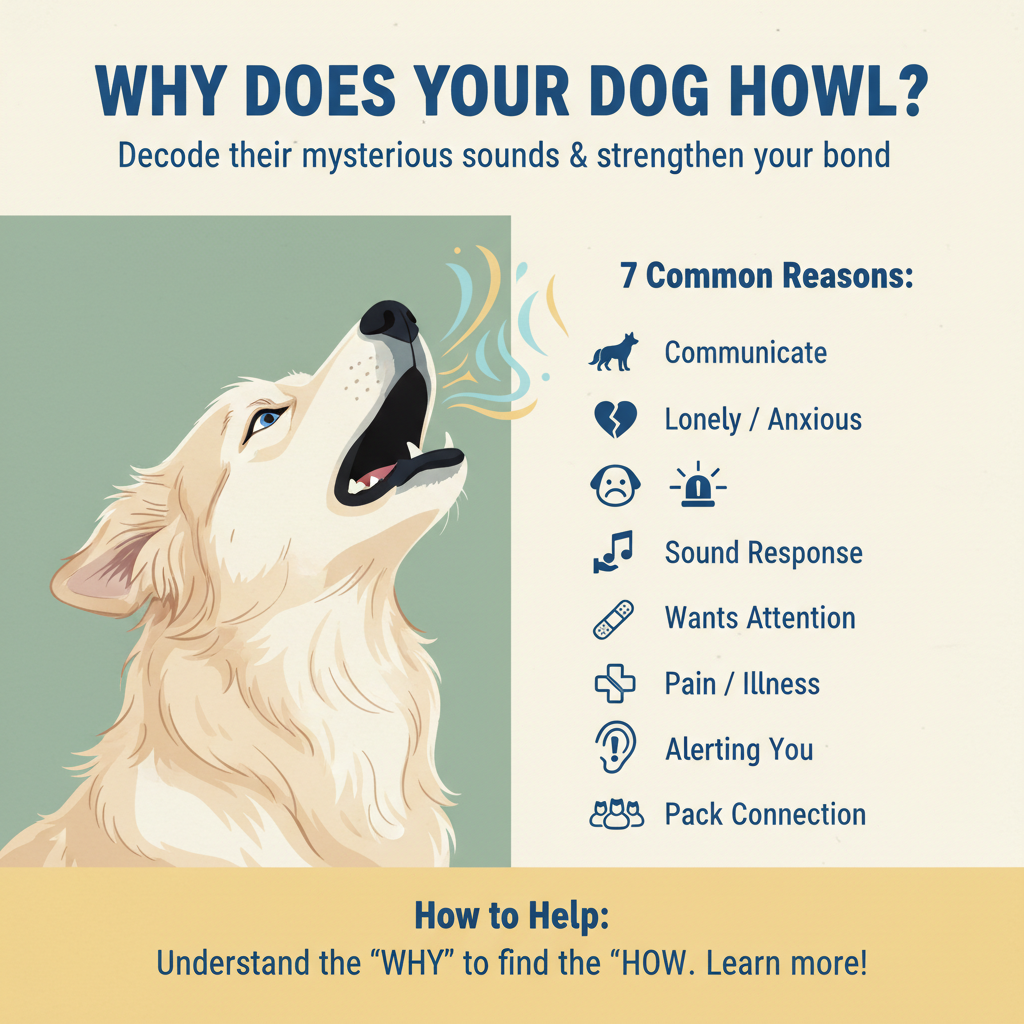
Why Dogs Howl: Unraveling Your Pup's Mysterious Sounds
That long, mournful sound – a dog's howl is instantly recognizable, and if you're a pet parent, you've probably heard it echo through your home or neighborhood. It's a vocalization that ties our furry friends directly back to their wild wolf ancestors, who used howling as a primary way to communicate across vast distances. For our dogs, understanding why dogs howl can feel like cracking a secret code. They aren't just making noise; they're trying to tell us something important, from announcing their presence to signaling distress.

If your dog howls, learning the reasons behind it can help you respond in ways that strengthen your bond and make both of you happier. Let's dig into the common culprits.
1. To Let Others Know They're There
One of the most ancient reasons dogs howl is simply to announce, "I'm here!" Think of it like a long-distance text message for the animal kingdom.
In the wild, a wolf pack uses howls to keep track of each other, especially if a member gets separated. Your dog might be doing the very same thing – letting the neighborhood pups (or even you!) know they're holding down their territory.
You'll often notice this kind of "I'm here!" communication when you walk in the door, or when your dog hears a distant siren. To them, that siren might sound like another dog's howl, and they're just trying to howl back and say hello.
2. They're Feeling Alone: Separation Anxiety
A dog's howl can also be a big red flag for separation anxiety. If your dog starts howling like crazy the moment you leave, it's often a genuine cry of loneliness and stress.
Dogs are incredibly social creatures. They thrive on companionship, and we, their human families, are their pack. When you leave, some dogs feel intense anxiety, which can come out as persistent howling. You might also see other signs, like destructive chewing, constant pacing, or even accidents inside the house.
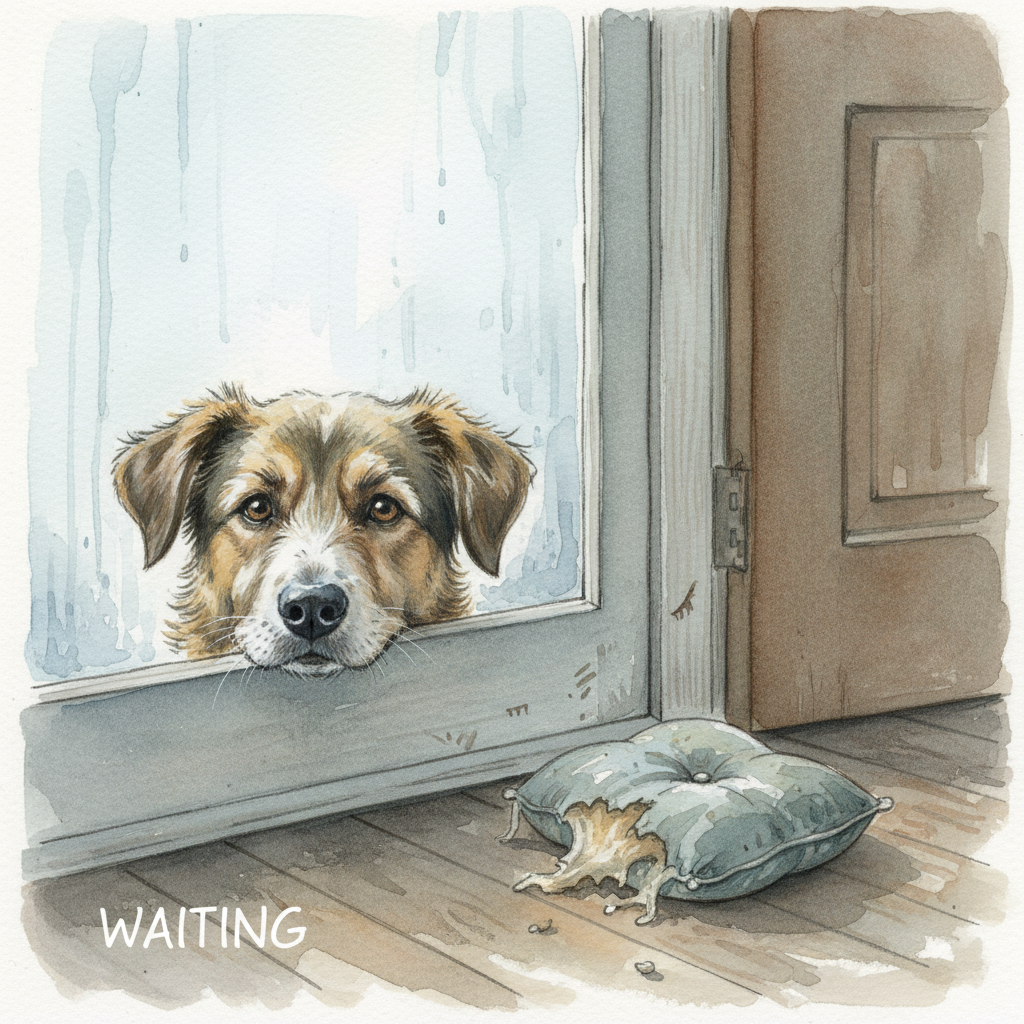
If you only hear the howling when you're not home, and it comes with other anxious behaviors, it's a strong hint that separation anxiety is the root cause.
3. Responding to High-Pitched Sounds
Have you ever noticed your dog "singing along" to a police siren, an ambulance, or even someone playing a harmonica? Many pups will howl in response to specific high-pitched sounds.
Our team at Petscarelab thinks there are a couple of reasons for this:
- It sounds like a friend: Your dog might hear these noises and interpret them as another dog's howl, so they're simply "howling back" as a way to join in.
- It hurts their ears: The high frequency of certain sounds can be uncomfortable, or even painful, for your dog's super-sensitive ears. They might howl to express their discomfort.
Paying attention to which sounds trigger your dog's howling can give you a lot of insight into their behavior.
4. They Want Your Attention
Dogs are smart cookies, and they quickly learn what works to get your attention. If your dog has howled in the past, and it resulted in you looking at them, talking to them, or even scolding them, they've learned that howling gets a reaction.
This is especially true if they want to play, go for a walk, or just get a good ear scratch. If you suspect your dog is howling to get your eye, try ignoring the behavior completely. Then, the instant they stop, praise them and offer a treat. This teaches them that calm, quiet behavior earns rewards, not noisy demands.
5. They're in Pain or Sick
Sometimes, a sudden change in your dog's howling might signal they're not feeling well. Just like we might moan or cry when we're hurting, dogs can use howling to express their pain or discomfort.
If your dog suddenly starts howling more than usual, or if it comes with other concerning signs like being sluggish, not eating, limping, or other behavioral shifts, it's crucial to call your veterinarian. Our veterinary specialists recommend early detection and treatment because it can make a huge difference in your pup's health and comfort.
6. To Alert You to Something New or Threatening
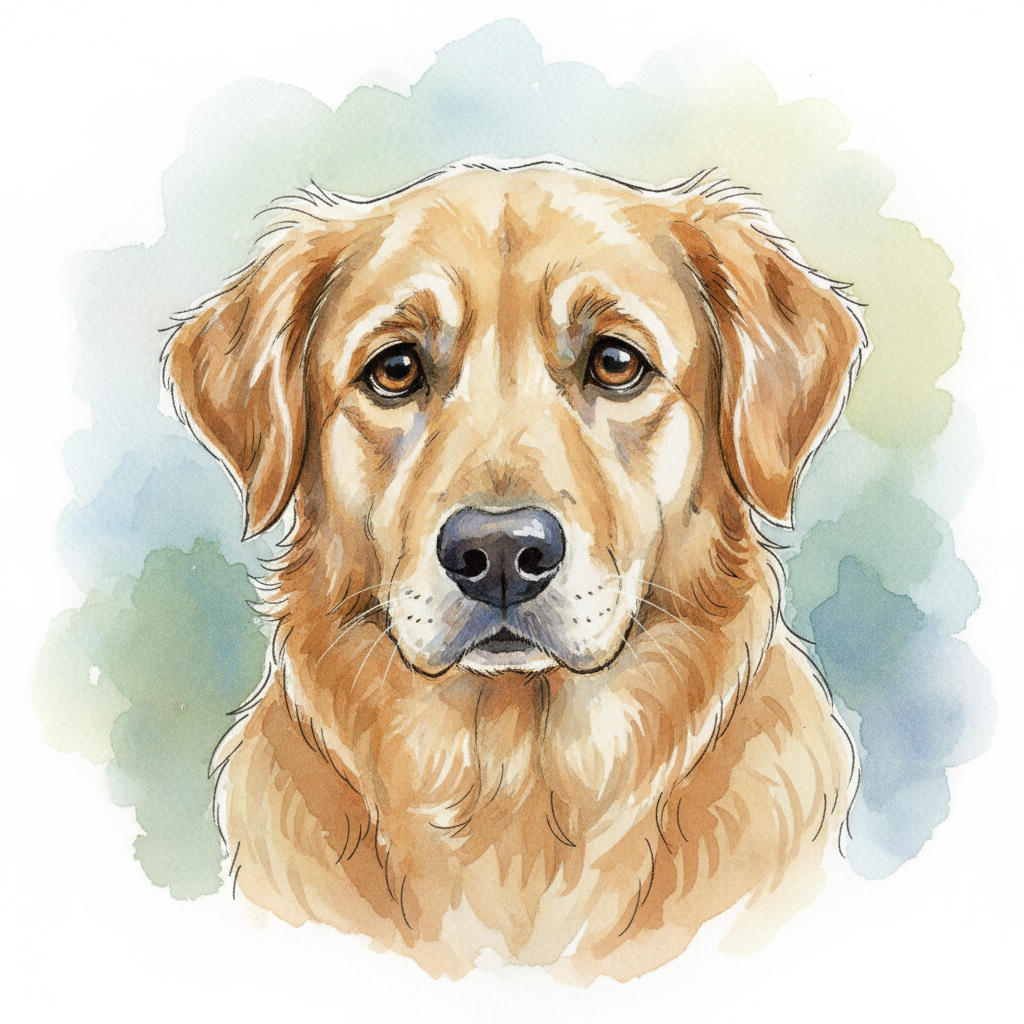
Your dog has a natural instinct to protect their home and their family. Howling can be their way of sounding the alarm when they sense something unusual or perceive a threat.
This could be anything from a stranger walking past the house, a squirrel in the yard, or a strange noise outside. They're basically trying to tell you, "Hey, something's not right!"
This kind of howling often comes with other alert behaviors, like barking, growling, or intently staring at whatever has caught their attention.
7. To Connect With Their Pack
Howling can also be a heartfelt way for dogs to bond, much like wolves use communal howls to strengthen their pack ties.
If you have several dogs, you might notice them howling together, creating a beautiful doggy chorus. It's their way of showing unity and reinforcing their social connections. Some dogs will even "howl along" if you join in, seeing it as a fun game or a deep way to connect with you, their favorite human.
How to Help Your Dog Stop Howling
The best way to address howling depends entirely on figuring out why your dog is doing it. Once you know the cause, you can take targeted steps.
If Your Dog Howls Due to Separation Anxiety
- Start Small: Practice leaving your dog alone for tiny bits of time, gradually increasing how long you're gone.
- Create a Den: Make sure your dog has a comfortable crate or a special spot where they feel safe and secure.
- Give Them a Job: Offer puzzle toys stuffed with treats to keep your pup busy and distracted while you're out.
- Seek Expert Help: If the anxiety is really bad, talk to your vet or a certified professional dog trainer for guidance.
If Your Dog Howls for Attention
- Become Invisible: Don't make eye contact, talk to, or touch your dog when they're howling. Wait it out.
- Reward the Quiet: The very second your dog stops howling, even for a moment, praise them and give a treat. This teaches them quiet equals good things.
- Teach "Quiet": Once your dog understands that being quiet gets rewards, you can introduce a "quiet" command for more control.
If Your Dog Howls Because of Pain or Illness
- Get a Vet Check: Schedule an appointment with your veterinarian right away to rule out any underlying medical issues.
- Follow the Plan: If your vet diagnoses an illness, stick to their recommendations for medication or therapy to help your pup feel better.
If Your Dog Howls in Response to Sounds
- Pinpoint the Trigger: Write down exactly which sounds make your dog howl.
- Desensitize Gradually: Play recordings of those trigger sounds at a very low volume and reward your dog for staying calm. Slowly increase the volume over time.
- Block the Noise: Use white noise machines or simply close windows to reduce how much they hear outside.
If Your Dog Howls to Alert You
- Investigate Calmly: Check out what your dog is alerting you to. If there's no real threat, gently reassure them.
- Teach "Speak" and "Quiet": Train your dog to "speak" on command and then to "quiet" down. Reward them for both.
- Manage the View: If your dog howls at people passing by the window, limit their view with blinds or privacy film.
Understanding why dogs howl is the first, most important step toward managing the behavior effectively. With patience, consistency, and sometimes a little expert help, you and your howling companion can definitely live together more harmoniously.