PetsCareLab
Small dogs bring endless joy and companionship. They’re perfect travel partners, easy to exercise, and simple to tidy up after. So if small dogs are wonderful, could even tinier be irresistible? Well, not quite.
Despite their charm and popularity, purchasing a “teacup” puppy often supports unethical breeding, resulting in these miniature dogs suffering from serious and sometimes life-threatening health concerns.
Key Takeaways
- Teacup puppies are selectively bred to be as minuscule as possible, often at the expense of their health.
- These tiny dogs frequently experience a range of health complications caused by questionable breeding practices.
- If you want a petite pup, aim for a small dog bred to the breed’s standard instead of opting for a teacup puppy.
What Is a Teacup Dog?
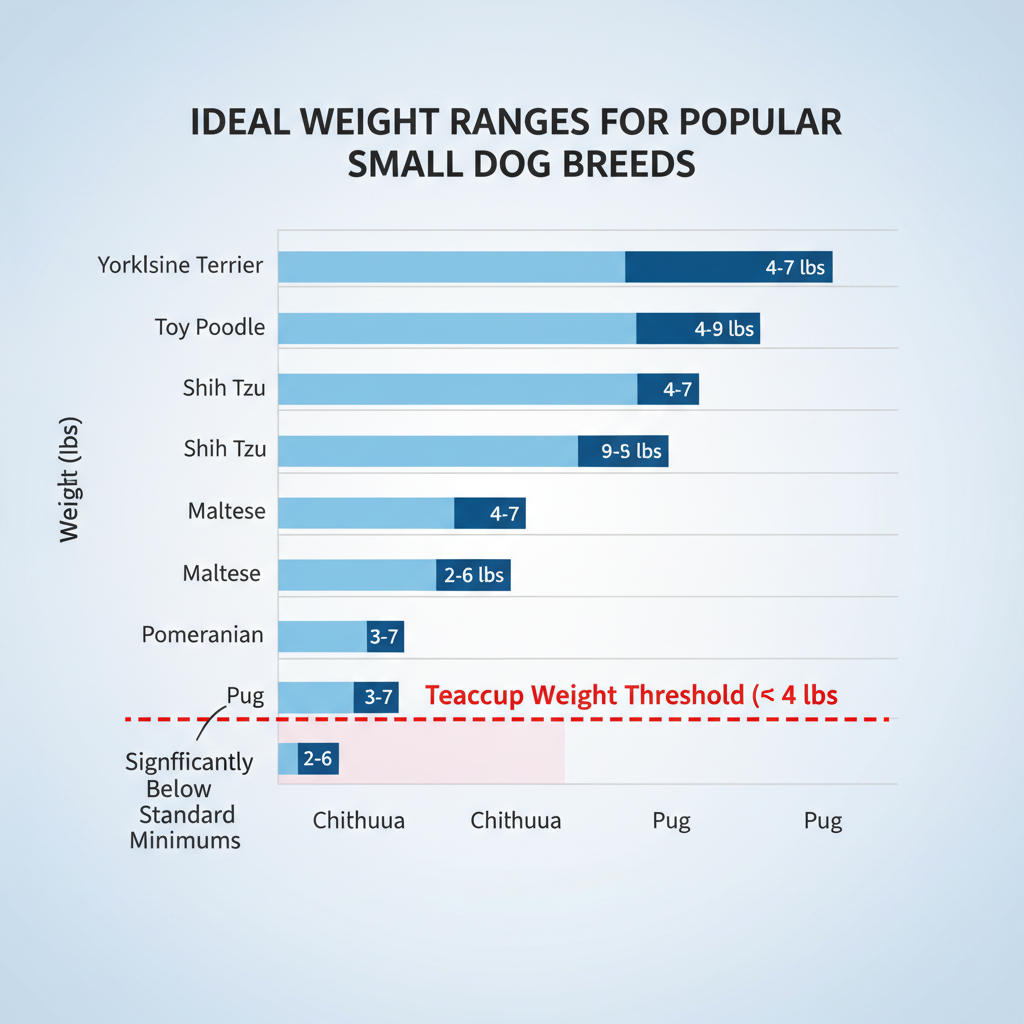
Teacup dogs are deliberately bred to be far smaller than the typical size expected for their breed. Also called tiny teacup dogs, micro dogs, or pocket dogs, these breeds are naturally small to begin with:
| Dog Breed | Ideal Weight |
|---|---|
| Yorkshire Terrier (Yorkie) | 4–7 pounds |
| Toy Poodle | 4–6 pounds |
| Shih Tzu | 9–16 pounds |
| Maltese | 4–6 pounds |
| Pomeranian | 3–7 pounds |
| Chihuahua | 3–6 pounds |
| Pug | 14–18 pounds |
Breeders focused on creating teacup dogs push these sizes even lower. While no official standard exists, it’s common for adult teacup dogs to weigh less than 4 pounds.
Many teacup breeders also produce “designer” mixed breeds in tiny sizes, like teacup Pomchis (a Pomeranian-Chihuahua cross) and teacup Maltipoos (a Maltese-Poodle blend).
Problems With Breeding Teacup Dogs
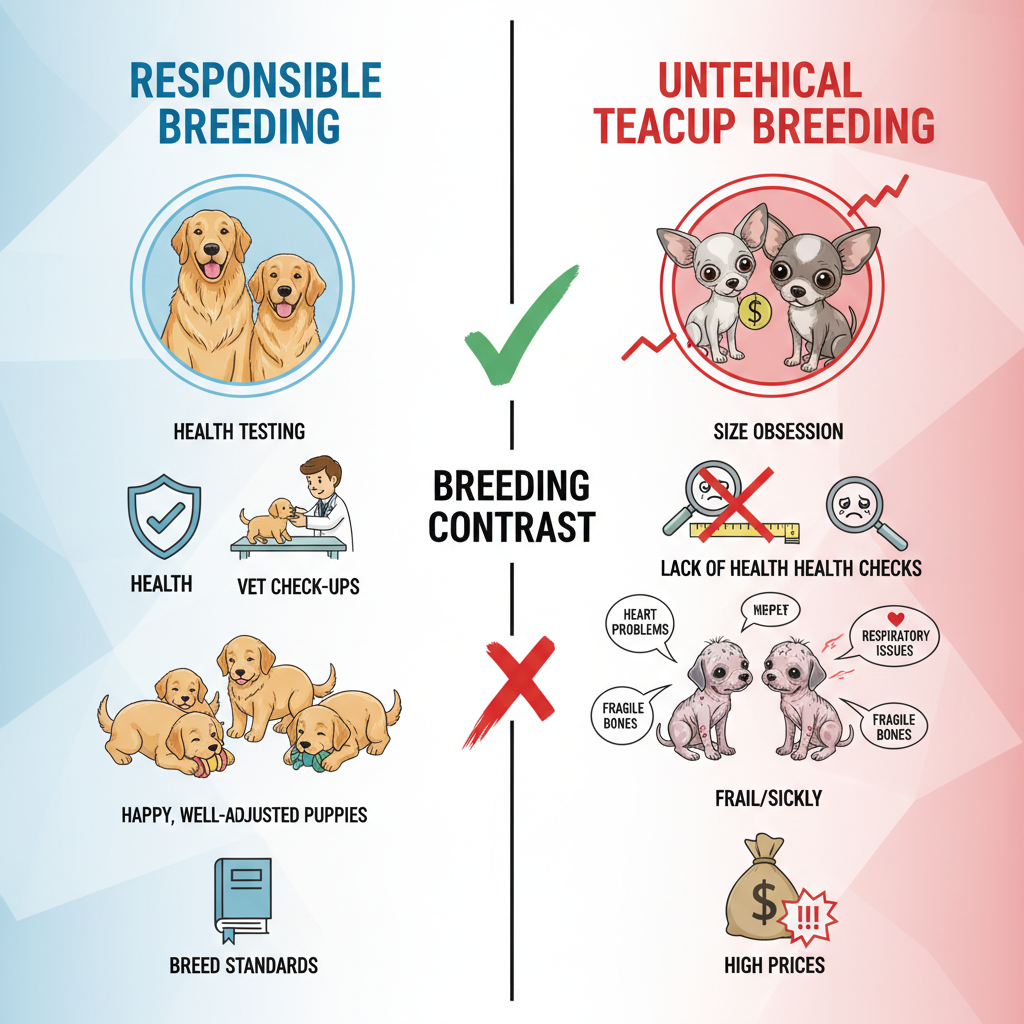
Understanding a breed’s ideal weight range is crucial. Responsible breeders strive to produce dogs conforming closely to breed standards. They select healthy, top-quality dogs for breeding pairs to produce puppies likely to be vigorous, well-tempered, and possibly show-worthy.
Unfortunately, the teacup dog breeding industry focuses obsessively on size above all else. Health, temperament, and welfare take a backseat as breeders mate the smallest females and males, aiming to sell tiny puppies at premium prices. This reckless approach greatly increases the chance of passing serious health disorders from parent dogs to puppies.
Teacup Dog Health Problems
Many health challenges common in teacup dogs are also found in other small breeds. While research continues on whether ultra-miniature size escalates these risks, poor breeding practices clearly raise the likelihood of these problems.
Hypoglycemia
Teacup puppies regularly suffer from hypoglycemia, or dangerously low blood sugar. This can cause weakness, confusion, muscle tremors, seizures, and even death. Preventing this often means feeding fragile teacup puppies every two hours—including overnight—until they reach around one year old.
Hydrocephalus
The adorable dome-shaped skull of many teacup dogs can result from hydrocephalus, a grave congenital condition where excess fluid builds in the brain. This pressure damages brain tissue, leading to blindness, behavioral problems, and other neurological issues. Surgery is sometimes required to create drainage pathways for the fluid.
Liver Shunts
Portosystemic shunts are abnormal blood vessels that bypass the liver. Symptoms include:
- Worsening behavioral changes and seizures post-meal
- Stunted growth
- Vomiting and diarrhea
- Fluid accumulation in the abdomen
Most liver shunts in teacup dogs involve multiple tiny vessels that cannot be surgically corrected. Medical treatments may ease symptoms but do not cure the condition.
Dental Disease
Teacup dogs’ tiny mouths often cannot accommodate their full set of teeth properly, resulting in crowding and retained baby teeth. This promotes plaque formation, gingivitis, periodontal disease, and other painful dental issues.
Collapsing Trachea
Teacup dogs are especially prone to collapsing trachea, where their windpipe’s muscular rings weaken and cave in, restricting airflow. This condition causes a distinctive honking cough. Treatment may include medications or surgery to ease breathing.
Heart Disease
Degenerative mitral valve disease (DMVD) is prevalent in teacup dogs. As the mitral valve deteriorates with age, dogs develop heart murmurs, coughing, difficulty breathing, fatigue, and potentially congestive heart failure. Medications can help manage symptoms but don’t fix the valve problem.
Orthopedic Diseases
Small dogs like teacups often face orthopedic issues such as luxating patella (dislocating kneecaps) and Legg-Calvé-Perthes disease (bone degeneration in the hip). Surgery may become necessary if medication and therapy don’t control pain adequately.
Other Potential Dangers for Tiny Teacup Dogs
In addition to health disorders, their tiny size exposes teacup dogs to unique risks.
Hypothermia
Smaller dogs lose body heat faster and struggle to stay warm. Exposure to cold can quickly lead to hypothermia or frostbite. Even mild chilly weather often requires a sweater or coat to keep these pups cozy.
Difficulty Dosing Medications
Standard dog medications, including heartworm preventives and flea treatments, are typically labeled for dogs 5 pounds and up. Teacup dogs often need specially compounded or off-label medications, increasing cost and complexity.
Complications With Anesthesia and Surgery
Performing anesthesia and surgical procedures on teacup dogs is challenging. Inserting IV catheters, repairing fractures, and maintaining body temperature during surgery requires greater skill because of their petite size.
Fragility
Teacup dogs’ bones are delicate and prone to fractures from everyday activities like jumping off furniture. They are also more vulnerable to rapid health decline when stressed or injured, often needing emergency veterinary care.
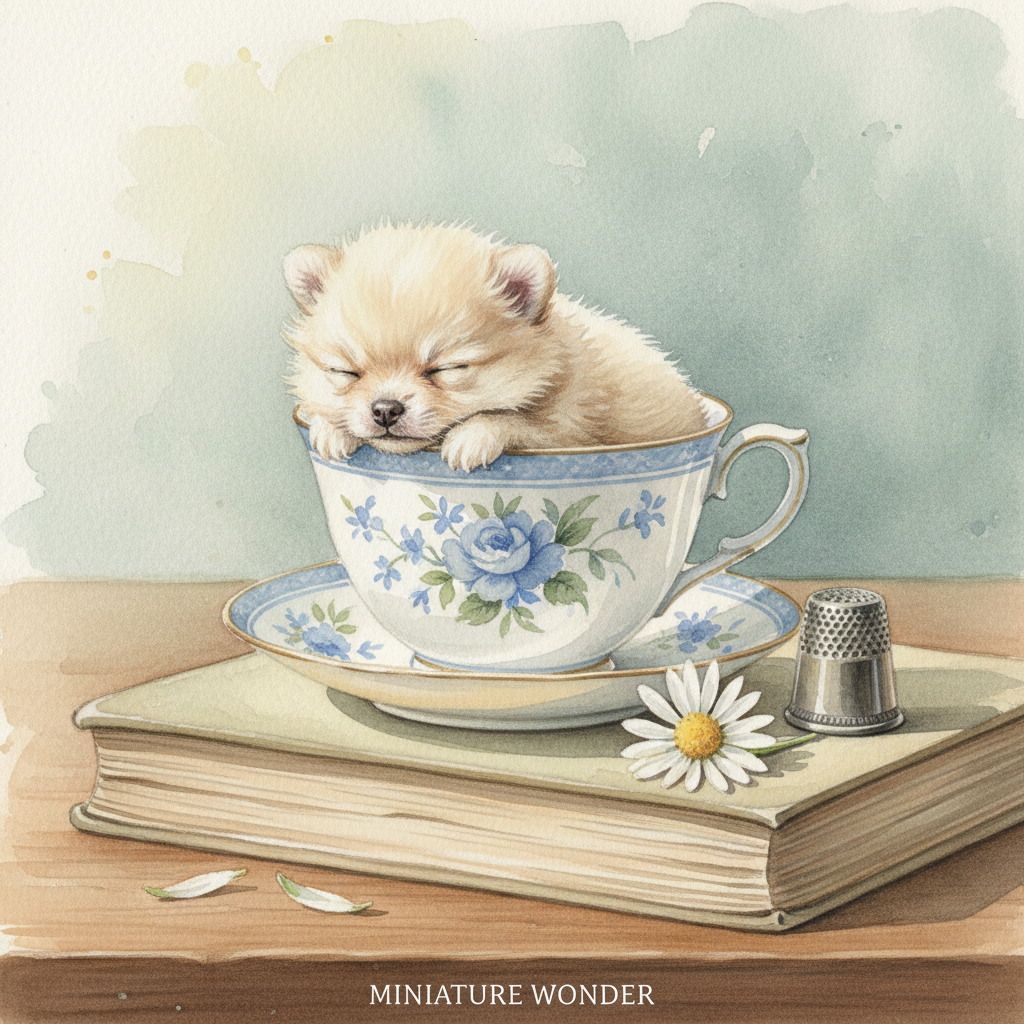
Should You Adopt a Teacup Puppy?
With all these concerns in mind, buying a teacup puppy is generally not advisable. For those seeking a small canine companion, puppies bred to the proper size and breed standards provide healthier, sturdier pets.
If you are truly determined to have an ultra-small dog, consider working with a responsible breeder who follows thorough health testing protocols recommended by the Canine Health Information Center. Occasionally, smaller-than-average puppies are born in these programs, and reputable breeders often find loving homes for them with the understanding they will not be bred as adults.