
Decoding Resource Guarding: A Guide for Pet Parents
Have you ever seen your dog get intensely protective over their food bowl, a favorite toy, or even you? That's resource guarding, a common behavior where a dog shows aggressive signs – like growling, snapping, or even biting – to keep something they value away from others. This protection can extend to food, toys, their bed, or even a person, aiming to deter anyone (animal or human) who comes too close.
It's natural for dogs to protect what's important to them. In the wild, animals had to guard their resources to survive. But for our beloved domesticated pups, resource guarding can turn into a real problem if left unaddressed. Luckily, with the right training, you can help your dog feel secure without resorting to aggressive displays.

What Do Dogs Guard?
Resource guarding isn't always about guarding a bowl of kibble. Dogs can get fiercely protective over anything they consider valuable. This could include:
- Food (think kibble, treats, bones)
- Toys (especially favorites)
- Beds or favorite sleeping spots
- Specific people
- Other dogs (yes, they can guard another dog!)
- Certain locations, like their crate or a prime spot on the couch
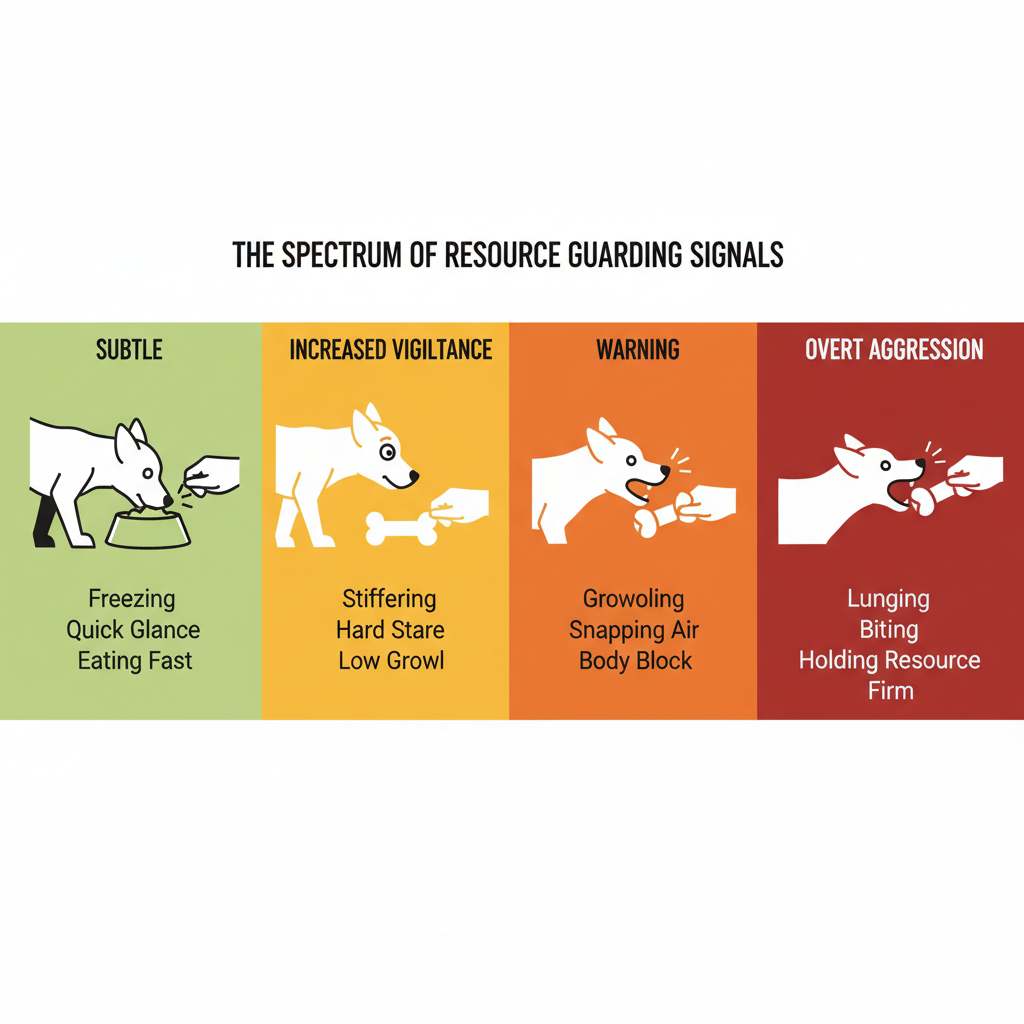
The intensity of resource guarding can vary widely. It might be as subtle as your dog freezing for a second when you walk past their bowl, or as serious as biting to protect an item.
Signs Your Dog Might Be Resource Guarding
Resource guarding can start subtly and often gets worse if ignored. Watch out for these signs:
- Freezing up: Your dog might suddenly become stiff or stop moving when you approach them while they have an item.
- Eye contact: They might quickly glance at the guarded item, then at you.
- Growling or snarling: This is a clear warning that you're too close to their treasure.
- Snapping or nipping: A quick, air bite meant to warn you away.
- Lunging: They might lunge at you or another pet to create distance from the guarded item.
- Biting: This is the most serious form of guarding, where they make contact to protect their resource.
- Eating super fast: Does your dog scarf down their food, especially if you get close? They might be trying to finish before you can take it.
- Running away: They might grab an item and retreat to a secluded spot.
- Showing teeth: A "hard stare" or baring teeth are definite warning signs.
- Standing over an item: They might physically cover the item with their body.
Keep in mind, these behaviors usually stem from a dog's natural instinct to protect something important, not because they're being "mean" or trying to dominate you.
Why Do Dogs Guard Resources?
While resource guarding is a natural behavior, several things can make it worse or even cause it to develop:
- Genetics: Some dogs or breeds might be naturally more prone to guarding.
- Lack of early socialization: Pups who didn't get enough exposure to different situations, people, and other animals during their critical development stage might be more likely to guard.
- Bad past experiences: If a dog has had items taken away forcefully, or inconsistently, they learn to guard. For example, if you punish a dog for picking up a forbidden item, they might try to guard it to avoid punishment later.
- Competition: In homes with multiple dogs, competition for food, toys, or even attention can sometimes spark guarding behaviors.
- Fear or anxiety: A dog who feels insecure or anxious might be more inclined to guard what little control they feel they have.
- Pain or illness: Sometimes, a dog guards a spot, like their bed, because they're in pain and don't want to be moved or bothered.
- Learned behavior: If guarding successfully keeps others away, your dog learns that it's a winning strategy.
Addressing Resource Guarding in Dogs
Dealing with resource guarding takes patience, consistency, and a big dose of positive reinforcement. Our goal is to shift your dog's feelings from anxious or aggressive to comfortable and even excited when you approach their prized possessions.
Here's how our team at Petscarelab recommends you approach treatment:
Management Strategies
The first and most important step is to prevent the guarding behavior from happening in the first place.
- Remove high-value items: If a specific toy or type of toy triggers guarding, put it away for a while. Only allow supervised play with these items later.
- Feed in peace: Give your dog their meals in a separate room, a crate, or behind a gate where they won't feel threatened by others approaching.
- Separate pets: If you have multiple dogs and one guards food or toys, keep them apart during meal times and whenever high-value items are out.
- Avoid triggers: Figure out what situations make your dog guard and steer clear of them until you've had a chance to work through them with training.
Desensitization and Counter-Conditioning (DS/CC)
This systematic approach helps change your dog's emotional response.
- Start small: Begin with items your dog doesn't guard much, or only mildly.
- Distance and deliciousness: Approach your dog from a distance where they show no signs of guarding. As you get closer, toss a high-value treat (something they absolutely love more than what they're guarding) near them.
- Slowly close the gap: Repeat this process many times, gradually shortening the distance you approach. Always make sure your dog stays relaxed and actually looks forward to your approach because it means tasty treats!
- The "trade-up" game: If your dog is guarding an item, teach them to "drop it" by offering an even more desirable item in exchange. Once they drop the guarded item, immediately give them the new, better one. This teaches them that giving up an item leads to something even better, not something being taken away.
[GRAPHIC: A multi-step infographic illustrating the Desensitization and Counter-Conditioning (DS/CC) process for resource guarding. Each step should include a simple visual:
1. **Identify Trigger:** Dog guarding a bowl.
2. **Establish Safe Distance:** Human far from dog, dog relaxed.
3. **Approach & Reward:** Human approaches slightly, tosses high-value treat, dog happy.
4. **Gradual Reduction of Distance:** Repeat step 3, moving closer in increments.
5. **"Trade-Up" Game:** Human offers a better treat, dog drops guarded item, receives new treat.
Use arrows to show progression and positive imagery (happy dog, tasty treats). Title: "Desensitization & Counter-Conditioning for Resource Guarding".]
Positive Reinforcement Training
- "Leave It" and "Drop It" commands: Make sure your dog knows these commands reliably.
- "Leave It": This stops your dog from even picking up an item in the first place.
- "Drop It": This teaches your dog to release an item they already have in their mouth.
- Hand-feeding: For food guarders, occasionally hand-feeding your dog their meals can build a positive connection between your hands and their food, making them feel safer.
When to Bring in a Pro
If your dog's resource guarding is severe – meaning it involves biting or intense aggression – you absolutely need to get help from a certified professional dog trainer, a certified animal behaviorist, or a veterinary behaviorist. They can create a customized plan for you and your dog, making sure everyone stays safe.
When to Talk to Your Vet
Contact your veterinarian if:
- The guarding behavior starts suddenly: A sudden change in behavior can sometimes signal an underlying medical problem or pain.
- The behavior gets worse: If the resource guarding intensifies or becomes more aggressive despite your best efforts.
- You feel unsafe: If you worry about your safety or the safety of other family members or pets.
- You need professional guidance: Your vet can often recommend certified professional dog trainers or veterinary behaviorists who specialize in aggression and behavior modification.
Your vet can rule out any medical causes and connect you with behavior specialists who can develop a comprehensive, safe, and effective plan to address your dog's resource guarding.