PetsCareLab
All puppies will encounter episodes of vomiting or diarrhea at some stage—and in most cases, it’s not a cause for major concern. However, it’s crucial not to ignore these signs, especially if you notice blood or mucus, or if the symptoms occur frequently.
Discover the various causes behind vomiting and diarrhea in puppies, and understand when it’s essential to consult your veterinarian to rule out serious health issues.
Causes of Vomiting and Diarrhea in Puppies
Puppies may vomit or have diarrhea for many reasons, ranging from mild to serious medical problems. Sometimes, these symptoms might also include blood.
Often, it’s difficult to pinpoint the cause of upset stomach just by examining vomit or stool. Visiting a veterinarian is the best way to uncover the underlying issue and ensure your puppy’s health. Frequently, several factors contribute to the symptoms.
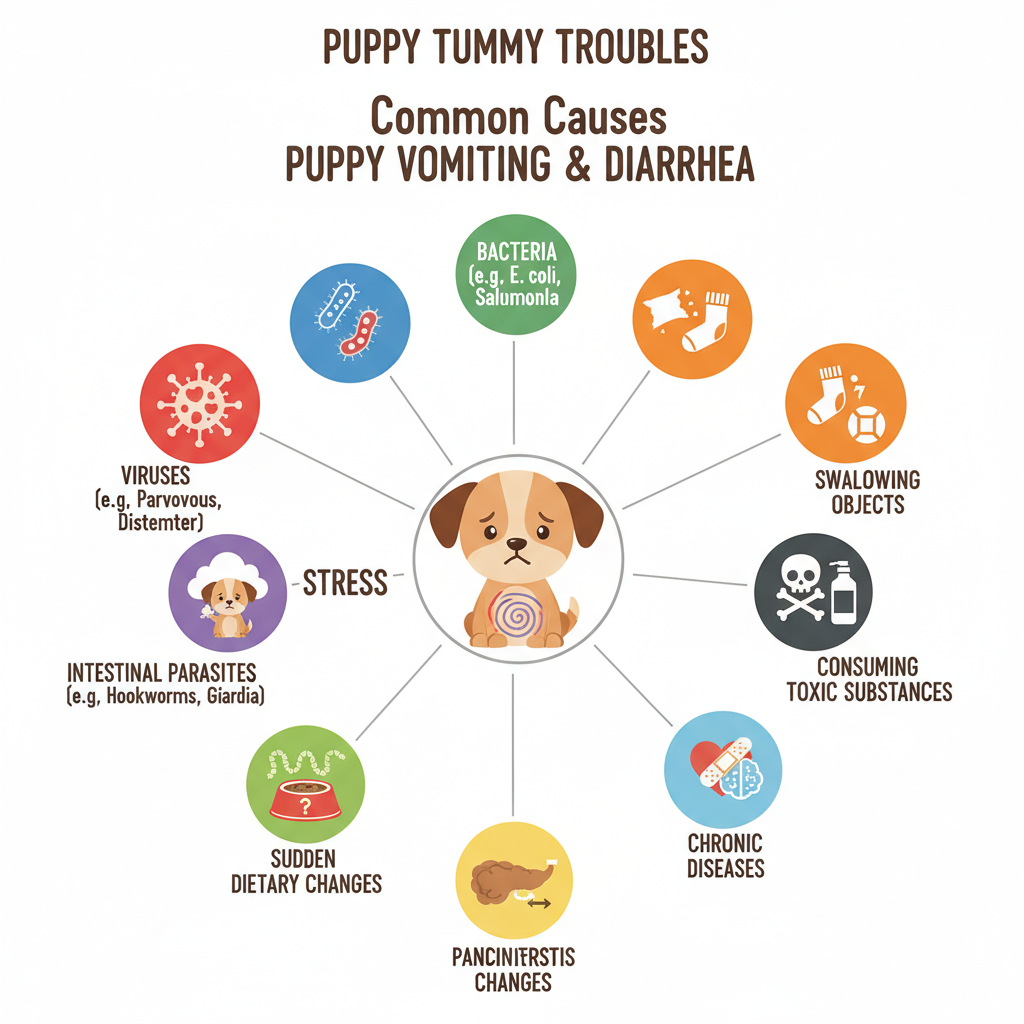
Below is a list of the most common causes of vomiting and diarrhea in puppies.
Viruses
Several viruses can upset your puppy’s stomach. These include the notorious canine parvovirus, along with other viruses such as canine coronavirus, distemper virus, and herpesvirus.
Young puppies are more vulnerable to severe viral infections. Vaccinations offer vital protection against these threats. Puppies typically need a series of vaccines spaced over their first few months. Partner with your veterinarian to create the ideal vaccination schedule tailored for your puppy’s needs.
Bacteria
A healthy puppy’s gut harbors many bacterial strains that usually don’t cause problems. However, if certain bacteria multiply excessively or your puppy contracts a bacterial infection, it can upset their digestive system.
Common bacteria that may overgrow include E. coli and Clostridial species, normally present in the gastrointestinal tract. Factors such as stress, sudden dietary changes, viral infections, or parasites can trigger this overgrowth.
Bacterial infections that may cause vomiting and diarrhea include:
- Salmonella
- Campylobacter
- Yersinia enterocolitica
These bacteria can be transmitted to humans (zoonotic), so always wash your hands thoroughly after handling a puppy suffering from vomiting or diarrhea.
Intestinal Parasites
Intestinal parasites are a frequent cause of gastrointestinal upset in puppies. Even if you don’t spot worms or if your puppy has been dewormed, they remain at high risk. The Companion Animal Parasite Council advises testing puppies at least four times within their first year.
Parasites that can provoke vomiting and diarrhea include hookworms, roundworms, whipworms, and tapeworms. Microscopic parasites such as giardia and coccidia also commonly cause digestive disturbances.
Stress
Despite their playful nature, puppies undergo considerable stress during their early life, which can trigger vomiting and diarrhea. Stress can also weaken the immune system, making puppies more susceptible to infections and parasites. Stressors include separation from their mother and littermates, moving to a new home, encountering unfamiliar environments, and adapting to new rules.
Swallowing Objects
Curious by nature, puppies explore their world by mouth, often swallowing things they shouldn’t. This can irritate their stomach or intestines, leading to vomiting or diarrhea.
Small items like toys, mulch, sand, rocks, sticks, paper, wrappers, or partially chewed treats may pass through but irritate the gut lining.
Larger ingested objects pose greater danger as they can cause blockages. Depending on the obstruction’s location and severity, this may become a medical emergency. Commonly swallowed large items include toys, socks, underwear, blankets, bedding, and bones.
Long, stringy items like fabric strips, carpet pieces, strings, and ribbons risk causing a linear foreign body—a condition where the intestines bunch up, potentially leading to life-threatening infections.
Consuming Toxic Substances
Ingesting toxins is a common and serious cause of vomiting and diarrhea. If you suspect your puppy has eaten something toxic, seek veterinary care immediately.
Frequent toxic culprits include human pain medications (ibuprofen, acetaminophen, naproxen), household cleaners (bleach, carpet fresheners, dryer sheets, fabric softeners, toilet tablets), chocolate, xylitol, grapes, rat poison, and certain household plants. It’s vital to ensure your plants are safe for puppies.
Sudden Dietary Changes
Abrupt switches in diet, introducing an excess of new treats, or allowing your puppy to eat human food can irritate their digestive tract and cause symptoms. New foods can also disrupt the balance of gut bacteria. Transition new diets gradually over at least a week, or slower for sensitive puppies.
Pancreatitis
High-fat treats or human foods can trigger pancreatitis—a painful inflammation of the pancreas causing vomiting, diarrhea, and decreased appetite.
Chronic Diseases
Though less common, chronic conditions might cause recurrent vomiting and diarrhea. If your puppy does not improve or suffers continuous symptoms, your veterinarian may evaluate for food allergies or intolerances and recommend special diets.
Additional testing might assess liver or kidney diseases, which can also lead to digestive upset.
Other Possible Causes
Hernias, where a portion of the intestines becomes trapped, can cause vomiting and diarrhea. Puppies may be born with hernias or develop them after injuries.
Intussusception—a condition where part of the intestine folds into another section—can obstruct the gastrointestinal tract and cause these symptoms as well.
What to Do if Your Puppy Is Vomiting and Has Diarrhea
Seek veterinary care promptly if your puppy:
- Is under 4 months old and has vomiting or diarrhea
- Is over 4 months old but has both vomiting and diarrhea, or shows other concerning signs like loss of appetite or lethargy
- Might have swallowed a foreign object or toxin
- Has blood in vomit or stool
- Cannot keep food or water down due to frequent vomiting
- Shows signs of dehydration
- Has vomited or had diarrhea continuously for more than 24 hours
Puppies with combined vomiting and diarrhea or additional illness signs can dehydrate rapidly and need immediate attention.
However, in some instances, it may be okay to wait 24 hours to see a vet, such as:
- Puppies over 4 months old vomiting without diarrhea who can drink small, frequent sips, appear comfortable, pain-free, and active
- Puppies over 4 months old with diarrhea but no vomiting, no blood, mild symptoms, and normal eating, drinking, and behavior
How to Check for Dehydration
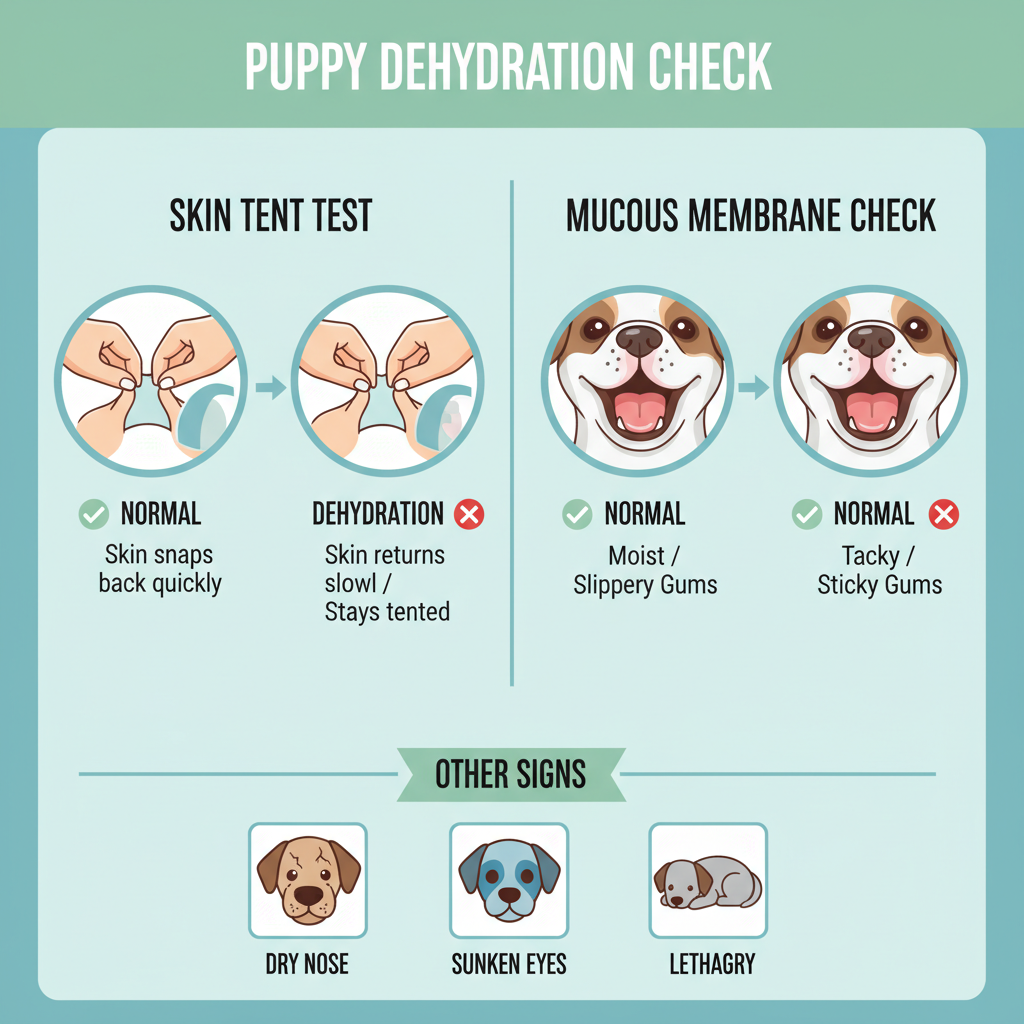
Puppies can dehydrate quickly when vomiting or having diarrhea. At home, you can assess dehydration by:
- Skin Tent Test — Gently pinch and lift the skin at the back of their neck. If the skin snaps back immediately, hydration is normal. If it returns slowly or stays tented, dehydration is likely.
- Mucous Membranes — If your puppy allows, gently check their gums. Sticky or tacky feeling gums (similar to drying paint) suggest dehydration. Note that nausea can cause drooling, so moist gums do not always rule out dehydration.
Other signs include dry nose, sunken eyes, and lethargy.
Can You Help at Home?
If your puppy is over 4 months old and only has vomiting or diarrhea but is otherwise normal, you might try:
- Feeding a bland diet temporarily—mix two parts cooked white rice with one part boiled, skinless, boneless chicken breast. Serve small, frequent meals.
- Adding probiotics to support gut health. Trusted options include Nutramax Proviable and Purina FortiFlora.
How Veterinarians Diagnose Vomiting and Diarrhea in Puppies
When your puppy visits the vet for vomiting or diarrhea, the initial step is a thorough general exam. The vet will usually test stool samples for intestinal parasites and parvovirus. Depending on findings, further diagnostics like blood tests, X-rays, or ultrasound may be recommended to uncover the problem.
Your veterinarian will likely ask:
- For your puppy’s vaccination records
- If your puppy is on any monthly preventatives for heartworm or parasites
- How long vomiting or diarrhea has been occurring
- Their behavior at home—eating, drinking, energy level
- Presence of blood in vomit or feces
- Recent food or treat changes
- Possible access to harmful substances or objects
Treating Vomiting and Diarrhea in Puppies
Treatment depends on the cause and severity. Core treatments focus on stopping vomiting, rehydration, and balancing electrolytes. This usually involves anti-nausea medications like Cerenia and fluid therapy.
For mild dehydration, oral electrolyte solutions such as Oralade may be suggested. Subcutaneous fluids under the skin help with mild dehydration. More severe dehydration requires hospitalization with intravenous fluids.
Supportive care often includes probiotics, prescription bland diets (such as Royal Canin Gastrointestinal Puppy, Purina Pro Plan EN, or Hill’s Prescription Diet i/d), and sometimes anti-diarrheal remedies like Proviable diarrhea kit or Pro-Pectalin paste.
Antibiotics may be prescribed for bacterial infections or to prevent secondary infections, even when a viral cause is suspected.
For parasitic issues, prescription dewormers or antibiotics will be provided. Surgical intervention may be necessary if blockages, hernias, or intussusceptions are identified.
Your veterinarian will guide you through the best treatment plan to restore your puppy’s health and comfort.