

How to Potty Train an Older Dog
Think potty training an older dog sounds harder than housetraining a puppy? It doesn't have to be! While it might take a bit more time, and you're certainly breaking some old habits, it's absolutely possible. Older dogs often come with their own routines, and sometimes even health quirks, that can make the process unique.
If your senior pup is having frequent accidents, a quick chat with your vet is always a good first step. It's smart to rule out any underlying medical conditions that might be affecting their bladder or bowel control.
But with a good routine, plenty of patience, and lots of happy praise, you can absolutely help your older dog master their potty habits. You'll enjoy a cleaner home and a happier, more confident companion.
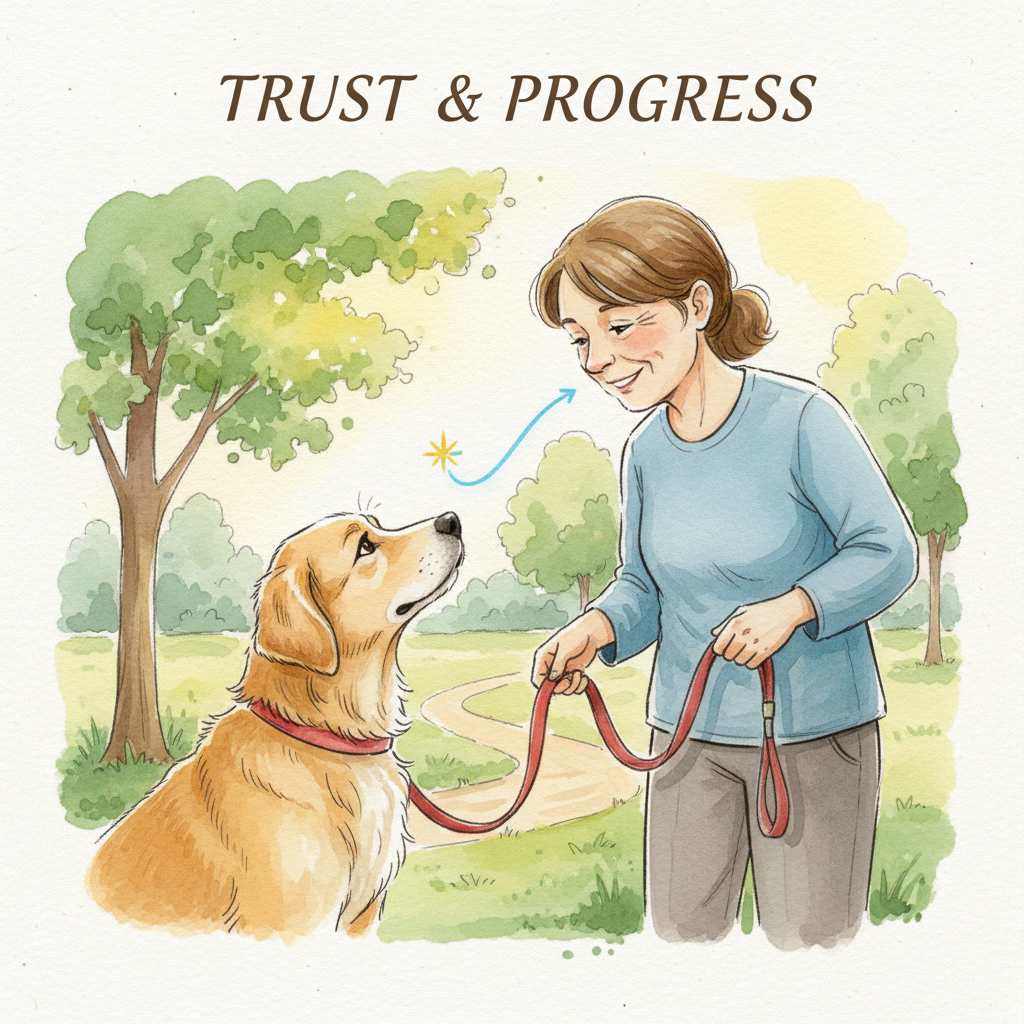
Practical Steps to Potty Train an Older Dog
Ready to help your older dog learn the ropes? Our team at Petscarelab has put together these clear, actionable steps:
1. Frequent Outdoor Breaks are Key
Get your older dog outside often. We're talking first thing in the morning, right after meals, once they wake up from a snooze, and definitely before bedtime. If you’re seeing a lot of indoor messes, set a timer for every 1-2 hours to remind yourself to take them out. When they do their business outside, make it a party! Shower them with praise and a tasty treat.
If you catch your dog squatting or peeing indoors, gently interrupt them – no scary yells, just a calm "Uh-oh!" – and immediately scoop them up to take them outside. If they finish up out there, give them that big reward. You can even try a consistent phrase like "go potty" or "do your business" while they're going to help them connect the words with the action.
And don’t forget to thoroughly clean up any indoor accidents with an enzymatic cleaner. This breaks down odors that could otherwise tempt your dog to mark that spot again.
2. Keep a Close Eye on Them
When you're home, think of yourself as your dog's shadow. Keep them on a leash and tethered to you, or to a piece of furniture in the same room. This makes it easy to spot those subtle signs they might need to go, like sniffing around, circling, or getting into that tell-tale squat. See those signs? It’s time for an immediate trip outside! Don't worry, you won't need this level of constant supervision forever, but it's a critical first step to prevent accidents and establish good habits.
3. Consider Crate Training (If It Fits Your Dog)
Crate training can be a powerful tool when you potty train an older dog, mainly because dogs generally don't like to soil their sleeping area. For this to work well, here’s what you need to remember:
- Pick the right size: The crate should be cozy – just big enough for them to stand up, turn around, and lie down comfortably. If it’s too spacious, they might decide one end is for napping and the other for bathroom breaks.
- Make it a happy place: Lure them in with their favorite toys, a soft bed, or delicious treats. We want them to love their crate.
- Never use it as punishment: The crate should feel like a safe, den-like retreat, not a place they go when they're in trouble.
- Limit time inside: Even if your dog seems content, avoid leaving them in the crate for more than 3-4 hours during the day. While most adult dogs can typically handle 8-9 hours overnight, veterinary specialists still recommend letting them out for a midday break if you're gone all day.
Remember, crate training isn't for every dog. If your dog shows signs of distress, anxiety, or panic when crated, it’s best to explore other methods.
[GRAPHIC: An infographic illustrating the correct crate size for an older dog, showing three examples: 1) A dog in a perfectly sized crate (can stand, turn, lie down comfortably), 2) A dog in a too-small crate (cramped), 3) A dog in a too-large crate (enough space to soil one end and sleep in the other). Include labels indicating "just right," "too small," "too big."]
4. Be Consistent and Patient, Always
Teaching an older dog new habits takes a lot of consistency and even more patience. Set up a predictable daily rhythm for their meals, water, and potty breaks. Dogs thrive on routine, and a steady schedule helps them understand exactly when and where they're supposed to go.
Stay calm and positive throughout the process, even if there are occasional setbacks. Yelling at your dog or punishing them for accidents only creates fear and anxiety, making training much harder. Instead, celebrate their successes, heap on the praise, and quietly clean up any mistakes.
5. Talk to Your Vet About Health Issues
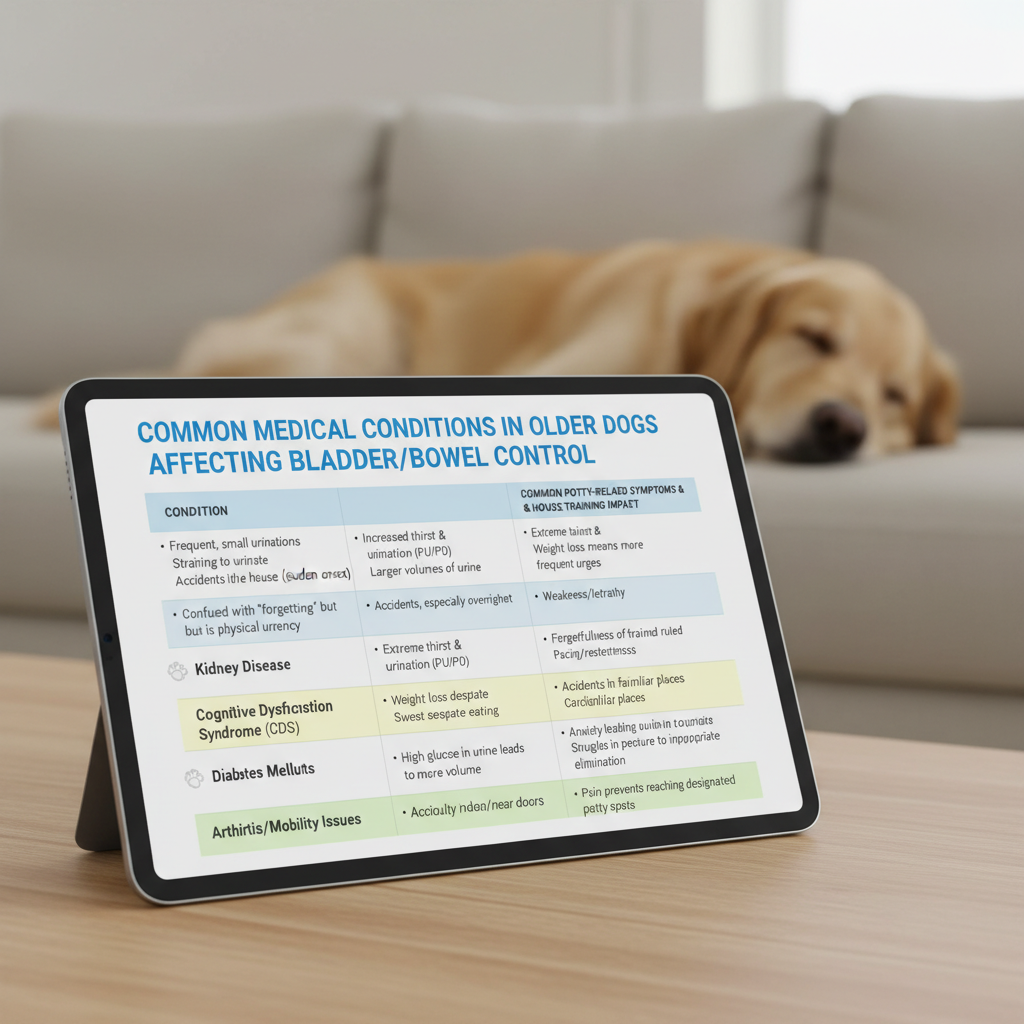
If your older dog suddenly starts having accidents, or if potty training feels like an uphill battle, it's really important to consult your veterinarian. Many medical conditions can interfere with a dog's bladder and bowel control, such as:
- Urinary tract infections (UTIs): These are common in older dogs and can lead to urgent, frequent urination and accidents.
- Kidney disease: This can make dogs drink and pee more, making it tough for them to hold it in.
- Diabetes: Similar to kidney disease, diabetes often causes increased thirst and more frequent urination.
- Cognitive dysfunction (doggy dementia): Like humans, older dogs can sometimes lose their memory, making it harder to remember their housetraining rules.
- Arthritis or mobility issues: Painful joints can make it hard for dogs to get outside quickly enough or even uncomfortable to get into the right position to relieve themselves.
Your vet can accurately diagnose and treat any hidden medical problems, which might be the key to solving your potty training woes.
By following these practical steps and staying committed, you'll successfully potty train an older dog and build an even stronger bond with your cherished companion.