Your Dog's Paws Hurt? It Could Be Pododermatitis!
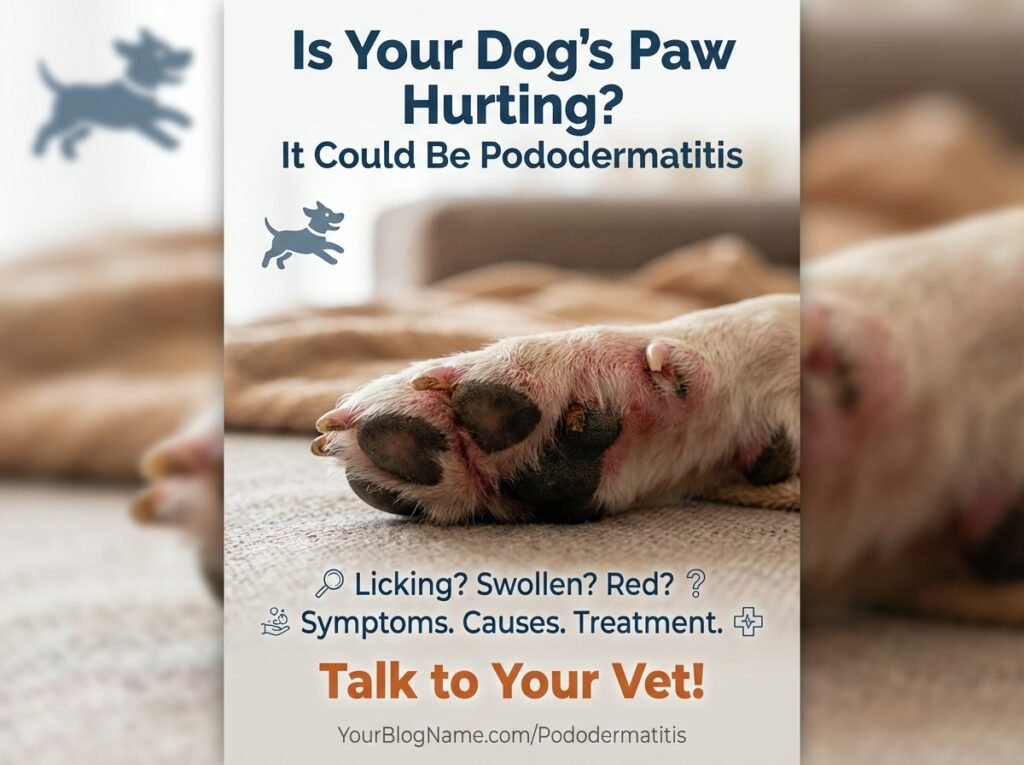
Picture this: your best furry friend is constantly licking, chewing, and biting at their paws. Maybe they look red, swollen, or even a little crusty. What's going on? Chances are, your dog is dealing with pododermatitis, a fancy name for inflammation of the skin on their paws. Think of it not as a specific illness, but as a red flag, a symptom telling you that something deeper is bothering your pup. It can hit just one paw or all four, making every step a struggle.
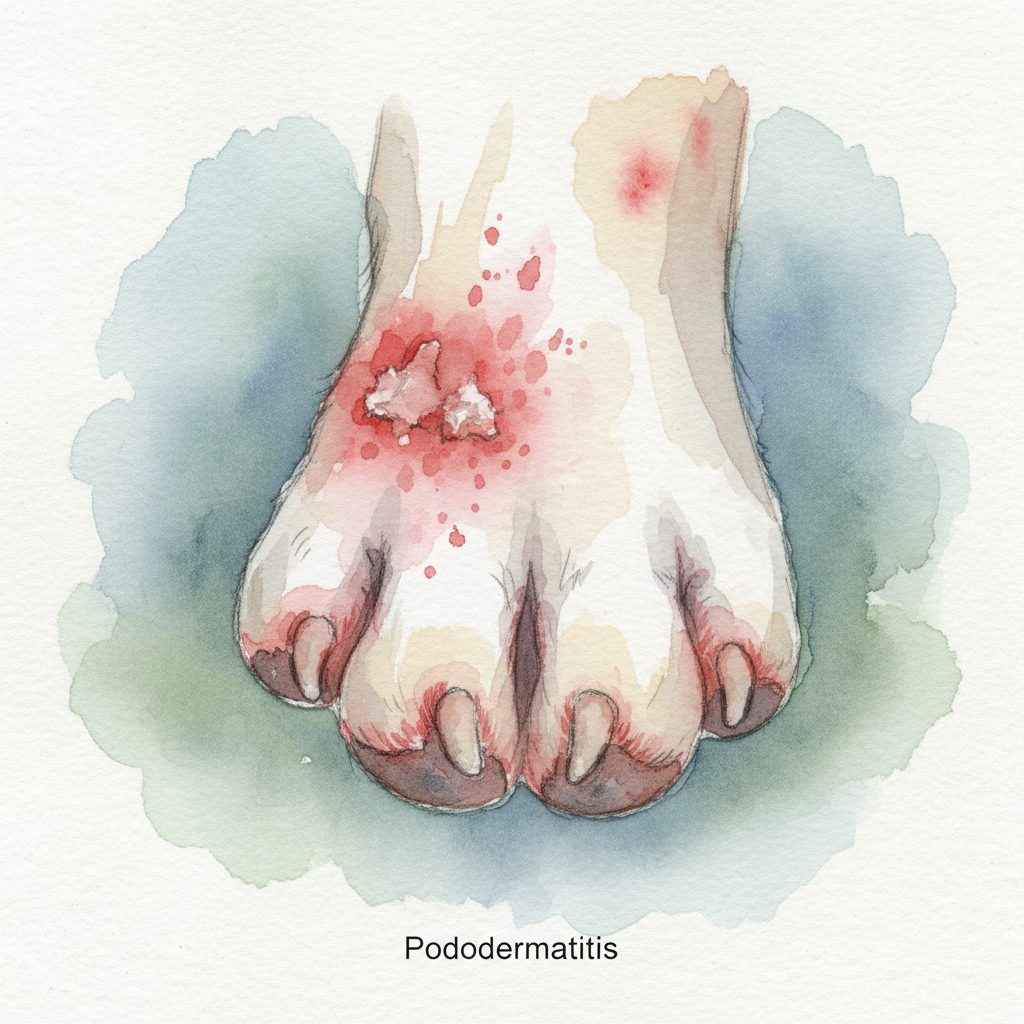
If you spot your dog obsessively grooming their paws, or if those precious paws look angry and inflamed, it's time to call your vet. They can figure out the real problem and get your dog back to happy walks.
Signs Your Dog Might Have Pododermatitis
The clues that your dog has paw inflammation can be tricky because they depend on what's causing the trouble. But keep an eye out for these common signs:
- Licking or chewing their paws too much: This is usually the first hint that something's not right.
- Swollen and red paws: When paws get inflamed, they puff up and turn a fiery red.
- Hair loss around the paws: All that constant licking and chewing can wear away the fur.
- Crusts, scabs, or pimples on the paws: These can point to skin infections or irritation.
- Open sores or draining tracks: These might mean a deeper infection or even a foreign object stuck inside.
- Limping or being lame: Your dog might not want to put weight on the sore paw.
- Pain or extra sensitivity when you touch their paws: They might pull away or even yelp.
- A strange smell: A foul odor often signals a bacterial or yeast infection brewing.
- Darkening skin (pigmentation changes): Long-term inflammation can make the skin turn darker.
- Thick, leathery skin (lichenification): Another sign that the inflammation has been going on for a while.
- Nail problems: Nails might become brittle, discolored, or misshapen.
Why Your Dog’s Paws Are Hurting: Causes of Pododermatitis
Many things can cause pododermatitis in dogs. Your vet will play detective to uncover the root cause, but here are some usual suspects:
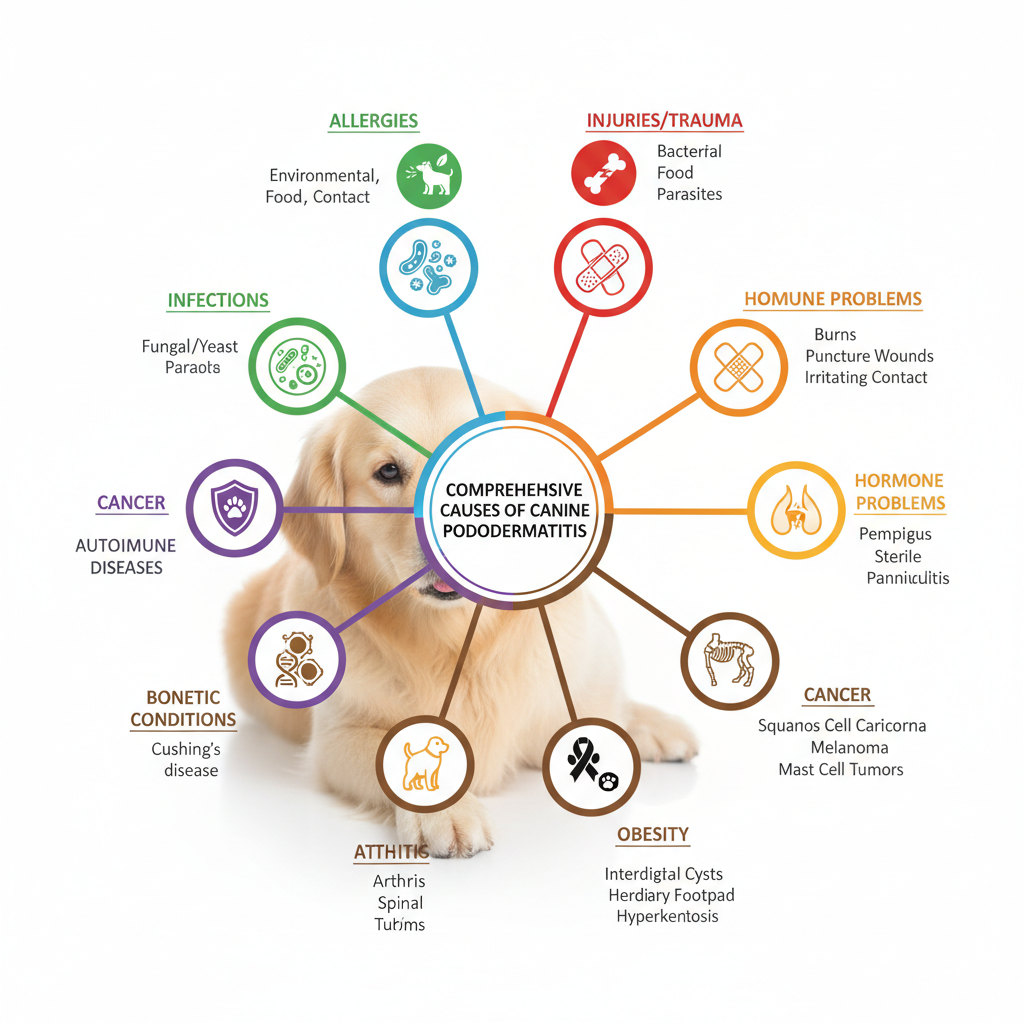
- Allergies:
- Environmental allergies: Just like us, dogs can react to pollen, dust mites, or mold.
- Food allergies: Certain ingredients in their dinner can trigger a reaction.
- Contact allergies: Touching things like specific plants, harsh cleaners, or even carpet fibers can cause irritation.
- Infections:
- Bacterial infections: These often pop up after allergies or an injury.
- Fungal/yeast infections: That common Malassezia yeast loves to cause trouble on paws.
- Parasites: Nasty mites (like Demodex or Sarcoptes), fleas, or ticks can set up shop.
- Injuries (Trauma):
- Foreign objects: Things like foxtails, splinters, thorns, or glass can get stuck in a paw.
- Burns: From scorching pavement, chemicals, or other hot stuff.
- Cuts or scrapes: Even small injuries can get infected.
- Puncture wounds: Stepping on something sharp can cause a deep wound.
- Irritating contact: Walking on irritating chemicals or surfaces.
- Autoimmune Diseases:
- Pemphigus: This affects skin and mucous membranes.
- Lupus: It can hit many parts of the body, including the skin.
- Symmetrical lupoid onychodystrophy (SLO): Mostly affects nails but can spread to nearby skin.
- Sterile panniculitis: Inflammation of the fat layer under the skin.
- Hormone Problems (Endocrine Diseases):
- Hypothyroidism: An underactive thyroid can lead to skin issues.
- Cushing’s disease: Too much cortisol can thin the skin and open the door to infections.
- Cancer:
- Squamous cell carcinoma: A type of skin cancer.
- Melanoma: A tumor of pigment cells.
- Mast cell tumor: These can show up on paws.
- Other tumors: Various benign or malignant growths can occur.
- Bone and Joint Issues (Orthopedic Problems):
- Arthritis: Joint pain can change how your dog walks, putting odd pressure on their paws and causing inflammation.
- Spinal problems: These can also alter gait and stress the paws.
- Genetic Conditions:
- Interdigital cysts: Common in breeds like Bulldogs, these are often not true cysts but inflamed areas from ruptured hair follicles, deep infections, or injuries.
- Hereditary footpad hyperkeratosis: Too much thickening of the paw pads.
- Obesity:
- Extra weight means more pressure on those paws, leading to inflammation and discomfort, especially between the toes.
How Vets Diagnose Pododermatitis
To figure out what's really going on with your dog's inflamed paws, your vet will start with a good, thorough physical exam, paying special attention to those hurting feet.
They'll likely suggest a few tests:
- Skin scrapes and hair plucks: To search for mites or other tiny critters.
- Cytology: They'll look at cells from the skin under a microscope to find bacteria, yeast, or abnormal cells.
- Fungal culture: To see if ringworm is the problem.
- Blood tests:
- Complete blood count (CBC) and chemistry panel: To check overall health and spot inflammation or organ issues.
- Thyroid panel: To check for hypothyroidism.
- Cortisol tests: To check for Cushing’s disease.
- Allergy testing: Blood tests or skin tests to pinpoint environmental allergens.
- Dietary elimination trial: This helps diagnose food allergies. Your dog eats a special diet for 8-12 weeks to see if symptoms improve.
- X-rays (radiographs): To look for foreign objects, bone infections, or joint problems.
- Biopsy and histopathology: A tiny piece of tissue is taken and examined. This is often needed for autoimmune diseases or suspected cancer.
- Culture and sensitivity: If a bacterial infection is suspected, this test identifies the exact bacteria and which antibiotics will work best.
Treating Pododermatitis in Dogs
Treating paw inflammation means getting to the bottom of the problem and easing your dog's discomfort.
Fixing the Main Problem
- Allergies:
- Environmental allergies: This might involve medications (like Apoquel or Cytopoint), antihistamines, omega-3s, or allergy shots.
- Food allergies: A strict special diet followed by careful reintroduction to find the culprit.
- Contact allergies: Find what's irritating your dog and remove it from their world.
- Infections:
- Bacterial infections: Oral antibiotics for several weeks, often with medicated shampoos or soaks.
- Yeast infections: Oral antifungals and/or special shampoos or wipes.
- Parasites: Specific medications depending on the unwelcome guest.
- Injuries/Foreign Objects:
- Surgery: If something's stuck in the paw, a vet will need to remove it.
- Wound care: Cleaning, bandaging, and pain relief for burns, cuts, or scrapes.
- Autoimmune Diseases:
- Immune-suppressing medications: Oral steroids, cyclosporine, or other immune-modulating drugs.
- Hormone Problems:
- Thyroid hormone supplements: For an underactive thyroid.
- Medications: To manage Cushing’s disease.
- Cancer:
- Surgery: To remove tumors.
- Chemotherapy or radiation: Depending on the cancer type and stage.
Helping Your Dog Feel Better Right Away
While working on the root cause of your dog's pododermatitis, your vet might suggest treatments to quickly relieve their pain and swelling:
- Anti-inflammatory medications: NSAIDs (like carprofen) or steroids can reduce pain and swelling.
- Pain management: If your dog is really hurting, they might get extra pain relievers.
- Topical treatments:
- Medicated shampoos/soaks: With ingredients like chlorhexidine for bacteria or miconazole for yeast, these soothe the skin and reduce inflammation.
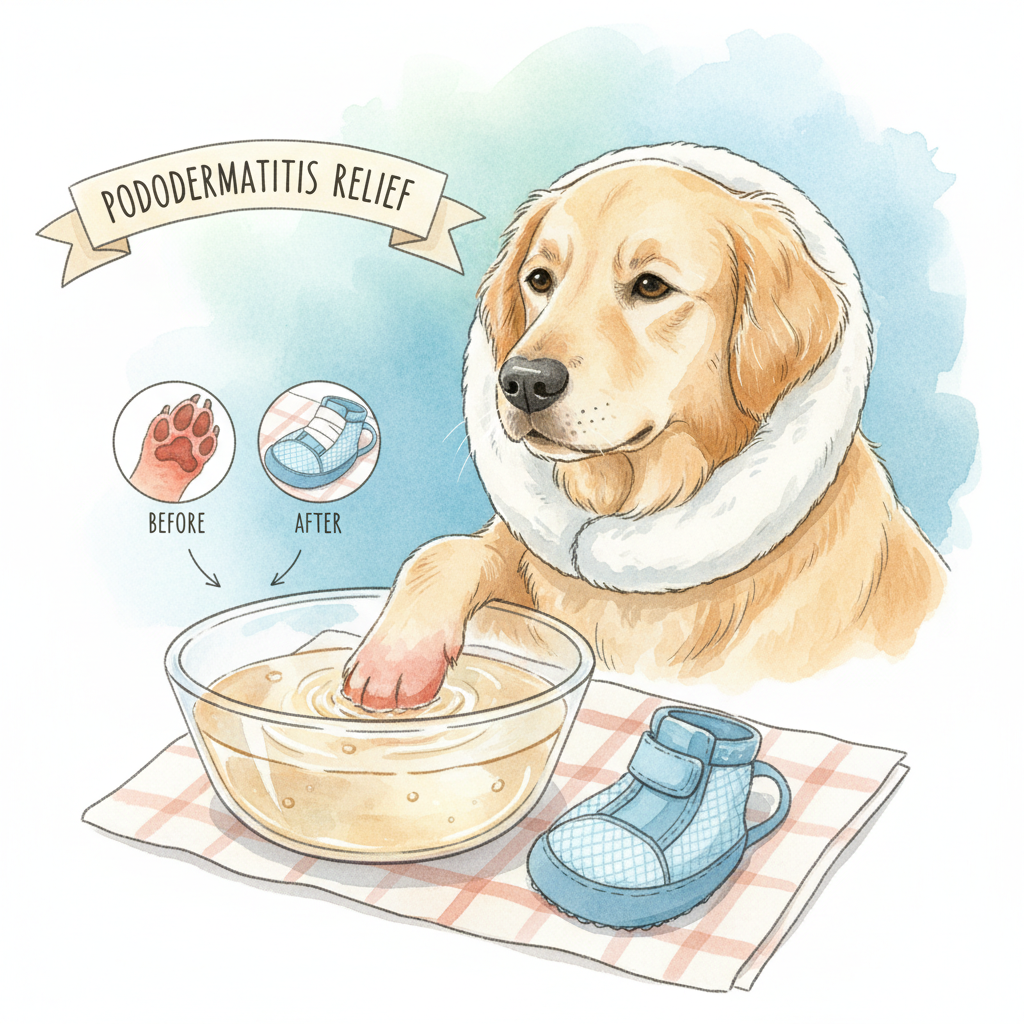
- Foot soaks: Warm water with Epsom salts or diluted antiseptic solutions can clean, soothe, and help with swelling.
- Topical steroids or antibiotics: Creams, sprays, or ointments applied directly to the paws.
- Protective gear:
- E-collar (cone of shame): Stops your dog from licking, chewing, and making things worse.
- Paw booties/socks: Protects paws from irritants or keeps topical medications on.
- Keeping their environment clean: Make sure your dog’s paws stay clean and dry. Keep them away from anything you know irritates them.
Getting Back to Normal: Recovery and Managing Pododermatitis
How fast your dog recovers from paw inflammation really depends on what caused it and how bad it was. Simple cases, like a minor irritation, might clear up in a few weeks. But if it's something chronic or severe, like allergies, autoimmune issues, or deep infections, it could take months of consistent care and ongoing management.
For the long haul, you'll likely need to:
- Check paws regularly: Give your dog’s paws a quick peek every day for any new issues or signs the problem is coming back.
- Stick to the treatment plan: Give all medications exactly as your vet prescribed. Don't stop early, even if your dog seems better.
- Manage allergies: If allergies are the culprit, your dog might need lifelong management with diet, medication, or immunotherapy.
- Keep a healthy weight: A healthy weight means less stress on those paws.
- Groom paws properly: Trim the hair between paw pads to prevent matting and help air circulate, reducing infection risks.
- Control their environment: Keep your dog away from irritants, allergens, and hot surfaces. Use paw protection when needed.
Always follow your vet's advice closely and go to all follow-up appointments. That's the best way to ensure your dog feels their best. And if you ever notice new or worsening symptoms, don't hesitate to call your vet right away!