What Is a Perianal Fistula in Dogs?
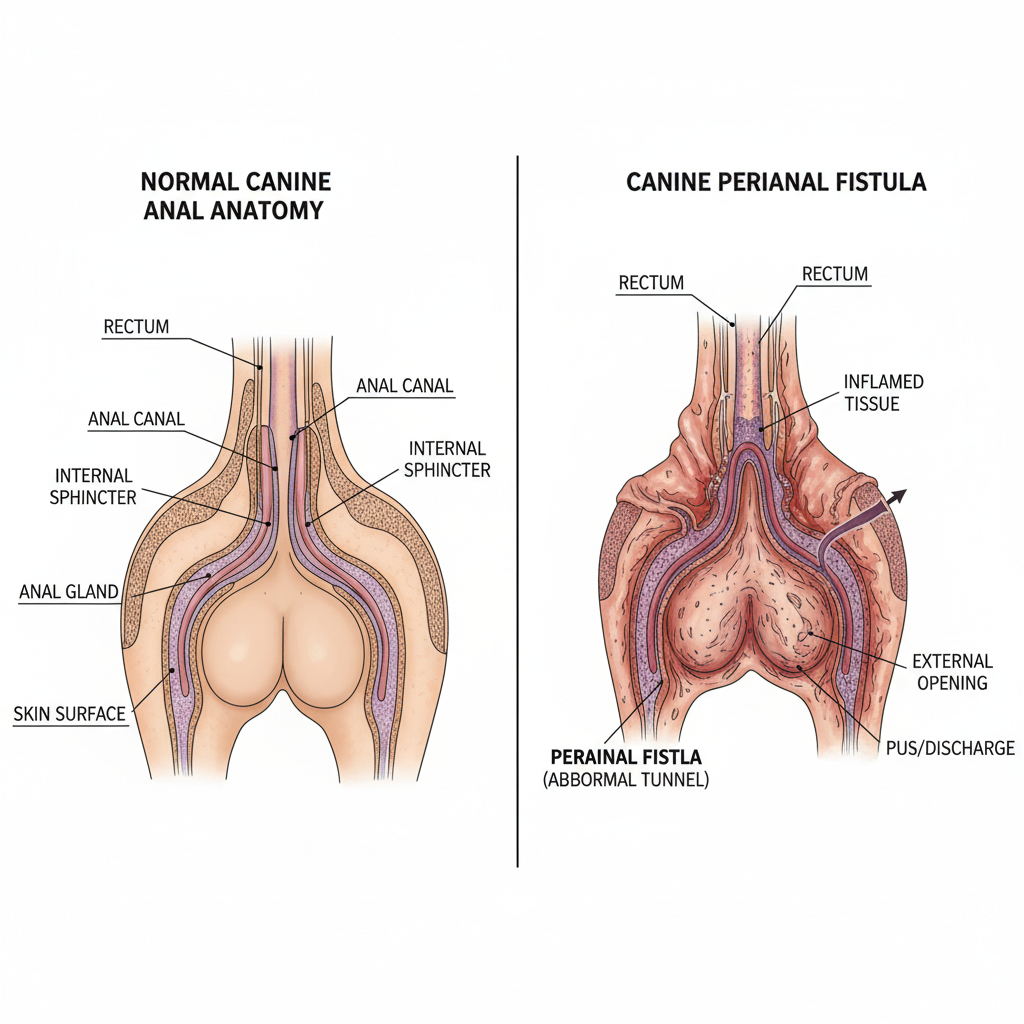
A perianal fistula is an abnormal, painful hole that forms near a dog’s anus. This condition can manifest as just one or two small openings, or it can involve numerous large, draining sores that resemble open, ulcerated wounds around the rear end. Also known as anal furunculosis, perianal fistulas can cause significant discomfort for affected dogs.
The anus serves as the exit point for stool passing from the rectum during a dog’s bowel movements. When a perianal fistula develops, pet owners may notice a small opening or discharge near this area. This opening is actually an infected passageway or tunnel connecting the anal canal to the skin surface—something that should never normally exist.
While this issue can worsen and create serious complications if left untreated, it’s generally not considered an emergency. Most dogs can be diagnosed and treated comfortably within regular veterinary office hours.
Symptoms of Perianal Fistula in Dogs
- Presence of draining tracts or holes near the anus
- Redness, swelling, pus, or weeping skin in the anal region
- Straining or discomfort during bowel movements
- Blood visible in the stool
- Changes in bathroom habits such as fecal incontinence, constipation, or diarrhea
- Loss of appetite
- Persistent licking or biting at the rear end
- Hesitation to sit or wag the tail
- Signs of pain or aggression when the hind area is touched
Causes of Perianal Fistula in Dogs
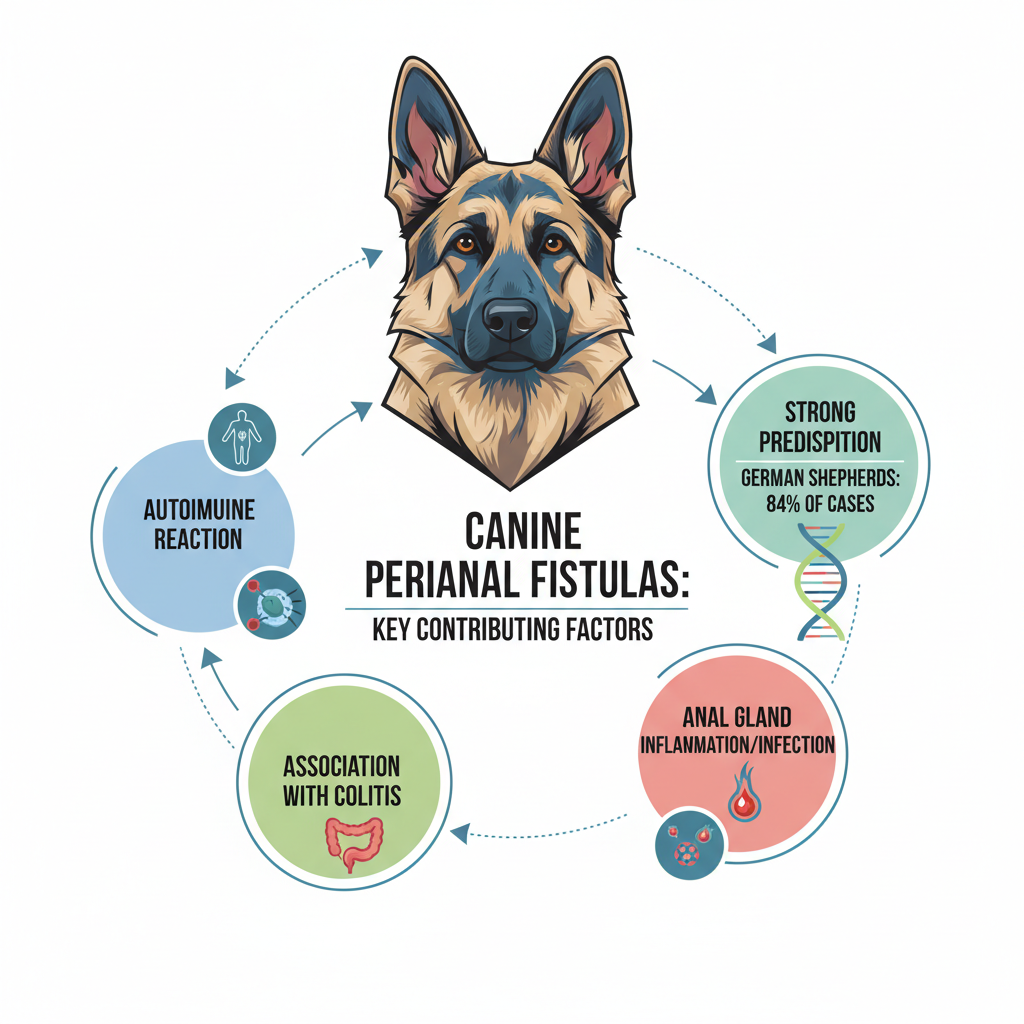
Though the exact trigger remains unclear, perianal fistulas are widely believed to be caused by an autoimmune reaction—where a dog’s immune system mistakenly attacks its own healthy tissues. There’s a strong genetic component suspected, especially since German Shepherds represent about 84% of cases. Middle-aged dogs of this breed are most commonly affected.
Involvement of the anal glands (also called anal sacs) varies from case to case. Infection or inflammation of these glands can increase the risk of developing fistulas. Additionally, many dogs with perianal fistulas also suffer from colitis, which is inflammation of the colon.
How Veterinarians Diagnose Perianal Fistula in Dogs
Veterinarians usually spot perianal fistulas through a detailed physical examination. The vet will gently feel (palpate) the anus, any visible fistulas, and the anal sacs. Because this examination can be painful, sedation is often necessary to keep your dog calm and minimize discomfort.
Several other conditions can mimic perianal fistulas, so your vet will carefully rule out issues such as abscessed anal sacs, tumors near the anal area, and other autoimmune or inflammatory diseases during the diagnostic process.
Before starting treatment, your vet might recommend blood tests to ensure your dog can safely take certain oral medications. Additional tests like stool and urine analysis, X-rays, or tissue biopsies may also be performed to gain a full understanding of your dog’s condition.
Treatment of Perianal Fistula in Dogs
Though perianal fistulas can be managed effectively, it’s important to understand that they are rarely cured completely. Treatment strategies focus on reducing symptoms and controlling the disease long-term.
Surgery was once considered the primary solution, but many dogs experienced recurrence after the operation. Surgical removal of the anal glands may be suggested if those structures are involved.
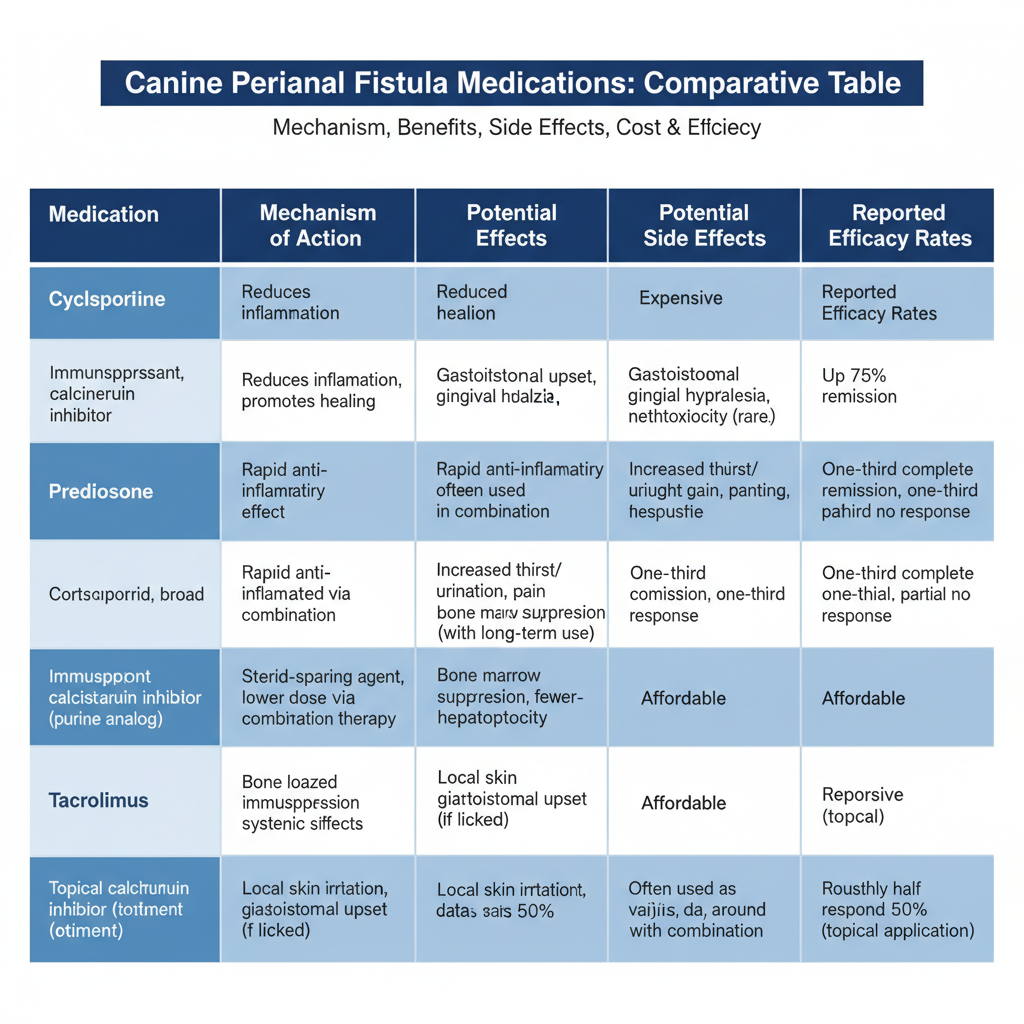
Today, the most common approach involves prescribing oral immunosuppressive medications that target the underlying autoimmune response. Various drugs or combinations may be used to help manage your dog’s condition:
- Cyclosporine: This widely prescribed immunosuppressant often produces good results and is generally well tolerated, although some dogs may develop gastrointestinal upset. Since cyclosporine can be expensive, vets sometimes combine it with ketoconazole, an antifungal that allows a lower cyclosporine dose, reducing treatment costs.
- Prednisone: As a potent steroid, prednisone is administered in higher doses to fight perianal fistulas. About one-third of treated dogs achieve complete remission, while another third show partial improvement. A final third do not respond. Prednisone is affordable but can cause increased drinking, urination, appetite, panting, weight gain, and sometimes house soiling, which can frustrate pet parents.
- Azathioprine: This immune-modulating drug can shrink fistulas before surgery or be used as a standalone treatment with metronidazole. It carries risks like bone marrow suppression, liver toxicity, and pancreatitis, so frequent monitoring via bloodwork is essential.
- Tacrolimus: Applied as a topical ointment directly to the affected skin, tacrolimus offers the advantage of targeted treatment without suppressing the entire immune system. Roughly half of dogs respond to this medication. It’s often combined with oral drugs for best results.
Emerging treatments such as platelet-rich plasma (PRP) injections, stem cell therapy, and fluorescent light therapy are being explored. Discuss options thoroughly with your veterinarian to tailor the best plan for your dog.
Recovery and Management of Perianal Fistula in Dogs
Although recovery can be a gradual process, many dogs with carefully managed perianal fistulas go on to enjoy long, comfortable lives. Improvement often appears within a few weeks of starting treatment, but ongoing care and regular veterinary check-ups are critical since the condition typically requires lifelong management. Relapses are unfortunately common, so keeping a close watch on the affected area is important.
A potential link exists between perianal fistulas and food allergies in dogs—a connection also studied in humans with conditions like inflammatory bowel disease (IBD). For long-term control, your vet might recommend specialized diets featuring novel or hydrolyzed proteins, such as those from brands like Hills, Royal Canin, or Purina.
Maintaining cleanliness of the anal region is equally vital. Routine baths using antibacterial shampoos, including ketochlor or chlorhexidine-based products, may be advised to reduce infection risk and promote healing.
Can a perianal fistula in dogs heal itself?
No, perianal fistulas do not heal spontaneously and always require veterinary intervention. Without treatment, these lesions can become increasingly severe and debilitating for your dog.
How long can dogs live with a perianal fistula?
Dogs that receive proper, ongoing care for perianal fistulas can enjoy long, healthy lives. While severe cases may impact lifespan, most pets respond well to treatment and can achieve remission for extended periods.