
Nausea in Dogs
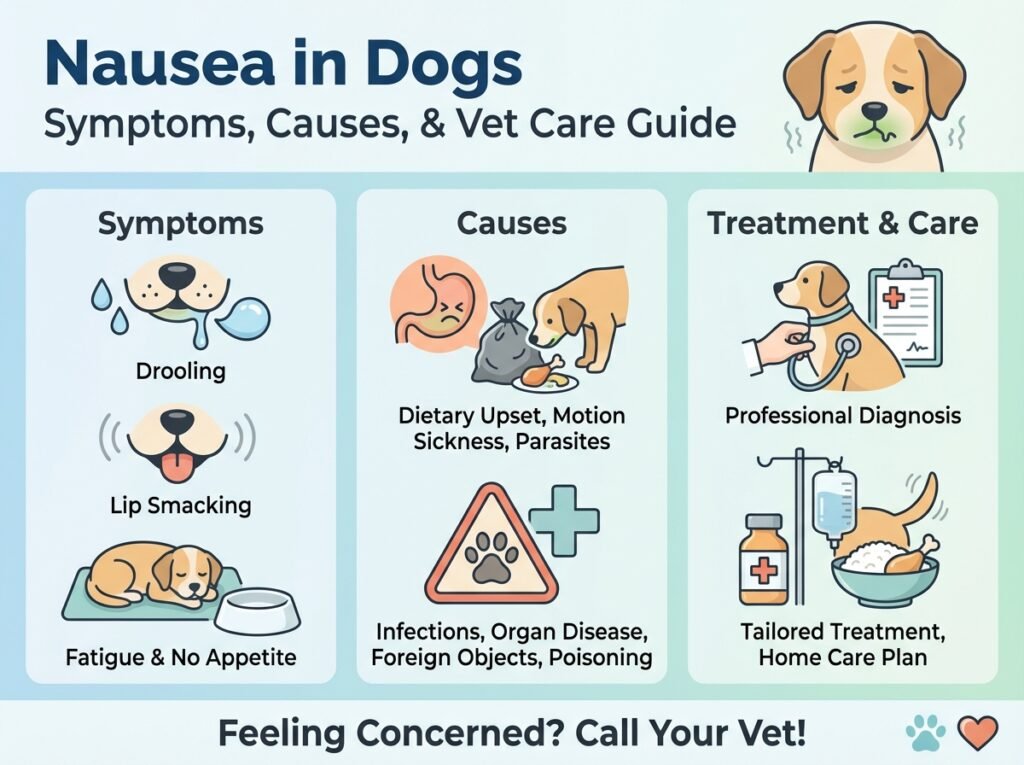
Ever notice your dog looking a little green around the gills? Just like us, pups can feel that awful queasy stomach sensation known as nausea in dogs. It's more than just a passing upset; nausea is that horrible feeling right before you throw up. While many different things can make your dog feel this way, it's always smart to call your vet if your furry friend seems nauseous.
What Is Nausea?
So, what exactly is nausea? It's that truly awful, unsettled feeling in your stomach or throat, a strong signal that vomiting might be coming next. Think of it as your dog's internal alarm bell going off, warning of an impending puke session.
Symptoms of Nausea in Dogs
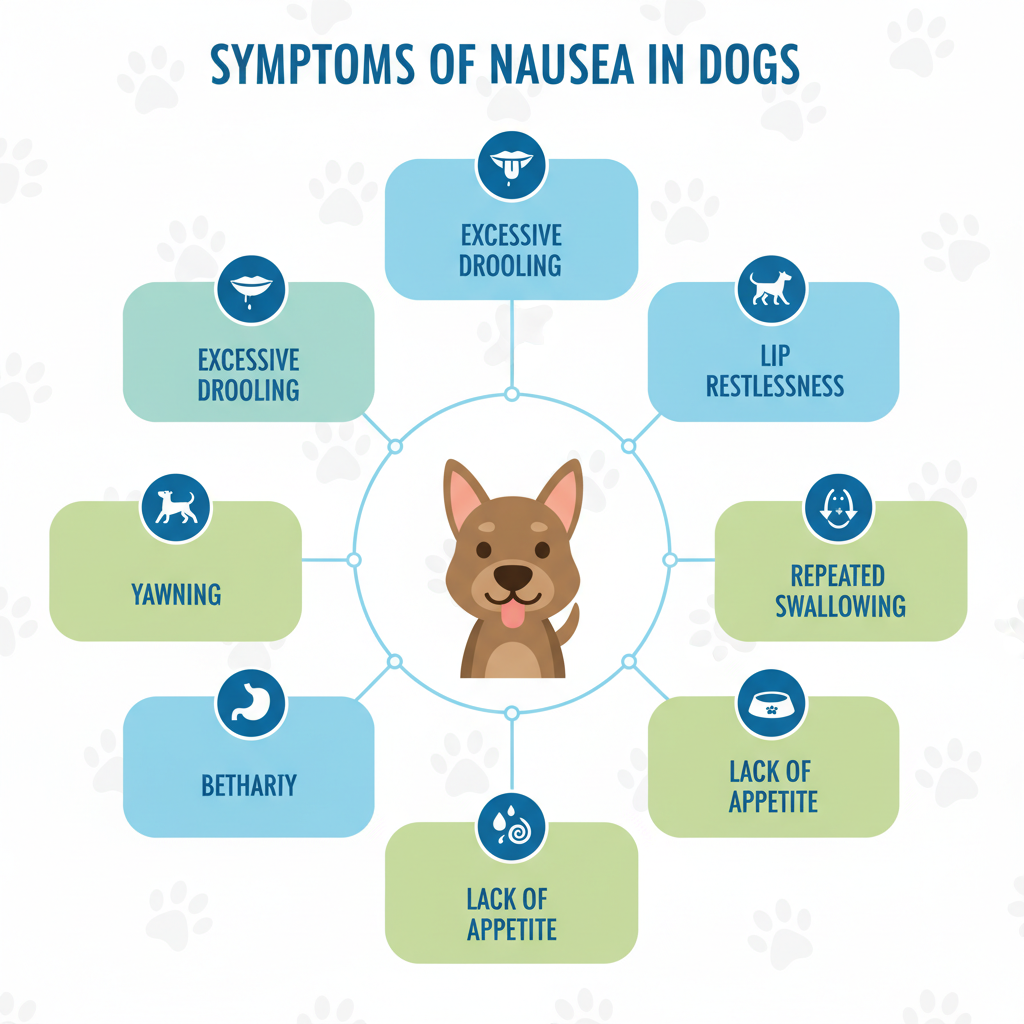
Sometimes a dog's nausea is super obvious, other times it's a subtle clue you might miss. Your pup might suddenly seem tired and down, or you could catch them drooling a ton, smacking their lips, or swallowing over and over again. Watch out for these signs that your dog is feeling nauseous:
- Excessive drooling
- Lip smacking
- Repeated swallowing
- Restlessness
- Yawning
- Lethargy (extreme tiredness)
- Lack of appetite
- Bloating
- Vomiting (this happens if nausea lasts a long time or gets really bad)
- Diarrhea (your dog might have it, or might not)
Nausea can progress to retching (when they dry-heave without bringing anything up) or full-blown vomiting.
Causes of Nausea in Dogs
So, what actually makes a dog feel nauseous? The reasons can vary wildly, from a simple tummy ache to something much more serious. Let's look at some common culprits behind nausea in dogs.
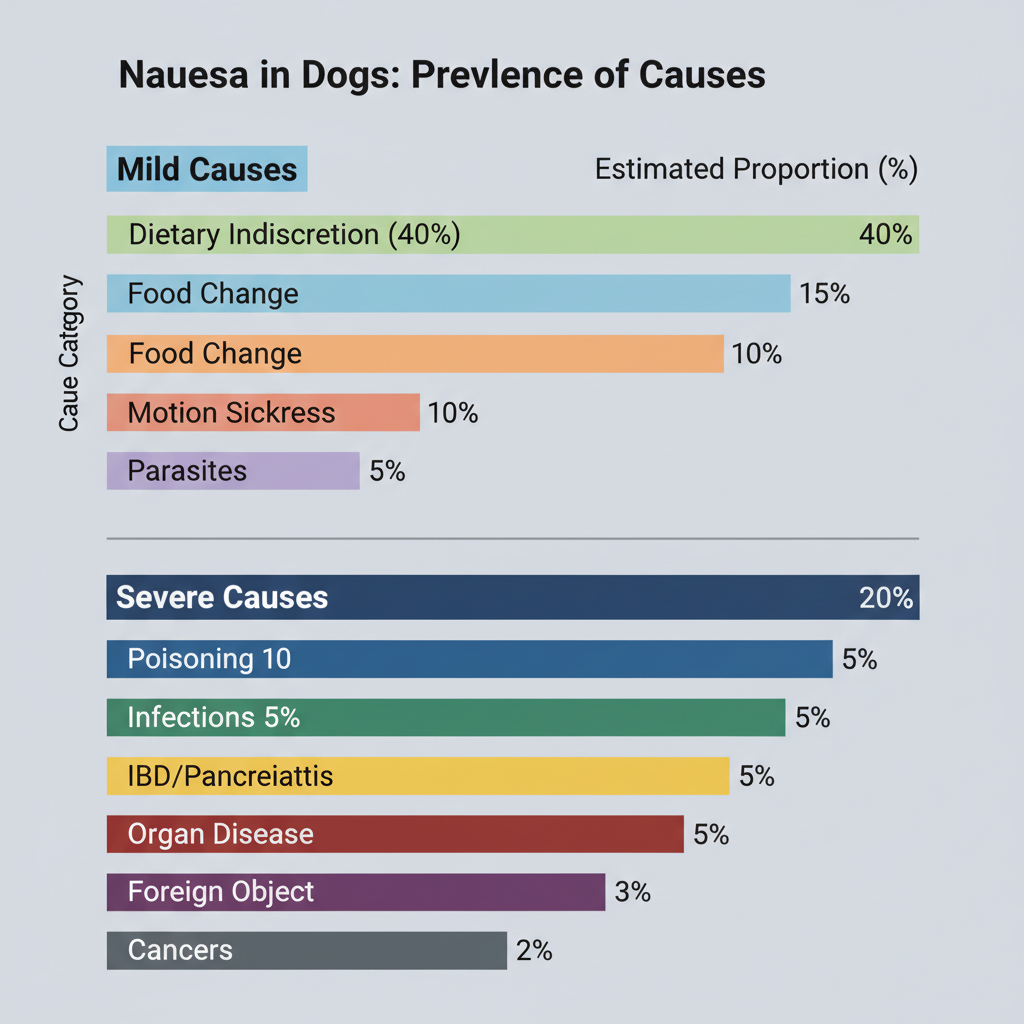
Mild Causes
- Snacking on something gross (we're talking garbage, rotten food, or anything else they shouldn't have)
- A sudden swap in their food
- Getting carsick on a ride
- Pesky internal parasites, like worms
Severe Causes
- Swallowing something poisonous
- Bacterial or viral infections
- Inflammatory Bowel Disease (IBD)
- Pancreatitis
- Kidney or liver disease
- Adrenal gland issues (like Addison’s disease)
- Diabetes
- Stomach or intestinal cancers
- A foreign object stuck in their gut
- Ulcers in the stomach or intestines
- Bloat (a life-threatening twisting of the stomach)
Diagnosing Nausea in Dogs
When your dog is feeling awful, your vet will start by giving them a thorough physical check-up. They'll also ask you plenty of detailed questions: what symptoms are you seeing, how long has your pup been feeling bad, and what have they munched on lately?
To get to the bottom of your dog's nausea, your vet might suggest some tests:
- Complete Blood Count (CBC): This checks for signs of infection, inflammation, or anemia.
- Blood Chemistry Profile: This helps evaluate how well your dog's liver, kidneys, and pancreas are working, plus their electrolyte and blood sugar levels.
- Urinalysis: We check urine for urinary tract infections, kidney function, and diabetes.
- Fecal Exam: This looks for intestinal parasites or too much bad bacteria.
- Abdominal X-rays: These can spot foreign objects, tumors, or bloat.
- Abdominal Ultrasound: This gives us a really close look at the organs in their belly, helping find tumors, changes in organ size, or foreign objects in the intestines.
Treatment for Nausea in Dogs
How we treat nausea in dogs really comes down to what's causing it. For simple, mild cases, vets often focus on making your pup feel better and keeping them comfortable. That might mean:
- Anti-nausea meds: These stop the queasiness and keep them from throwing up.
- Stomach protectors: These medications shield the sensitive lining of their stomach and intestines.
- Fluids: We might give your pup fluids under the skin or through an IV to fight dehydration.
- Bland diet: Once the vomiting stops, we usually suggest feeding small, frequent meals of a gentle diet, like plain boiled chicken and rice or a special prescription food.
But if your pup's nausea is more serious, we'll need to go after the root cause with specific treatments, such as:
- Antibiotics: For bacterial infections.
- Meds to kill parasites: For intestinal worms.
- Surgery: To remove a foreign object or tumor.
- Chemotherapy: For certain types of cancer.
- Hospitalization: For conditions needing intensive care.
Recovery and Management of Nausea in Dogs
How quickly your dog bounces back from nausea truly depends on what caused it and how sick they were. If it was a minor upset, they might be back to normal within a day or two with the right care. More serious issues, though, often mean a longer recovery and needing continued management.
Your vet will give you clear directions for caring for your pup at home. This might include:
- Giving their prescribed medications.
- Keeping a close eye on how much they're eating and drinking.
- Sticking to a bland diet.
- Steering clear of certain foods or treats.
- Coming back for follow-up visits.
Always follow your vet's advice to the letter. And if your dog's symptoms get worse or just don't get better, call them right away.
How do I know if my dog has nausea?
How can you tell if your dog is feeling nauseous? Watch for excessive drooling, lip smacking, or swallowing repeatedly. They might seem restless, yawn a lot, act super tired (lethargic), or just not want to eat. Sometimes, a dog trying to eat grass is a big clue they feel sick to their stomach.
Can nausea in dogs be serious?
Absolutely. While sometimes it's minor, nausea can signal a much more serious underlying problem. If your dog seems nauseous, you should always reach out to your vet for a proper diagnosis and treatment plan. If they're also throwing up over and over, showing signs of extreme pain, or seem utterly unresponsive, that's an emergency – get them to the vet immediately.
What can I give my dog for nausea at home?
Always, always talk to your vet before trying any home remedies for nausea in dogs. What might help one problem could actually make another worse. Your vet might suggest holding off on food for 12 to 24 hours, or they might recommend small, bland meals like boiled chicken and rice.