
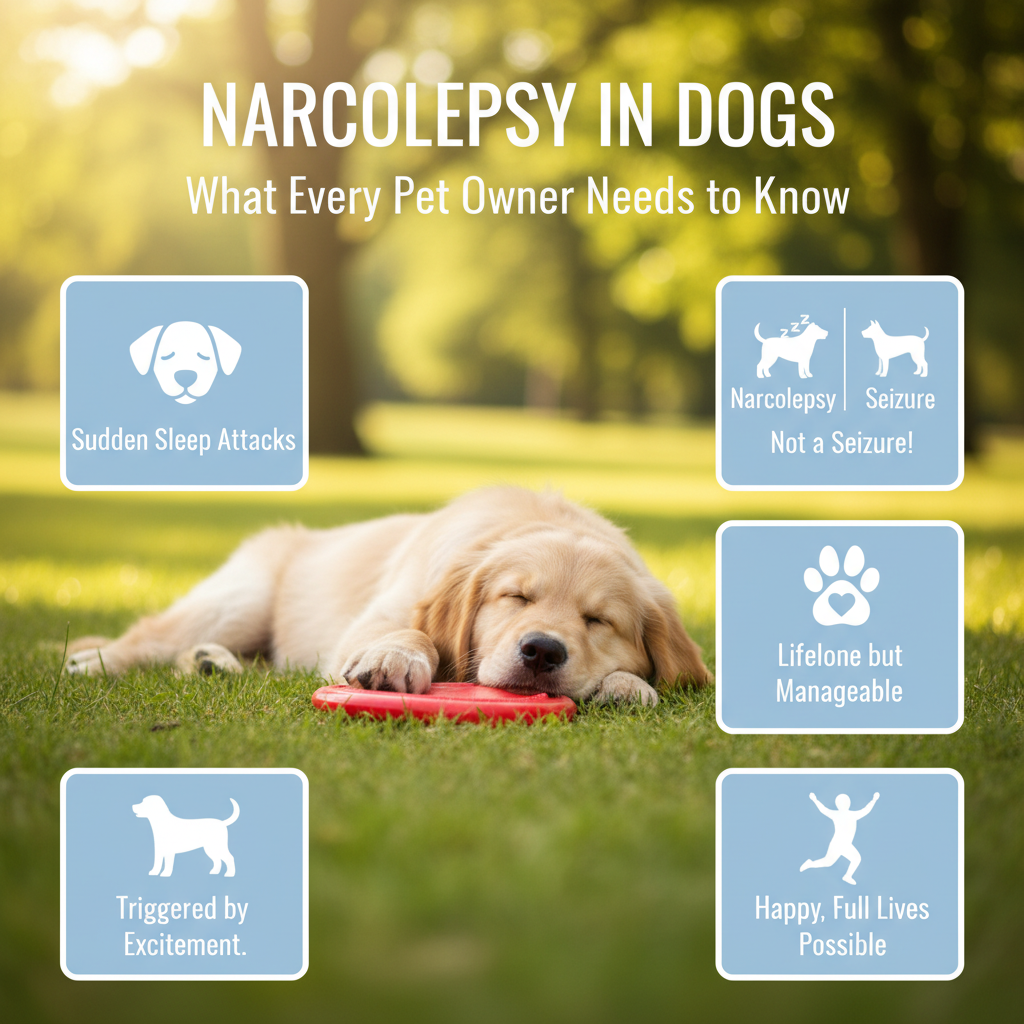
Narcolepsy in Dogs: Understanding This Sudden Sleep Condition
Seeing your beloved dog suddenly collapse into an uncontrollable sleep can be terrifying, but if it's narcolepsy in dogs, you're not alone. This rare, lifelong neurological condition causes pups to drop into sudden, brief sleep episodes. While it can be alarming to watch, it usually doesn't harm your dog. There’s no cure for narcolepsy, but don't worry – effective treatments can help manage the symptoms and ensure your dog lives a happy, full life.
What Is Narcolepsy in Dogs?
Imagine your dog is playing tug-of-war, tail wagging furiously, and then – poof! – they instantly collapse into a deep sleep. That's essentially what happens with dog narcolepsy. These brief, sudden "sleep attacks" often strike when your pup is excited, playing, eating their dinner, or feeling any strong emotion. During an episode, your dog drops to the ground, looking like they're in a super deep sleep. You might even see their eyes darting around under closed lids, just like when we dream. Most of these episodes are quick, lasting only a few seconds to a couple of minutes.
Here's the key: your dog usually doesn't lose consciousness. You can often gently rouse them during an attack. Once it passes, they pop right back up, bright-eyed and bushy-tailed, ready to pick up exactly where they left off, as if nothing happened. While any dog can develop narcolepsy, some breeds carry a genetic predisposition.
Symptoms of Narcolepsy in Dogs
The most obvious sign of narcolepsy in dogs is that sudden, inexplicable collapse into sleep when your pup is active or excited. Think of it like a light switch just getting flipped off. Other things you might notice during these episodes include:
- Sudden muscle weakness (cataplexy): This often happens right before or as your dog collapses. They might go completely limp, losing muscle tone in their head, neck, and limbs, almost like they're paralyzed.
- Darting eyes: Even with their eyes closed, you might see them moving rapidly beneath the eyelids, a clear sign they're deep in a sleep state.
- Quick "naps": These episodes are short, usually just a few seconds to a few minutes long.
- Instant rebound: Your dog will typically wake up just as fast as they fell asleep, alert and ready to go without any confusion.
- Excitement triggers: These sleep attacks often kick in when your dog is having fun – playing, eating, greeting you at the door, or getting overly stimulated.
- No heads-up: You won't see any warning signs. It just happens.
If you spot any of these symptoms in your dog, talk to your vet right away. They can figure out what's going on and rule out other potential health issues.
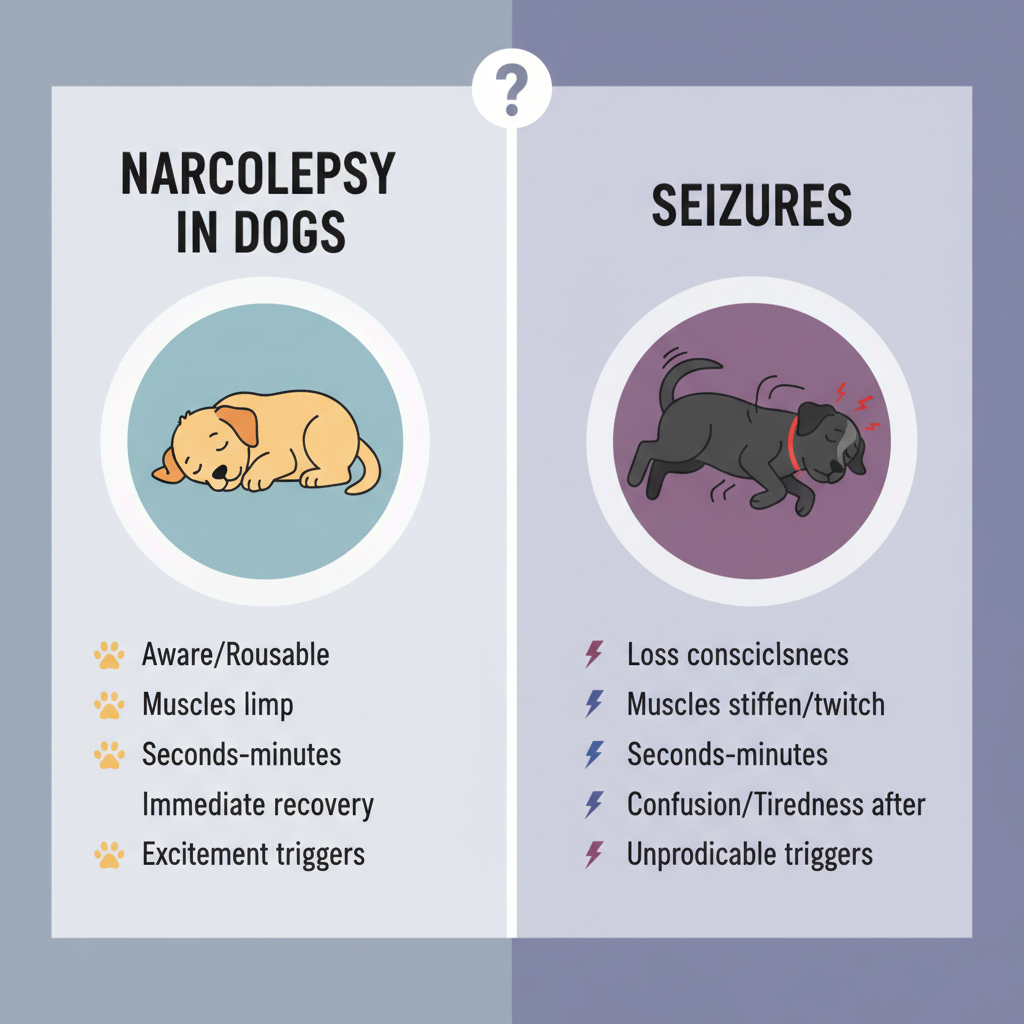
Narcolepsy vs. Seizures
It's easy for pet parents to mix up narcolepsy with seizures, especially since both can involve sudden collapses. But these are two very different conditions. Here's how to tell them apart:
| Feature | Narcolepsy in Dogs | Seizures |
|---|---|---|
| Onset | Sudden collapse, often triggered by excitement. | Can be sudden, sometimes with a "funny feeling" beforehand. |
| Consciousness | Often aware; you can usually wake them up. | Lose consciousness entirely. |
| Muscle Tone | Muscles go limp and relaxed (flaccid). | Muscles often stiffen, twitch, paddle, or convulse the whole body. |
| Duration | Seconds to a few minutes. | Seconds to several minutes. |
| Recovery | Immediate, alert, and back to normal. | Often followed by confusion, disorientation, or extreme tiredness. |
| Triggers | Excitement, play, eating. | Often unpredictable, but sometimes stress or flashing lights. |
If you're ever unsure if your dog is having a narcoleptic episode or a seizure, grab your phone and record it. This video can be incredibly helpful for your vet to make an accurate diagnosis.
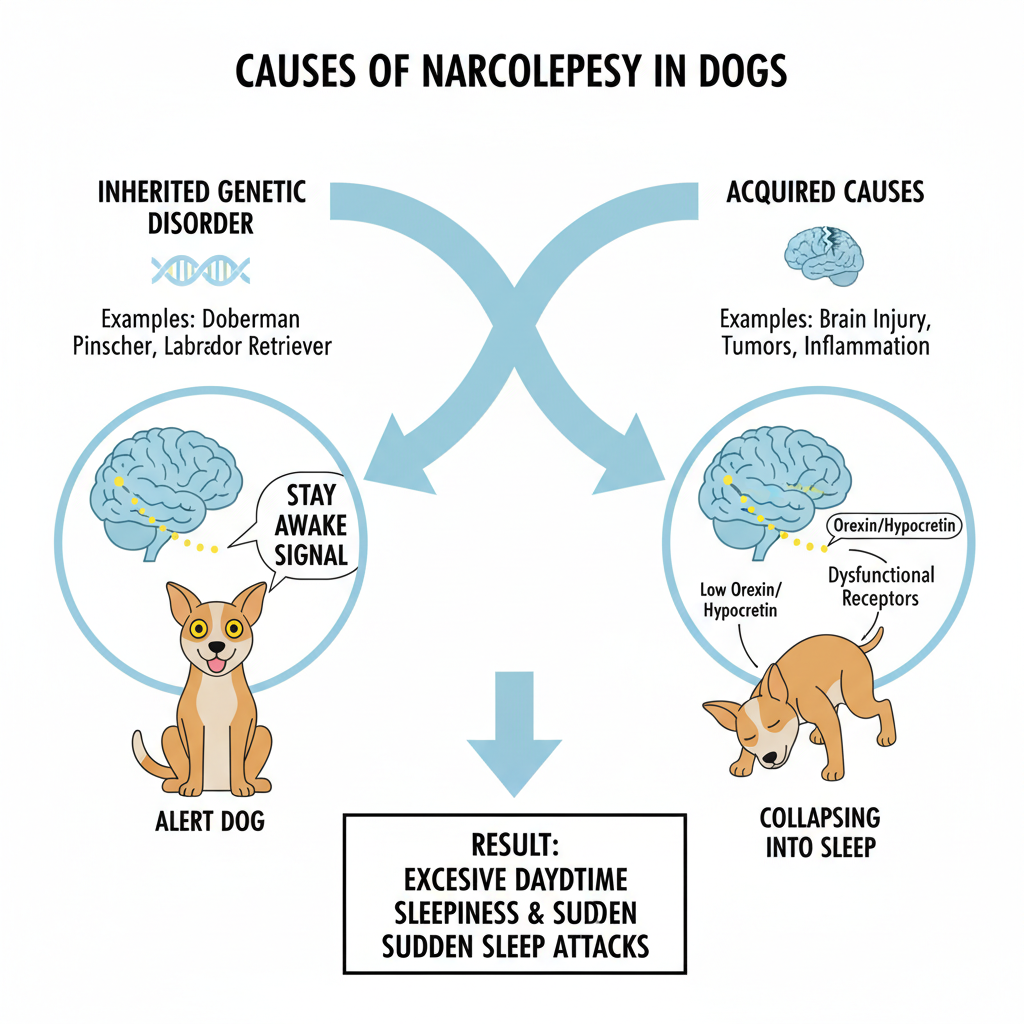
Causes of Narcolepsy in Dogs
At its core, narcolepsy in dogs usually stems from a problem with a brain chemical called orexin (or hypocretin). Think of orexin as the brain's "stay awake" signal. When there isn't enough of it, or it's not working right, your dog's sleep-wake cycle gets thrown off.
For most dogs, narcolepsy is something they're born with – an inherited genetic disorder. Our research shows that certain breeds are more likely to have specific genetic mutations that mess with how orexin works or how much of it their bodies make. These breeds include:
- Doberman Pinschers
- Labrador Retrievers
- Beagles
- Dachshunds
- Poodles
- Miniature Poodles
It's less common, but some dogs can acquire narcolepsy later in life because of other health issues, such as:
- Brain injuries
- Tumors
- Brain inflammation or infections
- Immune system diseases
Still, inherited narcolepsy is by far the most common type we see in our furry friends.
Diagnosis of Narcolepsy in Dogs
Pinpointing narcolepsy in dogs takes a careful approach. Your vet will conduct a thorough examination, dig into your dog's full health history, and often run tests to rule out other possible conditions. Here's what that usually involves:
- Your Story and Your Dog's Symptoms: Your vet will ask you all about your dog's episodes – how often they happen, how long they last, and what seems to trigger them. Remember, that video you took earlier? It's golden for this step!
- Physical and Neurological Check-up: These exams help your vet confirm it's not another neurological problem, a heart issue, or other underlying health concerns that could cause your dog to collapse or seem weak.
- Blood and Urine Tests: Your vet will likely run these to check for things like metabolic disorders, toxins, or other body-wide diseases that could look a lot like narcolepsy.
- Electroencephalogram (EEG): Sometimes, a vet might use an EEG to watch your dog's brain activity during an episode. This helps confirm it's a sleep state, not a seizure.
- Genetic Testing: If you have a breed known to be predisposed, a genetic test can pinpoint the specific mutation linked to inherited narcolepsy.
- "Food Test" (Provocative Testing): In a clinic, a vet might try to trigger an episode on purpose. This often involves offering a super tasty meal, because eating and excitement are common triggers for affected dogs.
Treatment for Narcolepsy in Dogs
While there's no magic cure for narcolepsy in dogs, the good news is that we can absolutely manage the symptoms and dramatically improve your dog's quality of life. Treatment plans are often a mix of medication and smart lifestyle adjustments.
Medication
Medications work by trying to cut down how often and how severe your dog's narcoleptic episodes are. Your vet might suggest:
- Stimulants:
- Methylphenidate (Ritalin): This is a central nervous system stimulant that helps your dog stay awake.
- Amphetamines (like Dextroamphetamine): Another type of stimulant to boost alertness.
- Antidepressants:
- Imipramine (Tofranil): This tricyclic antidepressant can help reduce those sudden muscle weakness episodes (cataplexy) by tweaking the brain chemicals that control sleep.
- Selegiline (Anipryl): Sometimes used to help regulate sleep-wake cycles.
Your vet will know which medication and dosage are best for your dog, watching how they respond. It's super important to stick to their instructions precisely, as these medicines can have side effects.
Lifestyle and Environmental Management
Beyond medication, there's a lot you can do at home to help your dog manage their narcolepsy:
- Spot and Reduce Triggers: Pay close attention to what sets off your dog's sleep attacks. Is it extreme excitement when guests arrive? Intense playtime? Once you know, try to create a calmer environment or manage those situations so they're less overwhelming.
- Built-in "Nap Times": Encourage regular, short rest breaks throughout the day. Just like human kids, pups can get overtired, and for dogs with narcolepsy, that can sometimes make their symptoms worse.
- Stick to a Routine: Dogs thrive on predictability. A consistent daily schedule helps regulate their body clock and sleep-wake cycles.
- Create a Safe Zone: If your dog is prone to collapsing during play or excitement, make sure they're in a safe spot. Think about areas without stairs or sharp furniture, or even close off access to pools when they're particularly active. We want to prevent any bumps or scrapes!
- Balanced Meals: A healthy, balanced diet is always important for your dog's overall well-being, though there isn't a special diet that specifically treats narcolepsy.
- Smart Exercise: Regular, moderate exercise is great, but watch out for overstimulation. Instead of one long, intense play session, try a few shorter, gentler ones to keep them active without pushing them over the edge.
Prognosis for Dogs With Narcolepsy
The good news for pups with narcolepsy in dogs is that the outlook is generally bright! While it's a lifelong condition, it's not life-threatening, and it certainly isn't painful or debilitating. With the right care and management, most dogs can enjoy wonderfully full and happy lives.
Medications can do wonders in cutting down how often and how severely your dog experiences these sleep attacks, helping them function normally most of the time. The secret to success? Sticking strictly to medication schedules and keeping an eye on those trigger events. And of course, regular check-ups with your vet are essential to keep tabs on your dog's condition and tweak their treatment plan as needed. You've got this, and our team at Petscarelab is here to support you every step of the way.