

Leash Reactivity in Dogs: A Guide to Happier Walks
Few things are as frustrating for a dog parent as a walk that turns into a wrestling match. If your pup barks, growls, or lunges at other dogs or people while on their leash, you're likely dealing with leash reactivity in dogs. It's a common struggle, and it often leaves owners feeling embarrassed, overwhelmed, and unsure how to help their furry friend. But you’re not alone – it’s one of the top reasons people reach out to a professional dog trainer.
It's easy to mistake leash reactivity for outright aggression. But here’s the thing: it’s almost never about your dog being truly aggressive. Instead, it’s usually rooted in fear or frustration. Think about it: when a dog is off-leash, they can choose to approach what they like or back away from what scares them. On a leash, those choices vanish. They feel trapped, and that’s when the barking and lunging can start.
Is Leash Reactivity the Same as Leash Aggression?
Not at all! While reactive behaviors can certainly look scary – all that barking and pulling – they're generally born from fear, anxiety, or pure frustration. You'll often find that many reactive dogs are perfectly happy and friendly with other dogs and people when they’re off-leash in a safe, open space. The leash changes everything for them.
Why Do Dogs Become Leash Reactive?
Dogs don't just wake up one day deciding to be leash reactive. This behavior usually builds up from a mix of different experiences and feelings. Figuring out what’s behind your dog’s reactivity is the first step toward helping them feel more relaxed on walks.
Here are some common reasons why a dog might develop leash reactivity:
- Fear and Anxiety: Many reactive pups are actually scared or worried when they spot other dogs or people. Stuck on a leash, they can't escape a situation they see as threatening, so they put on a big show of barking or lunging to make the "threat" go away. It’s their way of saying, "Stay back!"
- Frustration: Picture a social butterfly tied to a post while everyone else mingles. Some dogs get reactive purely out of frustration. They might desperately want to say hello or play with another dog but are held back by their leash. This pent-up desire can boil over into an outburst of barks and pulls.
- Lack of Socialization: Pups who didn't get enough positive exposure to other dogs and people when they were young might not know how to act politely. This lack of early experience can make them fearful or overly excited when they meet others while on a leash.
- Past Bad Experiences: A dog who's had a rough encounter with another dog or person while leashed – maybe they were jumped on, attacked, or just startled – can develop reactivity as a way to protect themselves. They learn to anticipate trouble.
- Pain or Discomfort: Imagine trying to be polite when you're hurting. Hidden medical issues like arthritis, hip problems, or even dental pain can make a dog cranky and more likely to react defensively. If they’re in pain, they might try to keep others away to prevent more discomfort.
- Genetics: Some dogs are simply born with a predisposition to be more anxious or sensitive. While you can’t change their genes, recognizing this can help you understand and manage their reactivity more effectively.
- Inconsistent Training or Management: Walks are tough when training is a bit haphazard. Inconsistent rules, using equipment like retractable leashes that give little control, or not setting clear boundaries can all contribute to a dog’s reactive habits.
- Territorial Feelings: Less common, but some dogs might act out on leash if they feel someone is getting too close to their person or their usual walking path, especially if they have strong territorial instincts.

Signs of Leash Reactivity in Dogs
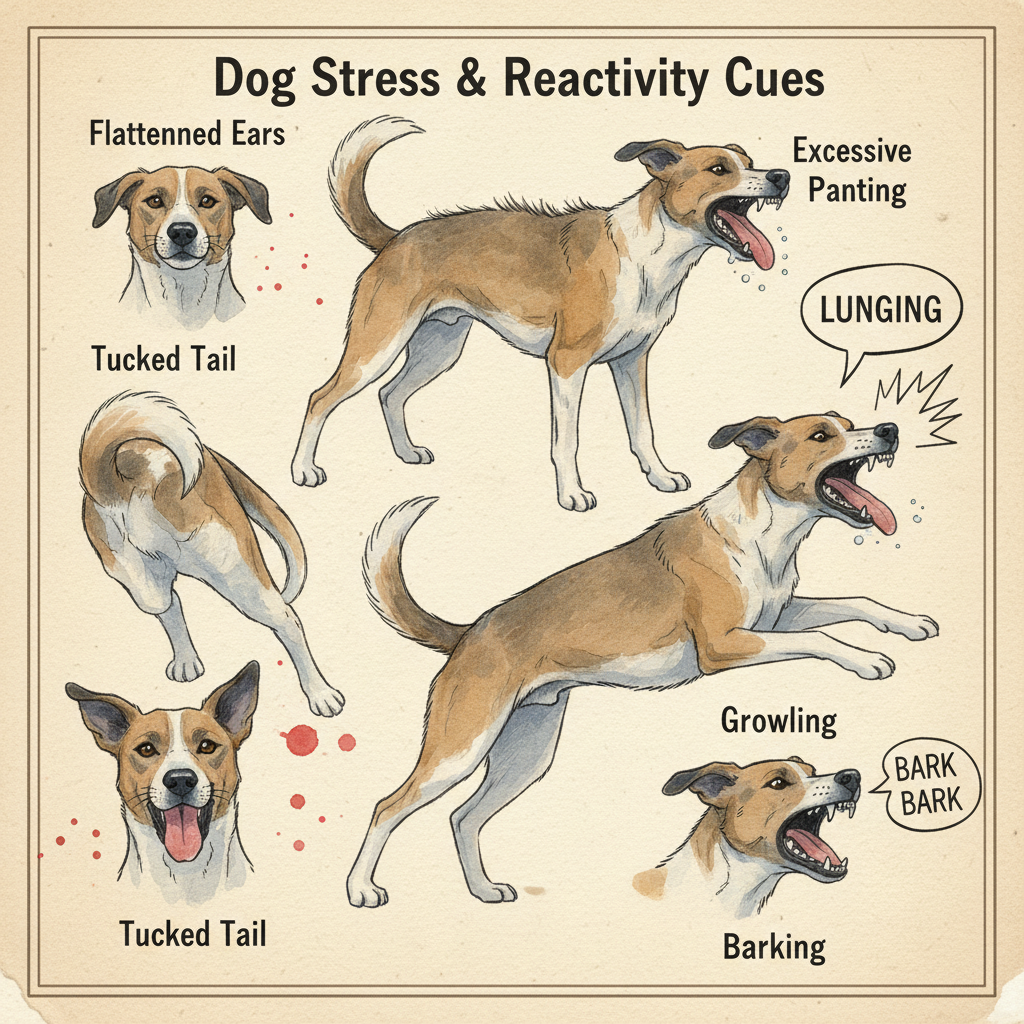
Spotting the signs of leash reactivity is your first clue that something needs attention. Keep in mind that every dog is different, so these signs can show up in mild ways or be quite intense, depending on your pup and what’s triggering them.
Here are common signals your dog might be showing when they’re reactive:
- Barking: Often a loud, frantic, or demanding bark aimed directly at whatever they’re reacting to.
- Lunging: A sudden, forceful pull on the leash, trying to propel themselves toward the trigger.
- Growling: A low, rumbling sound from deep in their throat, clearly saying, "I'm uncomfortable, stay away."
- Whining: Can signal frustration, anxiety, or even a desperate plea to get closer (or further away).
- Excessive Panting or Yawning: If your dog is panting heavily or yawning when it’s not hot or they haven’t just woken up, these can be classic stress signals.
- Trembling or Shaking: A clear, visible sign of fear or anxiety running through their body.
- Drooling More Than Usual: Another physical sign that stress levels are high.
- Tail Position: A tail tucked tightly between their legs means fear. A stiff tail held high or straight out can show tension or hyper-alertness.
- Ear Position: Ears flattened back or constantly swiveling back and forth tell you they’re anxious or extremely focused on something.
- Hackles Raised: The hair standing up along their spine is a powerful sign of high arousal or fear.
- Freezing or Pulling Away: They might suddenly stop dead in their tracks, unwilling to move, or try to yank away from the trigger.
- Avoiding Eye Contact: Sometimes a sign of submission or discomfort in a stressful situation.
- Nose to the Ground: Obsessive sniffing can be a displacement behavior, an attempt to cope with overwhelming stress.
Always look at your dog's whole body language. It tells a more complete story than just one action. Catching these signs early and starting consistent training can really help manage your dog's leash reactivity.
How to Help Stop Leash Reactivity
Helping your dog overcome leash reactivity takes a big helping of patience, a consistent effort, and a smart, multi-pronged approach. For really tough cases, working with a certified professional dog trainer or a veterinary behavior specialist is your best bet.
Here are some powerful strategies to calm things down and make walks enjoyable again:
Management Strategies
Management is your first line of defense. It’s all about preventing your dog from practicing those reactive behaviors, because every time they do, the habit gets stronger.
- Sidestep Triggers: Until you've had some success with training, steer clear of situations that make your dog react. This might mean walking at quiet times of day, choosing less busy routes, or crossing the street the moment you spot another dog.
- Keep Your Distance: Find that sweet spot where your dog notices a trigger but doesn't react. We call this working "below threshold." It gives them a chance to observe calmly without feeling overwhelmed.
- Use the Right Gear: A comfortable, well-fitting front-clip harness or a head halter can give you much more control without causing pain or discomfort. Ditch the retractable leashes; they teach dogs to pull and offer next to no control when you really need it.
- Muzzle Training: For safety, especially if your dog's reactions are intense, teach them to comfortably wear a basket muzzle. This ensures everyone stays safe while you work on training, giving you peace of mind.
Training Techniques
These techniques focus on changing how your dog feels about triggers, turning those negative reactions into positive ones, all with positive reinforcement.
- Counter-Conditioning: This is about flipping the script. Every time your dog sees a trigger (from a safe distance where they *don't* react), immediately give them a super high-value treat. The goal? Your dog starts thinking, "Oh, look! Another dog! That means treats!"
- Desensitization: Gradually expose your dog to triggers. Start with the trigger far away and slowly, over time, decrease the distance. The key is to always stay below their reactivity threshold, so they stay calm and confident.
- "Look at That" Game (LAT): When your dog spots a trigger, simply mark the moment with a cheerful "yes!" or a click, then immediately give them a tasty treat. This teaches your dog to glance at the trigger, then look back to you for a reward.
- Engage-Disengage Game: Your dog sees the trigger (engage), you reward them, and then they naturally look away or back at you (disengage). The idea is to make disengaging from the trigger more rewarding than staring at it.
- Emergency U-Turn: Teach your dog a quick "let's go!" or "this way!" cue that means to immediately turn around and walk fast in the opposite direction. It’s a lifesaver when an unexpected trigger pops up too close for comfort.
- Focus Drills: Practice commands like "watch me" or "focus" in really quiet places, then slowly add more distractions. This helps your dog learn to tune into you, even when the world around them gets busy.
- Loose-Leash Walking: Work on walking calmly with a loose leash in calm settings. A dog who’s already pulling and straining is in a high-arousal state, which only makes reactivity worse.
Seek Professional Help
Many pet parents find that tackling leash reactivity is much easier with an expert by their side.
- Certified Professional Dog Trainer: A trainer who specializes in positive reinforcement and force-free methods can assess your dog's unique situation, design a personalized training plan, and coach you through every step.
- Veterinary Behavior Specialist: For serious cases, or when anxiety and fear run very deep, a veterinary behavior specialist can offer a medical perspective. They might even suggest medication to help reduce your dog's anxiety while you work on behavior changes.
[GRAPHIC: Flowchart demonstrating the process of addressing leash reactivity, starting with "Identify Triggers," moving to "Management Strategies," then "Training Techniques," and branching to "Seek Professional Help" for severe cases. Include loops for "Patience & Consistency" and "Celebrate Wins."]
Be Patient and Consistent
Changing ingrained behaviors like leash reactivity takes real time and commitment.
- Never Punish: Yelling, jerking the leash, or scolding your dog for reacting will only ramp up their fear and anxiety. It won't fix the problem and can actually damage the trust you share.
- Celebrate Every Win: Any progress, no matter how tiny, is a huge step forward. Take pride in those small improvements!
- Mind Your Own Mood: Dogs are masters at picking up on our emotions. Try to stay calm and positive yourself during walks; your calm energy can help your dog relax.
By thoughtfully managing your dog's environment and consistently using positive training, you can dramatically improve their leash reactivity. Soon, you and your furry friend can both look forward to peaceful, happy walks together.