
How to Stop a Dog From Begging
Few sights tug at our heartstrings quite like our beloved canine companions gazing up with pleading eyes, especially when food is involved. While the occasional dropped morsel or table scrap might seem harmless, learning how to stop a dog from begging is crucial for their well-being and your household's harmony. This seemingly innocent habit can unfortunately lead to significant health issues for our furry friends, including unhealthy weight gain, digestive upset, and even anxiety. Moreover, it can understandably become a source of frustration for pet parents and guests alike.
The truth is, begging is not an innate trait; it’s a learned behavior. Dogs quickly understand that if they present their most endearing, "puppy dog" look, there’s a good chance a tasty reward might come their way. The wonderful news is that because it's a learned habit, it can absolutely be unlearned. Successfully addressing canine begging begins with unwavering consistency, thoughtful training, and a deep understanding of the underlying reasons your dog might be seeking out those extra bites.
At Petscarelab, we believe in empowering pet owners with the knowledge to foster healthier, happier relationships with their dogs. Join us as we explore the common reasons behind this behavior and, more importantly, equip you with effective strategies on how to stop a dog from begging for good.

Why Do Dogs Beg?
Dogs engage in begging behaviors for a variety of reasons, but the most prevalent one is rooted in past reinforcement. Even a single instance of receiving food from the table, no matter how small, can be enough to cement the behavior in their minds. They quickly connect their adorable antics with a tasty outcome, and so the cycle begins.
Another common factor is simple hunger or boredom. If your canine companion isn't receiving adequate nutrition from their regular meals or isn't getting sufficient physical and mental exercise, they might resort to begging to satisfy a perceived void. Their instinct drives them to seek out additional sustenance or engagement wherever it might be found.
Furthermore, some dogs may beg due to underlying anxiety. When feeling stressed or insecure, a dog might use the act of seeking food as a self-soothing mechanism, similar to how a person might reach for comfort food.
Regardless of the root cause, it’s important to remember that begging is a malleable behavior that can be thoughtfully addressed and changed with the right approach.
Is Begging Bad for Dogs?
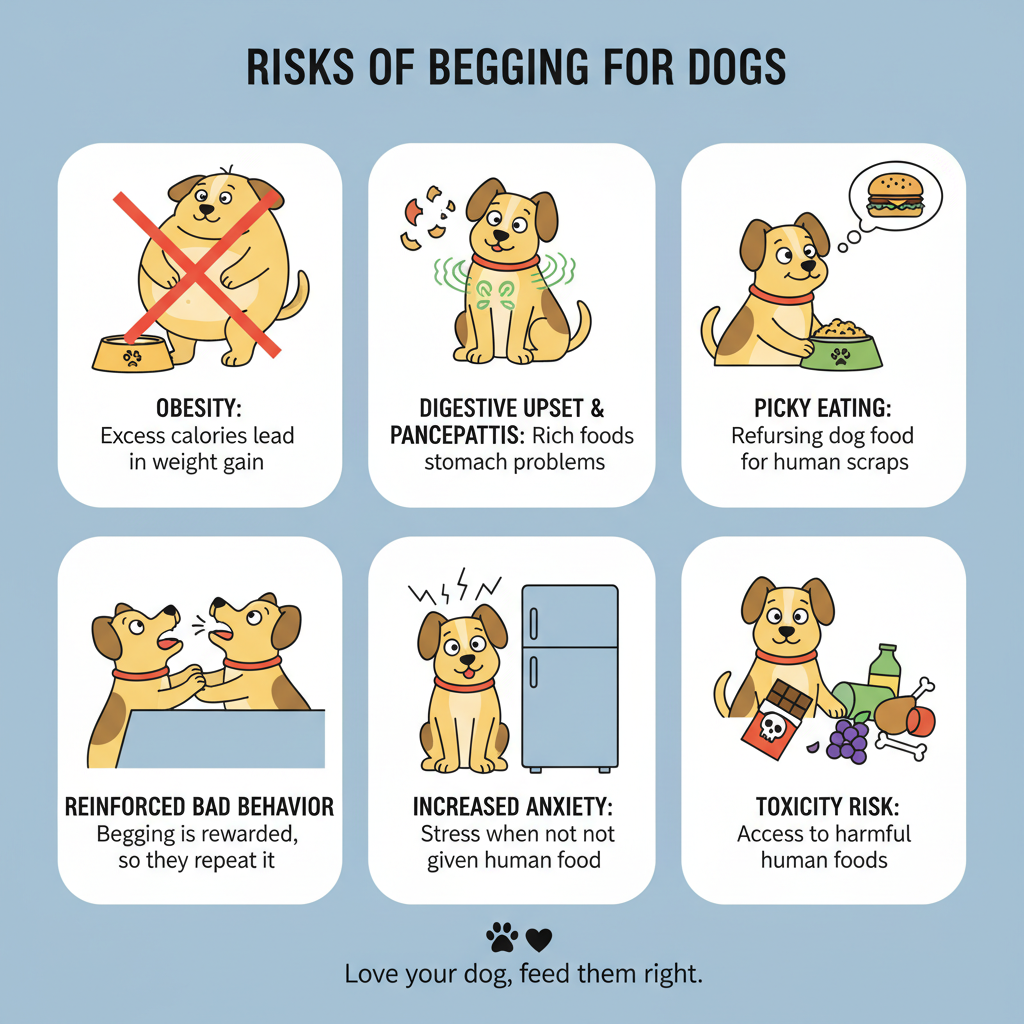
Absolutely. While it’s tempting to share a piece of your meal, begging can indeed be detrimental to a dog's health and behavior for several compelling reasons:
- Obesity: The caloric content in human food, even in small amounts, can quickly accumulate. This often leads to unhealthy weight gain, putting your dog at risk for obesity-related health problems like diabetes, joint issues, and heart disease.
- Digestive Upset & Pancreatitis: Many human foods are simply too rich, fatty, or highly seasoned for a dog's sensitive digestive system. Consuming these can trigger an upset stomach, vomiting, diarrhea, or, in severe cases, lead to a life-threatening condition called pancreatitis.
- Picky Eating Habits: Dogs who frequently receive human food may develop a disinterest in their nutritionally balanced dog food. This can lead to imbalanced diets and a refusal to eat their proper meals.
- Reinforces Undesirable Behavior: Feeding your dog from the table inadvertently teaches them that disruptive actions — like whining, pawing, or intense staring — are effective ways to get what they want. This can translate into other undesirable behaviors.
- Increased Anxiety: Paradoxically, for some dogs, begging can escalate anxiety. If they are consistently denied food after begging, meal times can become a source of stress and frustration, potentially leading to other behavioral challenges.
- Risk of Toxicity: Numerous human foods are highly toxic to dogs (e.g., chocolate, grapes, onions, xylitol). Feeding from the table dramatically increases the risk of accidental ingestion of these dangerous substances, with potentially fatal consequences.
How to Stop a Dog From Begging
Addressing canine begging requires a unified strategy, a great deal of patience, and unwavering consistency. Our expert team at Petscarelab recommends a multi-pronged approach to effectively teach your dog alternative, more desirable behaviors. Here’s how to stop a dog from begging with compassion and effectiveness:
1. Eliminate All Table Scraps
This is the cornerstone of effectively stopping this behavior. It is paramount that you never, under any circumstances, offer your dog food directly from your plate or from the table. Even a single lapse can undo weeks of training. This directive extends beyond obvious table feeding to include "accidental" drops, allowing them to lick plates, or giving them bits of food under the table. Every member of your household, as well as any guests, must be fully committed to this rule for it to be successful.
2. Schedule Their Mealtime Strategically
Consider feeding your dog their regular, balanced meal just before your family sits down to eat. A full and satisfied belly can significantly reduce their inclination to beg, making your mealtime a more peaceful experience for everyone. This preemptive feeding also provides a natural distraction, keeping them content and occupied while you enjoy your meal.
3. Establish a Designated Mealtime Retreat
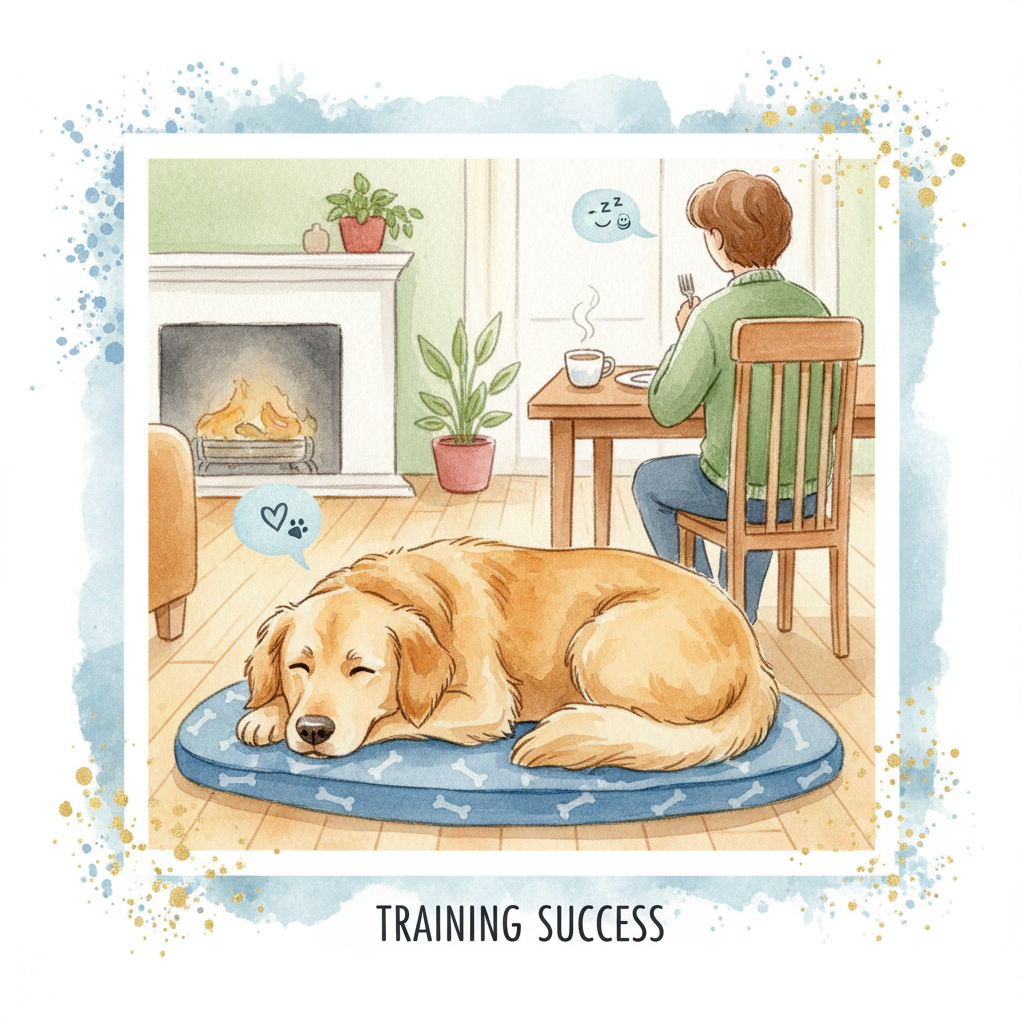
Train your dog to go to a specific, comfortable spot, such as their bed, mat, or crate, during your meal times. Utilize positive reinforcement, such as high-value treats and calm praise, to reward them generously for staying in their designated area. This strategy is highly effective because it teaches an alternative behavior that is physically incompatible with begging at the table.
Begin by gently guiding your dog to their mat or bed and rewarding them instantly when they settle there. Gradually increase the duration they must remain in their spot before receiving a reward. If they attempt to leave, calmly and without scolding, guide them back to their designated area.
4. Master the Art of Ignoring Begging Behavior
When your dog starts to beg, it's crucial to give them absolutely no attention. This means avoiding eye contact, refraining from talking to them (even to say "no"), and not physically pushing them away. Any form of attention, whether positive or negative, can inadvertently be perceived as a reward, reinforcing the very behavior you’re trying to eliminate.
The most effective response is to completely turn your back or ignore them altogether. This sends a clear message that begging simply does not yield results. If your dog remains persistent, you might need to briefly leave the room for a minute or two. This demonstrates that their undesirable behavior causes you to disengage.
5. Offer Engaging Distractions
Before you sit down to eat, provide your dog with a long-lasting, enriching chew toy, a puzzle toy filled with a healthy treat like peanut butter or yogurt, or a durable dental chew. This offers a positive and productive outlet for their energy and redirects their focus away from your meal, keeping them happily occupied.
6. Implement Consistent Training
Integrate foundational commands like "stay" and "place" into your dog's daily training routine, not just during meal times. Regular practice in various environments and with different levels of distraction will strengthen their understanding and reliability, making it much easier for them to comply when you need them to during family meals.
7. Proactive Scrap Management
After meals, ensure all plates are promptly cleared from the table and counter surfaces. Never leave food unattended where your dog can easily access it. Consider installing child locks on lower cabinets and securing garbage cans to prevent opportunistic scavenging of tempting food items.
8. Address Any Underlying Concerns
If your dog's begging seems excessive, constant, or is accompanied by other signs of insatiable hunger, it’s vital to consult your veterinary professional. They can rule out any potential underlying medical conditions or help you adjust their diet to ensure they are receiving adequate, balanced nutrition. If anxiety appears to be a contributing factor, your vet or a certified professional dog trainer can provide tailored strategies and guidance to help reduce your dog's stress levels.
How Long Does It Take to Stop a Dog From Begging?
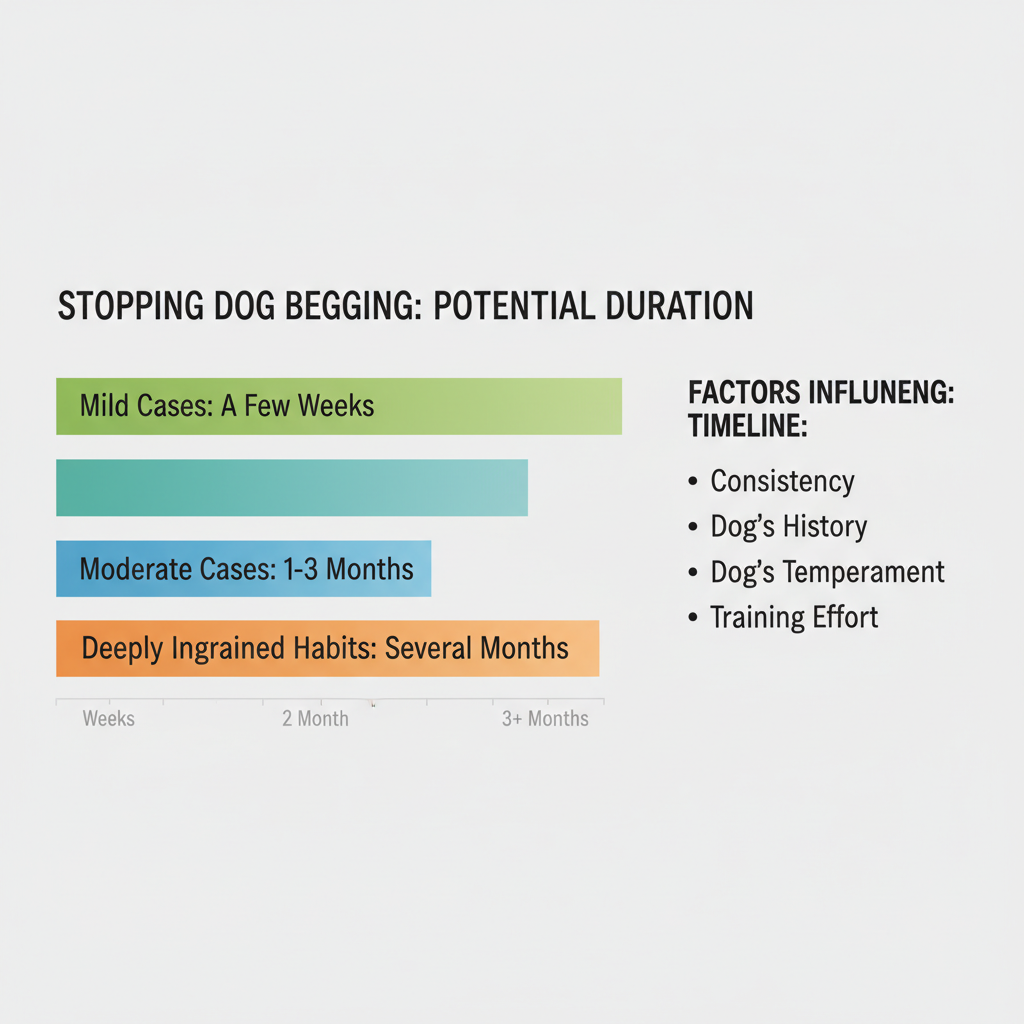
The timeline for successfully stopping a dog from begging can vary significantly, depending on several influential factors:
- Consistency of Application: The most critical factor is how consistently every person in the household adheres to the "no human food" rule and the training protocols.
- Dog's History: The longer and more frequently your dog has been rewarded for begging, the more ingrained the habit will be, and thus, the longer it may take to modify.
- Dog's Temperament: Just like people, some dogs learn new behaviors more quickly than others due to individual personality and learning styles.
- Dedicated Training Effort: The amount of focused time and positive reinforcement you invest in teaching alternative behaviors will directly impact the speed of progress.
For relatively mild cases with diligent, consistent effort, you might observe significant improvements within a few weeks. However, for deeply established begging habits, it could potentially take several months. The ultimate keys to success are unwavering patience, persistence, and a positive approach.
The Takeaway
Learning how to stop a dog from begging is a deeply rewarding endeavor that significantly contributes to your pet's overall health, emotional well-being, and brings a greater sense of peace to your household. By consistently refusing to give in to those pleading eyes, diligently teaching desirable alternative behaviors, and proactively managing their environment, you can effectively help your dog break the begging habit for good. Remember, through this process, your greatest tools are patience, consistency, and an understanding heart.