
```html
Puppy Socialization: An Essential Guide
When puppies arrive at their forever homes, they require far more than just food, cuddles, playtime, and house training. Crucially, they need to learn how to confidently engage with people, other animals, and the world beyond their doorstep. This vital process is known as puppy socialization.
Socializing your puppy during the critical first few months sets the stage for a lifetime of successful interactions. It helps your furry friend feel at ease with the diverse sights, sounds, smells, and creatures—including people and animals—that they’ll encounter throughout their life.
Let’s explore why socialization is essential for your puppy’s development and how to do it effectively.
What Is Puppy Socialization?
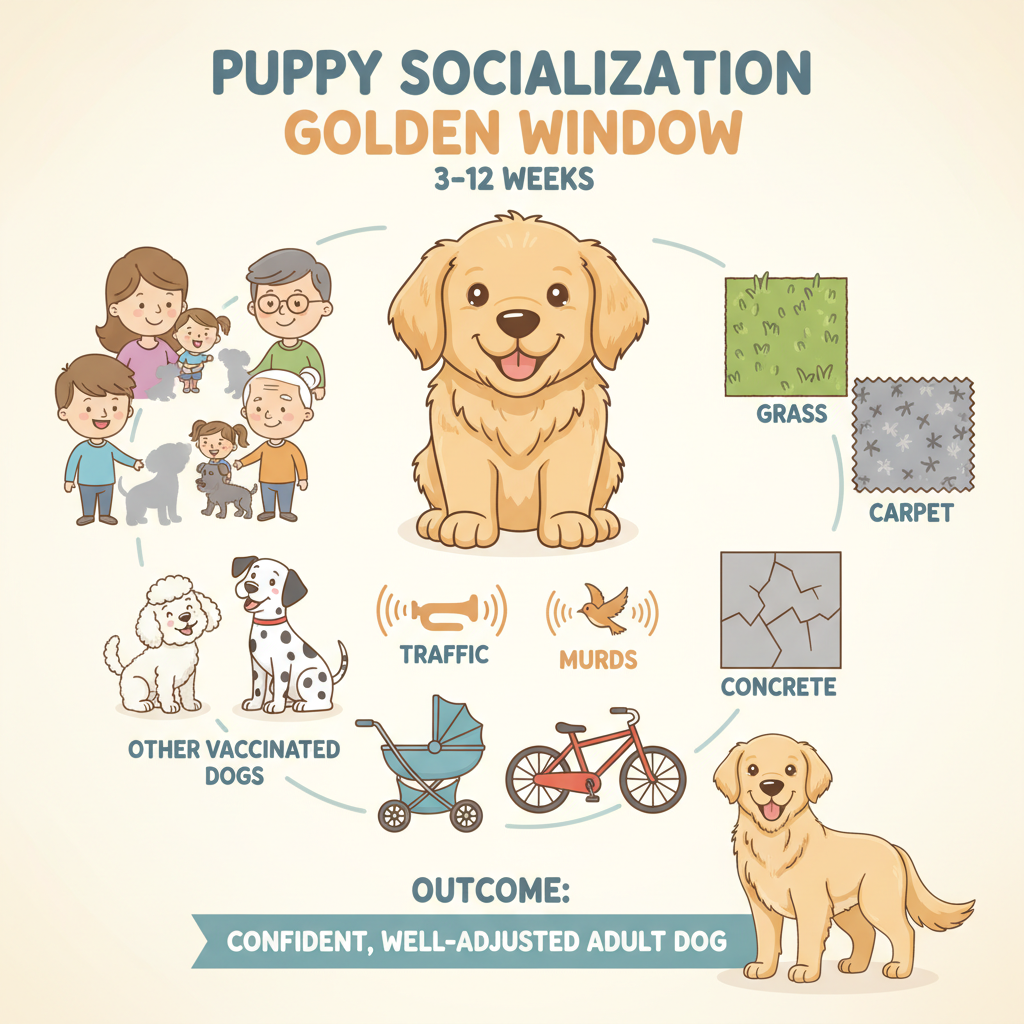
The socialization period is a golden window in a puppy’s early life, usually between 3 and 12 weeks old, when their brain is exquisitely tuned to soaking in new experiences. During this phase, puppies learn the skills they’ll need to thrive socially among other dogs and in the bigger world.
When you socialize your puppy, you’re thoughtfully exposing them to a broad spectrum of new sights, sounds, smells, people, animals, and objects. This exposure helps your puppy acclimate to various stimuli and grow into a confident, well-balanced adult dog.
Puppy socialization focuses on helping your puppy become comfortable with:
- Novel sights, sounds, and scents
- Different objects and textures underfoot
- People of all ages, sizes, and backgrounds
- Children, with their quick movements and high energy
- Other dogs from various breeds and temperaments
- Animals from other species
Why Is Socializing a Puppy Important?
In today’s busy world, dogs face an endless parade of sights and sounds. Urban environments mean bustling streets filled with honking cars, roaring buses, cyclists, joggers, and skateboarders whizzing by. Puppies will also encounter quirky stationary objects—think garbage bins, statues, or seasonal inflatable decorations—that might initially seem strange.
Your dog might meet unknown people, some of whom may want to pet them without asking first. They might accompany you to lively outdoor cafés, bustling dog parks, or crowded events. Early, positive exposure to these everyday experiences ensures your puppy grows into a calm and adaptable companion who can navigate life’s hustle and bustle with ease.
By immersing your puppy in a variety of experiences during the socialization period, you’re laying the foundation for a confident, well-adjusted dog.
Without such exposure, puppies often become fearful or anxious adults, more prone to behavioral challenges and stress.
When Should You Socialize a Puppy?
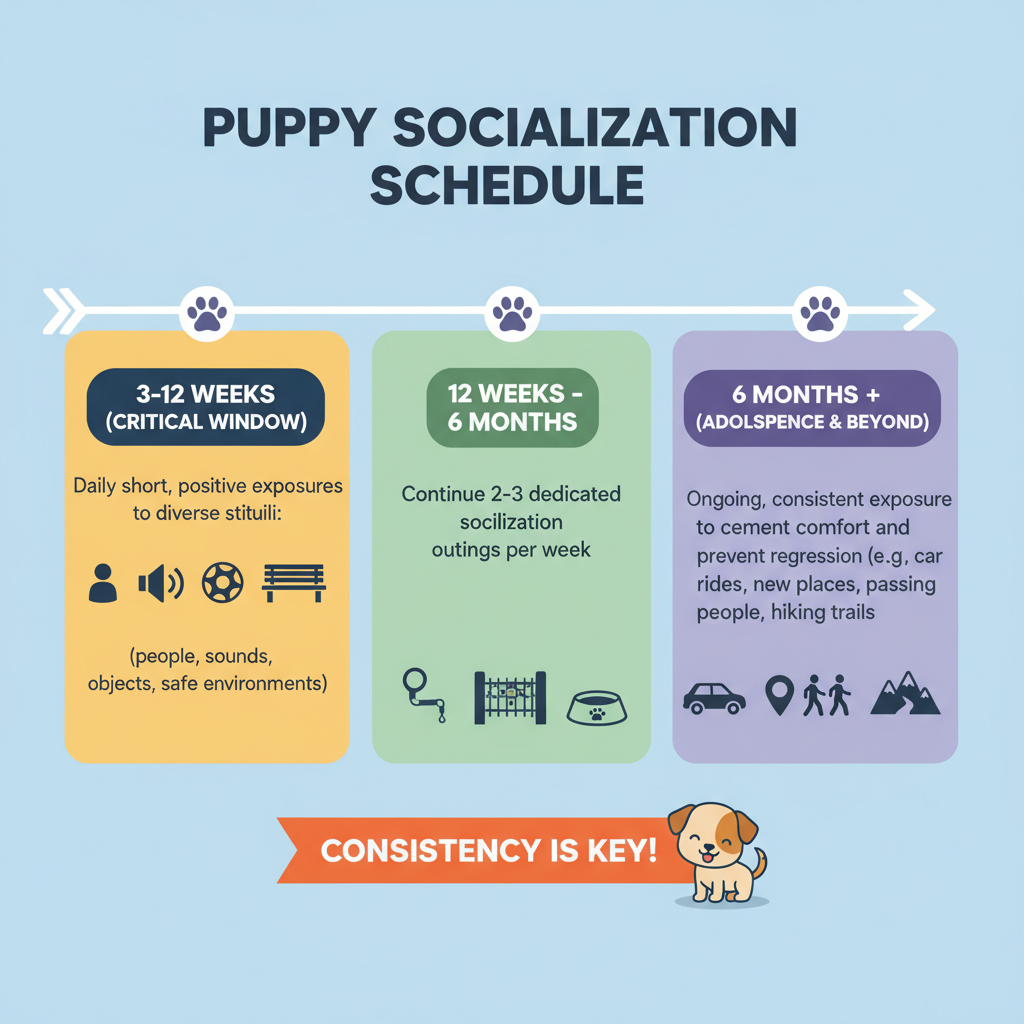
The optimal window for socializing puppies is from 3 to 12 weeks of age.
Since most puppies join their forever families around 8 to 12 weeks, early socialization (between 3 and 8 weeks) typically happens with breeders or, for rescue pups, with foster caregivers or shelter staff.
Depending on the breed and individual temperament, some puppies may still benefit from a socialization period extended to 16 or even 20 weeks.
How To Socialize a Puppy
Before venturing outdoors to introduce your puppy to the wider world, it's essential to prioritize safety. Puppies shouldn’t be taken to public spaces until they have completed their full vaccination series. This precaution protects them from serious illnesses like parvovirus, leptospirosis, and kennel cough.
If your puppy hasn’t completed vaccinations, consider controlled alternatives, like creating a safe, clean area on a blanket beside busy spots so your puppy can observe from a secure place.
Only allow your puppy to interact with dogs who are healthy and fully vaccinated. Avoid walking your puppy directly on public ground frequented by unknown dogs to reduce infection risks—using a stroller, sling, or carrying your pup is best during this vulnerable time.
Consult your veterinarian for tailored advice on safe socialization strategies for your puppy.
1. Prepare Your Puppy
Before heading out, gather all essential supplies to make each outing enjoyable and stress-free:
- Treat pouch stocked with a variety of high-value, irresistible dog treats
- Properly fitted collar and harness
- Sturdy leash
- Fresh water and portable water bowl
- Favorite chew toys
- Poop bags for responsible cleanup
- Pet-safe wipes for quick sanitation
- A cozy mat or blanket for resting during breaks
- Hand sanitizer for anyone who plans to pet your puppy
- A pet carrier, body sling, or puppy stroller to provide a safe retreat when your puppy gets tired or overwhelmed
2. Provide Positive Reinforcement
The heart of puppy socialization is showing your pup that the outside world is an exciting, enjoyable place. Shower your puppy with praise, treats, and gentle affection to reinforce positive experiences. Always allow your puppy to rest or take a break if they seem tired or uneasy.
3. Take It Slow With New Stimuli
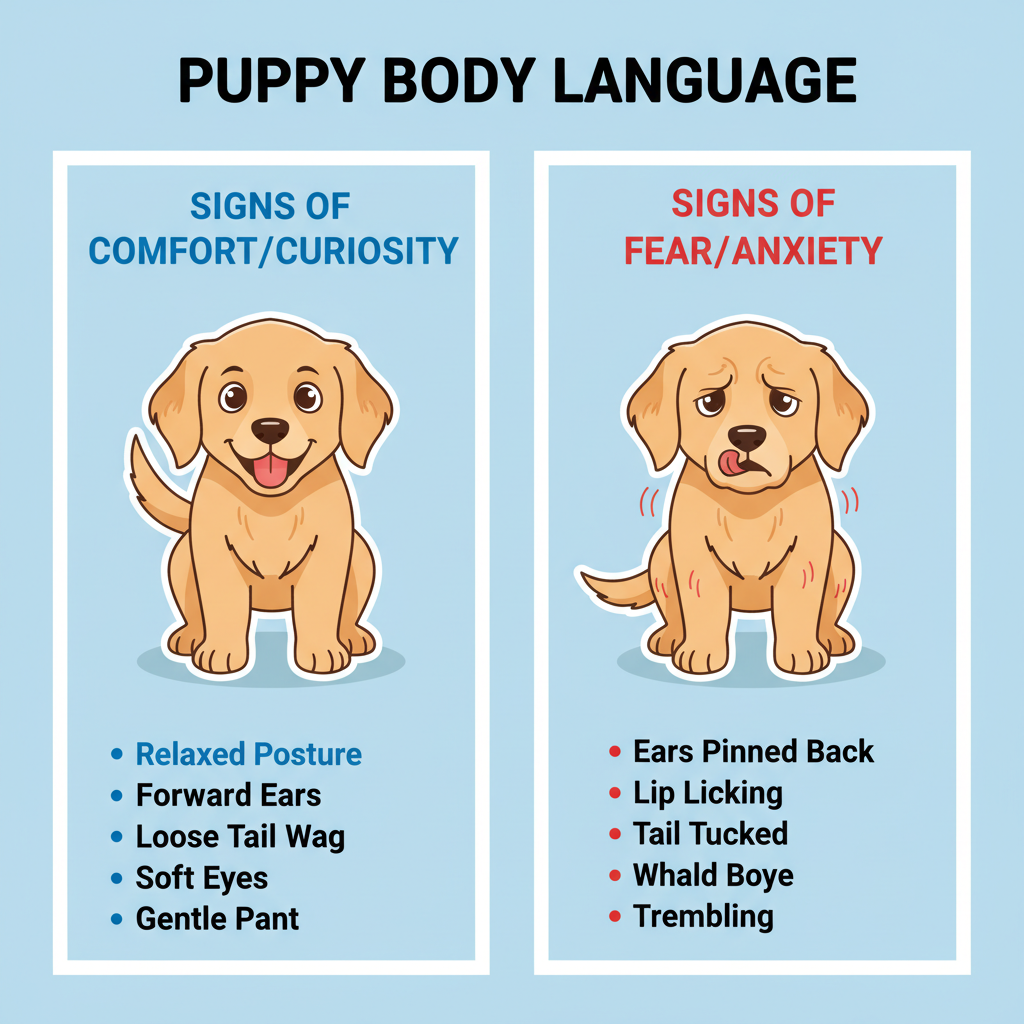
Introduce your puppy to new sights and sounds gradually. Start from a comfortable distance where your pup can observe without feeling overwhelmed. Pay close attention to their body language, watching for signs of stress, such as:
- Ears pinned back
- Avoiding eye contact
- Trembling
- Lip licking
- Whining or whimpering
If your pup shows fear or anxiety, gently increase the distance from the stimulus. Conversely, if your puppy displays curiosity with forward-facing ears, wagging tail, or approaches steadily, you can slowly draw nearer to explore together.
Should your puppy become startled, swiftly redirect their attention with a favorite toy or by engaging with them yourself. This helps prevent negative associations that could foster future fears.
Remember, your puppy doesn’t need to experience everything in one go, especially in stimulating environments. Even a brief exposure or gradually moving a few steps closer to something new can lay the foundation for positive future interactions. Building confidence slowly and patiently is key.
It’s perfectly fine—and recommended—to pace your puppy’s introductions to new experiences thoughtfully.
4. Make Introductions to People
Provide your puppy with short, enjoyable encounters with people of various ages and backgrounds. If you don’t know families with children, try taking your puppy to a park near a playground, allowing them to safely observe kids playing and making noise.
Avoid letting strangers pick up your puppy, as this can be frightening for a young dog still learning about personal boundaries.
5. Enroll in Puppy Socialization Classes
Once your puppy has been dewormed, tested negative for intestinal parasites, and received their first DHPP/DA2PP vaccination, they’re ready to join puppy socialization classes.
These classes provide structured opportunities to meet a diverse group of puppies, people, and even children. Classes often introduce puppies to different surfaces to walk on, various toys, novel objects such as skateboards or shopping carts, and everyday noises they’ll encounter in life.
Running for four to six weeks, classes focus on positive reinforcement training techniques. Steer clear of any programs that use harsh or punitive methods, which can increase fear and damage the bond between you and your dog.
Since many classes meet once a week, puppy owners should continue socializing their puppies regularly outside of class. If time allows, enrolling in a second class can provide even more chances for your puppy to build confidence during this crucial period.
6. Create a Socialization Schedule
Aim to socialize your puppy at least two to three times per week, continuing this routine until they are six months old.
Some owners intensively socialize their puppies in the first four months but then drop the habit—this can cause puppies to lose hard-earned progress or even develop new fears.
Ongoing exposure during adolescence is essential to cement your dog’s comfort with various situations—whether that means car rides, elevators, passing groups of people, or hiking trails.
Tips for Socializing a Puppy
- Take your puppy on short walks during both day and night across different neighborhoods.
- Expose them to an assortment of surfaces—concrete, asphalt, grass, dirt, gravel, sand, and metal grates—to build comfort and sensory familiarity.
- Avoid walking in areas with unvaccinated or potentially sick dogs. Sunlight helps reduce risks like parvovirus on clean, dry pavement, but always consult your vet for the safest neighborhoods.
- Steer clear of places contaminated with dog waste, such as dog parks or beaches, until your puppy’s vaccinations are complete at around 16 weeks.
- Organize playdates only with healthy, vaccinated dogs, or use controlled environments like your backyard that have no history of infectious disease.
- Visit local parks but keep your puppy off the grass until vaccinations are finished; instead, let them explore from a clean blanket or your lap.
- Introduce your puppy to diverse people—young and old, tall and short, from various cultural backgrounds—to foster broad social comfort.
- Always conclude outings early if your puppy is showing signs of distress or disinterest. Avoid any frightening experiences that could hinder your puppy’s mental and emotional development.
By committing to gentle, positive, and consistent socialization, you’ll set your puppy up for a confident and joyful life alongside you.
```