Should You Make Your Dog Throw Up?
When your dog swallows something potentially harmful, your first instinct might be to try to induce vomiting quickly. In many cases, this is the right step, and your veterinarian will likely recommend it. However, inducing vomiting carries risks and isn’t always the safest choice.
If you believe your dog has ingested a toxic substance or foreign object, contact your veterinarian immediately. They can assess the situation, determine if inducing vomiting is advisable, and provide guidance while monitoring for any complications.

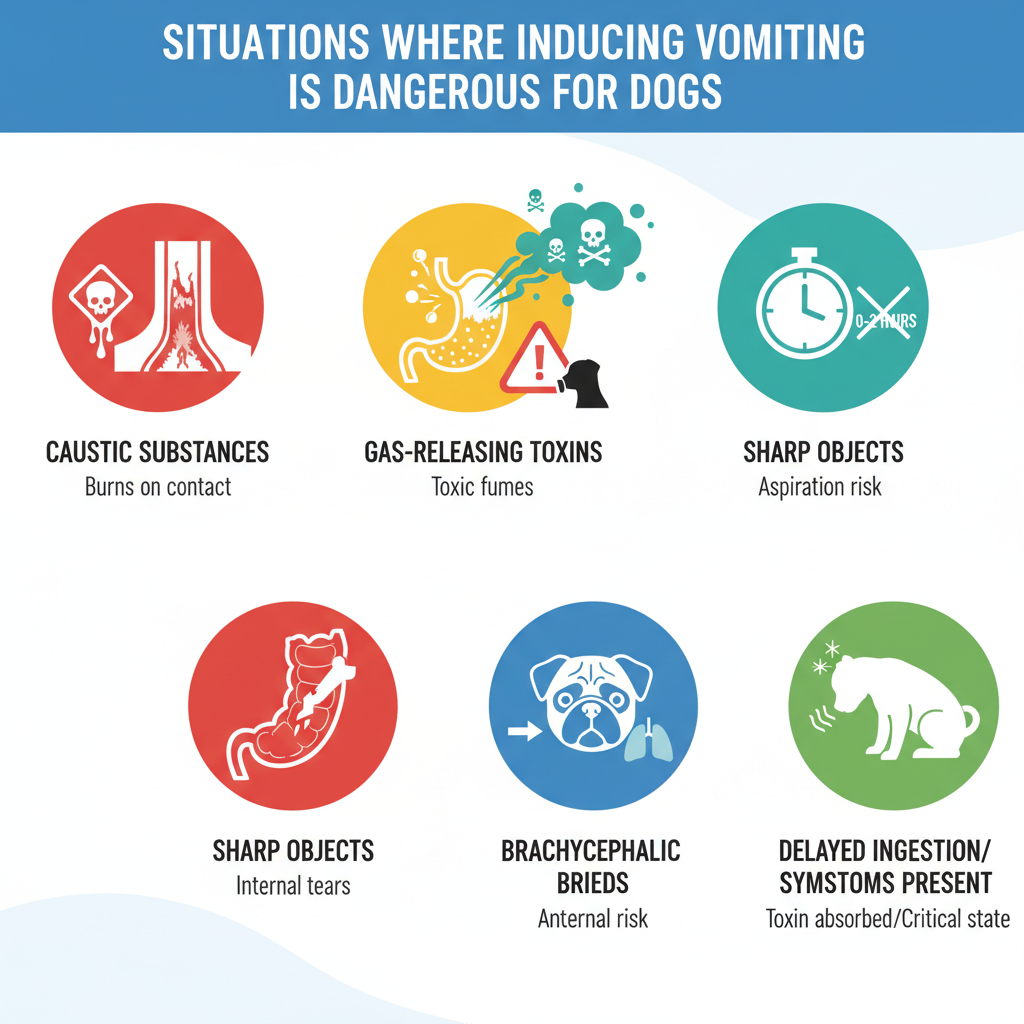
When NOT to Induce Vomiting in Dogs
There are important situations where causing your dog to vomit can actually worsen the harm:
- Caustic chemicals such as toilet bowl or drain cleaners can cause severe damage to the throat and mouth if vomited back up.
- Certain poisons, like zinc or aluminum phosphides found in mole and gopher baits, release deadly gases when mixed with stomach acid, posing a risk not just to your pet but to people and other animals nearby.
- Sharp objects, including glass shards or pointed plastics, can scrape or tear the esophagus during vomiting.
- Dogs with flat faces (such as Bulldogs, Pugs, Boxers, and Boston Terriers) are prone to aspiration pneumonia—a potentially fatal lung infection—due to their anatomy. Some toxins, like those in Tide pods, create foamy liquid that’s easy to inhale, increasing risk.
- Timing is crucial. Vomiting is generally effective only if done within two hours of ingestion. Once a foreign object moves into the intestines or a toxin is absorbed, or if your dog is already showing symptoms like seizures, inducing vomiting may no longer be safe or helpful.