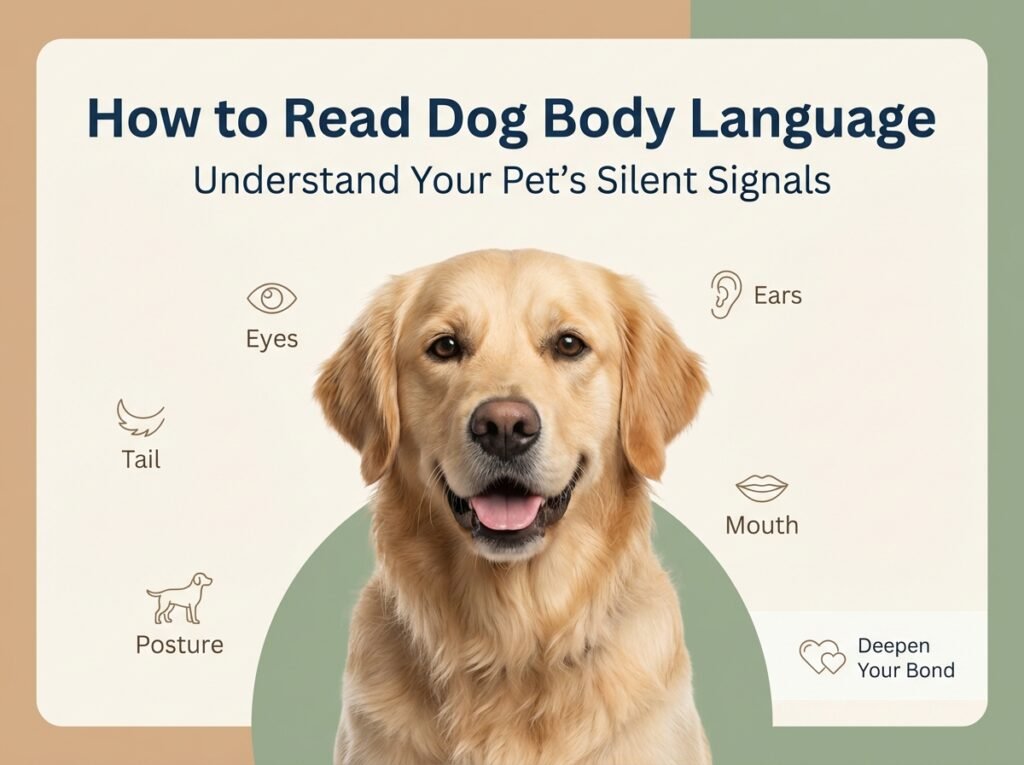
Crack the Code: How to Read Your Dog's Body Language
Dogs might not use words, but they're constantly "talking" to us through their dog body language. Learning to understand their eyes, ears, mouth, and tail is like gaining a secret superpower – you'll know exactly what your pup is feeling and trying to tell you. This skill isn't just cool; it's essential for building a deep, trusting bond with your furry best friend.
When you truly understand your dog's signals, you can:
- Connect on a deeper level: Respond perfectly to what your dog needs, whether they want playtime, comfort, or a little space.
- Prevent tricky situations: Spot early signs of fear, stress, or aggression before they escalate, keeping everyone safe.
- Ensure happy interactions: Know when a new dog is eager for a sniff and when they'd rather be left alone.
Let's dive into the fascinating world of canine communication, starting from the top!
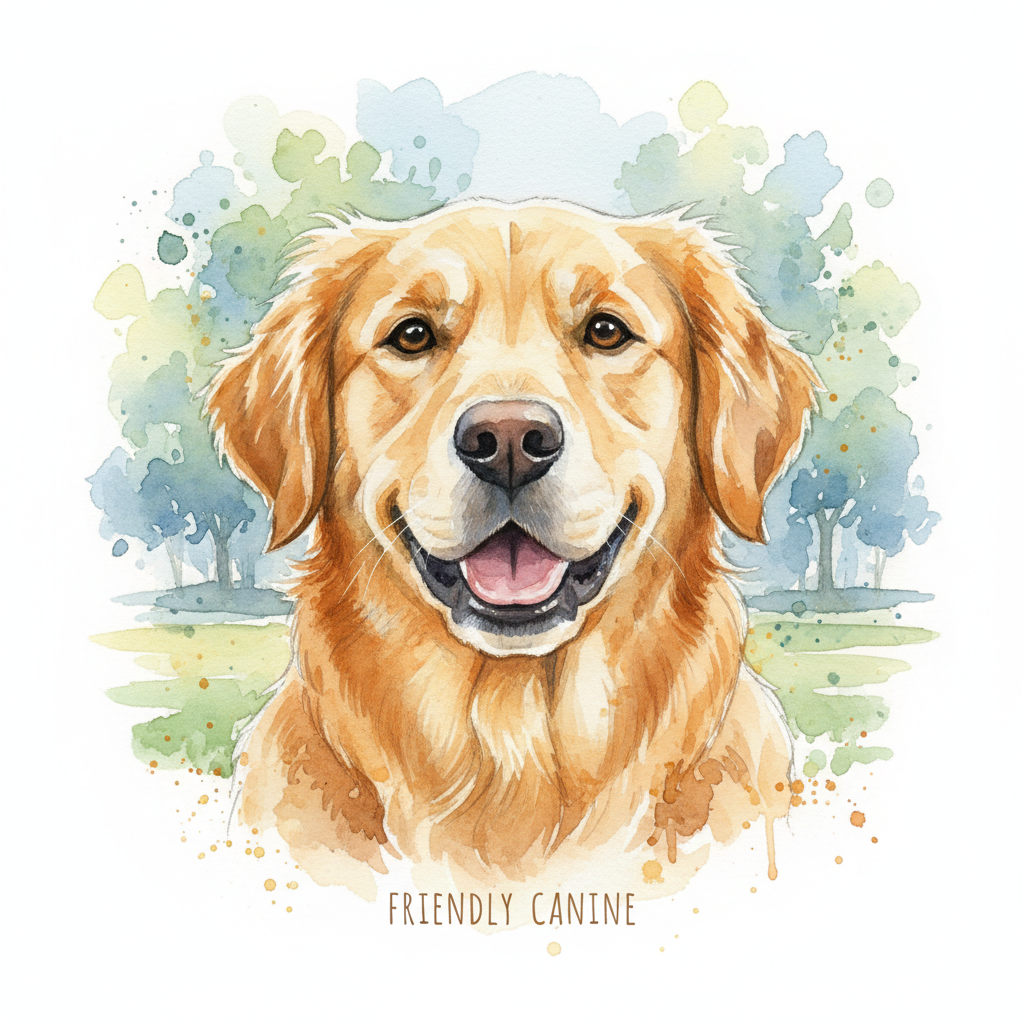
What Your Dog's Eyes Are Telling You
Your dog's eyes aren't just for seeing; they're a direct line to their feelings.
Relaxed and Happy Eyes
- Soft, almond shape: These are the eyes of a truly content dog, often looking gentle and relaxed.
- Regular blinking: Just like us, a comfortable dog blinks normally.
- Meeting your gaze: When your dog looks right at you, especially someone they know and love, it's often a sign of affection and trust.
Stressed or Worried Eyes
- Wide "whale eye": If you see the whites of your dog's eyes showing around the edges, like half-moons, they're likely feeling stressed, anxious, or even scared.
- Darting eyes: A nervous dog might quickly glance around, searching for an escape route or feeling unsure about their surroundings.
- Squinting or avoiding eye contact: This can signal submission, discomfort, or fear. They might be trying to make themselves seem less threatening.
When Eyes Signal Aggression
- Hard stare: A direct, unblinking gaze, often paired with a stiff body, is a serious warning sign. Your dog is telling you to back off.
- Dilated pupils: When pupils look very large, it often means high arousal – whether from fear, excitement, or aggression.
How to Read Your Dog’s Ears
Dogs use their ears like tiny, expressive antennae. Remember that natural ear positions vary a lot by breed, but the movement still speaks volumes.
Relaxed and Happy Ears
- Natural position: Ears sit comfortably, perhaps slightly forward or to the side, without tension.
- Gentle movement: You might see them swivel softly, picking up interesting sounds in their environment.
Alert or Curious Ears
- Perked up and forward: When your dog's ears shoot up and point forward, they've heard something captivating and are completely focused.
- Swiveling like radar: Ears might dart back and forth, trying to pinpoint a specific sound.
Stressed or Fearful Ears
- Flattened or pinned back: Ears pressed tightly against the head are a clear sign of fear, anxiety, or submission. They're trying to make themselves smaller.
- Low and to the sides: This can also suggest your dog is feeling uncomfortable or apprehensive.
When Ears Signal Aggression
- Stiff and forward: Ears held rigidly forward, sometimes with a direct stare, can signal a potential threat or aggression.
- Slightly back and stiff: This shows tension and a readiness to react.
What Your Dog’s Mouth Says
The mouth is a complex communicator, and its messages are always clearer when you look at it with other body language cues.
Relaxed and Happy Mouth
- Closed or slightly open: A relaxed mouth, perhaps with a soft, natural pant if they're warm or active.
- Soft "grin": Sometimes, a happy dog will pull their lips back slightly, showing a relaxed, almost smiling expression, especially when greeting a favorite person.
- Slow lip licking: A slow, deliberate lip lick can be a sign of appeasement or submission, not always stress.
Stressed or Worried Mouth
- Yawning (out of context): If your dog yawns when they're not tired, it's usually a sign of stress or anxiety.
- Rapid lip licking: Quick, repeated lip licks often mean your dog is feeling uncomfortable or stressed.
- Tight, closed mouth: Lips pulled back tightly, with visible tension around the muzzle, show your dog is feeling tense.
- Rapid, shallow panting: If not related to heat or exercise, this panting can be a sign of stress or fear.
When the Mouth Signals Aggression
- Growling: This is a crystal-clear warning sign. Never, ever ignore a growl.
- Snarling: Lips pulled back to show off their teeth (incisors and canines) is a definite threat display.
- Muzzle wrinkling: The skin on their muzzle might wrinkle and tighten, showing tension.
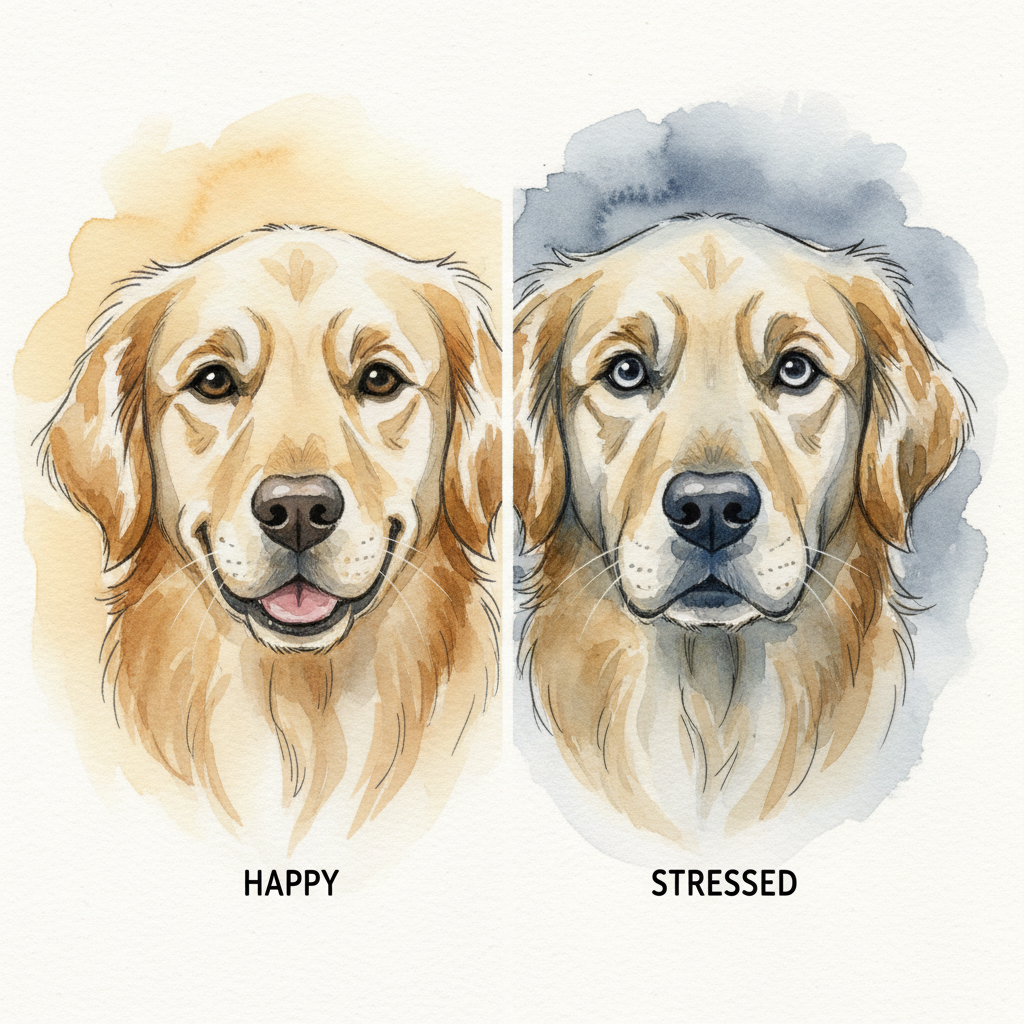
Understanding Your Dog’s Tail
That wagging tail can be tricky! It's not just that they're wagging, but how – the height, speed, and direction all tell a story.
Relaxed and Happy Tail
- Natural position, loose wag: The tail hangs in its normal, breed-specific position, moving with a loose, relaxed swing.
- Mid-height, sweeping wag: A broad, sweeping wag at about mid-height usually screams friendliness and happiness.
- Whole-body wag: When the wag goes all the way down to their hips, you're looking at pure, unadulterated joy and excitement!
Alert or Curious Tail
- Mid-to-high position, gentle wag: The tail sits a bit higher than normal, with a slight, gentle wag, showing they're interested or curious about something.
Stressed or Worried Tail
- Low and tucked: A tail held low, often clamped between the legs, is a classic sign of fear, anxiety, or submission.
- Stiff, slight wag (low): A low, stiff wag can indicate nervousness or uncertainty, a far cry from a happy sweep.
When the Tail Signals Aggression
- High and stiff: The tail is held high and rigid, sometimes with a quick, shallow vibration or a stiff, flagpole-like wag. This signals high arousal, dominance, or aggression.
- Rapid, shallow wag (high): A quick, tight wag of a high tail can also mean high arousal and potential aggression.
Reading Your Dog’s Whole Body Posture
Looking at individual parts is good, but your dog's overall posture gives you the complete picture of their emotional state.
Relaxed and Happy Posture
- Loose, fluid body: Their weight is evenly distributed, muscles look relaxed, and they move with ease.
- Play bow: Front end lowered, rear end up, tail wagging, inviting you (or another dog) to play. It's an unmistakable invitation!
- Rolling over (exposing belly): This usually shows immense trust and comfort with familiar people – but watch out for other fear signals if it's combined with them.
Stressed or Worried Posture
- Crouched or lowered body: They try to make themselves look smaller, ready to retreat or hide.
- Hunched back: Often seen with a tucked tail and flattened ears, signaling discomfort.
- Trembling: A clear sign of fear or extreme stress.
- Freezing: Becoming completely still, often a tense pause right before they decide to flee or defend themselves.
- Piloerection (hackles raised): Hair standing up on the back of the neck or along the spine. This means high arousal, whether from fear, excitement, or aggression.
When Posture Signals Aggression
- Stiff, rigid body: Muscles are tense, and their weight often shifts forward, showing readiness to act.
- Tall, dominant stance: Standing tall, chest puffed out, head held high – your dog is trying to appear larger and more intimidating.
- Lunging or snapping: These are overt aggressive behaviors, signaling a dog who feels threatened or wants to assert dominance.
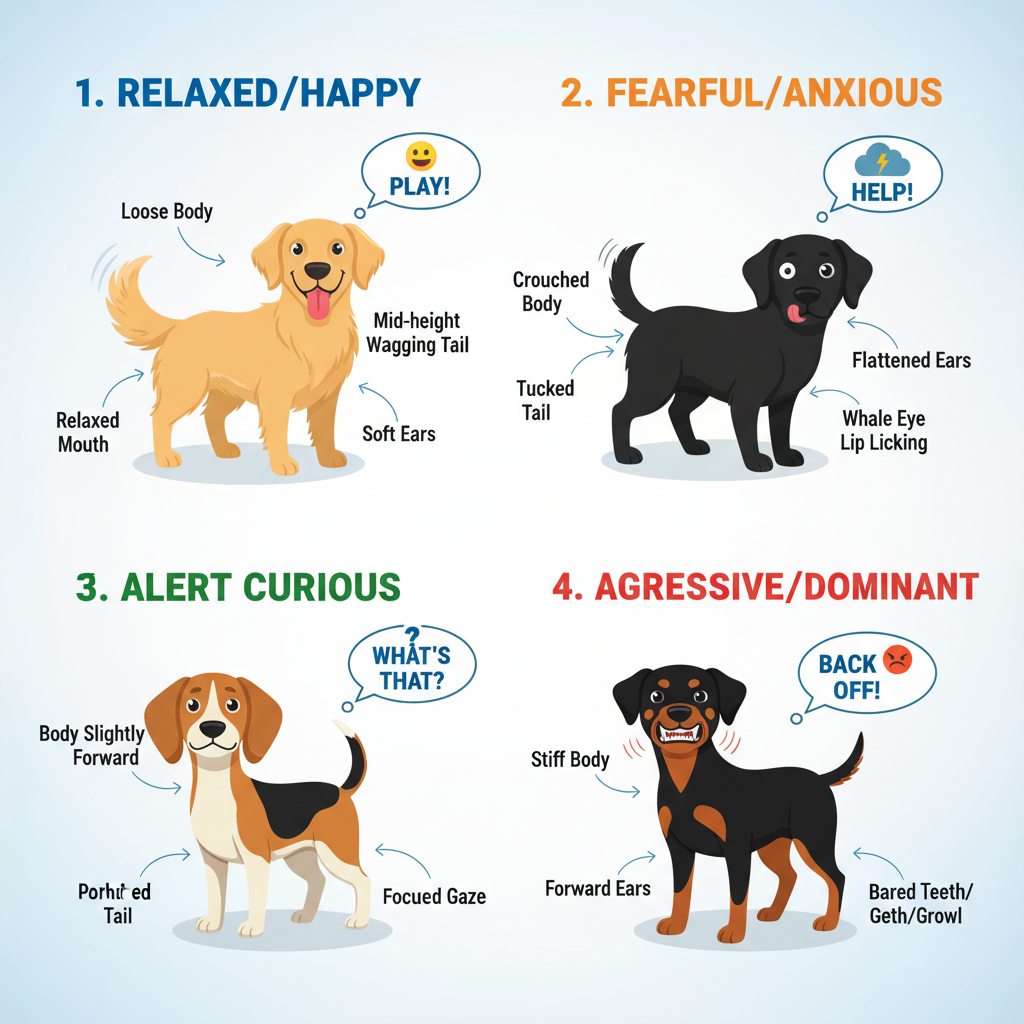
Putting All the Pieces Together
Truly understanding your dog's body language means looking at the whole picture, not just one signal. A tucked tail combined with wide eyes tells a different story than a tucked tail during play. Always consider the situation and your dog’s unique personality.
The more you watch dogs in different situations, the better you’ll become at deciphering their silent language. This amazing skill will not only strengthen the bond with your own dog but also help you interact safely and respectfully with every dog you meet.