How to Pet a Dog
Learning how to pet a dog is a powerful way to connect with your furry friend. It builds trust, makes new pups feel welcome, and truly is a conversation between you and them. Just like people, every dog is different. What one dog loves, another might only tolerate, and a third might genuinely dislike. The secret to being a great petter? Watching their body language and understanding what they're trying to tell you.
Here at Petscarelab, we'll walk you through exactly how to approach and pet a dog, where they love to be touched, spots to avoid, and how to tell if your dog is enjoying the attention.
How to Approach and Pet a Dog
When you first approach any dog, whether it's your own familiar pup or a new furry face, move slowly. Always let them come to you first. A scared or anxious dog might snap or bite if you startle them.
Here are the basic steps for showing a dog some love:
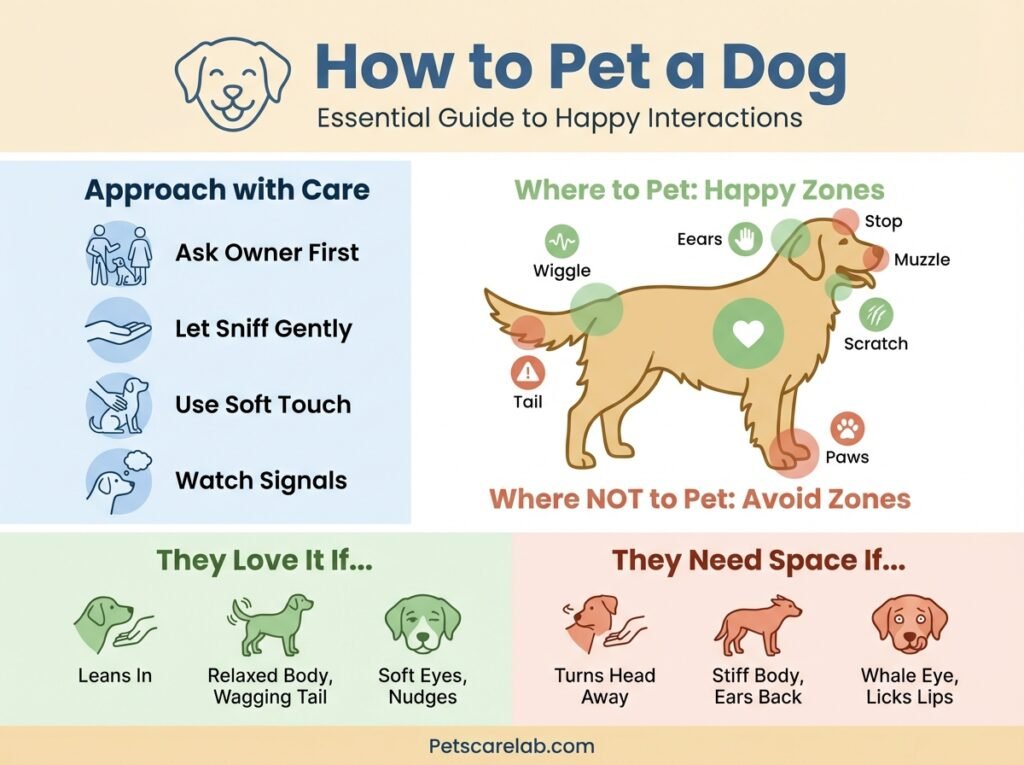
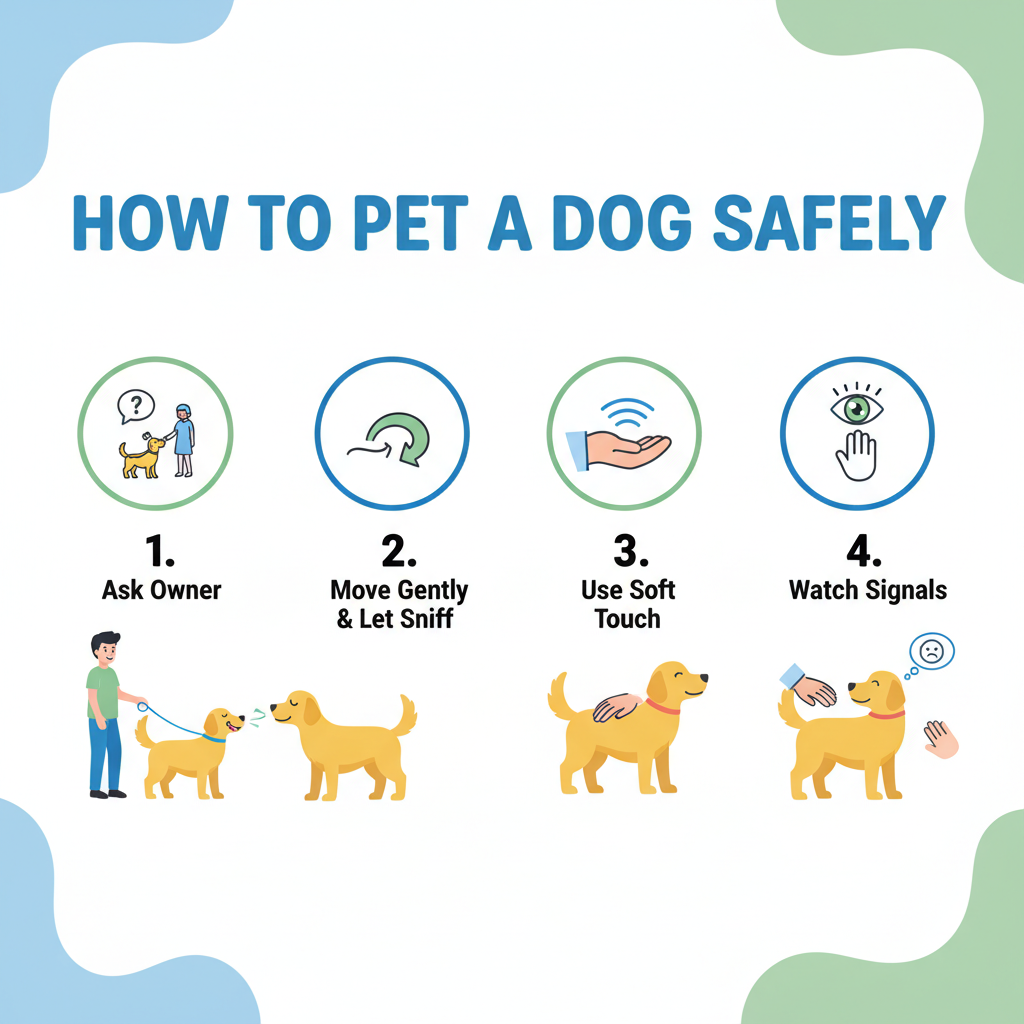
- Always ask the owner first. Before you even think about reaching out, confirm with the dog's guardian that their pup is friendly and enjoys being petted. Even if you know the dog, it's polite and safe to double-check.
- Move gently and let them sniff. Hold your hand loosely by your side, palm up, and let the dog approach you. An open hand can feel less threatening than reaching out with your palm down. Let them take their time to sniff your hand, getting to know you. Avoid sudden movements that might spook them.
- Use a soft touch. Once the dog has approached and seems comfortable, slowly extend your hand towards their chest or shoulder. Pet them with gentle, deliberate strokes. Think of it like a soft massage, not a rough pat.
- Watch their signals. Pay close attention to how the dog responds to your touch. If they lean in, relax, or give a soft tail wag, you're doing great! If they tense up, try to back away, or look uncomfortable, stop petting immediately and give them space.
Where to Pet a Dog
Most dogs have their favorite "sweet spots" for petting. Generally, these are places they can't easily scratch themselves, making your help feel extra good!
Here are some of the most common places dogs absolutely adore being petted:
- Chest and Shoulders: A gentle rub here is often a safe and welcome starting point, especially when you're meeting a new dog. It's not intrusive and many dogs relax into it.
- Base of the Tail: Ah, the "butt rub" zone! Many pups love a good scratch right where their tail meets their back. This can be a particularly itchy spot for them, and your scratching might just hit the perfect itch.
- Under the Chin: A soft scratch or rub under the chin can be incredibly soothing for many dogs, almost like a relaxing massage.
- Sides of the Face/Behind the Ears: Just like cats, many dogs enjoy a gentle rub on the sides of their face or just behind their ears. It’s a comforting spot that often gets those happy wiggles going.
- Neck: A thorough scratch along the neck can be incredibly satisfying for many dogs, especially after a long day of exploring or playing.
Remember, every dog is an individual with unique preferences. What one dog begs for, another might simply tolerate. Always let their body language guide you!
Where Not to Pet a Dog
Just as there are prime petting zones, there are also areas where most dogs prefer to stay untouched. These are often sensitive spots or places where they feel especially vulnerable.
Here are some common spots where dogs usually prefer not to be petted:
- Top of the Head: Reaching directly over a dog's head can feel threatening or dominant to them. It can make them feel cornered or unable to escape. Imagine someone suddenly reaching for your head – it's unsettling!
- Mouth/Muzzle: This area is incredibly sensitive, and dogs use their mouths for eating, playing, and exploring the world. Touching a dog's muzzle, especially if you're a stranger, can make them feel very uncomfortable or defensive.
- Tail: While some dogs enjoy a scratch at the base of their tail, grabbing or pulling their tail is almost universally unwelcome. The tail is an extension of their spine and is very sensitive.
- Paws: Dogs often dislike having their paws touched, particularly by strangers. Paws are sensitive and essential for their movement and interaction with the world; restricting them can feel alarming.
- Ears: While some dogs love a good ear scratch, others are extremely sensitive about their ears. Approach this area cautiously and watch for any signs of discomfort.
- Genital Area: This is a very private and sensitive area for dogs. They generally don't appreciate being touched there by anyone, especially strangers.
- Hindquarters: While some dogs might tolerate petting here, it's rarely a preferred spot for most, especially if you're approaching them from behind. This can make them feel vulnerable and uneasy.
Reaching over a dog's head or going straight for one of these sensitive areas can be seen as a threat, even by a usually friendly dog. That's why letting the dog approach you and sniff your hand first is always the safest bet.
How to Pet a Puppy
Petting a puppy follows similar rules to petting an adult dog, but with a few extra considerations. Puppies are much more sensitive and are still learning how the world works.
Here’s how to introduce a puppy to petting:
- Keep interactions gentle and calm. Puppies are easily startled by sudden movements or loud noises. Move slowly and speak softly.
- Let the puppy lead. Offer a calm hand and allow them to come to you for a sniff. Don't chase them down for cuddles.
- Stick to safe, preferred spots. Focus on areas like their tiny chest, shoulders, or under their chin.
- Keep petting sessions short and sweet. Puppies have short attention spans and can get overwhelmed quickly. End on a positive note before they get too distracted or tired.
- Watch their body language like a hawk. Look for clear signs of enjoyment – a relaxed little body, a soft wagging tail. If they seem tense or try to squirm away, give them a break.
- Avoid rough play or too much handling. This can teach them to dislike being touched, which we certainly don't want!
- Gradually introduce touch everywhere. Over time, gently and positively, help them get used to having their paws, ears, and mouth touched. This is super important for future vet visits and grooming sessions. Always use treats and praise to make it a good experience.
Always make sure children are supervised when they're interacting with puppies. This keeps both the child and the puppy safe and happy.
How to Tell if a Dog Likes Being Petted
Dogs communicate a lot through their body language. Learning to read these signals is essential for understanding if a dog is enjoying your pets or if they'd rather have some personal space.
Here are the signs a dog loves being petted:
- Leaning into your touch: If they press their body against your hand or leg, they're clearly asking for more!
- Relaxed body posture: A happy dog will have a soft gaze, ears that are relaxed (not flattened or stiff), and a loose, wiggly body that looks comfortable.
- Slow, relaxed tail wags: A gentle, sweeping wag of the tail usually means happiness and comfort, especially if it involves their whole body.
- Soft eyes and a slightly open mouth: These are classic signs of a relaxed, friendly, and content dog.
- Nudging or pawing you for more: If you stop petting and they nudge your hand or gently paw at you, they're definitely requesting more affection.
- Rolling over for belly rubs: This is a big sign of trust and enjoyment! However, only pet their belly if you know the dog well and they explicitly invite it. Not every dog enjoys a belly rub.
- Falling asleep: Some dogs get so relaxed by gentle petting that they'll simply drift off to sleep right there.
Here are the signs a dog doesn't like being petted:
- Turning their head away: This is a polite but clear signal for a dog to say, "I'm not interested right now."
- Stiffening or tensing their body: A rigid posture screams discomfort or anxiety.
- Yawning or lip licking (when not tired or hungry): These are common stress signals dogs use to calm themselves or indicate unease.
- Ears flattened back or pulled stiffly forward: These can indicate fear, anxiety, or even aggression.
- Showing the whites of their eyes (often called "whale eye"): This often means a dog feels stressed, threatened, or trapped.
- Growling or snarling: These are undeniable warnings. The dog is very uncomfortable and might bite if you don't stop immediately.
- Trying to move away or escape: If a dog backs away, tries to hide, or actively leaves the interaction, respect their wishes and give them plenty of space.
Always prioritize the dog's comfort and safety. If you're ever unsure about a dog's reaction or notice any signs of discomfort, it's always best to stop petting and give them space. This shows you respect their boundaries and helps build a strong, trusting relationship.