Understanding precisely how much to feed your dog
Understanding precisely how much to feed your dog is a cornerstone of responsible pet ownership and one of the most impactful ways to safeguard their long-term health. Providing the correct portion of a high-quality dog food isn’t just about satisfying hunger; it’s about striking a delicate nutritional balance. Overfeeding can tragically lead to obesity and a cascade of related health issues, while underfeeding risks vital nutritional deficiencies that compromise their well-being.
If you find yourself pondering, “how much food should I feed my dog?” you’ve arrived at the right destination. Petscarelab’s comprehensive dog feeding guide is designed to empower you with clarity and confidence.
Key Takeaways for Optimal Dog Feeding
- The ideal feeding amount for your beloved canine companion is highly individualized, contingent upon critical factors such as their age, current weight, daily activity level, and overall health status.
- Always begin by consulting the feeding chart provided on your dog’s specific food packaging, then diligently fine-tune portions based on their body condition and the expert advice of your trusted veterinarian.
- Puppies, adult dogs, and cherished senior canines each possess distinct nutritional requirements, necessitating adherence to age-specific feeding guidelines for their optimal development and well-being.
- Consistently providing your dog with the appropriate amount of food is a powerful preventative measure against obesity, a condition intricately linked to numerous serious and debilitating health concerns.
Critical Factors That Influence How Much to Feed Your Dog
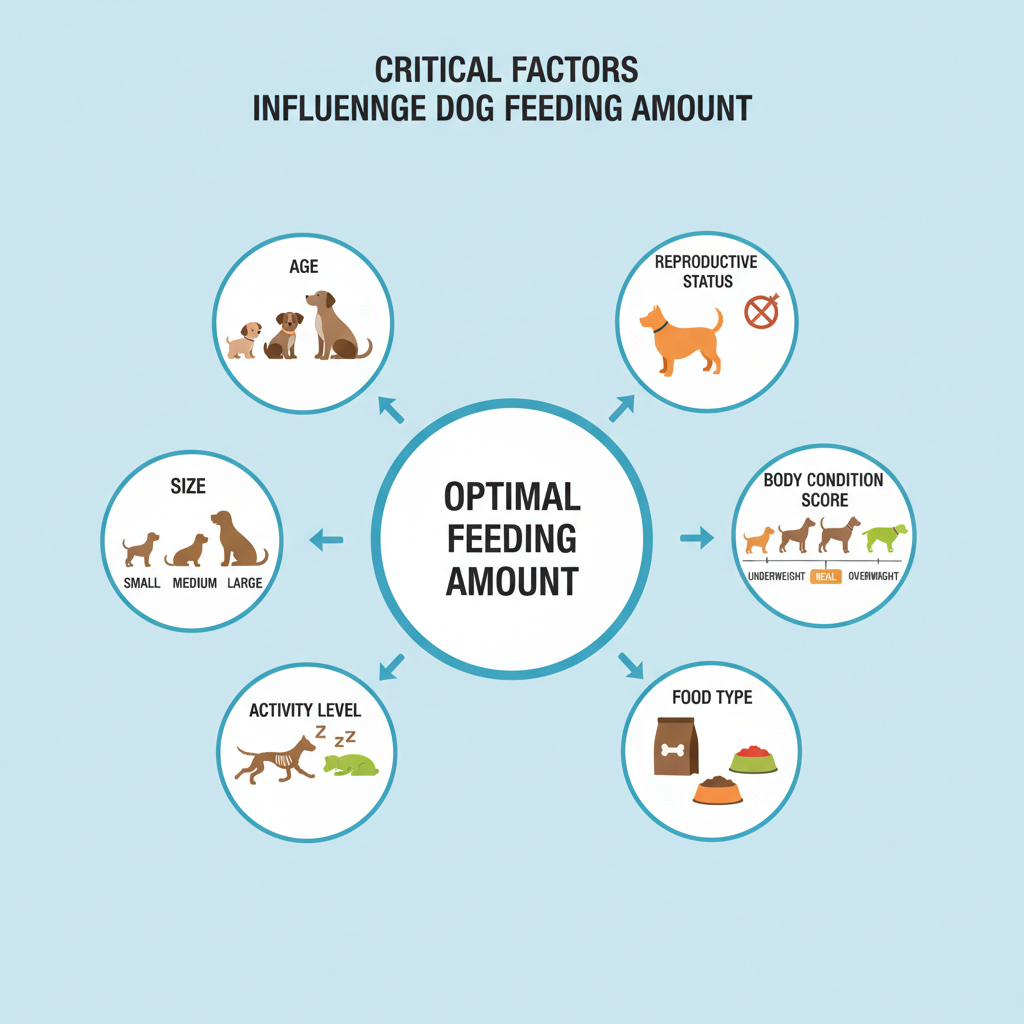
Many interconnected factors intricately play a role in determining the precise quantity of food you should offer your dog. A dog’s nutritional requirements are dynamic, often shifting as they mature, or as their lifestyle or health status evolves. It is crucial to remember that every dog and every individual situation is wonderfully unique—what constitutes the ideal feeding regimen for one dog may not be suitable for another.
- Age: Growing puppies demand significantly more energy (calories), protein, and a higher concentration of specific vitamins and other essential nutrients compared to fully grown adult dogs.
- Size: Logically, larger canine breeds require greater food quantities than their smaller counterparts to sustain their body mass and energy needs.
- Activity Level: Dogs with a high-energy lifestyle, enjoying extensive exercise or working roles, naturally require a more substantial caloric intake to fuel their daily endeavors.
- Reproductive Status: Spayed and neutered dogs typically have lower caloric needs than unaltered dogs. Conversely, a pregnant or nursing mother dog will require a significantly increased food intake to support both her own health and the development of her precious litter.
- Body Condition Score: Dogs carrying excess weight should be fed fewer calories to encourage healthy weight loss. Conversely, canines needing to gain weight will require an increased, carefully managed caloric intake.
- The Food You Offer: The caloric and nutrient density of different dog foods varies significantly. Some formulations are incredibly potent, meaning a smaller quantity provides ample nutrition, underscoring the importance of checking the label.
Unraveling: How Much Food Should I Feed My Dog?
Precisely determining how much food to feed your dog isn’t always straightforward, but ample guidance and resources are readily available. The most authoritative starting point is always the label of the dog food your pet consumes. Examine the packaging closely, and you will discover a detailed feeding chart, offering recommendations meticulously tailored to that specific food formulation.
While an online calorie calculator can provide a helpful initial estimate, remember that these results are merely a general guide. Your dog’s unique metabolic rate and specific needs can deviate by as much as 50% from typical averages. Utilizing a body condition scoring system is an excellent, practical method to fine-tune your dog’s food portions. Most importantly, always foster an open and collaborative partnership with your trusted veterinary professional.
Adult Dog Feeding Chart
Healthy adult dogs typically present the most straightforward feeding scenario. Having completed their growth phases, their nutritional requirements generally remain quite consistent over time, unless significant life changes occur. Their ideal body weight stands as the most paramount factor. Base your feeding calculations on your dog’s ideal weight. This target weight goal might be lower than their current weight if they are overweight, or slightly higher if they are underweight.
To illustrate how much to feed your dog, let’s consider a typical feeding guide from a reputable pet food manufacturer. For instance, a high-quality adult dry dog food containing approximately 382 calories (kcal) per cup might recommend the following daily amounts:
| Weight Range | Feeding Amount Per Day |
|---|---|
| 3–12 pounds | ½–1¼ cup |
| 13–20 pounds | 1¼–1⅔ cups |
| 21–35 pounds | 1⅔–2⅓ cups |
| 36–50 pounds | 2⅓–3 cups |
| 51–75 pounds | 3–3¾ cups |
| 76–100 pounds | 3¾–4⅔ cups |
| Over 100 pounds | 4⅔ cups, plus ¼ cup for each 10 pounds of body weight over 100 pounds |
Puppy Feeding Chart
Feeding puppies introduces a greater level of complexity and nuance. In their formative early months, they require a significantly boosted intake of calories, protein, and other vital nutrients to vigorously fuel their rapid growth and development. Puppies of large and giant dog breeds have distinct nutritional requirements compared to small and medium breeds. It is imperative that they receive a large-breed puppy formula to support proper bone and joint development, mitigating future health issues.
As puppies approach their full adult size, their nutritional needs gradually transition, becoming more akin to those of an adult dog. Furthermore, feeding charts for puppy foods are typically predicated on your puppy’s target adult weight. Therefore, identify their projected adult weight and current age to accurately determine how much to feed your dog during these crucial growing stages.
| Weight Range (at maturity) | Feeding Amount Per Day: 1½–3 Months Old | Feeding Amount Per Day: 4–5 Months Old | Feeding Amount Per Day: 6–8 Months Old | Feeding Amount Per Day: 9–11 Months Old | Feeding Amount Per Day: 1–2 Years Old |
|---|---|---|---|---|---|
| 2–12 pounds | ¼–1¼ cups | ½–1⅓ cups | ½-1¼ cups | ⅓–1¼ cups | Feed as adult |
| 13–20 pounds | ¾–1¾ cups | 1⅓–2 cups | 1⅔–2 cups | 1¼–1⅔ cups | Feed as adult |
| 21–50 pounds | 1–2¾ cups | 1¾–3½ cups | 2¼–3¼ cups | 1¾–3¼ cups | Feed as adult |
| 51–75 pounds | 1½–3 cups | 4–4⅔ cups | 4¼–4¾ cups | 3½–5⅓ cups | 3¼–4¼ cups |
| 76–100 pounds | 1¾–3 cups | 4–4⅔ cups | 4¼–5 cups | 5¼–5¾ cups | 4¼–4⅔ cups |
| 101 pounds and up | 3 cups, plus ¼ cup for each 10 lbs over 100 | 4⅔ cups, plus ⅓ cup for each 10 lbs over 100 | 5 cups, plus ⅓ cup for each 10 lbs over 100 | 5¾ cups, plus ⅓ cup for each 10 lbs over 100 | 4⅔ cups, plus ⅓ cup for each 10 lbs over 100 |
Senior Dog Feeding Chart
Our cherished senior dogs represent the other end of the canine life spectrum, with unique considerations for their dietary needs. Veterinary professionals typically categorize dogs as seniors when they reach between 7 and 12 years of age, a timeframe that can vary depending on their specific size and breed. Beyond age, a dog’s individual lifestyle and prevailing health status must always be thoughtfully considered.
Senior dog diets are frequently (though not universally) formulated with lower calorie counts than adult dog foods. This careful adjustment helps to proactively prevent unhealthy weight gain as dogs naturally become less active with age. Furthermore, these specialized foods may incorporate targeted ingredients to bolster joint health or assist in managing other common conditions that tend to emerge as dogs gracefully grow older. Your veterinarian is your invaluable partner in discerning the optimal moment to transition your beloved senior companion to a senior-specific dog food.
| Weight Range | Feeding Amount Per Day |
|---|---|
| 3–12 pounds | ⅓–1 cup |
| 13–20 pounds | 1–1¼ cups |
| 21–35 pounds | 1⅓–2 cups |
| 36–50 pounds | 2–2⅓ cups |
| 51–75 pounds | 2⅓–3 cups |
| 76–100 pounds | 3–3⅔ cups |
| Dogs over 100 pounds | 4 cups, plus ¼ cup for each 10 pounds of body weight over 100 pounds |
How Many Times a Day Should a Dog Eat?
You’ve likely observed that most dog feeding guides stipulate the total daily quantity of food. However, the majority of dogs thrive on more than just one meal per day. Therefore, it becomes essential to divide the recommended daily amount from the feeding chart by the number of meals your dog consumes daily. To establish a thoughtful dog feeding schedule, consider the following general recommendations, which are tailored to a dog’s size and age:
- Large and giant breeds:
- For puppies up to 4 months of age: three balanced meals per day
- For adults and seniors: two to three well-portioned meals per day
- Small and medium breeds:
- For puppies up to 4 months of age: three wholesome meals per day
- For adults and seniors: two consistent meals per day
- Toy breeds:
- For puppies up to 4 months of age: four to five small, frequent meals per day
- For puppies 4–6 months of age: three dedicated meals per day
- For dogs 6 months of age and older: two regular meals per day
The Profound Importance of Feeding Your Dog the Right Amount
Feeding dogs accurately isn’t just important—it’s absolutely critical for their vitality! While underfeeding can manifest as low energy levels, compromised immune function, and a host of other health challenges, overfeeding represents a far more prevalent concern among pet owners. Disturbingly, leading pet health organizations estimate that a significant 59% of dogs are either overweight or obese. This alarming statistic places them at a drastically elevated risk for a spectrum of serious and often debilitating health problems.

If your beloved dog is carrying excess weight, a specialized over-the-counter diet dog food, such as a weight management formula, may offer valuable support. For dogs requiring substantial weight loss, veterinary-prescribed weight loss foods often yield more effective and medically supervised results. Your veterinarian is the ultimate resource to help you navigate these choices and determine the most appropriate course of action for your dog’s unique needs.
While it does require dedication and effort to precisely determine how much food to feed your dog, your diligent efforts will be profoundly rewarded with the gift of extra healthy, joyful years you get to share with your cherished fur friend.
How often should I feed my dog?
While generally recommended to feed your dog twice a day, the optimal frequency for feeding your dog is highly variable, depending on your dog’s age, breed, size, and any underlying medical conditions. Always consult your veterinarian for personalized guidance.
How many cups of food should I feed my dog each day?
Always prioritize checking the label on your dog’s specific food packaging for the feeding chart meticulously recommended by the pet food manufacturer. Additionally, engaging in a direct conversation with your veterinarian about how much to feed your dog is paramount. Your vet will craft a specific nutrition plan, taking into account your dog’s age, size, body condition, activity level, and comprehensive health status.
How do I know if I’m feeding my dog enough?
You can confidently assess that you’re providing your dog with adequate nutrition if they consistently maintain a healthy weight, exhibiting a visible waistline, ribs that are easily felt but not visibly prominent, consistent energy levels, and firm, well-formed stools. Utilize the food label guidelines as a practical starting point, then diligently adjust portions based on your veterinarian’s invaluable advice and your dog’s ongoing health.