The Remarkable Words Dogs Understand: A Pet Parent's Guide
Every dog owner knows that special moment: your pup tilts their head, looks at you, and seems to get it. We often wonder just how many words dogs understand, even if they can't chat back. Turns out, our furry friends are far smarter than we sometimes give them credit for, capable of learning and responding to a surprising number of words and commands.
How Many Words Do Our Dogs Really Understand?
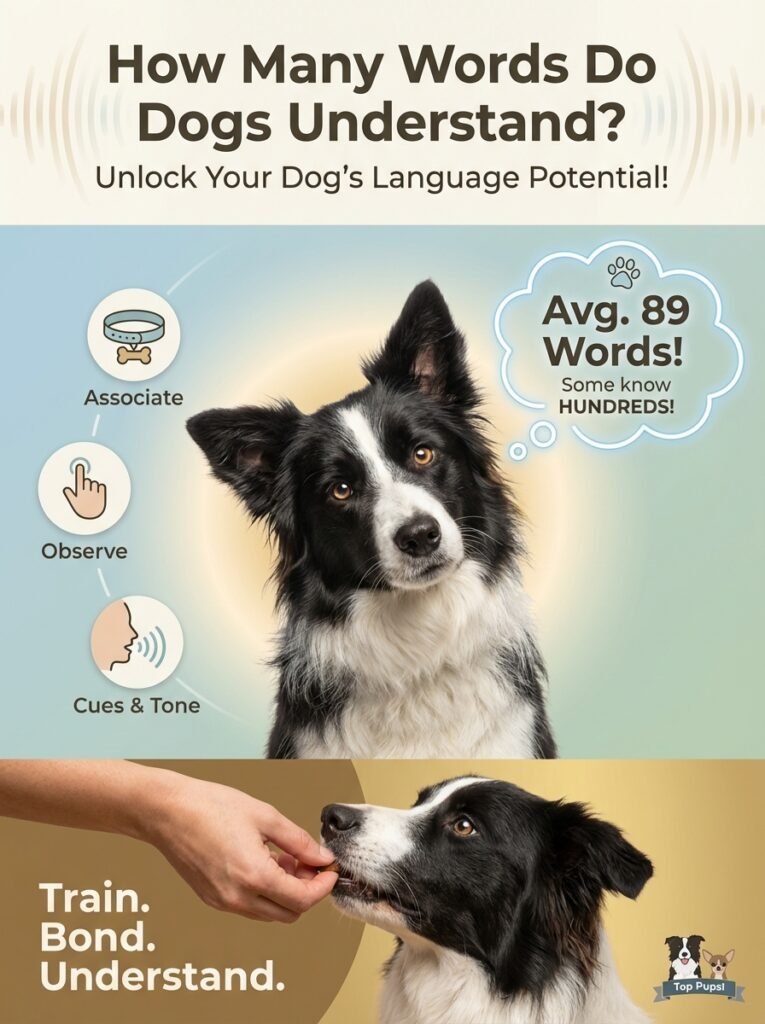
So, how many words do dogs actually pick up? On average, our research shows dogs understand about 89 words. This came from a study where our team at Petscarelab looked at data from hundreds of dog owners and many different breeds. But here's the cool part: some pups are true "word wizards," called "gifted word learners," and they can know hundreds of words!
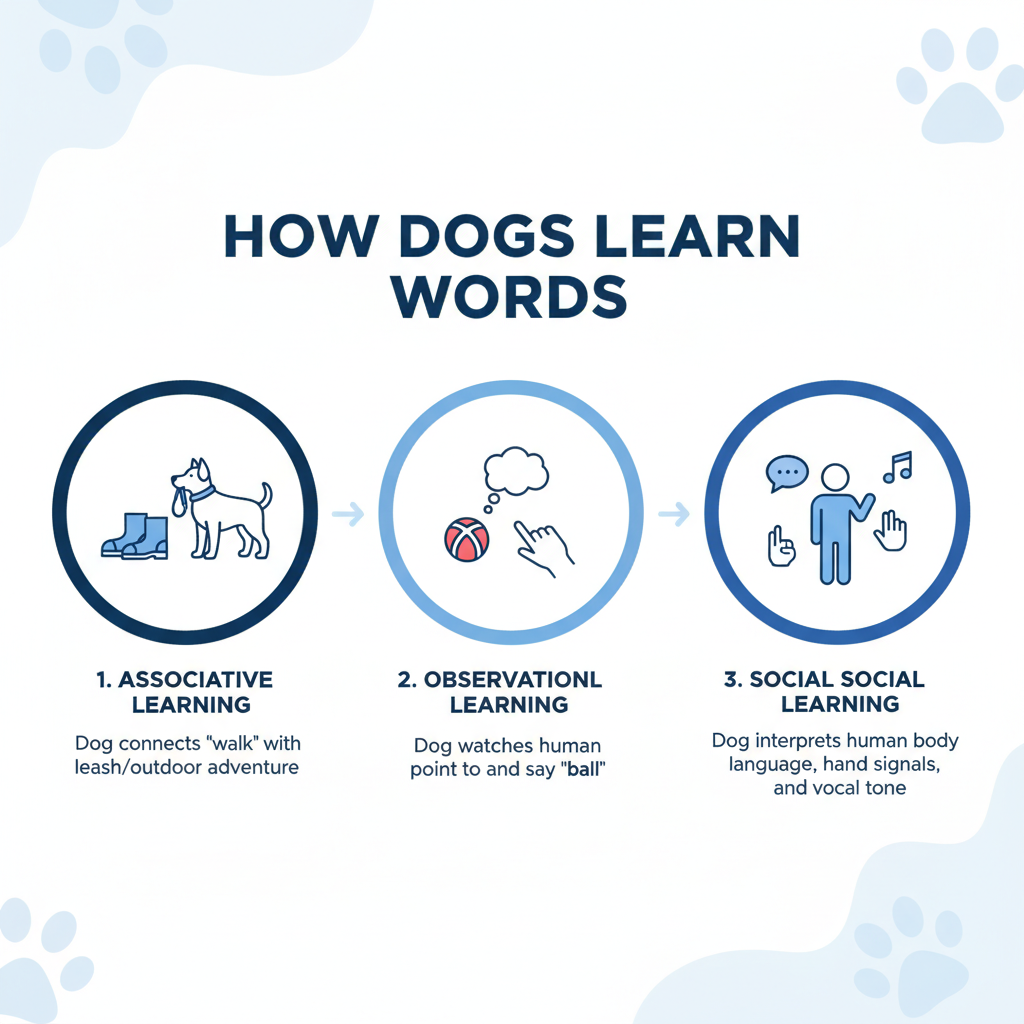
Our furry pals learn words in a few key ways:
- Associative learning: When "walk" always means a leash and an outdoor adventure, your dog makes that connection.
- Observational learning: They watch you, they watch other dogs. If they see you point to the ball and say "ball," they start to get it.
- Social learning: Pups pick up on your body language, your hand signals, and even the tone of your voice. It's not just the word, it's the whole package.
Which Dog Breeds Understand the Most Words?
Based on our findings, herding breeds tend to top the charts when it comes to vocabulary. Think of amazing pups like the Border Collie, German Shepherd, and Australian Shepherd. And here's a fun surprise: Chihuahuas also made the list, proving size doesn't always matter when it comes to smarts!
On the flip side, some breeds like Beagles, Boxers, and Poodles usually pick up fewer words. But let's be clear: a dog's breed isn't the only thing that decides how many words they understand. Your pup's unique personality, the training you give them, and how much you expose them to language all play huge roles.

Do Dogs Really Get Our Human Language?
No, dogs don't understand human language quite like we do. They aren't dissecting grammar rules or figuring out complex sentence structures. Instead, they're brilliant at reading us, focusing on a few key things:
- Vocal cues: The way your voice sounds – its tone, how high or low it is, and those subtle changes in inflection.
- Body language: Every move you make: your hand gestures, your facial expressions, even how you stand.
- Context: The entire situation around the word. Is it walkie-time? Treat-time? They know the drill.
Picture this: you tell your dog "sit" with a firm voice and point your finger down. Your pup doesn't just hear "sit"; they take in the sound of your voice, your hand gesture, and the overall situation. That's how they figure out you want their furry rear end on the ground.
Do Our Pups Understand Their Own Names?
Absolutely! Your dog definitely knows their name. Call them, and you'll usually get that head tilt, a happy tail wag, or they'll come trotting over.
Pups learn their names through simple association. They link that special sound with all the good stuff: yummy treats, happy praise, or an exciting game of fetch. The more you use their name in these positive moments, the stronger that connection gets.
How to Teach Your Dog New Words (And Expand Their Understanding!)
Want to boost the number of words your dog understands? Teaching your pup new words is one of the most fun and rewarding ways to bond with them. Here are our team's top tips for success:
- Kick off with easy, one-word commands. "Sit," "stay," "come," and "down" are perfect starting points.
- Stick to the same words. If you want your pup to "come," always say "come." Don't switch to "get over here" or "let's go." Consistency is key!
- Connect words with actions. When you say "sit," gently guide your dog into the position. This helps them link the sound to what you want them to do.
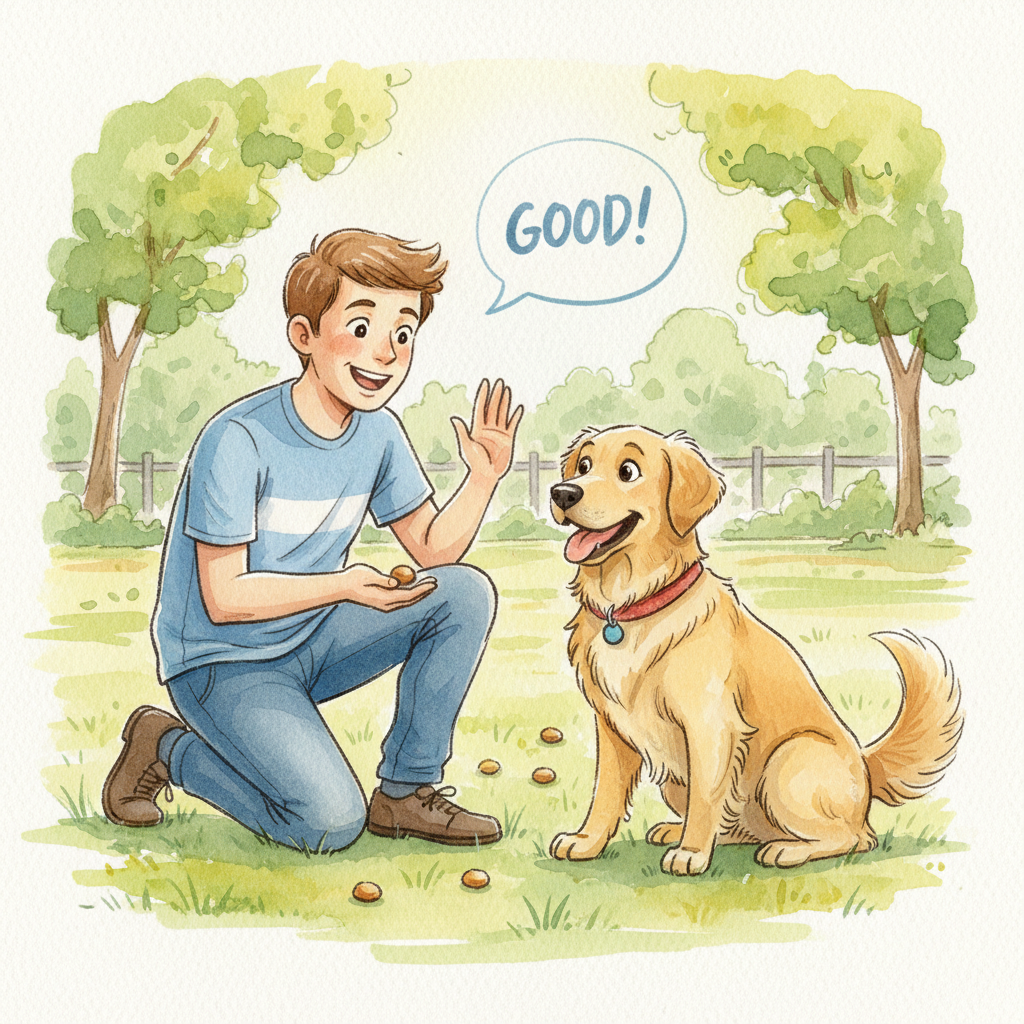
- Always reward good behavior! A tasty treat, a happy "Good pup!", or a favorite toy makes learning a blast and reinforces the word.
- Keep practice sessions short and sweet. Pups have short attention spans, so aim for 5-10 minutes a few times a day rather than one long marathon.
- Practice everywhere. Once they nail a word in a quiet spot, try it in the park or a friend's house. This helps them understand the word regardless of distractions.
- Go slow with new words. Don't throw a bunch of new terms at your dog all at once. Master one or two before moving on to the next.
- Patience is a virtue. Every dog learns at their own pace. Be kind, keep trying, and celebrate every little win!
How to Spot If Your Dog Really Understands What You're Saying
Wondering if your pup truly grasps what you're asking? Watch their reactions closely! The best sign of understanding is when your dog consistently performs the right action or shows a clear reaction to a word, no matter where you are or what's going on.
Signs your dog understands a word include:
- They nail the action every time. Say "sit," and down they go, no hesitation.
- Their eyes go straight to the toy. Say "ball," and they're looking for the ball, not just any toy.
- The "zoomies" kick in. Mention "walk," and they're suddenly at the door, tail wagging like crazy.
- They follow your lead on longer commands, like "Go get your toy and bring it here."
- They "talk" back. A little bark or whine might mean they recognize the word and are trying to tell you something!
If your dog isn't consistently responding, it just means they might need a bit more practice or a different approach to truly get it.
The Bottom Line
The bottom line? While our dogs don't speak our language with all its complexities, they are amazing at picking up on our verbal cues. On average, most pups grasp around 89 words, but those special "gifted word learners" can know hundreds! With consistent training, loads of positive reinforcement, and a good dose of patience, you'll boost your dog's vocabulary and build an even stronger, more loving bond.