Flyball for Dogs: The Ultimate Guide for Your Speedy Pup
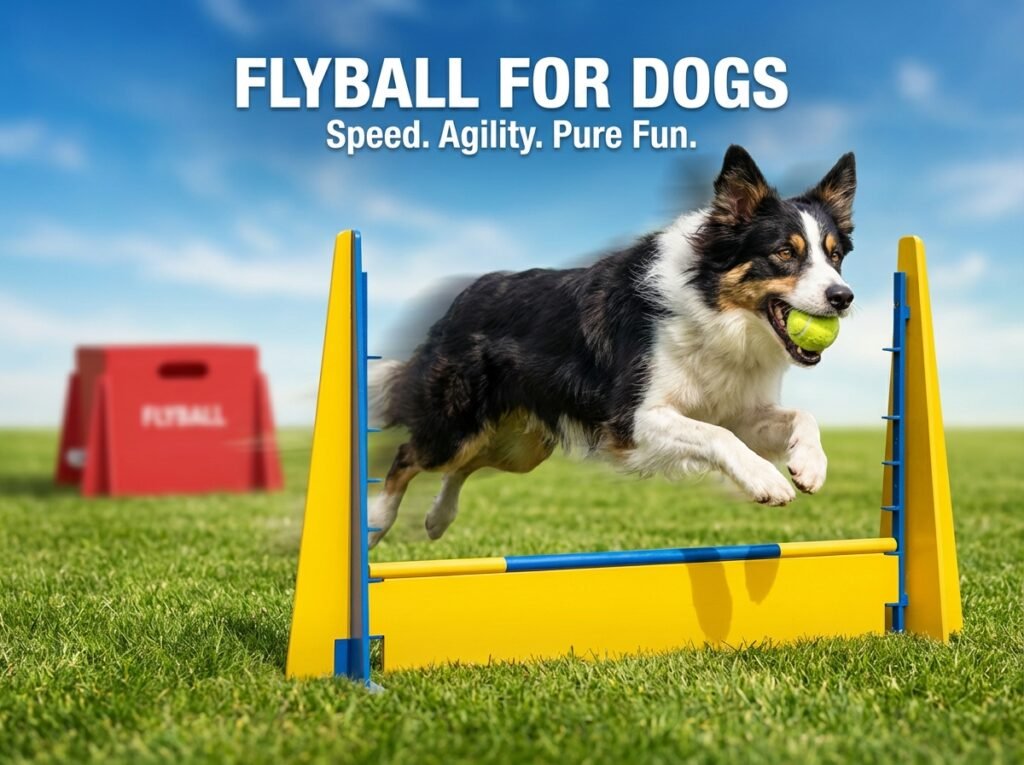
Flyball for dogs is an electrifying relay race that gets tails wagging and paws flying! Picture this: two teams of four dogs, each tearing down a course, leaping over four hurdles, triggering a special box that launches a tennis ball, catching it mid-air, and then racing back over those same hurdles. The winning team is the one whose four dogs complete the course first, flawlessly.
It's not just a sport; it's a whirlwind of speed, agility, and pure retrieve passion. If your dog loves to run, jump, and fetch, flyball might just be their new obsession!

What Exactly is Flyball?
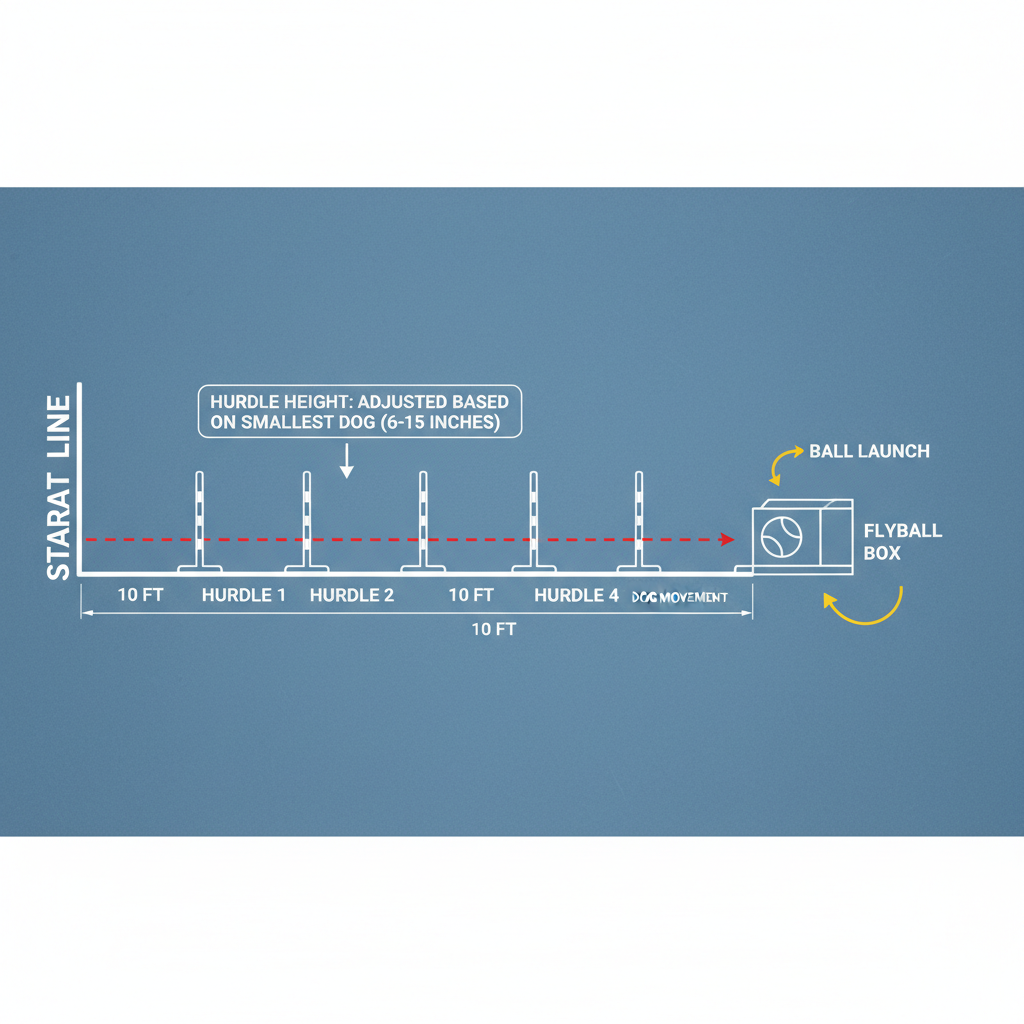
Flyball is a fantastic team sport for dogs and their handlers. Here’s how the course lays out:
- Starting Line: Every dog begins and ends their part of the race here.
- Four Hurdles: These are spaced 10 feet apart, and their height is set based on the smallest dog on the team, though they're never lower than 8 inches.
- Flyball Box: This clever device sits 51 feet from the starting line. When a dog steps on it, a tennis ball pops out, ready for a speedy catch!
The Big Goal
The main objective is for every dog on a team to finish the course as fast as possible. As soon as one dog sprints back with the ball, the next dog on the team can burst off the starting line. It's a head-to-head race, with two teams competing side-by-side on identical courses.
How Scoring Works
In a flyball heat, two teams go paw-to-paw. Teams earn points by winning heats, and tournaments often use a double-elimination bracket or round-robin scoring. Every millisecond counts; timing often goes down to a thousandth of a second!
A Glimpse into Flyball's History
Flyball got its start in sunny Southern California back in the late 1960s. Herbert Wagner, the sport's pioneer, dreamt up and built that ingenious ball-launching machine. The very first official flyball tournament then kicked off in 1981.
Since those early days, flyball has truly taken off, becoming a beloved international sport. Organizations like the North American Flyball Association (NAFA) and the International Flyball Association (IFA) now set the rules and sanction exciting events all over the world.
What Kinds of Dogs Excel at Flyball?
The Best Traits for a Flyball Dog
- Plenty of Energy: Flyball demands short bursts of intense speed and stamina.
- Serious Ball Drive: Your dog needs to live for chasing and retrieving that tennis ball. It's the heart of the sport!
- Agile and Nimble: Dogs must clear hurdles effortlessly and make quick, precise turns.
- Eager to Learn: A dog who loves to train and quickly picks up commands will absolutely shine.
- Social Butterfly: While dogs don't directly interact on the course, they’ll be close to other dogs and people during practices and competitions.
Breeds You'll Often See in Flyball
You'll spot many different breeds tearing up the flyball course, but some common favorites include:
- Border Collies
- Australian Shepherds
- Jack Russell Terriers
- Labrador Retrievers
- And lots of amazing mixed breeds!
Often, smaller, lightning-fast breeds make fantastic lead-off dogs, while bigger, powerful pups can leap hurdles with impressive grace.
Ready to Get Started with Flyball?
Diving into flyball for dogs can be an incredibly rewarding journey for both you and your furry friend. Here’s how you can begin:
1. Master Basic Obedience
Before your dog starts zooming around the flyball course, they'll need a solid foundation in basic obedience. Think of these as their essential tools:
- "Come!": Absolutely crucial for reliable recalls.
- "Stay!": Perfect for patiently waiting their turn at the starting line.
- "Fetch!": The absolute core of this retrieve-based sport.
- "Leave It!": Important for staying focused amidst all the excitement.
2. Introduce the Ball and Hurdles
- Fire Up That Ball Drive: Encourage your dog to enthusiastically chase and retrieve a tennis ball. This passion is the very foundation of flyball success.
- Practice Those Jumps: Start with very low hurdles or even just poles on the ground. The goal is to get your dog comfortable stepping or jumping over obstacles. Gradually, you can raise the height.
3. Find a Local Flyball Club
This step is probably the most important! A good local flyball club will offer:
- Expert Coaching: Experienced trainers know the ins and outs and can teach you and your dog the right techniques.
- Proper Equipment: You'll get access to regulation hurdles, flyball boxes, and all the necessary gear.
- A Team Vibe: Flyball is a team sport, and a club will welcome you and your pup into their team family.
- Structured Training: Clubs usually have regular practice sessions and will guide you through your dog's progress.
You can usually track down clubs through:
- The North American Flyball Association (NAFA) website.
- The International Flyball Association (IFA) website.
- Your local dog training facilities—many offer flyball classes.
- A quick online search for "flyball club near me."
4. Go Watch a Flyball Competition
Even before your dog is ready to race, attending a local flyball tournament is a huge help. It lets you:
- Observe: See how the competitions run, catch different team strategies, and soak up the high-energy atmosphere.
- Learn the Rules: Get a real-time understanding of what’s allowed and what’s not.
- Network: Meet other flyball enthusiasts and maybe even future teammates!
5. Keep Practicing and Growing
Consistency is your best friend here. Regular practice sessions will help your dog:
- Boost Speed and Accuracy: They'll master those jumps and perfect their box turn.
- Build Confidence: Your pup will get comfortable with the equipment and the fast-paced environment.
- Learn Teamwork: They'll understand exactly when to burst off the line in relation to their teammates.
As your dog gets better, your club will let you know when they’re ready for their very first official competition.
Amazing Benefits of Flyball for Dogs
Flyball offers so many wonderful perks for dogs, which is why active pet parents adore it.
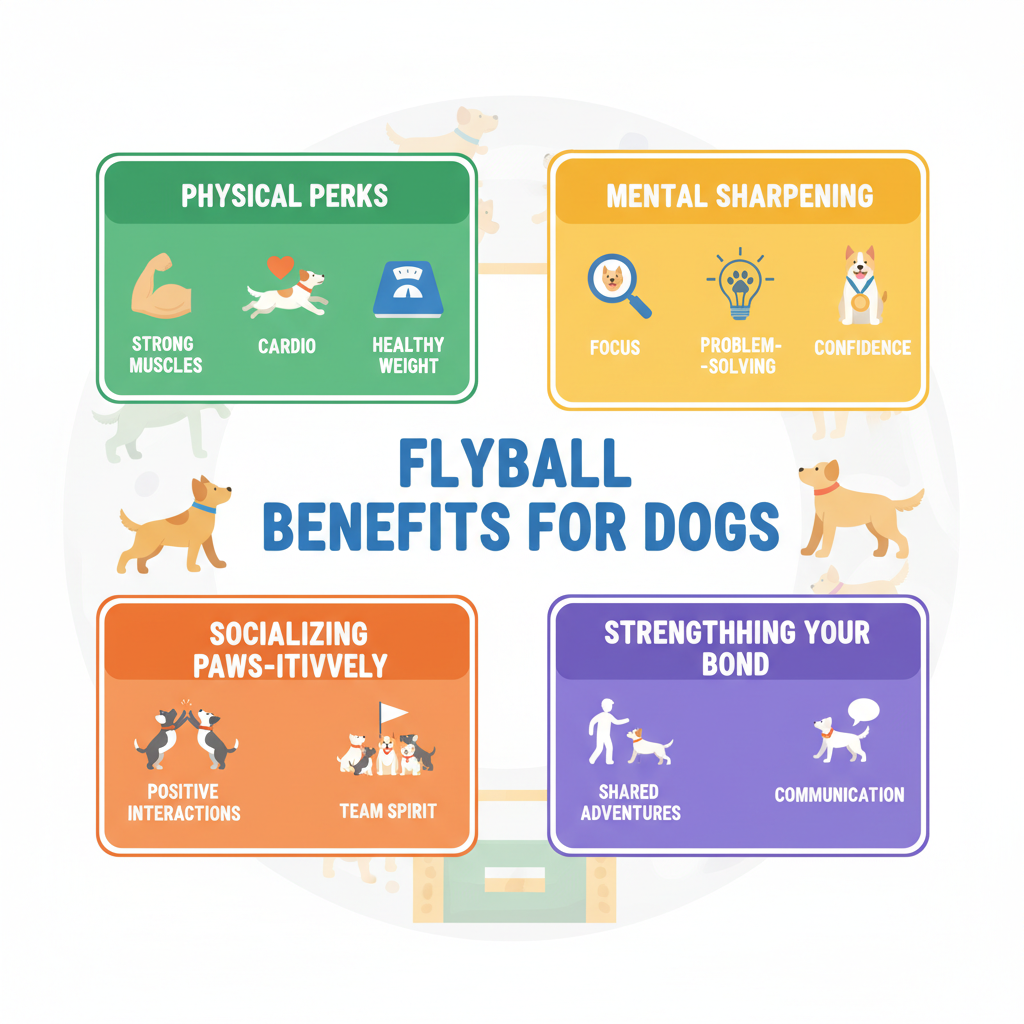
Physical Perks
- Superb Exercise: Flyball gives dogs a fantastic full-body workout, boosting their heart health, muscle strength, and stamina.
- Agility and Coordination: Dogs learn to deftly navigate obstacles, improve their balance, and hone their fine motor skills.
- Healthy Weight Management: The high-intensity nature of the sport helps pups stay lean and fit.
Mental Sharpening
- Problem-Solving Skills: Dogs quickly learn to anticipate when the ball will release, navigate the course, and react in a flash.
- Laser Focus: The sport demands dogs stay focused despite all the exciting distractions around them.
- Confidence Booster: Successfully completing the course and helping their team win truly gives a dog’s self-esteem a magnificent lift.
Socializing Paws-itively
- Positive Interactions: Dogs get exposed to all sorts of environments, people, and other dogs in a structured, friendly setting.
- Team Spirit: While dogs don't directly interact on the course, they learn to be a part of a team, waiting patiently for their turn amidst all the excitement.
Strengthening Your Bond
- Shared Adventures: Training and competing together creates a deeper, more meaningful bond between you and your dog.
- Clearer Communication: You'll learn to truly read your dog's signals and fine-tune your communication, leading to a much richer understanding.
Things to Keep in Mind: Potential Challenges
While flyball is an incredible sport, there are a few important considerations.
Risk of Injuries
Just like any athletic pursuit, there's always a chance of injury. Common issues can include:
- Muscle strains or sprains: From all those rapid movements and powerful jumps.
- Pad abrasions: From quick turns and running on different surfaces.
- Joint stiffness: Especially for dogs with existing conditions.
What you can do: Always ensure proper warm-ups, cool-downs, regular conditioning, and correct training techniques to help minimize risks. Regular veterinary check-ups are also super important.
Time Commitment
Flyball definitely requires a decent chunk of your time for:
- Training sessions: Regular practices with your club are a must.
- Travel to competitions: Tournaments often mean traveling, sometimes even overnight stays.
- Learning and practice: Both you and your dog will be learning and practicing new skills.
Costs Involved
Expenses for flyball can add up, including:
- Club membership fees.
- Entry fees for competitions.
- Travel expenses (gas, maybe a hotel).
- Basic equipment (good leashes, collars, toys, sometimes specific gear for your dog).
- Veterinary care: Including any potential injury treatments.
Your Dog's Unique Personality
Most dogs absolutely love flyball, but it’s not for every single pup. Dogs who are overly anxious, reactive around other dogs, or just don't have much interest in retrieving might find it stressful instead of fun. It's crucial to pay attention to your dog’s personality and make sure they’re truly enjoying themselves.
How old should a dog be to start flyball?
Pups can begin basic training like hurdle work and building their retrieve drive early on. However, they generally shouldn't compete until they're fully grown, usually around 12 to 18 months old, to protect their developing joints. Always chat with your local club for their specific guidelines.
Can small dogs do flyball?
Absolutely! Small dogs are often incredibly valuable on flyball teams. Remember, the hurdle height is set for the smallest dog on the team. So, if there’s a little dog on your team, all the dogs—even the big ones—get to jump lower hurdles, which can make the whole team faster!
Do all dogs on a flyball team have to be the same breed?
Not at all! Flyball teams are typically a wonderful mix of all sorts of breeds, and even mixed breeds. What really matters is finding dogs with the right skills and temperament, not how uniform their pedigrees are.
What equipment do I need to get started with flyball?
To begin, you'll need a flat collar, a sturdy leash, and a tennis ball (or your dog's absolute favorite retrieve toy). Your flyball club will provide all the specialized gear like hurdles and the flyball box for training and competitions.
Is flyball dangerous for dogs?
While any athletic sport carries some risk, flyball is generally very safe when you follow proper training methods. Common risks include muscle strains or pad injuries, but serious injuries are quite rare. Good warm-ups, cool-downs, conditioning, and regular veterinary care can significantly reduce these risks.
What's the world record for flyball?
The fastest NAFA-sanctioned flyball time stands at an incredible 14.182 seconds, set by the team "Touch N Go" in 2023. Talk about speed!