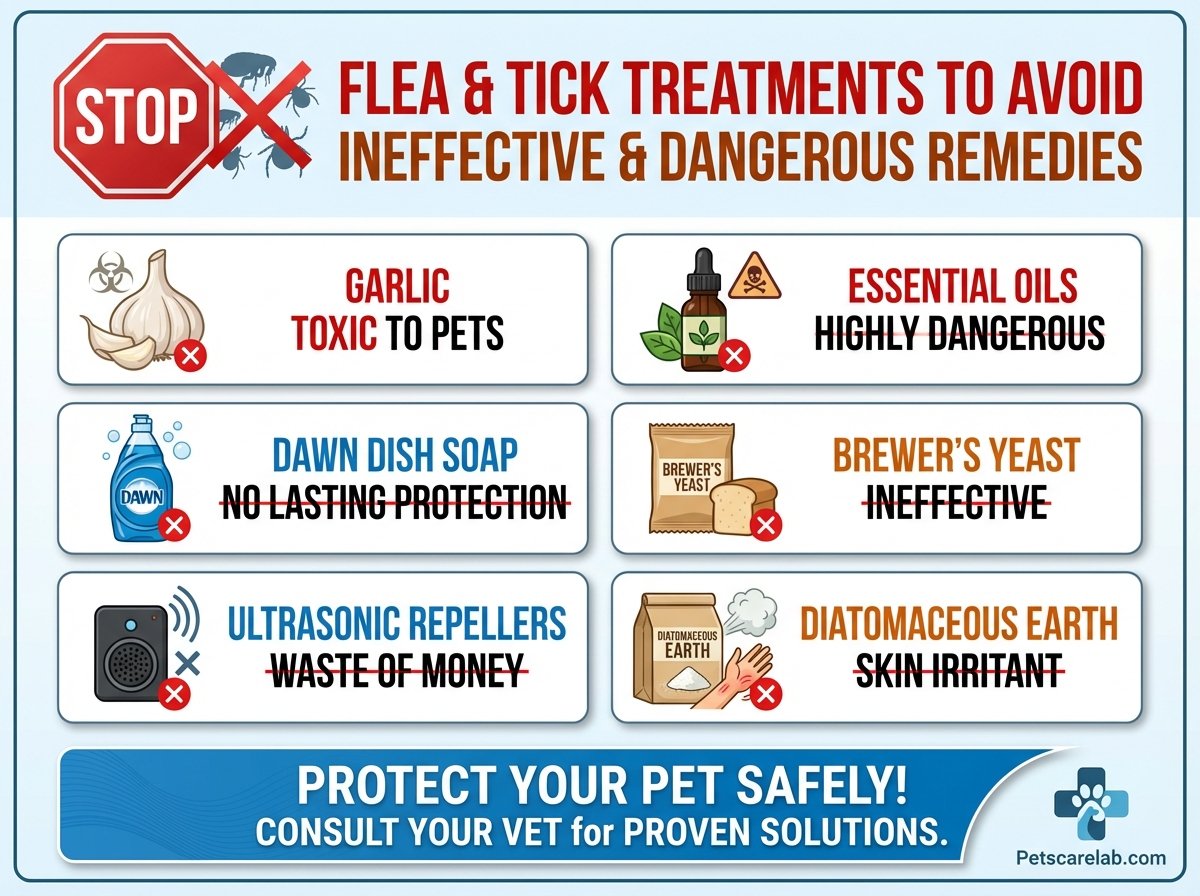
Don't Waste Your Money (or Risk Their Health): Flea and Tick Treatments to Avoid
Fleas and ticks aren't just annoying for your pet; these tiny invaders carry nasty diseases and can make your furry friend miserable. You want to protect them, and luckily, there are lots of great prevention products out there. But with so many options, how do you know which ones actually work—and more importantly, which flea and tick treatments to avoid?
Our team at Petscarelab knows how easy it is to fall for popular "natural" or home remedies. The truth is, many of these aren't just useless; they can be downright dangerous for your beloved pet. Let's look at the common culprits you should always steer clear of.
Garlic: A Toxic "Remedy" That Fails
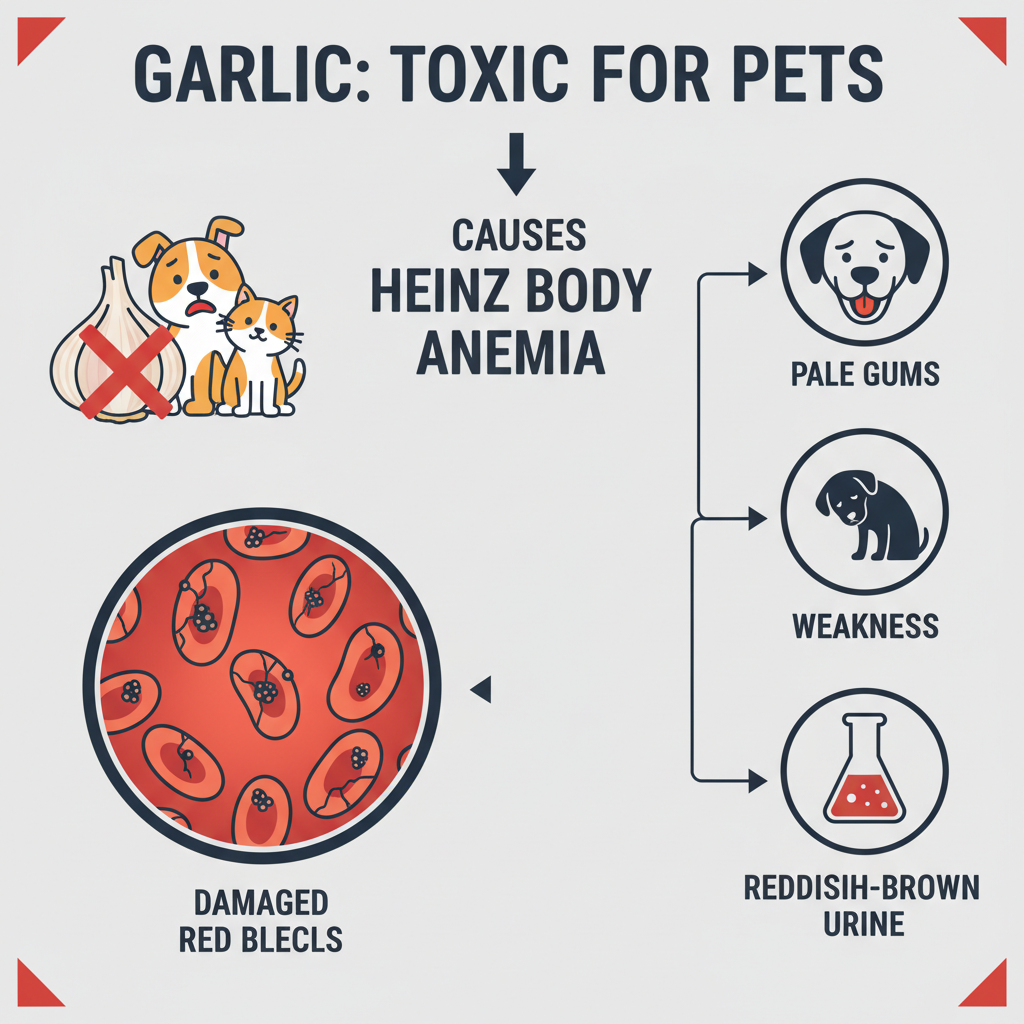
You might hear old wives' tales about giving your dog or cat garlic to ward off fleas and ticks. Sounds natural, right? Wrong. Not only is this idea utterly ineffective at repelling pests, but garlic is also surprisingly toxic to our furry friends. It can damage their red blood cells, leading to a serious condition called Heinz body anemia.
Keep an eye out for these signs of anemia if you think your pet got into some garlic:
- Acting tired or sluggish
- Unusual weakness
- Pale gums
- Getting winded easily after short walks or play
- Urine that looks reddish-brown
If you ever suspect your pet has eaten garlic and is showing any of these symptoms, call your vet right away.
Brewer's Yeast: Harmless, But Useless
Brewer's yeast is another popular home remedy touted for flea and tick prevention. The problem? There's zero scientific evidence proving it works to keep pests away. While a little brewer's yeast generally won't hurt your pet, it simply won't give them any protection against fleas or ticks. Save your money and skip this one.
Essential Oils: A Potentially Deadly Mistake
Essential oils have exploded in popularity, but they can be incredibly dangerous for pets. Many, like tea tree oil, are highly toxic to dogs and cats, even in tiny amounts. Applying them to skin, letting pets lick them, or even just diffusing them too close can cause serious problems. These oils often lead to skin irritation, tummy upset, and even scary neurological symptoms like tremors and seizures.
If a dog or cat gets into tea tree oil or other essential oils, you might see signs like:
- Sluggishness
- Weakness
- Vomiting and excessive drooling
- Stumbling or looking uncoordinated
- Shaking or tremors
- Feeling unusually cold (hypothermia)
- In very rare cases, severe liver damage or even death
Never rub essential oils directly onto your pet's fur or skin. Keep diffusers well out of their reach. If you think your pet has ingested essential oils, contact your veterinarian or your local pet poison control center immediately.
Dawn Dish Soap: A Temporary Fix with Drawbacks
Yes, Dawn dish soap can kill fleas. It suffocates them on contact. However, it's a terrible choice for long-term flea and tick prevention. As soon as your pet dries off, they're completely unprotected, ready for new fleas to jump right back on. Plus, bathing your pet frequently with dish soap strips their skin and coat of natural oils, leading to dryness, itchiness, and irritation.
It's also worth noting that most over-the-counter flea shampoos work the same way—they're contact killers that offer no lasting protection.
Ultrasonic Pest Repellers: A Waste of Money
These gadgets claim to blast fleas and ticks away with high-frequency sound waves. The reality? Our research, and that of veterinary specialists, finds no scientific evidence to back up these claims. These devices are generally ineffective and will just drain your wallet without protecting your pet.
Diatomaceous Earth: Limited, Irritating Protection
Food-grade diatomaceous earth (DE) sometimes gets mentioned as a "natural" flea and tick control. While DE can kill fleas and ticks by dehydrating their exoskeletons, its effectiveness is very limited when you apply it directly to a pet. It mainly works in the environment, like in carpets or yard areas, not as a direct pet treatment.
Putting DE on your pet can dry out their skin and cause irritation. If inhaled by you or your pet, it can also lead to respiratory problems.
What Flea and Tick Treatments *Do* Work?
Now that we know which flea and tick treatments to avoid, let's talk about the ones that actually protect your pet. The most effective and safest options are those recommended by your veterinarian. These products have been thoroughly tested and are proven to be both safe and highly effective.
Here are some types of flea and tick treatments our team at Petscarelab often recommends:
Oral Flea and Tick Medications
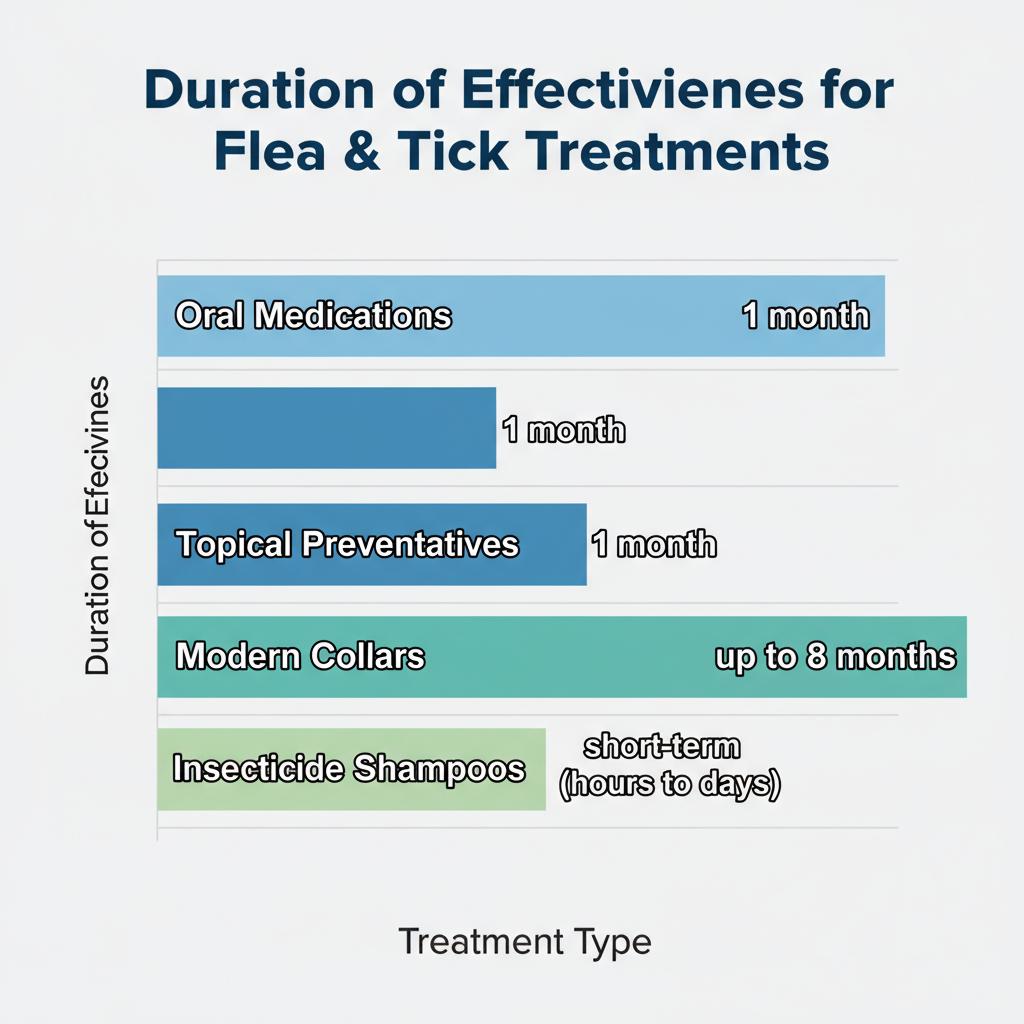
These are super convenient and incredibly effective. Your pet takes a tasty chew, and the medication gets into their bloodstream, killing fleas and ticks when they bite. Most oral medications work for a month and are easy to give.
- Examples: Bravecto, Nexgard, Simparica TRIO, Credelio
Topical Flea and Tick Preventatives
Often called "spot-ons," these medications go on a small patch of skin, usually between your pet's shoulder blades. The active ingredients spread across the skin and into the hair follicles, killing fleas and ticks either on contact or after they take a bite. You typically apply these once a month.
- Examples: Frontline Gold, K9 Advantix II, Revolution Plus, Vectra 3D
Modern Flea and Tick Collars
Today's flea and tick collars are a huge step up from older versions. The best ones release active ingredients that spread over your pet's skin and coat, offering protection that can last for several months.
- Example: Seresto Flea and Tick Collar
Flea and Tick Shampoos (with Insecticides)
While many basic flea shampoos are contact killers with no lasting power, some medicated shampoos containing insecticides can kill fleas and ticks on contact and give short-term protection. These are generally not a standalone prevention method but can be really helpful for kicking off the treatment of a severe infestation alongside other products.
- Example: Adams Plus Flea & Tick Shampoo
Yard Treatments
If your yard is crawling with fleas and ticks, professional pest control or specific yard treatments can drastically cut down the population. These target pests in their outdoor environment, stopping them from reinvading your pet and home.
- Example: BioSpot for Pets
Choosing the Right Flea and Tick Treatment for Your Pet
Always, always talk to your veterinarian before picking a flea and tick treatment for your pet. They're your best resource for recommending the perfect product based on your pet's unique needs, including their:
- Species (dog or cat)
- Age and weight
- Current health status
- Lifestyle (think about how much time they spend outside!)
- Risk of flea and tick exposure in your local area
Your vet can help you choose a safe, effective product that will keep your furry friend protected from these annoying—and sometimes dangerous—pests.