Edema in Dogs: What Those Swollen Spots Mean for Your Pup
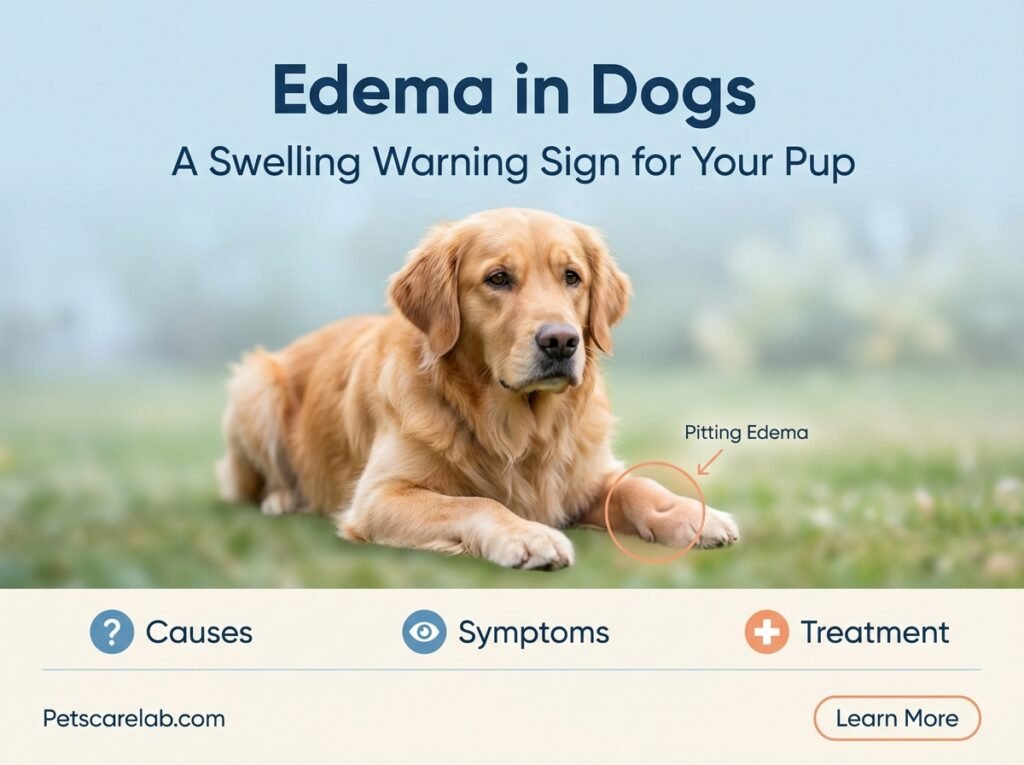
Ever notice a puffy spot on your dog, almost like they've been stung by a bee, but it's not going away? That might be edema in dogs, a common term for swelling caused by too much fluid trapped in your furry friend's body tissues. This swelling can pop up in just one area, like a swollen paw, or spread throughout their whole body. Edema isn't a disease on its own; instead, think of it as a flashing warning light telling you something else is happening inside your dog.
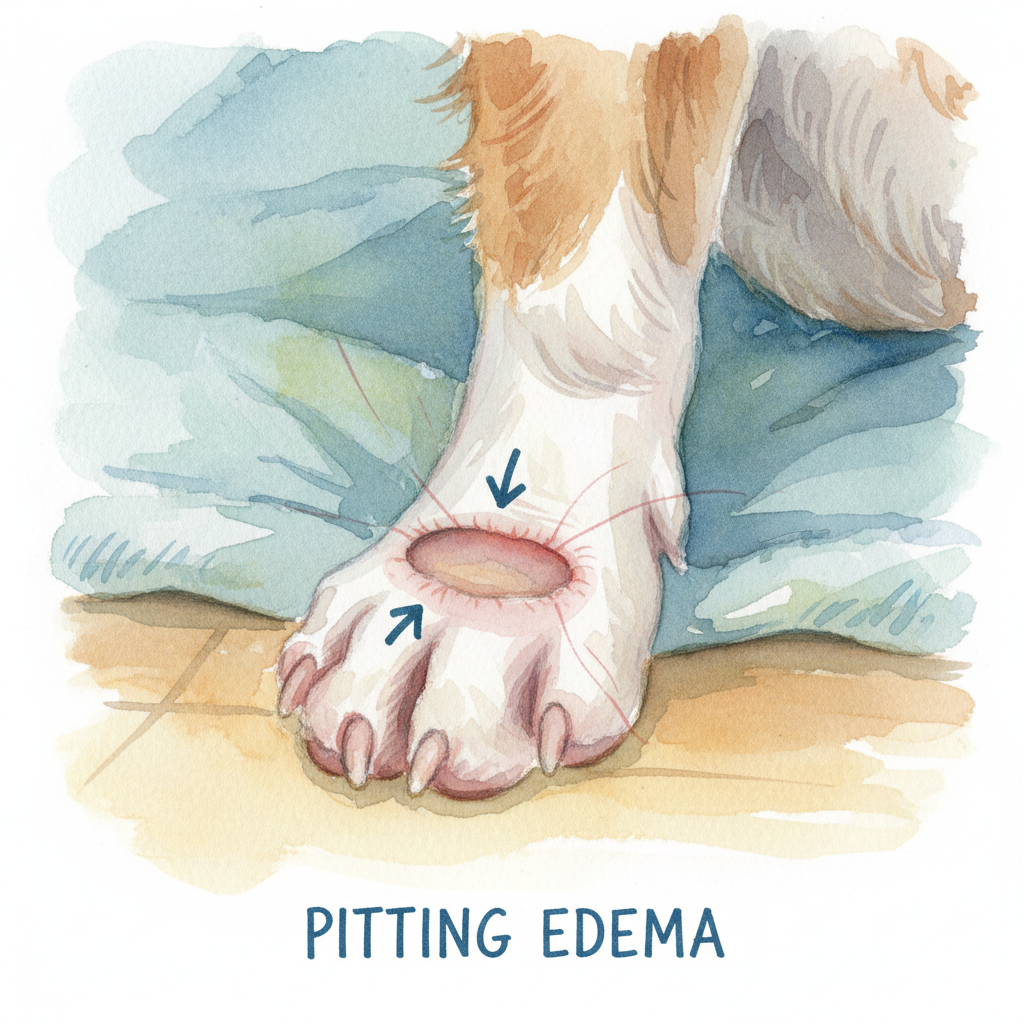
You'll usually spot edema as a soft, fluid-filled lump right under their skin. If you gently press on the swollen area, your finger might leave a temporary little dimple, which we call "pitting edema." Depending on what's causing it and where it is, edema can be completely painless or make your dog quite uncomfortable.
Types of Edema: Where Swelling Can Happen
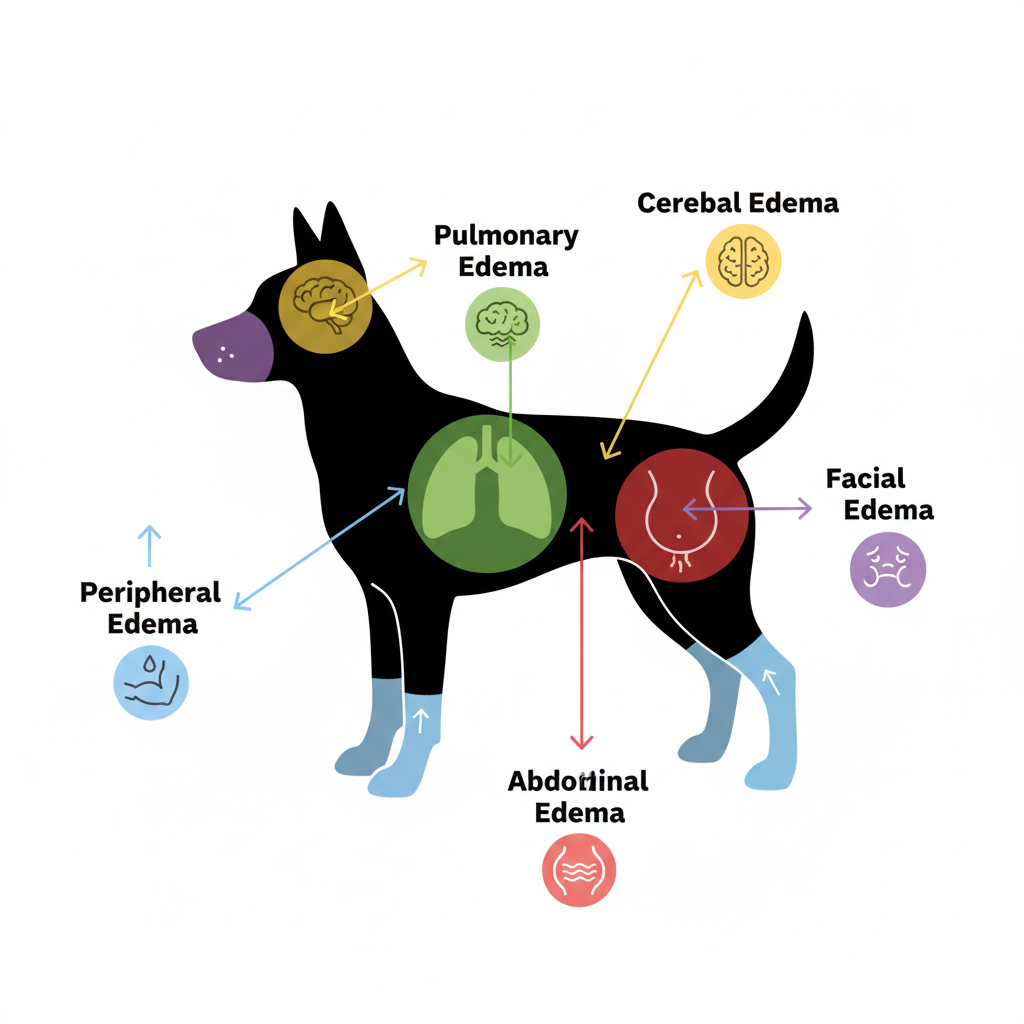
Our team at Petscarelab knows that edema can show up in different ways, which often helps us understand what might be going on. Here are the common types, usually categorized by where they appear:
- Peripheral Edema: This is swelling in your dog's legs or paws.
- Pulmonary Edema: Fluid building up in the lungs, making it hard for your pup to breathe.
- Cerebral Edema: A very serious condition where the brain swells.
- Abdominal Edema (Ascites): When fluid collects in the belly, making it look distended or bloated.
- Pitting Edema: That temporary indentation you see when you press on the swollen spot.
- Non-Pitting Edema: When you press on the swollen area and it doesn't leave a dimple.
- Generalized Edema (Anasarca): Widespread swelling that covers a large part of your dog's body.
Spotting Edema: What Symptoms to Look For
The signs of edema really depend on where the fluid is gathering and how bad it is. Keep a close eye on your dog for these general clues:
- Swelling in a specific body part, like a leg, their face, or their belly. Sometimes, it can be all over.
- The skin over the swollen area might look tight, shiny, or even a bit discolored.
- Your dog seems tired or weaker than usual.
- They don't want to move around as much.
Here's what you might see with specific types of edema:
- Leg or Paw Swelling (Peripheral Edema):
- One or more legs or paws look puffy.
- Your dog struggles to walk or limps.
- The affected limb might be painful or tender to touch.
- Lung Fluid (Pulmonary Edema):
- A cough, especially at night or when your dog is resting.
- Trouble breathing: panting quickly, taking shallow breaths, or breathing with an open mouth.
- Gasping for air.
- Gums that look bluish.
- Weakness or even collapsing.
- Brain Swelling (Cerebral Edema):
- Changes in how your dog acts or their level of awareness.
- Seizures.
- Difficulty walking, seeming wobbly, or walking in circles.
- Pressing their head against walls or furniture.
- Blindness.
- Belly Fluid (Abdominal Edema/Ascites):
- A noticeably swollen or bloated tummy.
- Not wanting to eat.
- Vomiting.
- Breathing difficulties if the fluid pushes against their diaphragm.
- Facial Swelling (Facial Edema):
- Puffiness around the eyes, muzzle, or their whole face.
- Often a sign of an allergic reaction.
If you ever notice any of these signs of swelling in your dog, don't wait. Call your veterinarian right away. Edema can signal a serious underlying health problem that needs quick attention.
Why Do Dogs Get Edema? Understanding the Causes
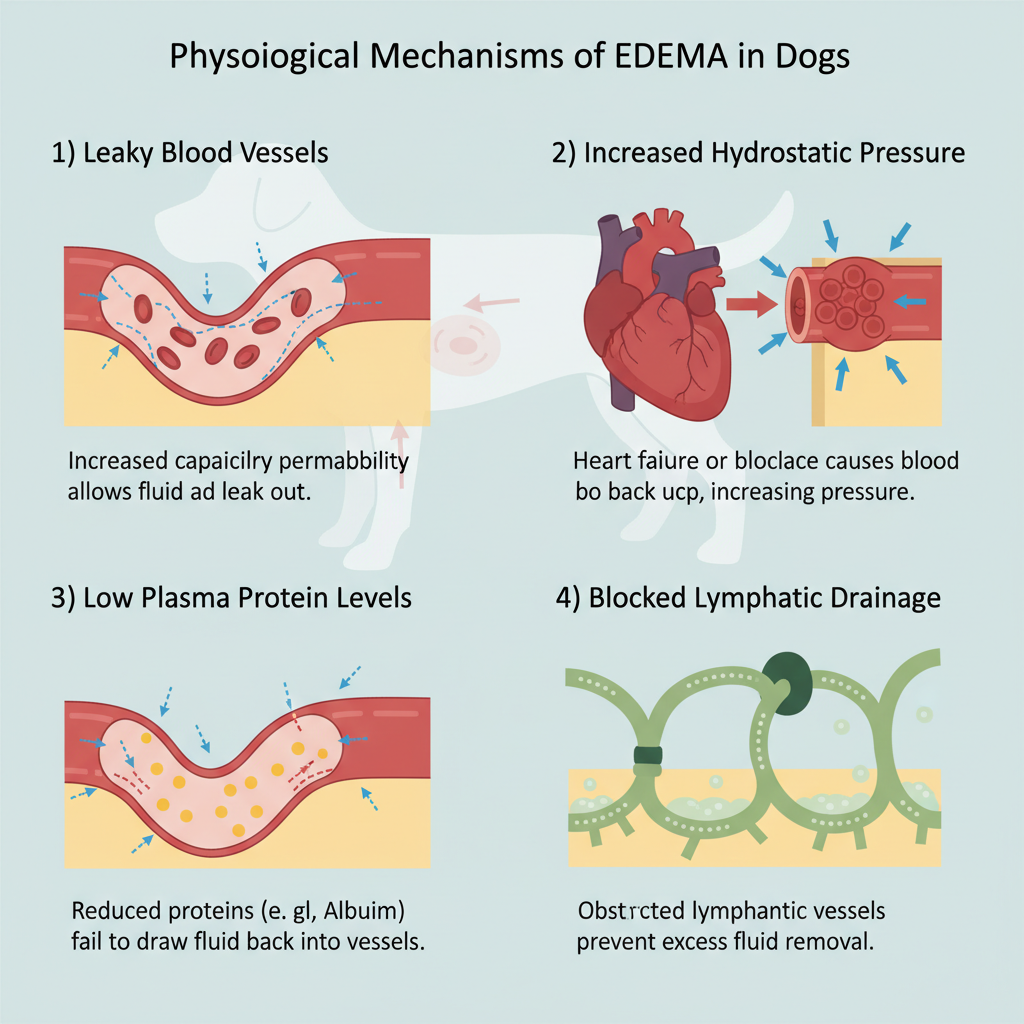
Edema happens when fluid leaks out of your dog's blood vessels and pools in the surrounding tissues. Several things can cause this, and our research shows these are the most common culprits:
- Leaky Blood Vessels: Sometimes, the tiny blood vessels (capillaries) become "leaky," letting fluid escape more easily. This can happen because of:
- Inflammation: From injuries, infections, or allergic reactions.
- Allergies: Things like insect stings, certain foods, or even vaccine reactions often cause a puffy face.
- Toxins: Some poisons can damage these tiny vessels.
- Too Much Pressure Inside Vessels: This is like a hose with too much water pressure, forcing fluid out.
- Heart Failure: If your dog's heart can't pump blood efficiently, blood backs up, increasing pressure in the vessels. This is a frequent cause of fluid in the lungs and belly.
- Blood Clots or Blockages: Anything that stops blood flow can increase pressure behind the blockage.
- Not Enough Protein in the Blood: Proteins, especially albumin, act like sponges, pulling fluid back into the blood vessels. If these protein levels are too low, fluid leaks out.
- Severe Liver Disease: The liver makes albumin; if it's damaged, protein levels drop.
- Serious Kidney Disease: The kidneys might accidentally lose protein into the urine.
- Severe Gut Problems: The intestines can lose protein.
- Poor Nutrition: A diet lacking enough protein.
- Blocked Lymphatic System: The lymphatic system normally collects extra fluid and returns it to the bloodstream. If it's blocked or damaged, fluid builds up.
- Tumors: These can squeeze or invade lymphatic vessels.
- Surgery or Injury: These can damage the vessels.
- Infections: Swollen lymph nodes can block drainage.
- Other Reasons:
- Injury: A direct bump or wound can cause local swelling.
- Infections: Abscesses, for example, can cause local inflammation and fluid.
- Certain Medications: Some drugs can cause fluid retention as a side effect.
- Hypothyroidism: Low thyroid hormone levels can sometimes contribute to fluid buildup.
How Vets Figure Out the Cause of Edema
Diagnosing edema means finding out what's causing it. Your vet will start with a thorough physical exam, checking for swelling, listening carefully to your dog's heart and lungs, and feeling their belly.
Here are some of the tests they might recommend:
- Blood Tests:
- Complete Blood Count (CBC): To look for infection, inflammation, or anemia.
- Chemistry Panel: This checks organ function (liver, kidneys), electrolytes, and protein levels (especially albumin).
- Thyroid Testing: If they suspect low thyroid levels.
- Urinalysis: To see if your dog is losing protein in their urine, check kidney function, or look for infection.
- Imaging:
- X-rays: Of the chest (to see if there's fluid in the lungs or if the heart is enlarged) or abdomen (to check for fluid in the belly or organ size).
- Ultrasound: Of the abdomen (to visualize organs and fluid) or heart (an echocardiogram) to assess heart function and diagnose heart failure.
- Fluid Analysis: If there's fluid in the abdomen or chest, the vet might collect a sample to analyze it. This can often reveal the underlying cause.
- Biopsy: Sometimes, a small tissue sample from the swollen area is needed to diagnose things like tumors or severe inflammation.
- Allergy Testing: If an allergic reaction is suspected for facial swelling.
Treating Edema: Getting Your Dog Back to Normal
Treatment for edema focuses on tackling the root cause, not just the swelling itself.
General care to help your dog might include:
- Diuretics: These are medications that help your dog's body get rid of extra fluid. Vets often use them for fluid in the lungs or belly due to heart failure.
- Special Diets: A low-sodium diet might be recommended for dogs with heart or kidney disease to help reduce fluid buildup.
- Fluid Removal: For severe fluid in the belly or around the lungs, the vet might drain the fluid manually to relieve pressure and make your dog more comfortable.
- Oxygen Therapy: For dogs who are really struggling to breathe because of fluid in their lungs.
Treating the underlying cause often involves:
- Heart Disease: Medications to help the heart work better.
- Kidney Disease: Specific diets, medications to manage blood pressure, and sometimes IV fluids.
- Liver Disease: Medications to support the liver and dietary changes.
- Allergic Reactions: Antihistamines or corticosteroids to calm inflammation.
- Infections: Antibiotics.
- Injury: Rest, anti-inflammatory medications, and addressing the specific wound.
- Hypothyroidism: Thyroid hormone supplements.
- Cancer: Surgery, chemotherapy, or radiation, depending on the type and stage.
The outcome for edema in dogs varies a lot depending on what's causing it and how quickly it's found and treated. Catching it early and getting the right treatment is super important for a good recovery.
Long-Term Care: Living with and Managing Edema
How your dog recovers and what long-term care they need depends entirely on the cause of the edema. Many conditions that lead to swelling, like heart or kidney disease, need ongoing management.
Here's what long-term management might involve:
- Medication Schedule: Giving your dog their prescribed medications regularly, whether it's diuretics, heart meds, or thyroid supplements.
- Dietary Adjustments: Sticking to the special diet your vet recommends, such as a low-sodium or prescription kidney diet.
- Regular Vet Visits: Taking your dog for routine check-ups to monitor their condition, adjust medications, and run follow-up tests like blood work or X-rays.
- Home Monitoring: Keeping a close eye on your dog for any changes in their symptoms, energy levels, breathing, or if the swelling comes back.
- Environment Adjustments: If your dog has heart or lung conditions, keeping them in a calm, cool environment and limiting strenuous exercise.
It's absolutely essential to follow your veterinarian's instructions for ongoing care. If you notice your dog's symptoms getting worse or new signs of edema appear, contact your vet immediately.
What's the quickest way to get rid of swelling in a dog?
The fastest way to reduce swelling depends completely on what's causing it. For an allergic reaction, your vet might give antihistamines or corticosteroids that work quickly. If fluid buildup is due to heart failure, diuretics can rapidly reduce the fluid. For an injury, cold compresses and rest might help. You must consult a vet to figure out the cause and the right treatment.
Is edema painful for dogs?
Yes, edema can be painful, especially if it's localized because of an injury, infection, or serious inflammation. Swelling in critical areas like the brain (cerebral edema) or lungs (pulmonary edema) can cause a lot of distress and discomfort due to pressure and impaired function. However, some types of edema, especially mild swelling in the legs, might not hurt much at all.
Can dogs get over pulmonary edema?
Yes, dogs can recover from pulmonary edema, particularly if the underlying cause is identified and treated quickly. For example, pulmonary edema caused by heart failure often gets much better with diuretics and heart medications. However, it usually requires ongoing management of the underlying heart condition. The outlook depends on how severe the fluid in the lungs is, what caused it, and your dog's overall health.