
When a female dog experiences her fertile period, known as estrus, it’s a completely natural and significant stage in the life of an unspayed pet. For many pet parents, understanding dogs in heat can bring about questions like, “What exactly does ‘in heat’ mean for my dog?” or “How long should I expect my dog to be in heat?”
Recognizing the various behavioral and physical changes your beloved companion will undergo is crucial for responsible care. Knowing details such as how often your dog comes into heat and the typical duration of this cycle will empower you to be fully prepared and provide the best support.
Key Takeaways for Understanding Dogs in Heat
- A female dog’s reproductive journey, known as the estrous cycle, unfolds through distinct phases.
- The onset of a dog’s first heat can vary widely, from as early as 6 months to as late as 24 months of age.
- Spaying remains the most universally recognized, safe, and effective method for preventing unintended dog pregnancies and playing a vital role in addressing pet overpopulation.
How Often Do Dogs Go Into Heat?
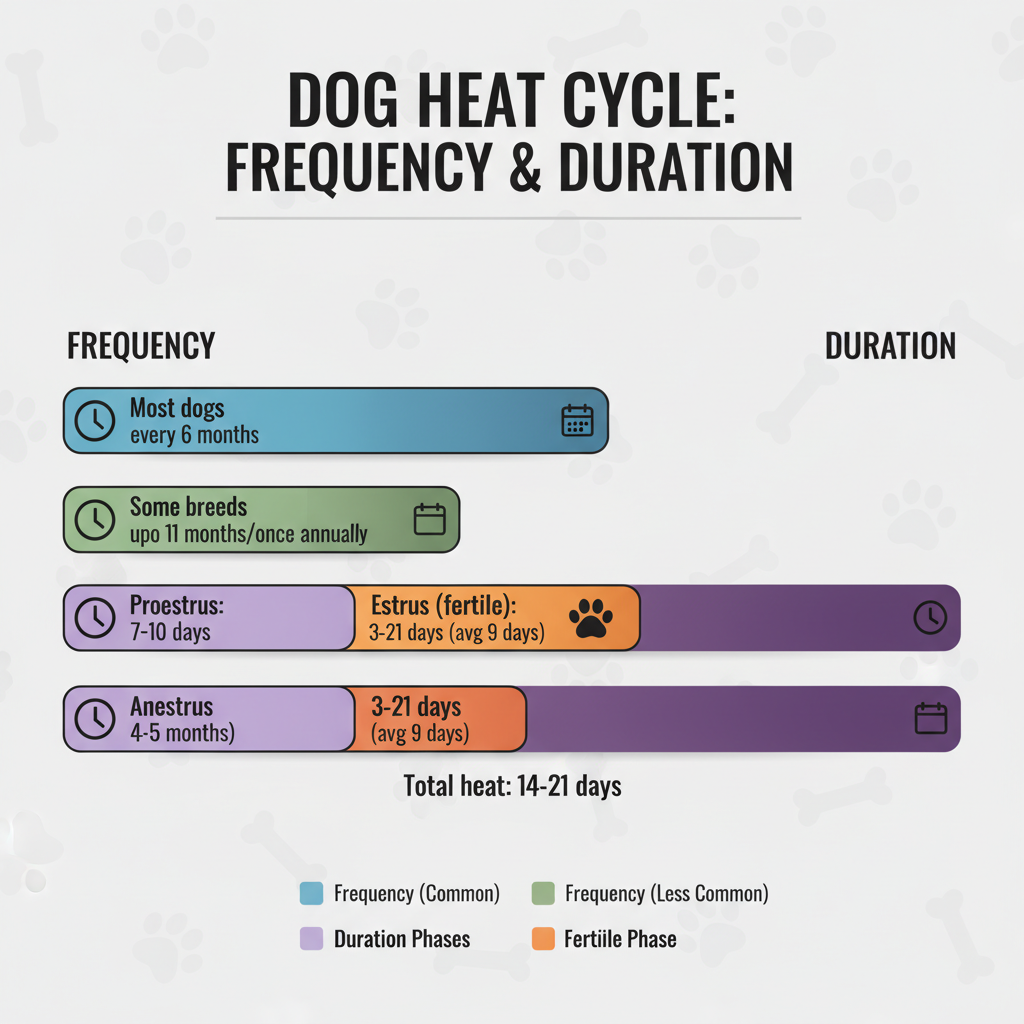
Most female dogs typically enter their heat cycle approximately twice a year, generally occurring every six months. However, the precise timing can vary considerably. Factors such as your dog’s specific breed, her age, and her individual physiology can extend the interval between estrus periods to as long as 11 months. This means that for some breeds, a heat cycle might only occur once annually.
How Long Are Dogs In Heat?
On average, dogs in heat remain in this fertile phase for a duration of 14 to 21 days. This is the critical window during which a female dog is receptive to mating and capable of becoming pregnant. Just as with the frequency of their cycles, the exact length of a dog's heat period can fluctuate based on the same influencing factors of breed, age, and individual health.
Phases of a Dog’s Heat Cycle
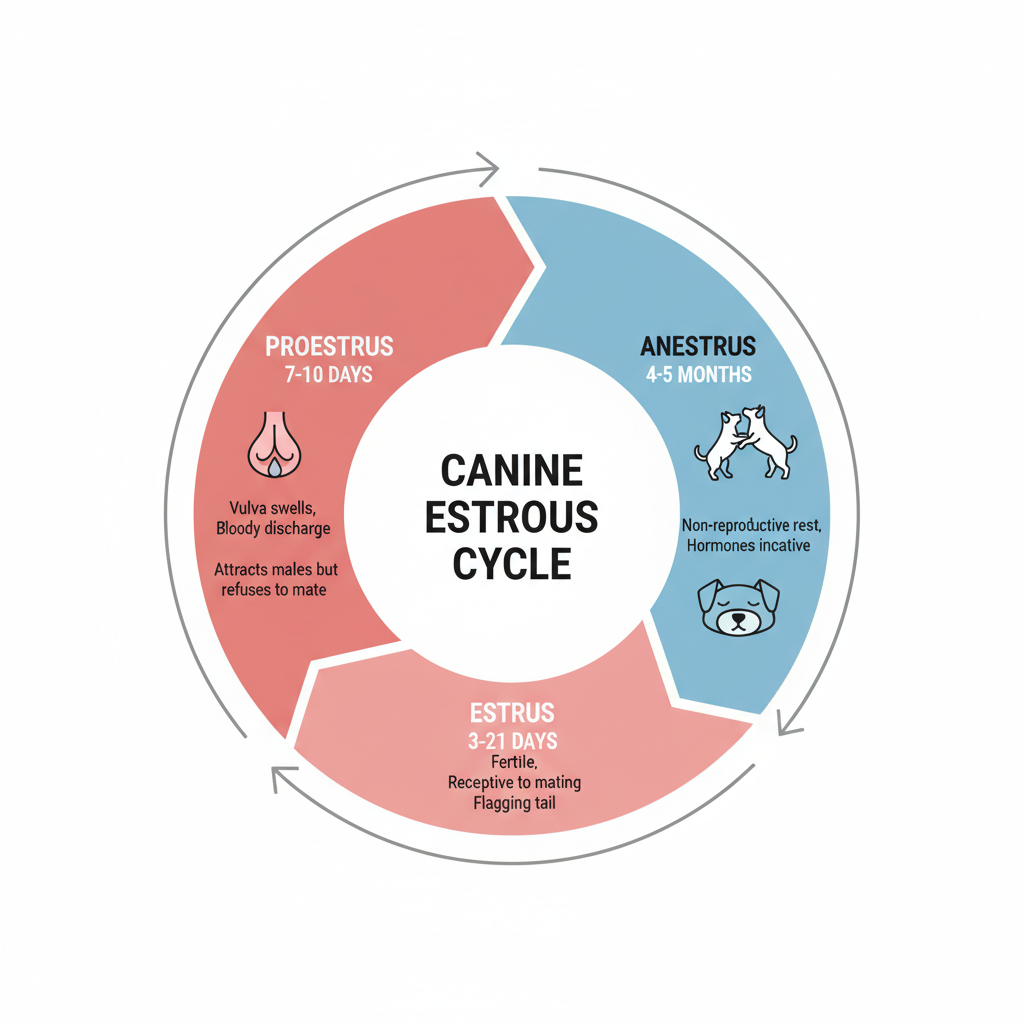
The reproductive cycle of a female dog, scientifically termed the estrous cycle, is a fascinating journey comprising three distinct phases:
- Proestrus marks the initial stage of the heat cycle. During this time, you may observe a noticeable swelling of the vulva and a blood-tinged vaginal discharge. Importantly, female dogs will not yet permit mating in this phase. Proestrus can span anywhere from a few days to a full four weeks, with an average duration of seven to 10 days.
- Estrus is the definitive period commonly referred to as "heat." This is the crucial time when the female dog is fertile and will be receptive to mating. This phase of the cycle can last from as little as three days to as long as 21 days, typically averaging around nine days.
- Anestrus represents the quiescent period when the cycling ceases. This non-reproductive phase usually extends for approximately four to five months, offering a vital time for the body to rest and prepare for the next cycle.
When Do Dogs Go Into Heat?
A dog’s first experience with heat can happen quite early, as young as 6 months old, or much later, even up to 24 months of age. While pregnancy is biologically possible during this initial timeframe, it's generally not advisable, as the dog is still maturing physically and emotionally.
The timing of a dog’s inaugural heat cycle is significantly influenced by her size. Smaller dog breeds often mature earlier, experiencing their first estrus cycle around 6 months old. In contrast, larger or giant-breed dogs tend to have a delayed onset, often not coming into heat until they are 18 to 24 months old.
Symptoms of a Dog In Heat
Recognizing the signs your dog is in heat is essential for her well-being and responsible management. Common symptoms include:
- Swollen, often more prominent, nipples
- A visibly swollen vulva
- Bloody or pink vaginal discharge
- An increase in the frequency of urination
- Unusual restlessness or fidgeting
- A temporary decrease in appetite
- Excessive licking of the vulva
- Noticeable changes in behavior (which can range from increased affection to mild aggression)
- Markedly increased attention and pursuit from male dogs

Do Dogs Go Through Menopause?
Unlike humans, dogs do not experience menopause. Their reproductive cycles operate differently, allowing female dogs to continue going into heat and potentially becoming pregnant throughout their lives, even into their senior years.
However, as your dog ages, you may notice some changes: her cycles might occur less frequently, or the time between one heat and the next might seem longer. These are generally considered normal age-related variations.
Nevertheless, if your dog completely stops having cycles, it's imperative to consult a veterinarian. This could signal an underlying health condition or a metabolic disease process that requires professional attention.
While senior dogs can technically get pregnant, it's generally not advisable. Litters from older mothers tend to be smaller, there may be a higher incidence of puppy deaths, and labor can be significantly more challenging if carried to term. Furthermore, female dogs over 8 years of age face an increased risk of developing pyometra, a severe and potentially life-threatening uterine infection.
What To Do When Your Dog Is In Heat
Managing dogs in heat requires vigilance and care. Dog diapers offer a temporary solution to help maintain cleanliness in your home during her cycle and can provide some barrier against unintended pregnancy. If you opt for a dog diaper, ensure it's leakproof, highly absorbent, comfortable for your pet, and, most importantly, securely fitted. Remember to change it frequently, ideally every three to four hours, for hygiene and comfort.
For households with both male and female dogs, absolute separation is paramount. Utilize dog crates, dog gates, and securely closed doors to keep them apart when your female dog is in heat, as a dog diaper is not a foolproof method of pregnancy prevention.
During this sensitive time, it is strongly advised to avoid dog parks or other areas where many dogs congregate. When walking your dog outside, always keep her securely on a leash. The determination of dogs to reproduce should never be underestimated, whether it's your dog or another's. Extra vigilance is essential, and even a securely fenced yard may not be sufficient on its own.
At Petscarelab, we emphasize that spaying your dog—a procedure involving the removal of the ovaries and/or uterus—is the most common, safe, and overwhelmingly effective method for preventing unwanted dog pregnancies and making a significant contribution to reducing pet overpopulation. A dog spay procedure is permanent and irreversible, offering a lifelong solution for your pet's health and responsible population management.
Do dogs get periods?
A heat cycle in dogs can be broadly compared to human menstruation, though they are biologically different. When a female dog is in heat, she typically experiences a bloody discharge as part of her reproductive cycle, which occurs approximately twice a year. This signifies her fertile phase.
What are common behaviors of a female dog in heat?
Common behavioral indicators that a dog is in heat include restlessness, noticeable changes in temperament (ranging from increased affection to minor aggression), more frequent urination, and excessive licking of her vulva. Physical signs also typically involve a swollen vulva, enlarged nipples, and a bloody or pink vaginal discharge.
Do male dogs go into heat?
No, male dogs do not experience "heat" cycles. The term "in heat" specifically refers to the female reproductive cycle, as male dogs do not possess a uterus and therefore do not undergo estrous cycles.
How do male dogs know a female dog is in heat?
Male dogs possess an incredibly acute sense of smell, allowing them to detect when a female dog is in heat through the emission of powerful pheromones. These specific chemical signals are present in a female dog’s urine and vaginal discharge, acting as an irresistible beacon to potential mates.