Decoding Your Dog's Tail Wag Meaning
Ever wonder what your dog is really trying to tell you when their tail goes into overdrive? Most of us instantly think "happy!" when we see a wagging tail, and that’s often true. But the dog tail wag meaning goes much deeper. It's a rich language, not just a simple sign of joy. Understanding these subtle signals can help you truly connect with your pup and avoid misunderstandings.
Your dog’s tail isn't just for balance; it's a vital communication tool they use with other dogs, animals, and us humans. When you see that tail moving, know it's a complex message, not just a happy wiggle. The speed, direction, and even how high they hold it all play a role in what they're trying to say.
Interestingly, dogs don't wag their tails when they're alone – it's a social signal, plain and simple. Puppies typically start their tail wags around 30 to 50 days old, right when they're getting more social with their littermates. This tells us that tail wagging is an instinctive behavior, deeply tied to interacting with others.
What Your Dog's Tail Wag is Really Saying
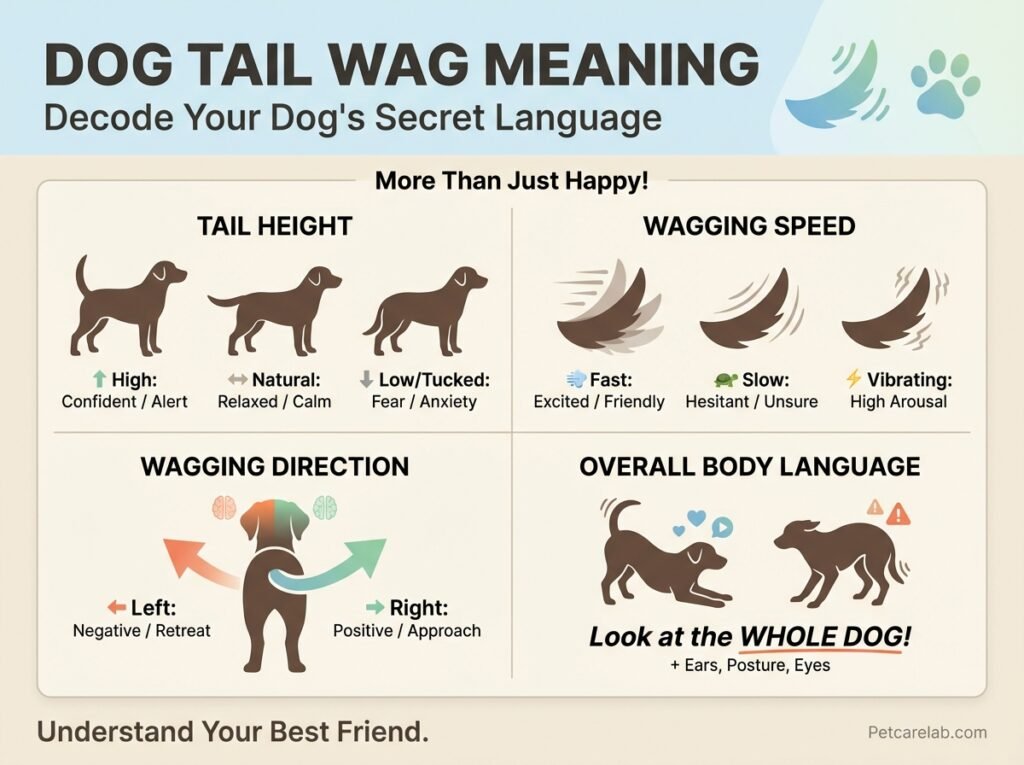
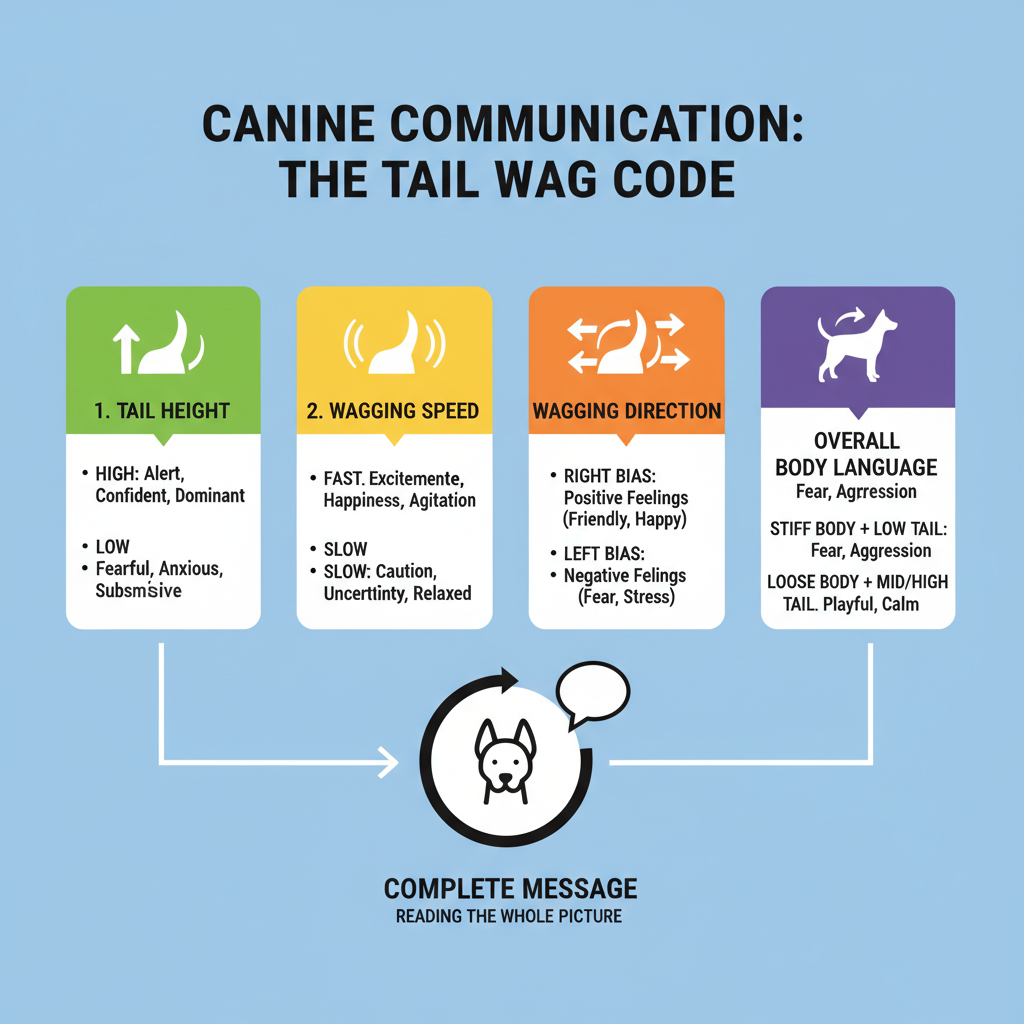
Figuring out the true meaning behind a tail wag isn't always straightforward. It's a puzzle made up of several key pieces:
- Tail Height: How high or low your dog holds their tail.
- Wagging Speed: The tempo of the wag.
- Wagging Direction: Whether the wag leans more to the left or right.
- Overall Body Language: All the other clues your dog's body is giving, like their ears, posture, and facial expression.
Tail Height Tells a Story
The height of your dog's tail offers a window into their emotional state:
- Tail Held High: When your dog’s tail shoots up high, it often signals they're feeling pretty keyed up or confident. If it's held very high and stiff, maybe with a slow, deliberate wag, it could be a warning sign of aggression or dominance.
- Tail Held Naturally: A relaxed tail at its natural height usually means your dog feels calm and comfortable in their surroundings. Think of it as their neutral, happy place.
- Tail Held Low or Tucked: A low or tucked tail is a clear sign of fear, anxiety, insecurity, or submission. When they tuck their tail, dogs are actually trying to hide their scent glands around their rear, which are used for communication.
The Speed of the Wag Matters
How fast that tail moves can also give you clues:
- Fast Wag: Generally, a rapid, broad wag points to excitement and friendliness. Your dog is thrilled to see you or ready for some fun!
- Slow Wag: This can signal hesitation, uncertainty, or a careful assessment of a situation. It might be a prelude to a stronger emotion.
- Small, Quick "Vibrations": This fast, almost trembling wag often happens when dogs are highly aroused and about to act – imagine a hunting dog locked onto a scent.
Does Wagging Direction Have a Meaning?
Our team at Petscarelab, alongside veterinary specialists, has noticed that the way a dog wags their tail – specifically, which side it leans to – can tell us even more:
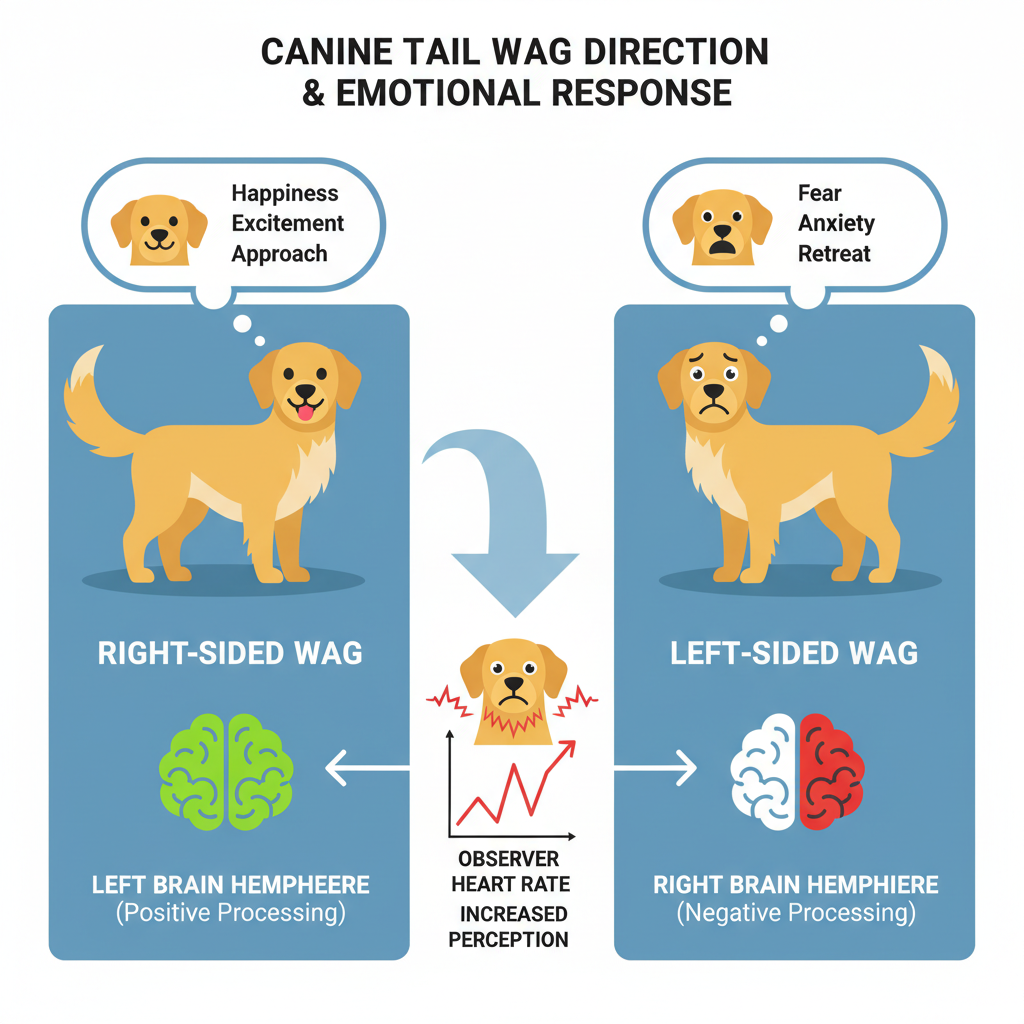
- Right-Sided Wag: This often links to positive emotions like happiness and excitement, suggesting your dog wants to approach and interact. It’s thought that the left side of the brain, which controls the right side of the body, processes these happy feelings.
- Left-Sided Wag: A wag that leans to the left might indicate negative emotions like fear or anxiety, suggesting your dog wants to retreat. The right side of the brain, controlling the left side of the body, is typically involved in processing these more cautious feelings.
When dogs see another dog wagging their tail to the left, their own heart rate can jump, making them perceive it as a potential threat or something to be anxious about.
Look at the Whole Picture: Other Body Language Cues
It’s crucial to observe your dog’s entire body, not just their tail. All their movements work together to form a complete message.
- Relaxed Body + Mid-Height, Broad Wag: Your dog is happy, friendly, and open to interaction.
- Stiff Body + High, Slow Wag: Watch out. This could be a sign of potential aggression or a dog trying to assert dominance.
- Crouched Body + Tucked Tail + Ears Back: Your pup is feeling fearful or submissive and might be trying to make themselves look smaller.
- Play Bow + Wagging Tail: Time to play! Your dog is inviting you or another dog to join in the fun.
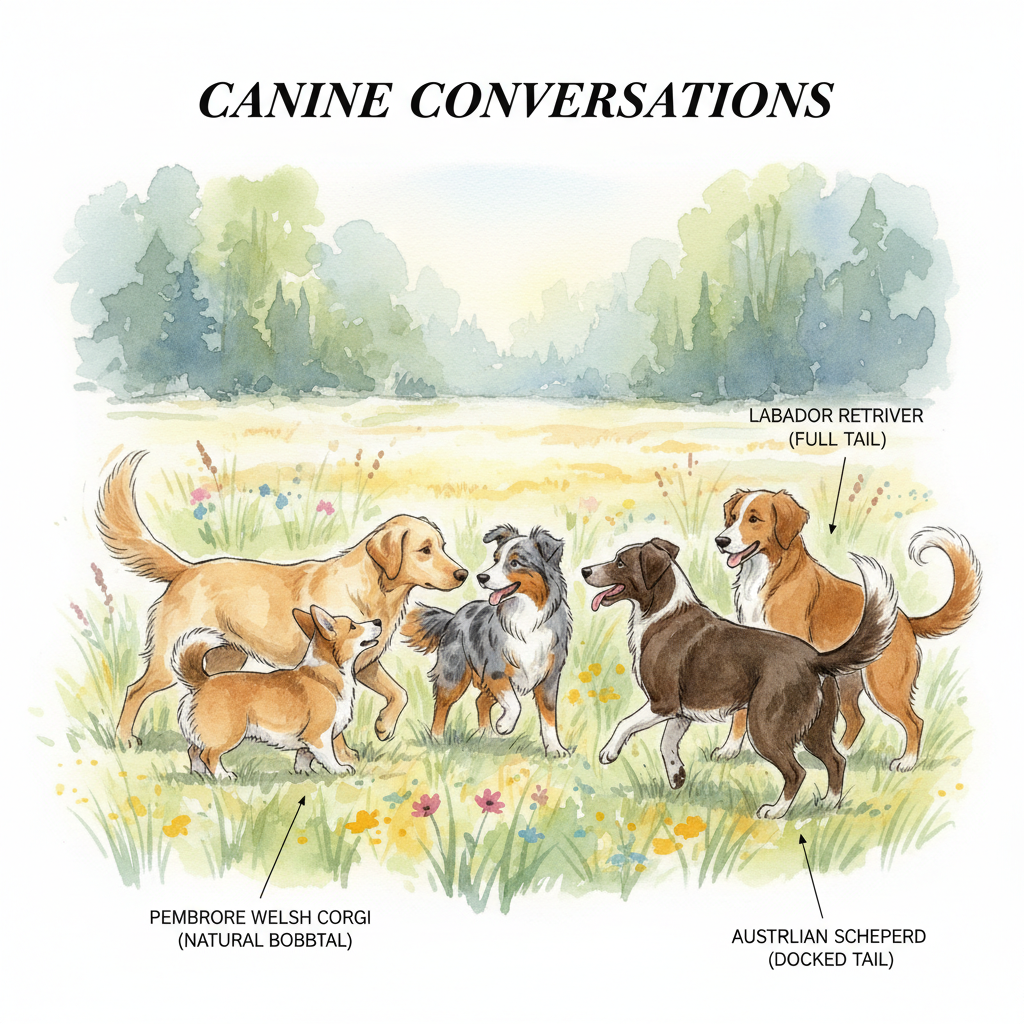
Dogs Without a Full Tail: How Do They Communicate?
Dogs that have had their tails docked (a practice many veterinary organizations now advise against) may struggle to communicate effectively through tail wags. This missing piece of their social signaling can unfortunately lead to misunderstandings with other dogs and even people.
Breeds with naturally short or "bobbed" tails, like the Boston Terrier or Pembroke Welsh Corgi, still use what tail movement they have, along with their entire body language, to get their messages across. However, the subtle cues of direction and height might be less pronounced for them.
Paying close attention to these tail signals is one of the best ways to truly connect with your pup. Always consider the whole picture: tail height, speed, direction, and how their entire body moves. This complete approach will help you understand and interact with your dog in the best way possible.