
Is Your Dog's Snoring Normal? What Pet Parents Need to Know
You love the sound of your dog sleeping, but sometimes those little snores turn into something louder, or even worrisome. Dog snoring is common, sure, but it's not always just a cute quirk. Sometimes, it’s a tiny red flag for a bigger health issue.
Our team at Petscarelab knows how much you care about your pup. We've put together this guide to help you understand your dog’s nightly sounds. We'll show you when a little rumble is totally normal and when it's time to have a chat with your vet.
What Exactly Is Dog Snoring?
Just like us, when your pup snores, it means something's getting in the way of air flowing smoothly through their nose and throat while they're asleep. This blocked airflow makes the soft bits of tissue in their palate and throat vibrate, creating that familiar, sometimes rumbling, sometimes whistling sound we call dog snoring.
Why Do Dogs Snore? Unpacking the Causes
So, what makes your dog saw logs? A lot of things can cause a dog to snore. Sometimes it's totally harmless, but other times, those snores are actually hinting at a health problem that needs attention.
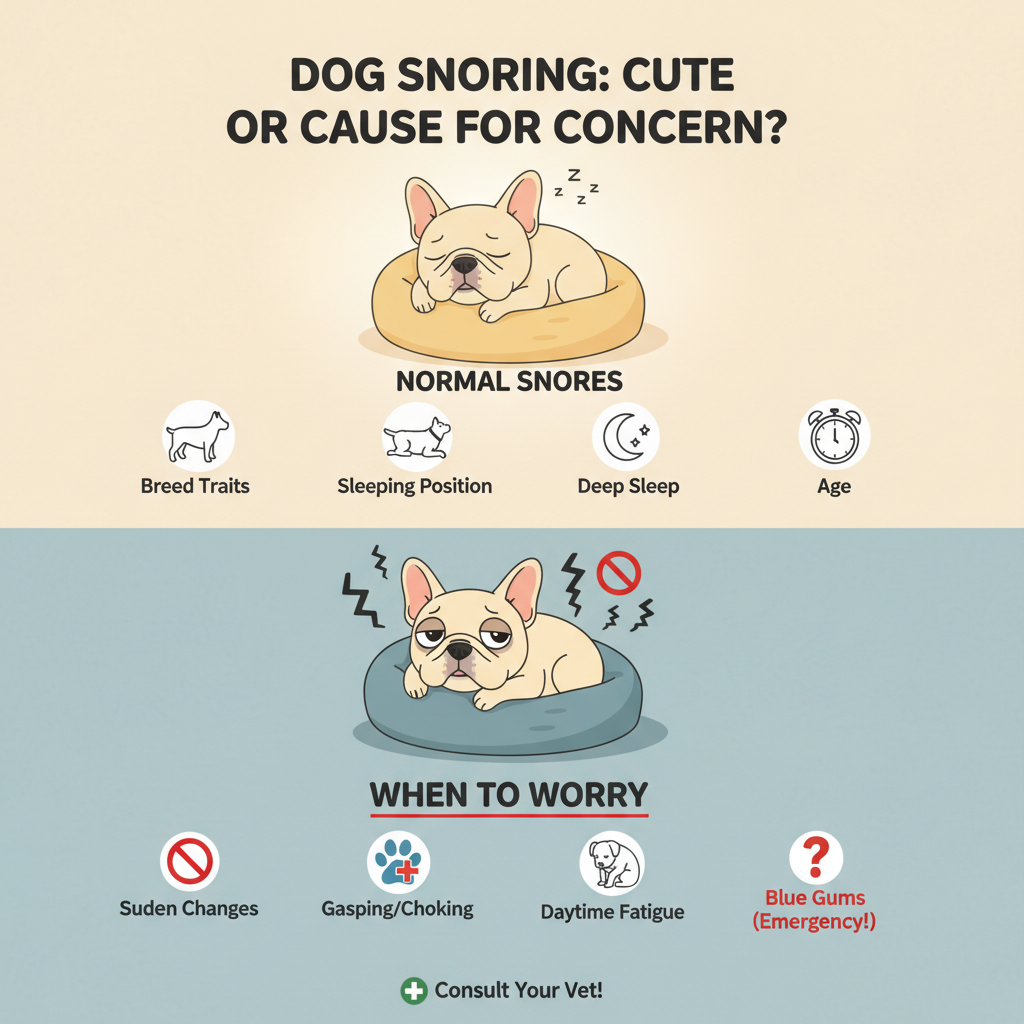
When Your Dog Snoring is Totally Normal
For some dogs, snoring is just part of who they are, often because of their unique build or even how they choose to nap.
- Flat-Faced Breeds: If you have a Pug, Bulldog, Frenchie, or Boxer, you already know they're champion snorers! These flat-faced pups (we call them "brachycephalic") have unique skull structures, often leading to longer soft palates and squished nostrils. This setup naturally blocks airflow, making them more likely to snore.
- Sleeping Positions: Ever snored because of how you were lying? Dogs do too! If your pup’s sprawled out on their back, their tongue can slip back, partially blocking their airway and causing those snores.
- Deep Sleep: When your dog is really out cold – you know, twitching and dreaming – their throat muscles relax completely. This deep relaxation can make snoring more likely.
- Age: Just like people, as dogs get older, the tissues in their throat can lose a bit of their bounce. This loss of elasticity might mean more frequent or louder snoring as they age.
When Dog Snoring Signals a Health Problem
Sometimes, though, those snores aren’t so harmless. They can actually be a clue that your dog has a health issue needing a vet's help.
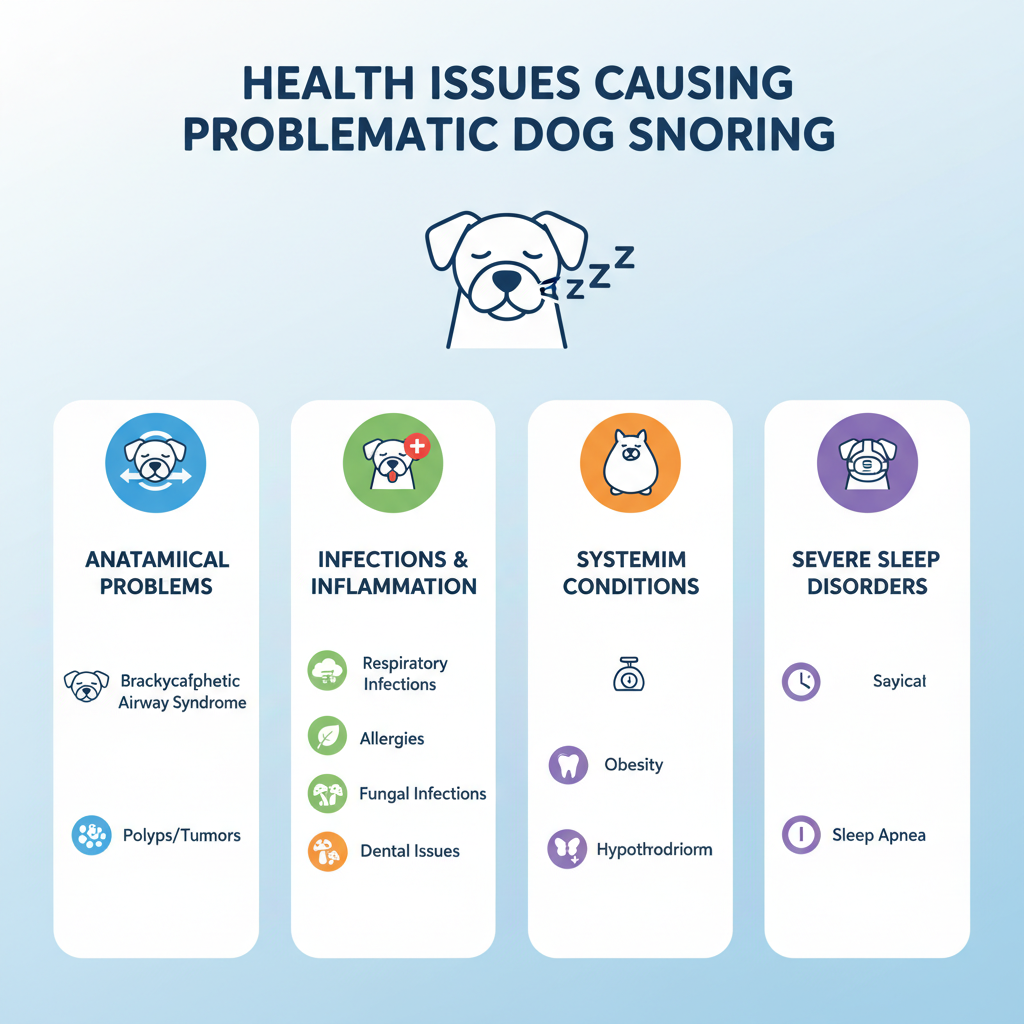
- Allergies: Just like us, dogs get environmental allergies. These can cause inflammation and swelling in their nose and throat, making it harder for air to pass through and kicking off the snoring.
- Obesity: If your dog is carrying too many extra pounds, they might have extra fatty tissue around their throat and neck. This tissue can narrow the airway, making them more prone to snore.
- Respiratory Infections: A cold, kennel cough, or other respiratory bug can cause inflammation and gunk to build up in your dog’s nose and throat. All that blockage can lead to some serious snoring.
- Foreign Objects: Has your dog ever sniffed up a blade of grass or tiny toy? If something gets lodged in their nose or throat, it'll block airflow and definitely cause snoring.
- Dental Issues: Nasty dental disease or an abscess in your dog's mouth can sometimes cause swelling. If that swelling presses on their airway, it can contribute to snoring.
- Polyps or Tumors: Any kind of growth – whether it's a harmless polyp or a more serious tumor – in your dog's nose, throat, or voice box can block airflow and lead to snoring.
- Hypothyroidism: An underactive thyroid gland can make your dog gain weight, feel sluggish, and even cause the tissues in their throat to thicken. All these factors can crank up the snoring.
- Fungal Infections: Fungal infections, especially in the nose, can trigger inflammation, discharge, and blockages, all of which can lead to snoring.
- Brachycephalic Airway Syndrome (BAS): This is a serious condition common in those flat-faced breeds we mentioned earlier (Pugs, Bulldogs). It’s a group of issues like narrow nostrils, an extra-long soft palate, and other airway quirks that severely block air. This doesn't just cause loud dog snoring; it makes breathing hard, especially when they exercise or get hot.
- Sleep Apnea: While not as common as in people, dogs can also suffer from sleep apnea. This is when their breathing repeatedly stops and starts while they’re asleep. It's often linked to very severe snoring and can be a sign of BAS or other major airway blockages.
Could Your Dog Have Sleep Apnea? Signs to Watch For
If your dog’s snoring makes you wonder if it’s more than just a little noise, keep an eye out for these other signs of sleep apnea:
- Loud, Erratic Snores: We're talking really loud, unpredictable snoring here. It might even be broken up by quiet moments where your dog actually stops breathing, only to start again with a gasp or choke.
- Restless Sleep: Pups with sleep apnea often toss and turn a lot, struggle to get comfy, or even jolt awake suddenly.
- Daytime Fatigue: Because their sleep is constantly interrupted, these dogs can be unusually tired, sluggish, or just not as active during the day.
- Gasping or Choking: These sounds are a clear sign your dog is really struggling to breathe.
- Behavior Changes: Constant tiredness can make your dog irritable or less interested in playing.
- Blue Gums or Tongue (Cyanosis): In really serious situations, not enough oxygen can make your dog's gums and tongue look blue. This is an absolute emergency – get to a vet right away!
If you notice any of these signs alongside your dog's snoring – especially if it's super loud or inconsistent – please call your vet right away. Sleep apnea can lead to serious health problems because of long-term oxygen deprivation.
When to Worry: Time to Call the Vet About Dog Snoring
A little light snoring now and then might be totally normal, but certain situations mean it's definitely time to get in touch with your veterinarian:
- Sudden Snoring: If your dog never snored before and suddenly starts, especially if it's loud or won't stop.
- Changes in Snoring: Your dog's snores suddenly get louder, happen more often, or come with new sounds like wheezing, gasping, or choking.
- Breathing Hard When Awake: You notice your dog struggling to breathe, panting way too much, or making noisy breathing sounds even when they're not asleep.
- Discomfort or Distress: Your dog looks like they're struggling to breathe in their sleep, waking up suddenly, or seeming agitated.
- Blue Gums or Tongue: This is a life-threatening emergency. It means a severe lack of oxygen. Get immediate veterinary care.
- Tired or Less Active: Your dog is unusually tired or just not as active during the day.
- Appetite or Weight Changes: You notice unexplained weight gain or loss, or your dog isn't eating as much.
- Runny Nose or Sneezing: These could point to a respiratory infection or allergies.
Catching and treating any underlying issues early is super important for your dog's health and happiness.
How Veterinary Specialists Pinpoint Your Dog's Snoring Cause
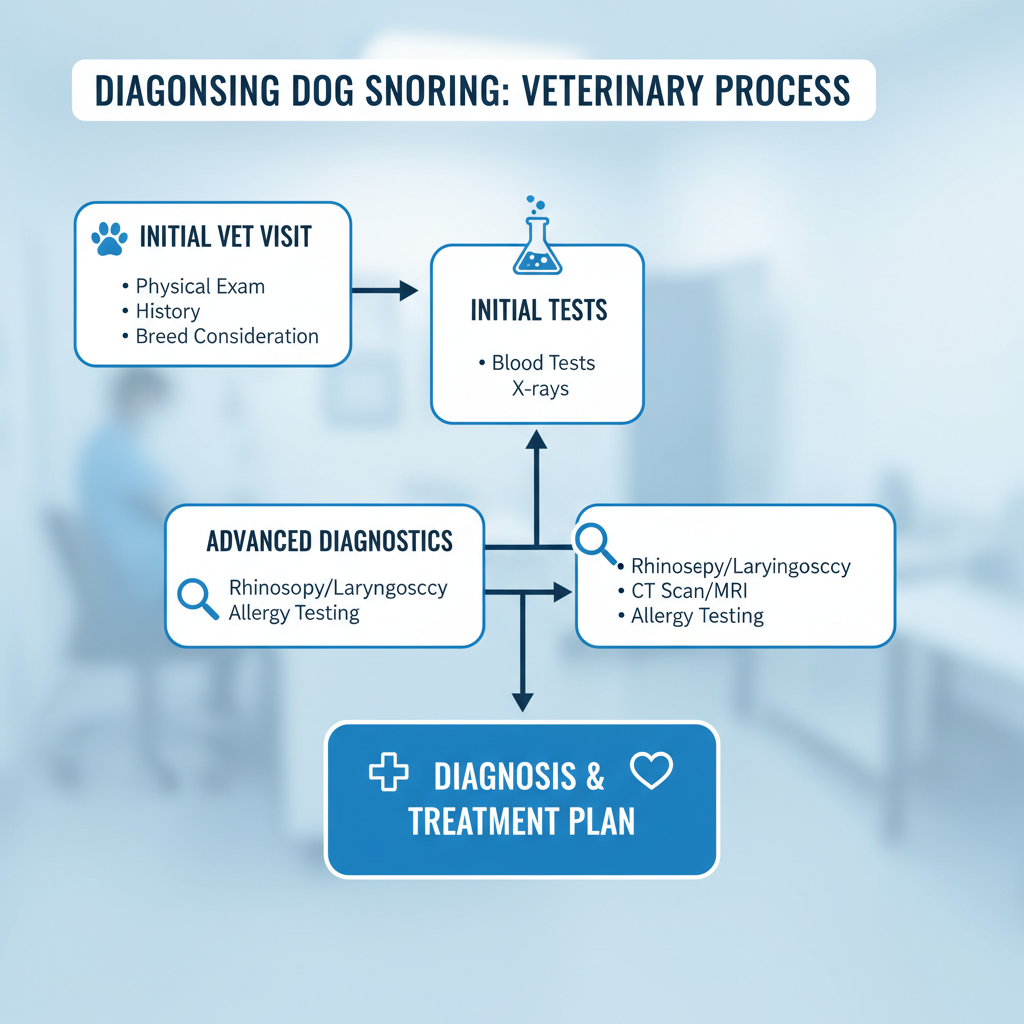
When you bring your dog in for those snoring concerns, our veterinary specialists will do a thorough check-up and might suggest a few more tests.
- Physical Exam: Your vet will kick things off with a complete physical. They'll check your dog’s overall health, listen to their heart and lungs, look in their mouth and throat, and assess their body weight and condition.
- Breed & History: They’ll definitely consider your dog's breed (especially if they’re a flat-faced snorer!) and ask you all about the snoring: when it started, how often, how loud, and any other symptoms you’ve noticed.
- Blood Tests: Blood work (like a CBC and biochemistry profile) can help spot underlying infections, inflammation, or metabolic issues like an underactive thyroid.
- X-rays (Radiographs): X-rays of your dog’s chest, neck, or skull can show problems in their airways, such as an enlarged soft palate, a collapsed windpipe, foreign objects, or growths.
- Rhinoscopy/Laryngoscopy: These are specialized procedures where a tiny camera helps the vet get a good look inside your dog's nose (rhinoscopy) or voice box and windpipe (laryngoscopy). They usually need anesthesia and can help find polyps, tumors, foreign objects, or structural issues.
- CT Scan/MRI: For more complicated cases, advanced imaging like a CT scan or MRI might be suggested. These give super detailed pictures of your dog’s head, neck, and breathing system.
- Allergy Testing: If your vet suspects allergies are the culprit, they might recommend allergy testing to figure out exactly what’s bothering your dog.
Getting Your Dog's Snoring Under Control: Treatment Options
The way we treat your dog's snoring totally depends on what's causing it in the first place.
- Weight Management: If your dog is overweight, a careful diet and exercise plan are a must. Shedding those extra pounds can really cut down on the fatty tissue around their throat, which makes breathing easier and reduces snoring.
- Allergy Management: If allergies are the problem, your vet might suggest antihistamines, corticosteroids, or even immunotherapy. Figuring out and avoiding those allergy triggers is also a big part of the solution.
- Treating Respiratory Infections: Bacterial infections will need antibiotics, while fungal infections call for antifungal meds.
- Removing Foreign Objects: Any foreign objects will need to be taken out, either through surgery or with an endoscopy.
- Dental Care: Tackling severe dental disease with a professional cleaning or extractions can clear up swelling that’s blocking the airway and causing those snores.
- Medication for Hypothyroidism: If your dog has an underactive thyroid, they’ll need daily thyroid hormone medicine.
- Surgical Interventions:
- Brachycephalic Airway Syndrome (BAS): Surgery is often the best route for BAS. This might mean widening narrow nostrils, shortening that extra-long soft palate, or removing other airway obstructions. These operations aim to dramatically improve airflow and stop the severe dog snoring.
- Polyp/Tumor Removal: Any growths blocking the airway might need surgery to remove them. Vets will also do biopsies to see if they're harmless or something more serious.
- Lifestyle Adjustments:
- Humidifiers: Sometimes, a humidifier near your dog's bed can help moisten dry nasal passages, which might quiet down their snoring.
- Elevated Head: Gently raising your dog’s head when they sleep – maybe with a special pillow or by tilting their bed – can sometimes ease mild snoring by keeping their tongue from slipping back.
Please, never try to diagnose or treat your dog’s snoring on your own. Always talk to your veterinary specialist for a precise diagnosis and the right treatment plan. With the right care, many dogs can get relief from their snoring, leading to better sleep and a much healthier, happier life.
Is it bad if my dog snores really loudly?
Really loud dog snoring, especially if it's a new sound or comes with gasping, choking, or struggling to breathe, can absolutely signal an underlying health issue. Think Brachycephalic Airway Syndrome, obesity, allergies, or even sleep apnea. It's always best to have your vet figure out what's causing it.
Can allergies cause dog snoring?
Yes, absolutely! Allergies can make your dog's nose and throat swell up and get inflamed. This blocks airflow and can definitely cause them to snore. Your vet can help pinpoint and manage your dog’s allergies.
How do I know if my dog's snoring is normal or a problem?
Normal dog snoring is usually pretty consistent, not super loud, and your dog won’t seem bothered by it (no gasping or signs of distress). Problematic snoring often starts suddenly, gets much louder, involves gasping, choking, restlessness, daytime tiredness, or trouble breathing when awake. If you’re ever unsure, always check in with your vet.
Can a dog get sleep apnea?
Yes, dogs can indeed get sleep apnea, though we don't diagnose it as often as in people. It’s frequently seen in those flat-faced breeds and with severe airway blockages. Watch for really loud, inconsistent snoring with breathing pauses followed by gasps, and daytime sluggishness. This definitely needs veterinary attention.
What home remedies can I try for my dog's snoring?
For mild, normal dog snoring, make sure your pup is at a healthy weight. You could also try a humidifier in their sleep zone or gently prop up their head with a pillow. But here's the kicker: if you suspect *any* health issue, do NOT rely on home remedies. Go straight to your vet.
My dog only snores when they sleep on their back. Is that normal?
Yes, that's often totally normal for dog snoring! Just like with us, when they’re flat on their back, their tongue can fall back a bit and partially block their airway. If this is the *only* time they snore and you don't see any other concerning symptoms, it's usually nothing to worry about.