Dog Safety on Rainy Days: Your Guide to Keeping Pups Healthy & Happy
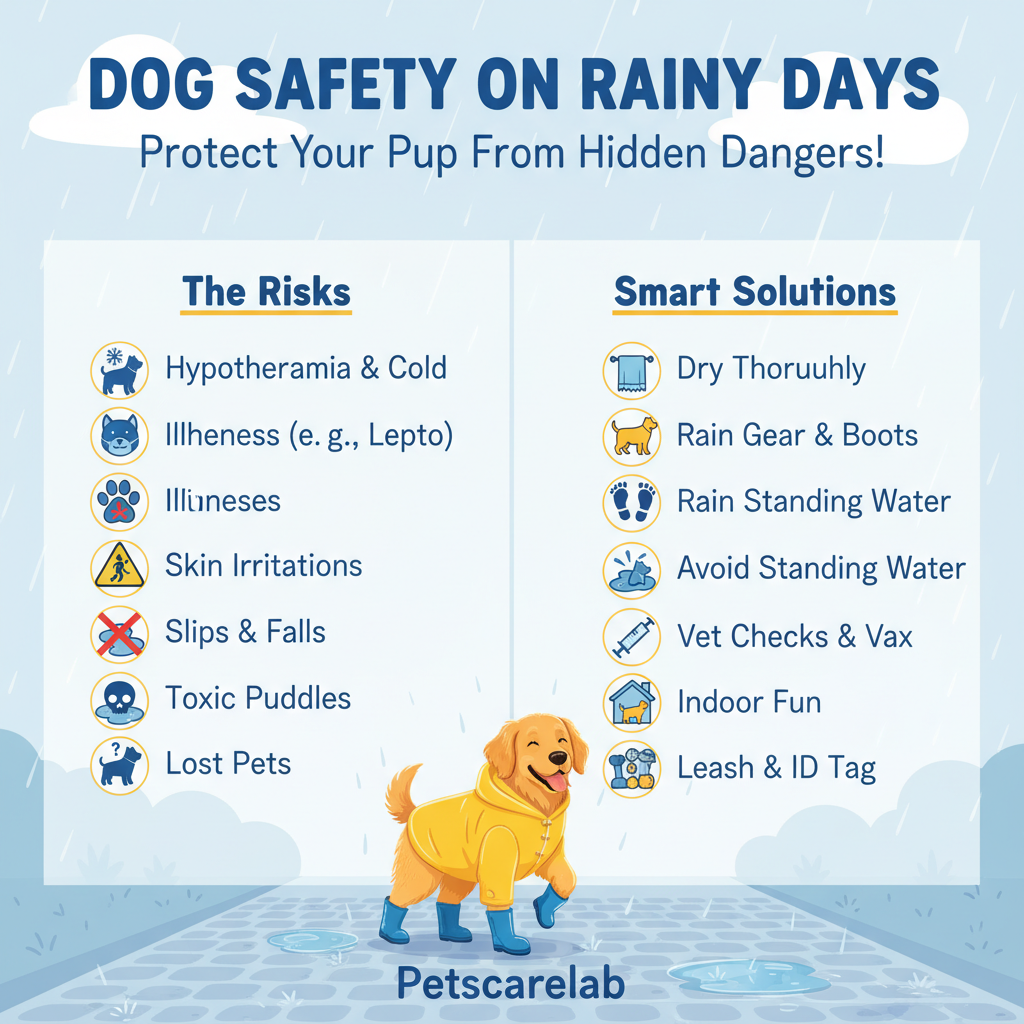
Rainy days are perfect for snuggling indoors, but for us dog owners, they bring a unique set of worries. Sure, a quick splash in a puddle might seem like innocent fun, but heavy rains can hide serious dangers for your furry friend. From unexpected illnesses to hidden hazards, understanding dog safety on rainy days is key. Here's what our team at Petscarelab wants you to know to keep your pup happy and healthy, even when the weather goes wild.
Cold Stress and Hypothermia
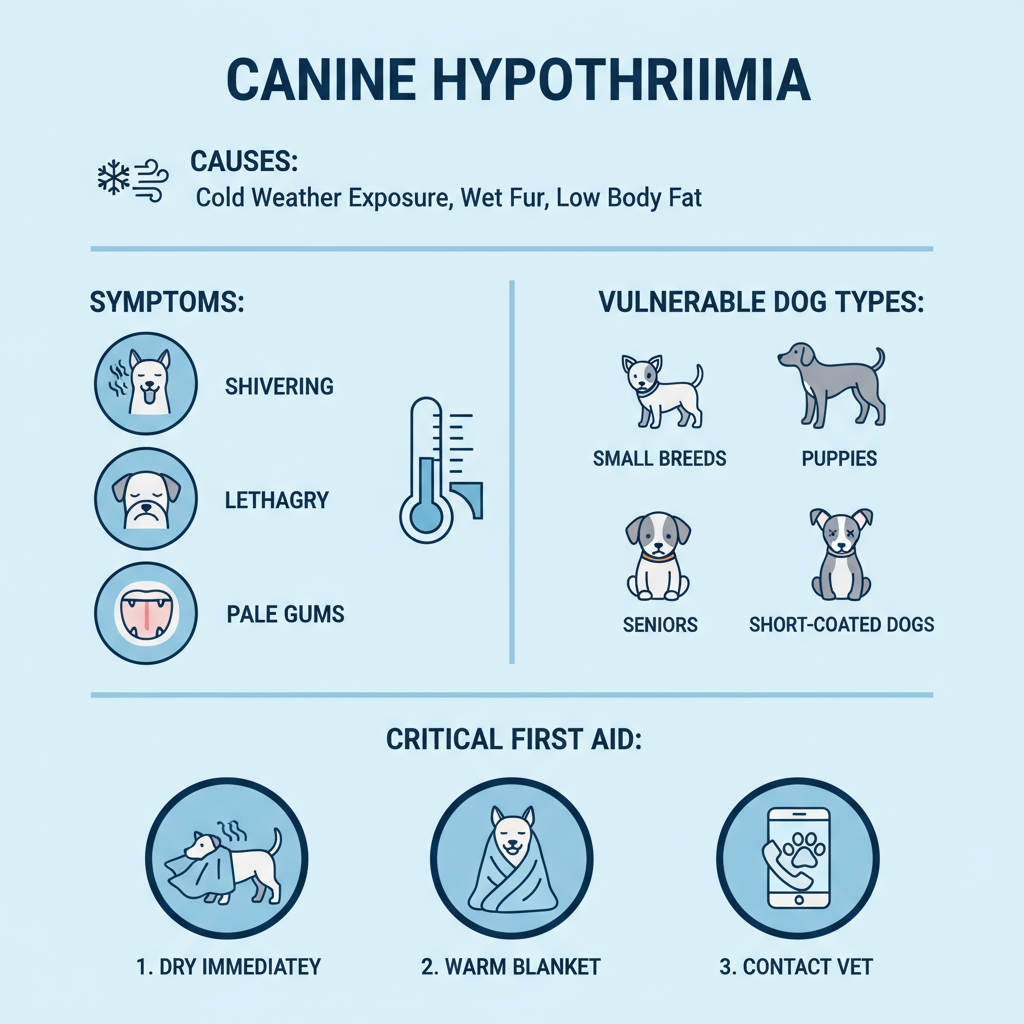
Pups get cold just like we do! Too much time out in the rain and chilly weather can quickly lead to hypothermia. This risk is even higher for little dogs, puppies, older pups, and breeds with short fur.
Watch out for these signs:
- Shivering
- Lethargy
- Weakness
- Pale gums
- Stumbling or incoordination
If you think your dog is getting too cold, dry them off right away with some fluffy towels, wrap them up in a warm blanket, and call your vet. In serious cases, hypothermia can be life-threatening.
Increased Risk of Respiratory Infections
Damp, chilly weather can make your dog's immune system weaker, opening the door for nasty respiratory infections like kennel cough or pneumonia. Pups who spend a lot of time outside or already have health problems are especially vulnerable.
Look for these symptoms:
- Coughing
- Sneezing
- Nasal discharge
- Difficulty breathing
- Fever
If you spot any of these signs, particularly after your dog's been out in the rain, don't hesitate to call your vet.
Skin Irritations and Infections
Constant dampness is an open invitation for bacteria and fungi to move in, causing uncomfortable skin irritations and infections. When moisture gets trapped in your dog's fur—especially between their paw pads or in those cute skin folds—it can lead to itchy hot spots, yeast infections, or bacterial skin trouble.
To keep skin problems at bay:
- Make sure to thoroughly dry your dog after walks in the rain. Really focus on their paws, ears, and any skin folds.
- Think about a dog raincoat, especially if your pup has long or thick fur.
- Regularly check your dog's skin for any redness, itching, or weird smells.
Leptospirosis
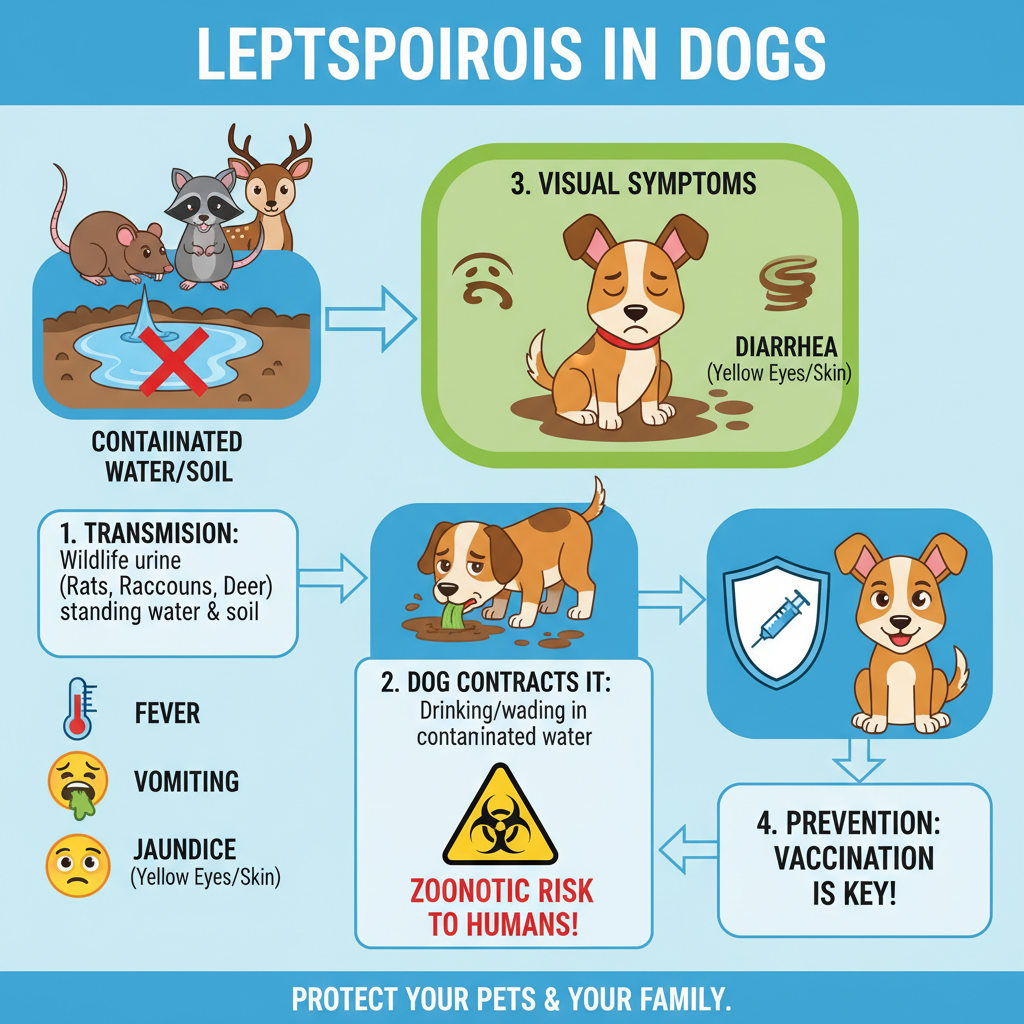
Leptospirosis is a nasty bacterial disease that can hit both pets and people. It usually spreads when dogs come into contact with the urine of infected wildlife (like rats, raccoons, or deer) in dirty water or soil. Rainy weather makes the risk even higher, since standing water and floodwaters are perfect places for this bacteria to hang out.
Signs of leptospirosis to watch for include:
- Fever
- Vomiting
- Diarrhea
- Lethargy
- Loss of appetite
- Increased thirst and urination
- Jaundice (yellowing of skin/eyes)
If your dog often explores areas with standing water or wildlife, talk to your vet about the leptospirosis vaccine. It can really help protect your pup from this potentially deadly disease.
Slips and Falls
Wet surfaces become super slippery, making slips, falls, and injuries a real danger. Dogs, especially senior pups or those with joint problems, can easily sprain a joint, pull a muscle, or even break a bone on slick sidewalks or muddy trails.
To keep them steady and safe:
- Always walk your dog on a leash for better control.
- Steer clear of super slick spots.
- Think about dog boots with good grip for extra traction.
Drowning in Floodwaters
Even though most dogs are natural swimmers, floodwaters are incredibly dangerous. Powerful currents can sweep away even the strongest swimmers, and murky water can hide all sorts of dangers like hidden debris, sharp objects, or open manholes.
Never, ever let your dog play or walk in floodwaters. If you live in an area prone to flooding, make sure your dog stays safely indoors or in a secure, elevated spot.
Chemical and Toxin Exposure
Rain washes all sorts of chemicals and toxins into puddles and storm drains, creating a truly dangerous mix. Antifreeze, pesticides, fertilizers, and even cleaning products can lurk in standing water. If your dog drinks any of these, it can be extremely dangerous, even deadly.
Always keep your dog far away from puddles, especially those close to roads, driveways, or gardens.
Electrocution from Downed Power Lines
Strong winds and heavy rain can knock down power lines, which are incredibly dangerous. If a live wire lands in a puddle, that water can become electrified. Stepping in it poses a deadly electrocution risk to anyone, including your beloved pet.
If you ever spot a downed power line, keep your dog (and yourself!) far away and report it to your local utility company right away.
Lost Pets
Heavy rain and storms can really confuse dogs, making it easy for them to get lost if they escape or wander off. Loud thunder and lightning can also terrify pups, causing them to bolt in fear.
To keep your dog from getting lost:
- Make sure your dog is microchipped and wears an ID tag with your current contact info.
- Always keep them on a leash during walks.
- Give them a safe, quiet spot indoors when thunderstorms roll in.
How to Keep Your Dog Safe on Rainy Days
Ready to tackle those wet weather worries? Here's how to ensure dog safety on rainy days is always a top priority:
- Limit outdoor time: Keep walks short and focused when it's pouring.
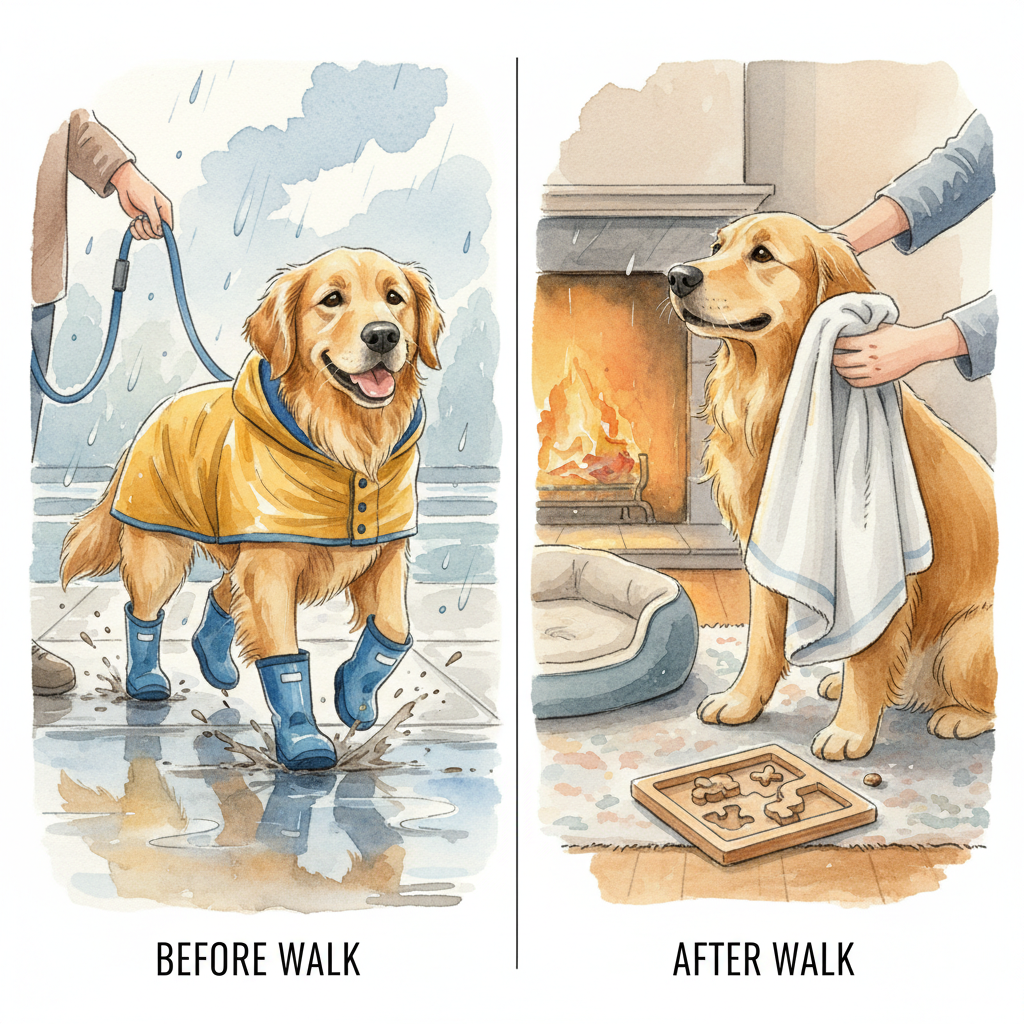
- Use protective gear: A dog raincoat and boots can keep your pup dry and give them better grip.
- Dry your dog thoroughly: Use towels to get their fur, paws, and ears completely dry right after they come in.
- Check paws: Look closely at their paw pads for any irritation, cuts, or debris.
- Avoid standing water: Steer your dog clear of puddles, ditches, and floodwaters.
- Update vaccinations: Chat with your vet about vaccines like leptospirosis, especially if your dog spends a lot of time outside.
- Provide indoor fun: On days when outdoor adventures are off-limits, keep your dog entertained with indoor games, puzzle toys, and training.
- Monitor for symptoms: Stay watchful for any signs of illness, injury, or discomfort. Call your vet if you're worried.
Rainy days don't have to put a damper on your pup's spirits or your peace of mind. By knowing the potential dangers and taking a few smart steps, you can make sure your furry friend stays safe, healthy, and happy, come rain or shine.