PetsCareLab
You recognize the telltale glance—and before you can intervene, your dog bolts wildly toward the sole patch of carpet in the house. Or perhaps your furry friend seems to suffer motion sickness, becoming queasy every time the car starts moving.
If you suspect your dog is feeling nauseous, it’s important to understand why this happens and discover the best ways to ease their discomfort.
Symptoms of Nausea in Dogs
Dogs each display their own unique signals when feeling queasy, and over time, you’ll become familiar with your pup’s specific cues. Since dogs are naturally curious and often get into things they shouldn’t, nausea is fairly common in our canine companions.
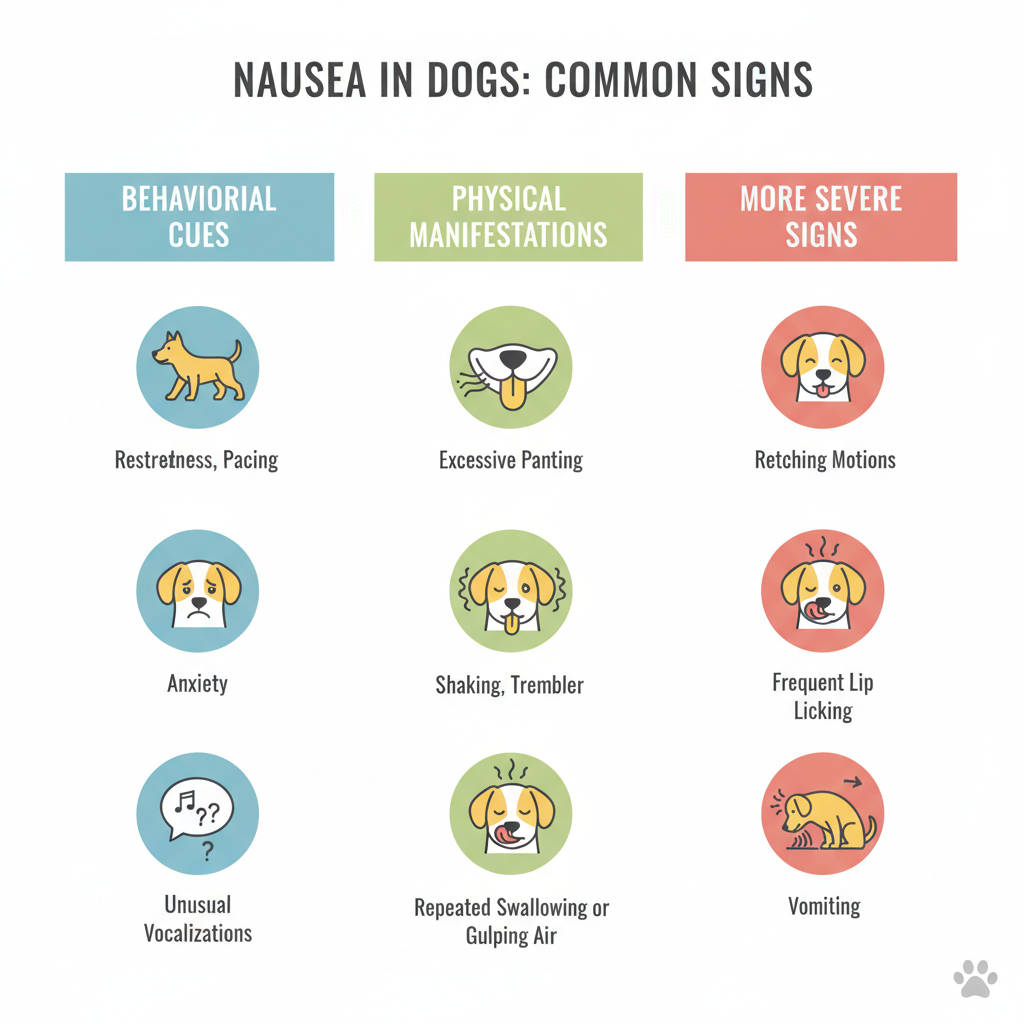
Watch closely for these signs indicating an upset stomach:
- Restlessness and pacing
- Excessive panting
- Drooling
- Shaking or trembling
- Repeated swallowing or gulping air
- Frequent lip licking
- Retching motions
- Vomiting
- Signs of anxiety or nervousness
- Unusual vocalizations
Nausea refers to that uneasy, queasy feeling before any actual vomiting occurs. Sometimes your dog may vomit after experiencing nausea, but other times this unsettled sensation passes without any throwing up.
What To Do if Your Dog Shows Signs of Nausea
When your dog shows nausea symptoms, immediately remove all food and treats. While many dogs lose interest in eating when their belly feels off, others may keep gobbling food, which can make their stomach upset even worse.
Too much water at once can also aggravate nausea, so encourage hydration by offering small sips of water frequently. Instead of filling the bowl entirely, provide only a little water at a time and refill as needed. If your dog isn’t interested in chewing ice cubes, offer a few—they can hydrate without overwhelming the stomach.
When it comes to vomiting, less is more. Minimizing what your dog eats and drinks gives their digestive system a chance to settle instead of triggering more vomiting.
If your dog seems queasy but otherwise stable, it’s usually safe to simply observe and wait a few hours. If they start to look more comfortable and haven’t vomited, the nausea has likely passed on its own.
However, if the discomfort worsens or vomiting begins, contact your veterinary clinic promptly to schedule the next available appointment.
If your dog does vomit, take a close look at the vomit to gather clues about the cause. Finding bits of chocolate wrappers points clearly to accidental ingestion of a toxic treat, while green material could suggest exposure to harmful substances like rodenticide, which require immediate care.
If your dog is very distressed, vomits repeatedly or severely, retches without producing anything, or if there is any blood in the vomit, seek emergency veterinary care without delay. These signs may indicate a serious problem, and continuous vomiting can quickly lead to dangerous dehydration.
What Causes Nausea in Dogs?
Nausea is a frequent issue in dogs with numerous potential causes—ranging from mild, transient upset to life-threatening conditions. When in doubt, trust your instincts: if something feels wrong, it’s best to consult a veterinarian right away.
Acute Nausea in Dogs
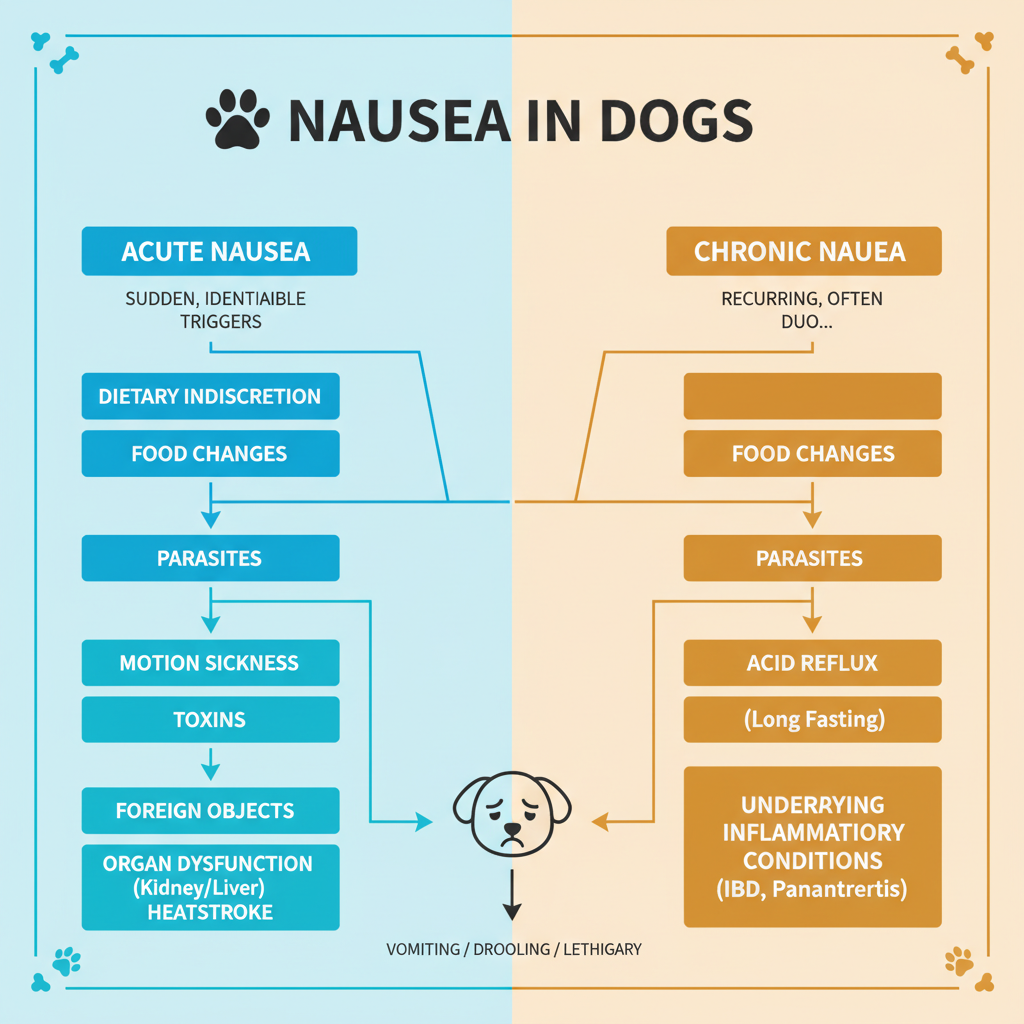
Acute nausea occurs suddenly from an identifiable cause and often resolves quickly once the trigger is addressed.
One of the leading causes is your dog ingesting something they shouldn’t—whether from scavenging the trash, the litter box, or counters. Holidays see a spike in vet visits as dogs succumb to nausea after being “treated” to table scraps or extra goodies.
Sudden changes in dog food—sometimes even switching flavors within the same brand—are another frequent culprit. And motion sickness during car rides is also a common trigger for acute nausea.
Other causes of acute nausea can include intestinal parasites, viral infections like parvovirus, bloat, foreign objects lodged in the digestive tract, adverse reactions to medication, constipation, pancreatitis, organ dysfunction (particularly kidney or liver issues), heatstroke, inflammatory bowel disease, exposure to toxins, uterine infections, ulcers, food allergies, bacterial infections, and stress.
Chronic Nausea in Dogs
Chronic nausea presents as recurring stomach upset lasting weeks or more, often without a clear underlying cause. Some dogs may experience nausea at roughly the same time each day, frequently late at night or early morning. Although the exact diagnosis is often elusive, this pattern is believed to result from acid reflux caused by long fasting periods.
Anti-Nausea Treatment for Dogs
If your dog is nauseated but hasn’t vomited yet, the best approach at home is to remove food and water bowls and offer small amounts of water frequently. Discourage grazing on grass, chewing rawhides, or similar treats that could worsen the stomach upset. Instead, encourage your dog to rest calmly in a quiet, stress-free spot.
In many cases that require veterinary attention, anti-nausea medications are prescribed. Common drugs include maropitant citrate (Cerenia), which directly controls nausea; metoclopramide (Reglan), which helps regulate intestinal movement; and anti-inflammatory medications to soothe irritated gut linings. Metronidazole can be especially useful thanks to its antibacterial, antiparasitic, and anti-inflammatory properties. Your veterinarian will tailor the treatment based on your dog’s specific needs.
Nausea Accompanied by Vomiting
Severe or ongoing vomiting often warrants comprehensive testing by your vet, including blood tests, X-rays, and analysis of urine and stool samples. Because many different conditions can cause vomiting, these diagnostics serve as valuable starting points—follow-up tests might be necessary to pinpoint the issue.
Managing Chronic Nausea
Feeding a small meal right before bedtime can dramatically improve symptoms for many dogs with chronic nausea. In some cases, a veterinarian-prescribed antacid can reduce acid reflux and soothe the stomach. Careful observation of when nausea occurs and what triggers it will help your vet develop an effective treatment plan.
Motion Sickness Relief
Prevent car sickness by withholding food for 12–18 hours before traveling. For dogs prone to nausea during car rides, medication such as Cerenia can be given before departure to prevent or greatly reduce symptoms, making the journey more comfortable for everyone.
How To Prevent Nausea in Dogs
The best way to prevent your dog’s nausea is to know their sensitivities and avoid triggers. For example, if your dog can’t resist cheese and you’re hosting a barbecue with plenty of cheeseburgers, it may be best to keep your pup indoors until the feast is over. Likewise, if your dog suffers from car sickness, skipping their evening meal before a trip can prevent nausea.
Some dogs are particular about their food brand and type, while others tolerate changes well. Paying attention to these preferences helps avoid digestive upset.
For dogs who frequently pick up and chew potentially harmful objects outside, a basket muzzle is an excellent safeguard. This allows your dog to pant, drink, and eat kibble freely but prevents them from ingesting rocks, sticks, or other items that could cause blockages or stomach upset.
Sometimes, despite your best efforts, your dog may ingest something harmful or react adversely to medication. The good news is that early recognition and timely veterinary intervention can often resolve these issues smoothly, restoring your dog’s health and vitality.