
Soothe Your Pup: Effective Dog Itchy Skin Home Remedies
Watching your dog constantly scratch can be heartbreaking. Whether it's seasonal allergies making them miserable or tiny, unseen parasites causing a ruckus, dog itchy skin home remedies can offer some much-needed relief. But before you reach for that jar of coconut oil, our team at Petscarelab urges you to chat with your veterinarian. They're the best ones to pinpoint why your furry friend is so itchy and rule out any serious underlying issues.
Once you know what's bugging your pup, your vet can guide you to the best treatments. This might include a mix of home remedies, over-the-counter options, or even prescription medications. We've gathered some of the most common and vet-approved home remedies to help ease your dog's discomfort.
Oatmeal Baths for Itchy Skin Relief
Oatmeal baths are a classic for a reason! They work wonders on itchy skin because oatmeal is packed with avenanthramides – fancy compounds that fight inflammation and calm that irritating itch. For the best results, grab colloidal oatmeal. It's ground extra fine, so it dissolves perfectly in water to create a milky, soothing soak for your pup.
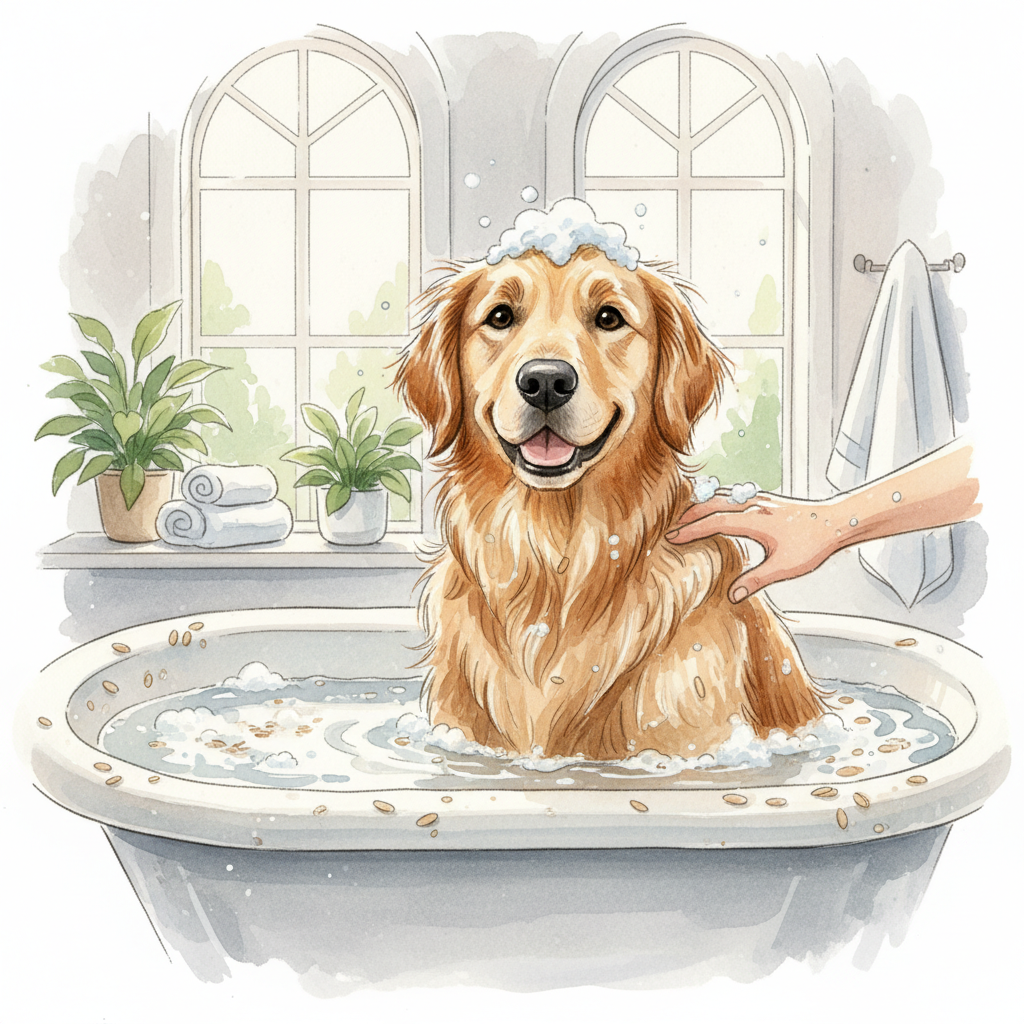
Here's how to give your dog an oatmeal bath:
- Fill your bathtub with lukewarm water – not too hot, not too cold.
- Stir in colloidal oatmeal. The package will tell you how much, but usually, it's about ½ to 1 cup for a medium-sized dog.
- Keep stirring until the oatmeal is fully dissolved and the water looks cloudy.
- Gently settle your dog into the tub. Let them soak for 10-15 minutes, making sure their head stays safely above the water.
- Use a cup or pitcher to gently pour the oatmeal water over their back, being careful to avoid their eyes and ears.
- Once they've had their soak, rinse your dog thoroughly with plain, lukewarm water. You want to wash away all the oatmeal residue.
- Pat your dog dry with a clean towel.
You can repeat these soothing baths a few times a week as needed to keep your pup comfortable.
Apple Cider Vinegar (Diluted) for Targeted Relief
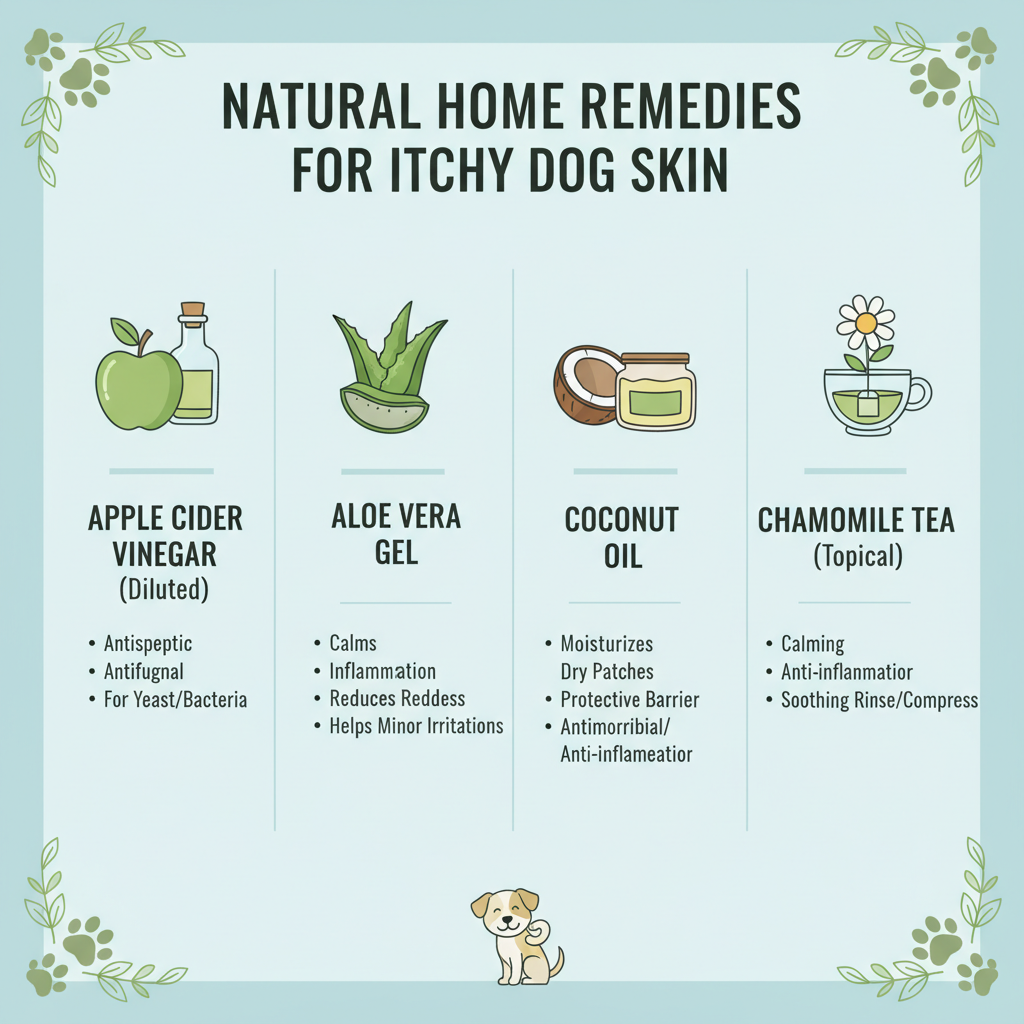
Apple cider vinegar (ACV) can be a real hero for certain types of itchy skin, especially those caused by yeast or bacteria, thanks to its antiseptic and antifungal properties. But here's the golden rule: always dilute it! Full-strength ACV can really irritate your dog's skin, especially if it's already broken or raw.
To use diluted ACV safely:
- Mix equal parts raw, unfiltered apple cider vinegar and water in a spray bottle.
- Before going all-in, spray a tiny test spot on your dog's skin. Wait a bit to make sure there's no bad reaction.
- Lightly mist the affected areas. Absolutely avoid any open wounds or raw patches.
- You can also dab it on with a cotton ball for smaller spots.
- Don't let your dog lick the solution right after you apply it.
Use this sparingly – maybe once or twice a day at most. If you notice any irritation, stop using it immediately.
Soothing Aloe Vera Gel
We all know aloe vera is great for sunburns, and it can work wonders for your dog's irritated skin too! It's fantastic for calming inflammation, reducing redness, and helping minor irritations heal. When you're picking out aloe vera, look for 100% pure gel. Steer clear of anything with added alcohol, fragrances, or dyes, as these can just make your dog's skin even itchier.
To use aloe vera gel:
- Apply a thin layer of pure aloe vera gel directly to the itchy spots on your dog's skin.
- Gently massage it in until it's absorbed.
- Try to keep your dog from licking the gel right away. While a little bit usually isn't harmful, too much can cause a mild upset tummy.
You can apply aloe vera a few times a day as needed.
Coconut Oil for Moisture and Protection
Coconut oil isn't just for cooking! It contains lauric acid, which has both antimicrobial and anti-inflammatory properties. When you rub it on your dog's skin, it helps moisturize dry, flaky patches and creates a protective barrier. You can even add a bit to their food to support skin health from the inside out.
To use coconut oil on their skin:
- Melt a small amount of virgin, unrefined coconut oil in your hands.
- Gently massage it into any dry or itchy spots on your dog.
- A little goes a long way to avoid making your dog feel greasy.
To give coconut oil orally:
- Start super small, like ¼ teaspoon per 10 pounds of body weight each day.
- Gradually increase to 1 teaspoon per 10 pounds of body weight per day if your dog handles it well.
- Mix it right into their food.
- Keep an eye out for any digestive upset, like diarrhea.
Always, always talk to your vet before adding any oral supplements to your dog's diet.
Calming Chamomile Tea (Topical Application)
Chamomile tea isn't just for a relaxing night's sleep; it's also known for its calming and anti-inflammatory powers, perfect for soothing irritated skin. You can use it as a refreshing rinse or a targeted compress.
To use chamomile tea:
- Brew a strong cup of chamomile tea. Use 2-3 tea bags, making sure they're 100% chamomile and caffeine-free.
- Let the tea cool completely – you don't want to burn your pup!
- Now you have a couple of options:
- As a rinse: After your dog's bath, pour the cooled tea over their itchy areas. Don't rinse it off afterward.
- As a compress: Soak a clean cloth in the cooled tea and apply it directly to specific itchy spots. Hold it there for 5-10 minutes.
You can apply chamomile tea once or twice a day.
Boost Skin Health with Omega-3 Fatty Acids
Omega-3 fatty acids, like EPA and DHA, are incredible for fighting inflammation throughout your dog's body, including their skin. They can make a big difference in skin and coat health and reduce itching caused by allergies or other inflammatory conditions.
Where to find these helpful omega-3s:
- Fish oil supplements: Look for high-quality, vet-approved fish oil specifically made for dogs.
- Krill oil: Another fantastic source of EPA and DHA.
- Certain dog foods: Some premium foods are fortified with higher levels of omega-3s.
The right dosage varies, so always consult your veterinarian before adding any supplements. Remember, it might take a few weeks to see the full benefits of omega-3s.
When to Call the Vet About Itchy Skin

While dog itchy skin home remedies can bring temporary relief, it's crucial to know when to seek professional help. Give your vet a call if your dog's itching is:
- Stubborn or severe: It just won't get better with home remedies, or it actually seems to be getting worse.
- Paired with other worrying signs: This includes hair loss, red spots, open sores, scabs, swelling, a foul smell, acting tired, or not wanting to eat.
- A mystery: If you can't figure out why your dog is so itchy, your vet can run tests to diagnose the real problem, whether it's allergies, parasites, infections, or something else.
Your veterinarian can give your pup a thorough check-up, perform diagnostic tests like skin scrapes or blood work, and recommend the safest and most effective treatment plan tailored just for your dog.