Are Essential Oils Safe for Your Beloved Canine Companion?
The question of Dog Essential Oil Safety is one that deeply concerns conscientious pet parents, and for good reason: the short answer is that most essential oils are not safe for dogs and can indeed be toxic. While an internet search might yield some information suggesting that certain essential oils, when meticulously diluted, could potentially offer therapeutic benefits for dogs, our expert team at Petscarelab consistently emphasizes the significant and inherent risk of toxicity. The core issue lies in the fundamental differences between canine and human physiology; dogs metabolize substances distinctly, and their exquisitely sensitive sense of smell renders them exceptionally vulnerable to the potent, concentrated compounds found in essential oils.

Why Are Essential Oils Dangerous for Our Furry Friends?
Understanding the potential hazards essential oils pose is crucial for every dog owner. Here’s a closer look at why these seemingly innocuous substances can be a significant threat to your canine companion:
- Potent Concentrations: Essential oils are not merely pleasant scents; they are highly concentrated plant extracts. Producing even a small bottle requires a substantial amount of plant material, meaning the active chemical compounds are present in exceptionally high, undiluted doses.
- Unique Canine Metabolism: Unlike humans, dogs lack specific enzymes essential for properly breaking down and eliminating certain compounds found in many essential oils. This physiological difference means these oils can accumulate to toxic levels within their system, causing harm over time or with acute exposure.
- An Overwhelming Sense of Smell: A dog’s olfactory capabilities are orders of magnitude superior to a human’s. What might register as a mild, pleasant aroma to us can be an intensely overwhelming, irritating, and even painful experience for a dog, triggering distress or respiratory issues.
- High Risk of Ingestion: Dogs are naturally curious and prone to licking. They might inadvertently ingest essential oils by licking them off their fur or skin, from contaminated surfaces, or directly from an open bottle or diffuser spill. Ingestion often leads to more severe systemic toxicity.
- Severe Skin Irritation: Direct application of undiluted essential oils to a dog’s skin can result in immediate and severe irritation, causing redness, inflammation, chemical burns, and significant discomfort. Even diluted oils can cause adverse reactions in sensitive individuals.
- Respiratory Distress: Inhaling diffused essential oils, particularly in poorly ventilated spaces, can severely irritate a dog’s delicate respiratory tract. This can manifest as coughing, wheezing, and labored breathing, posing an especially critical risk to brachycephalic (short-nosed) breeds or dogs with pre-existing conditions like asthma.
Recognizing Symptoms of Essential Oil Poisoning in Dogs
Vigilance is key if you suspect your dog has been exposed to essential oils. Signs of toxicity can vary based on the specific oil, the extent of exposure, and your dog’s individual sensitivity. Watch carefully for any of these concerning symptoms:
- Uncharacteristic vomiting or retching
- Sudden onset of diarrhea
- Profound lethargy or unusual weakness
- Excessive drooling, beyond normal
- Involuntary tremors or muscle twitching
- Noticeable loss of coordination (ataxia), appearing unsteady or “drunk”
- Redness, inflammation, or visible burns on the skin or mucous membranes
- Difficulty breathing, including rapid, shallow breaths or gasping
- Significant changes in behavior, such as sudden agitation, anxiety, or profound depression
- Signs of liver failure, which may occur with chronic or severe exposure (e.g., jaundice, abdominal pain)
- Seizures, indicating severe neurological toxicity
If you observe any of these symptoms and suspect your dog has been exposed to essential oils, it is imperative to contact your veterinarian or an emergency animal hospital immediately. You can also reach out to leading animal poison control centers for expert guidance; fees may apply for their consultation services. Always prioritize prompt professional veterinary attention.
Understanding Dog Essential Oil Safety: A List of Toxic Oils
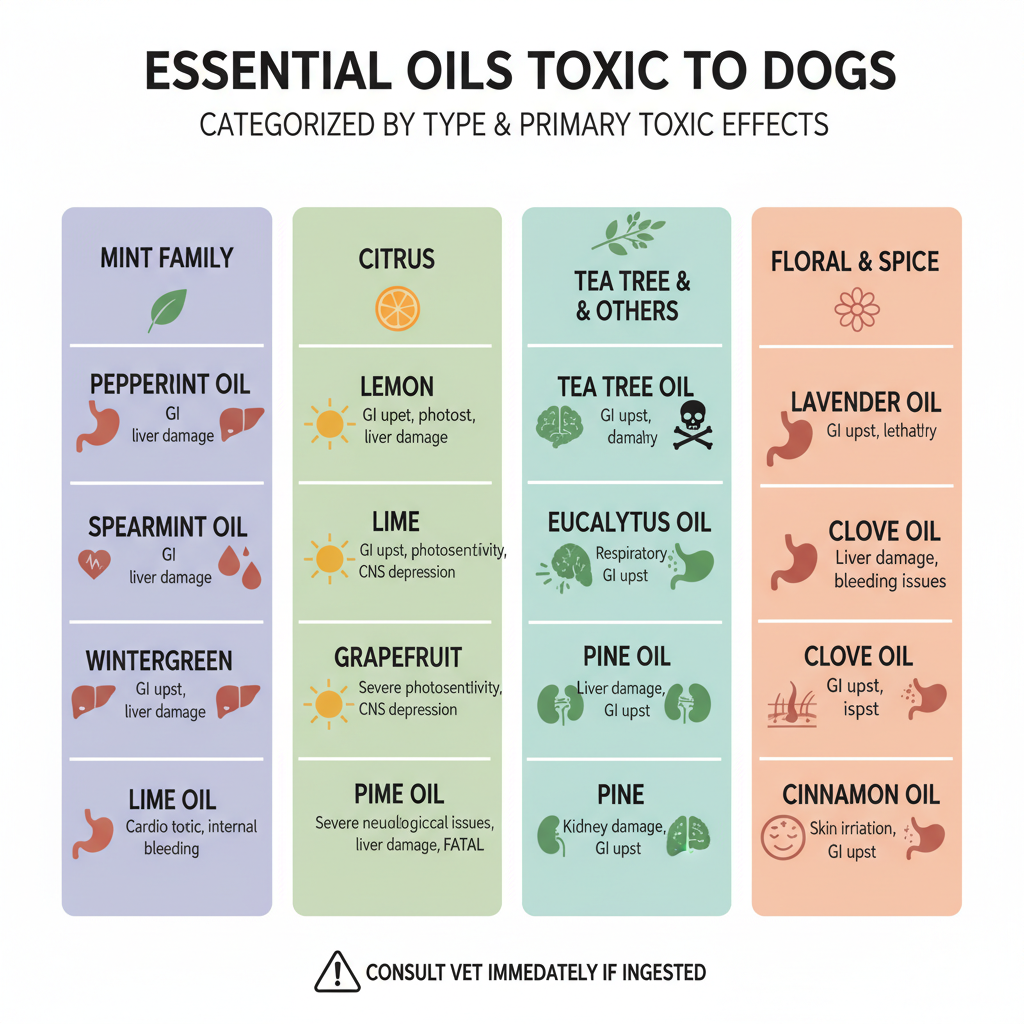
Many essential oils pose a risk to dogs, and some are particularly notorious for their severe toxicity. When considering Dog Essential Oil Safety, it’s safest to avoid these common essential oils around your canine companions:
- Tea Tree Oil (Melaleuca Oil): Highly toxic. Can rapidly cause severe neurological issues, liver damage, and, tragically, can be fatal.
- Peppermint Oil: Known to induce gastrointestinal upset, liver damage, and central nervous system disturbances.
- Wintergreen Oil: Contains methyl salicylate, a compound chemically similar to aspirin, which can lead to aspirin toxicity in dogs.
- Citrus Oils (Lemon, Lime, Orange, Grapefruit): Can cause significant gastrointestinal upset, increased photosensitivity, and central nervous system depression.
- Pine Oils: Associated with liver damage, severe respiratory irritation, and gastrointestinal distress.
- Pennyroyal Oil: Exceptionally toxic, known to cause severe liver damage and other profound systemic effects.
- Eucalyptus Oil: Can lead to gastrointestinal upset, central nervous system depression, and liver damage.
- Cinnamon Oil: Often causes skin and oral irritation, alongside gastrointestinal upset.
- Clove Oil: Implicated in liver damage, gastrointestinal upset, and central nervous system depression.
- Thyme Oil: Can result in liver damage and significant gastrointestinal distress.
- Ylang Ylang Oil: Known to cause gastrointestinal upset and central nervous system depression.
This is not an exhaustive list. Our recommendation at Petscarelab is to always err on the side of caution and assume that most essential oils are not safe for your dog.
Essential Oil Diffusers and Dogs: A Hidden Danger
While diffusing essential oils might appear to be a safer alternative, minimizing direct contact, this method still harbors significant risks for dogs.
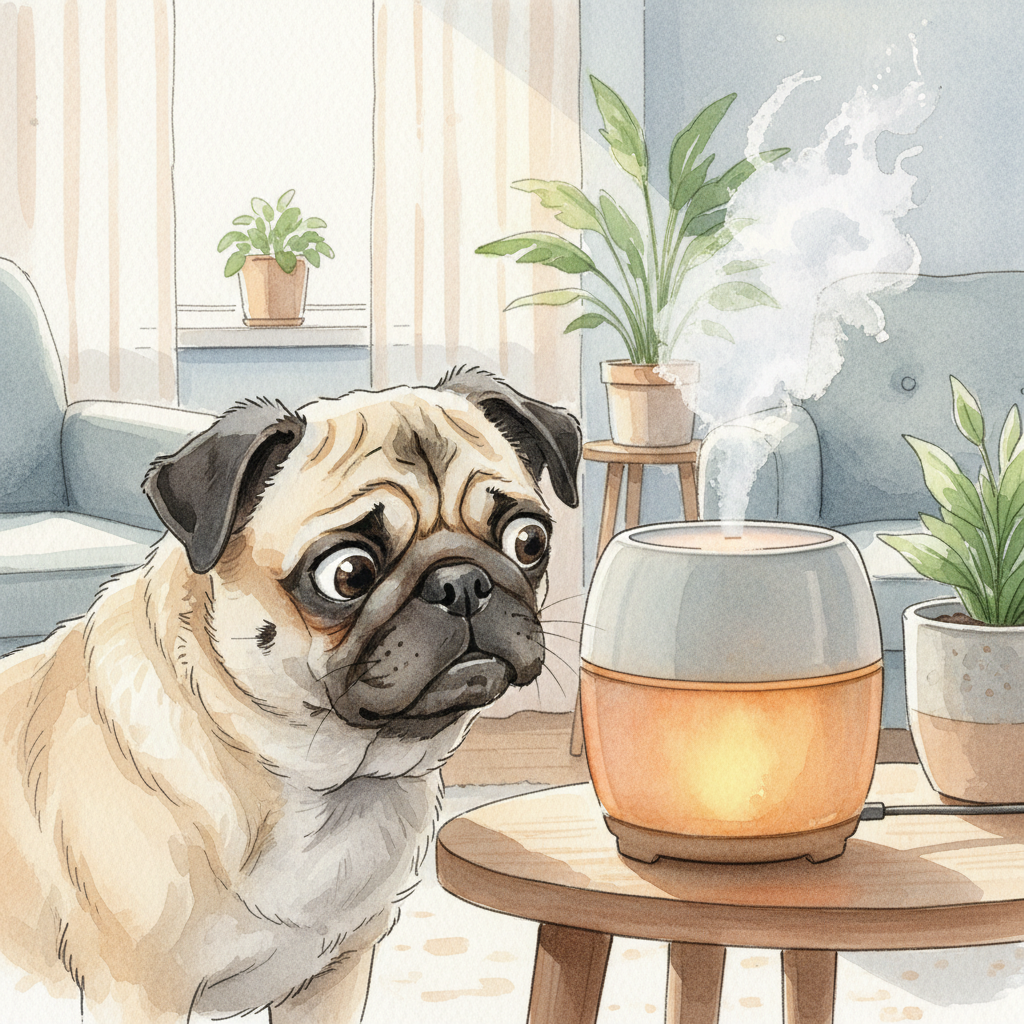
- Inhalation Hazards: Dogs invariably inhale the fine, diffused oil particles, which can profoundly irritate their delicate respiratory system. This risk is amplified in poorly ventilated areas or when diffusers operate for extended durations, posing a particular danger to brachycephalic breeds (like Pugs and Bulldogs) or those with existing respiratory conditions such as asthma.
- Surface Residue: Essential oil particles don’t just stay airborne; they eventually settle on various household surfaces, including your dog’s fur, bedding, and toys. Once settled, these oils can be easily licked off and ingested during grooming or play.
- Accidental Ingestion: A naturally curious dog might easily knock over an active diffuser or a bottle of essential oil, leading to direct ingestion of the concentrated liquid, which can be acutely toxic.
If you absolutely must use essential oil diffusers in your home, it is paramount to ensure they are placed in a well-ventilated area that is completely inaccessible to your dog. Furthermore, limit their use to very brief periods. Ideally, for optimal Dog Essential Oil Safety, your dog should be kept entirely out of any room where a diffuser is actively operating.
What About Essential Oil Products Formulated Specifically for Dogs?
The market offers various essential oil products purportedly formulated for dogs, often accompanied by claims of safety and therapeutic benefits. However, even these products warrant extreme caution and should never be used without prior discussion and approval from your veterinarian.
Here’s why our experts at Petscarelab advise such prudence:
- Pervasive Lack of Regulation: The essential oil industry, particularly concerning pet products, remains largely unregulated. This critical absence of oversight means that product quality, purity, and most importantly, safety, can vary dramatically between brands. What’s stated on the label may not accurately reflect what’s truly in the bottle.
- Scarcity of Scientific Research: There is a concerning dearth of rigorous, peer-reviewed scientific research supporting the safety and efficacy of essential oils for canine use. Most claims circulating are anecdotal, lacking the robust evidence required for responsible pet care.
- Individual Canine Sensitivity: Every dog is a unique individual. Even a highly diluted oil, marketed as “safe for dogs,” could still trigger an adverse or allergic reaction in a particularly sensitive canine, underscoring the unpredictable nature of these products.
- “Natural” Does Not Equate to “Safe”: It’s a common misconception that anything “natural” is inherently harmless. In reality, many natural substances, including various essential oils, are profoundly toxic if ingested, applied improperly, or used in concentrations unsuitable for a dog’s physiology.
Safer Alternatives to Essential Oils for Dogs
If you’re seeking natural, holistic, or simply pleasant ways to support your dog’s well-being or enhance your home environment, consider these proven, safer alternatives that prioritize Dog Essential Oil Safety:
- Veterinary-Approved Supplements: For specific health concerns, always consult your veterinarian regarding supplements that are backed by scientific research and have a verified track record of safety and efficacy for dogs.
- Carefully Selected Herbal Remedies: While some herbs can be beneficial, their use requires precise preparation and dosing. Always discuss any herbal remedies with your veterinarian or a qualified veterinary herbalist to ensure they are safe and appropriate for your dog.
- Dog-Safe Aromatherapy (Excluding Essential Oils): Some reputable pet retailers offer room sprays or diffusers specifically designed for pets, utilizing synthetic, non-toxic fragrances or extremely diluted, expertly vetted essential oil blends. Read labels meticulously and prioritize products with veterinary endorsement.
- Targeted Training and Enrichment: Many behavioral issues or signs of stress in dogs are most effectively addressed through consistent training, appropriate physical exercise, and engaging mental enrichment, rather than relying on aromatherapy.
- Prescription Medications: For genuine medical conditions, always adhere to your veterinarian’s advice regarding prescription medications, which are scientifically formulated and tested for specific health issues.
- Robust Hygiene and Ventilation: For a naturally fresh-smelling home, prioritize regular cleaning, ample natural ventilation by opening windows, and using pet-safe odor eliminators specifically designed to be non-toxic to animals.
The Bottom Line on Dog Essential Oil Safety
While essential oils may offer a range of benefits for humans, their use on or around dogs carries substantial and often underestimated risks. This is due to their highly potent nature, the unique way dogs metabolize substances, and their exquisitely heightened sense of smell.
Our unequivocal recommendation at Petscarelab is to generally avoid using essential oils directly on or around your dog.
If you are ever considering any form of holistic or alternative therapy for your dog, including essential oils, it is absolutely essential to consult with your veterinarian first. They possess the medical expertise to provide personalized guidance based on your dog’s specific health needs and ensure that any chosen therapy truly supports Dog Essential Oil Safety and is both effective and appropriate. When it comes to the health and well-being of your cherished canine companion, adopting an abundance of caution is always the most responsible and loving approach.