What You Need to Know About Dog Ear Cropping
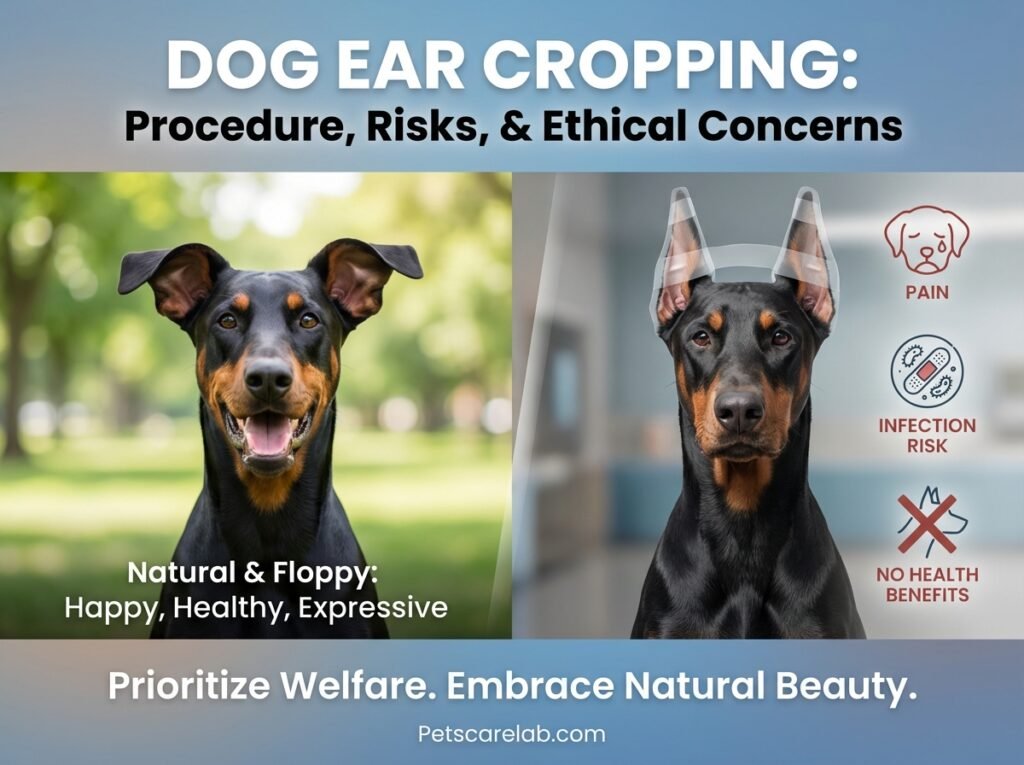
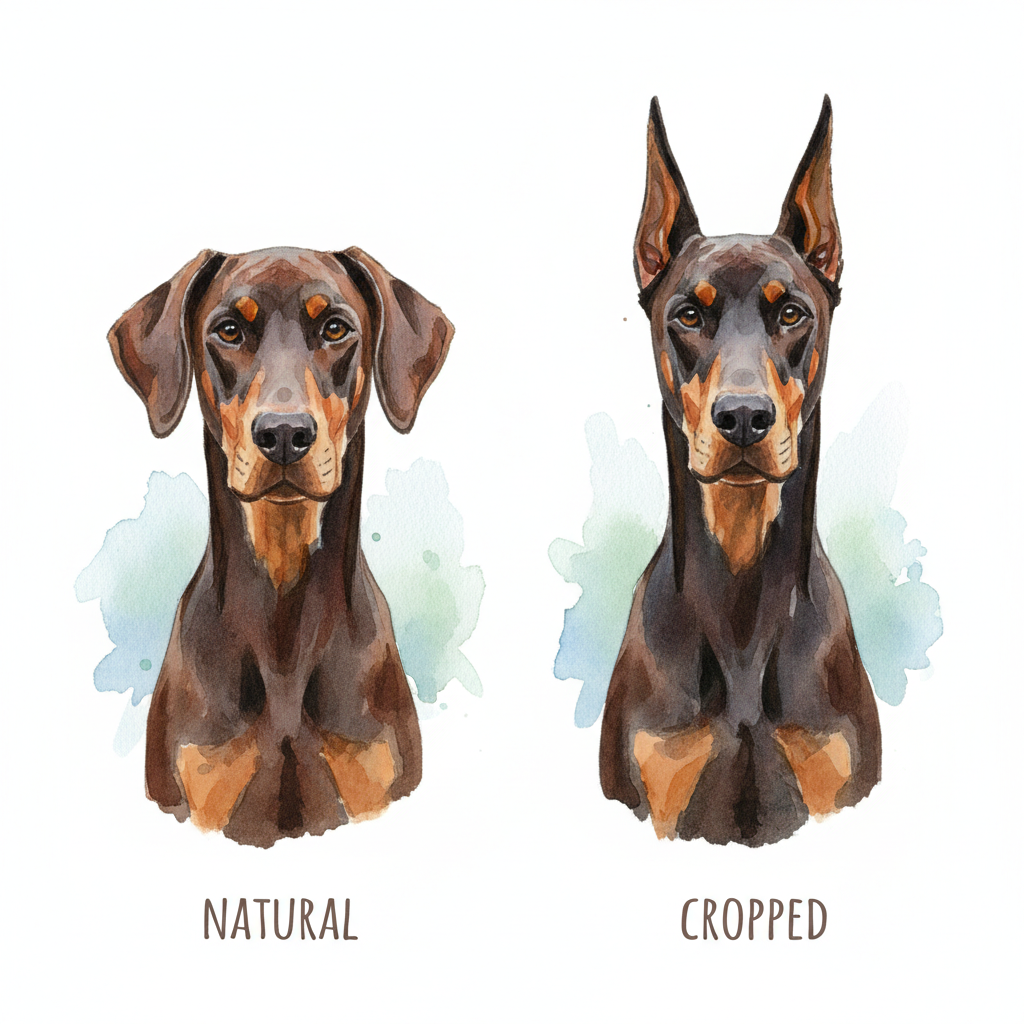
Thinking about dog ear cropping for your beloved pet? It's a surgical procedure where a piece of a dog's ear flap, called the pinna, is removed. After the surgery, the remaining ear is usually splinted to make it stand up in a particular way, often to fit a specific breed look.
This procedure is purely cosmetic and is typically done on puppies when they're between 8 and 12 weeks old. You'll often see breeds like Doberman Pinschers, Great Danes, Boxers, and Miniature Schnauzers with cropped ears.
Here at Petscarelab, our team and many veterinary specialists don't perform ear cropping. Why? Because it offers no health benefits to your dog. Many leading animal welfare and veterinary groups actively oppose ear cropping due to the ethical concerns and potential for pain and complications. In fact, it's illegal in many countries around the world.
How Dog Ear Cropping Works
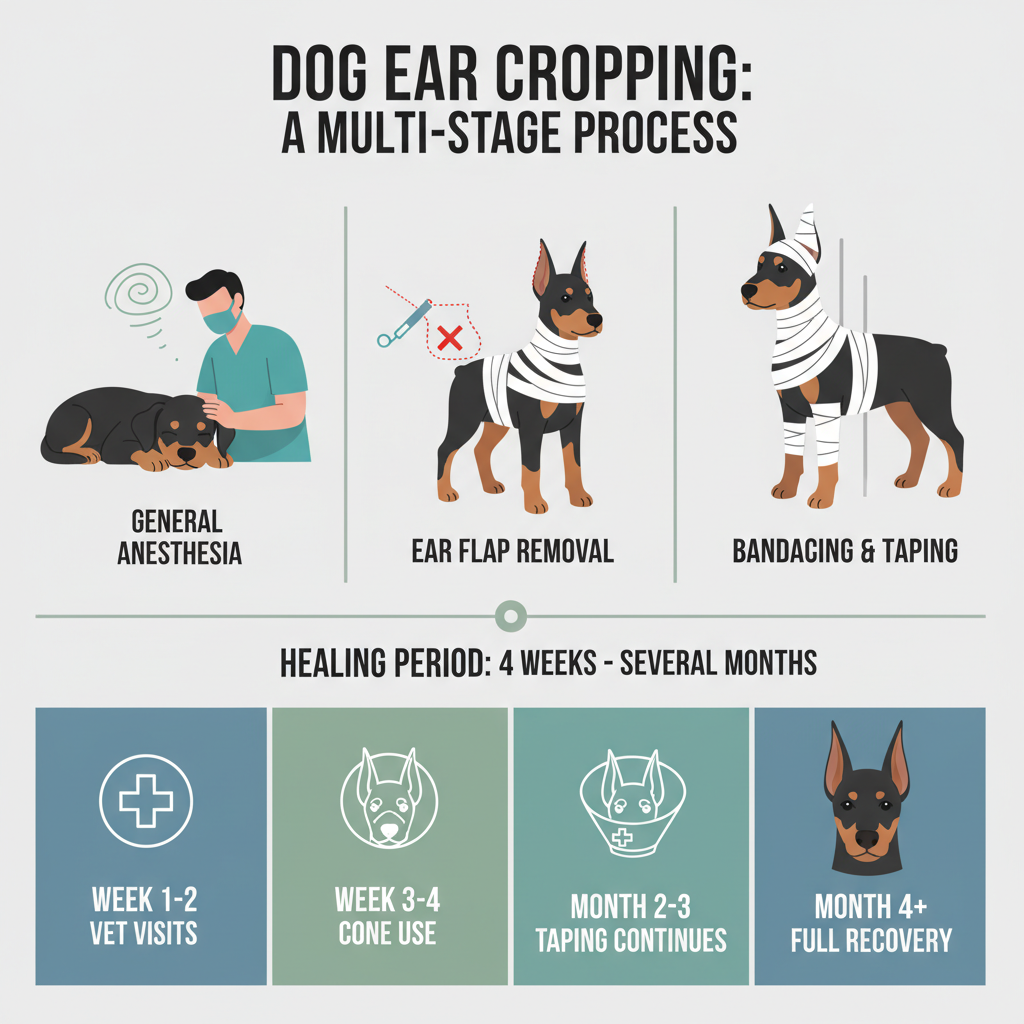
If a pup undergoes ear cropping, it happens under general anesthesia, performed by a vet. First, the vet removes a portion of the ear flap, then stitches the cut edges back together. After that, the ears are bandaged and taped upright while the cartilage heals. This isn't a quick fix; the healing process can stretch on for a long time, anywhere from four weeks to several months.
During this recovery, your pup wears a cone to keep them from scratching or biting at those bandages. You'll also need frequent vet visits to change the bandages and check on how the healing is coming along. Imagine how much stress that puts on a young puppy and your daily life!
Why Do People Crop Pups’ Ears?
Historically, people cropped certain working dog breeds' ears for practical reasons. For example, some hunting or fighting dogs had their ears trimmed to lower the risk of injury during their activities.
There was also a belief that ear cropping could prevent ear infections. However, our research and veterinary specialists confirm there's no scientific evidence proving that ear cropping helps prevent ear infections.
Today, people primarily crop ears for cosmetic reasons, aiming to meet specific breed standards. While some breed clubs might suggest it, they don't *require* ear cropping for a dog to be shown or registered.
Let's be clear: there's no scientific proof that ear cropping improves a dog's health, well-being, or behavior. It's simply a look.
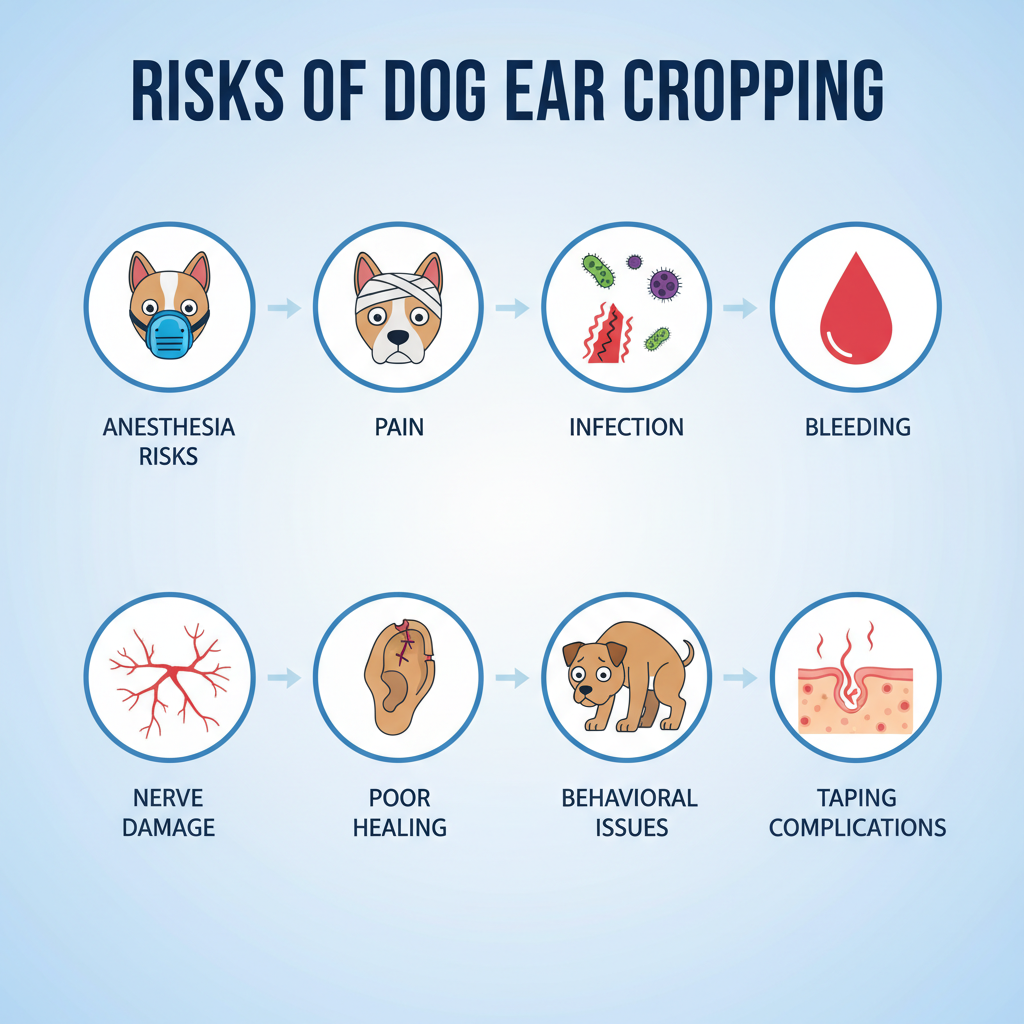
The Risks of Dog Ear Cropping
Since ear cropping is an elective surgery, it carries a whole range of risks, not just from the operation itself but also from the lengthy healing process that follows.
- Anesthesia Risks: Any surgery performed under general anesthesia comes with potential dangers. These can include breathing problems, bad reactions to drugs, and, very rarely, even death.
- Pain: Ear cropping is a painful procedure. Vets cut into your dog's sensitive ear tissue, and pups often experience significant pain, discomfort, and swelling afterward.
- Infection: Just like any surgical wound, the incision site can get infected. This can lead to serious problems like cellulitis, abscesses, or even a widespread infection (sepsis) if you don't treat it right away.
- Bleeding: Too much bleeding can happen during or after the procedure, sometimes requiring more medical care.
- Nerve Damage: In some cases, nerves can get damaged during the cropping. This might lead to permanent changes in how your dog's ear feels or moves.
- Poor Healing: Sometimes, the ears don't heal right. This can result in an undesirable look or ongoing irritation for your pup. You might see scarring, keloids (raised scars), or excessive tissue growth.
- Behavioral Issues: The entire ear cropping process can be incredibly stressful for a young puppy. This stress can impact their behavior, potentially leading to fear, anxiety, aggression, or a reluctance to be handled.
- Taping Complications: Taping your dog's ears up for weeks or months after surgery can cause additional discomfort, skin irritation, and even pressure sores. If the taping isn't done perfectly, it can also lead to an incorrect ear shape or lasting damage.
The Alternative to Ear Cropping
The best and only alternative to dog ear cropping is simple: let your dog's ears stay exactly as nature intended! Many popular breeds, like Doberman Pinschers and Great Danes, are recognized and celebrated for their natural, uncropped ears.
Our team at Petscarelab, along with veterinary specialists and animal welfare organizations worldwide, stands firmly against ear cropping. We prioritize your pet's comfort and well-being over a cosmetic procedure that brings no health benefits and carries significant risks. Let your dog embrace their natural beauty!