
The Perfect Fit: Your Guide to Dog Crate Sizing
Choosing the right crate size for your dog is one of the most important decisions you'll make, whether you're bringing home a new puppy or finding a comfortable space for an adult dog. A properly sized crate isn't just a place to sleep; it’s your dog's personal sanctuary, a cozy den where they feel safe and secure. Get the dog crate sizing wrong, and you could end up with an uncomfortable pup—or even potty accidents where you don't want them.
Think about it: a crate that's too small is like wearing shoes two sizes too tiny—cramped and painful. Your dog needs enough room to stand up without bumping their head, turn around easily, and stretch out fully on their side for a good nap. Too big, and that den-like comfort disappears, often inviting your dog to use one end as a bathroom. No one wants that!
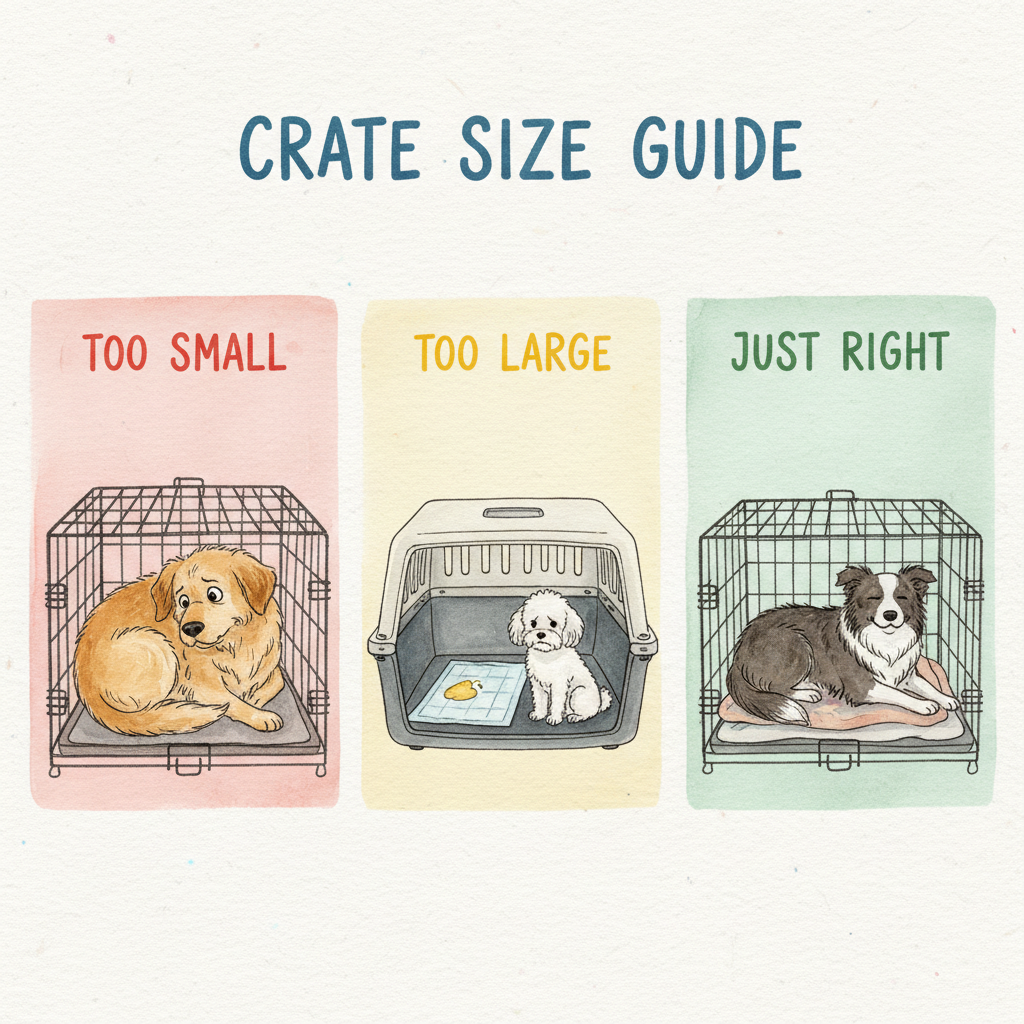
Our team at Petscarelab put together this guide to help you find that sweet spot, ensuring your furry friend has a crate that’s just right.
How to Measure Your Dog for the Perfect Crate
To pick out the ideal crate, you’ll need to grab a tape measure and get your dog's dimensions. We’ll focus on two key measurements: length and height.
Measure Your Dog’s Length
Have your dog stand up nice and straight—no hunching or stretching out. Measure them from the tip of their nose all the way to the base of their tail.
Once you have that number, add an extra 2-4 inches. This gives your dog just enough wiggle room and will be the minimum length for their crate.
Measure Your Dog’s Height
Again, have your dog stand tall. Measure from the very top of their head down to the floor. If your dog has perky, upright ears, measure to the tip of those ears.
Just like with length, add another 2-4 inches to this measurement. This will be the minimum height for their new crate.

Your Dog’s Weight (A Helpful Tip)
You don't *have* to know your dog's weight to choose a crate, but many crate makers do give weight guidelines. Knowing your dog's weight can be super helpful, especially if you're trying to decide between two crate sizes. Just remember, it's never a substitute for actually measuring your dog!
Dog Crate Size Chart
This chart offers a quick reference to help you narrow down the best dog crate sizing. But always, always measure your dog first to make sure they get a tailor-made fit!
| Dog Weight | Dog Breed Example | Crate Length | Crate Height | Crate Width |
|---|---|---|---|---|
| Up to 10 lbs. | Chihuahua, Pomeranian, Toy Poodle | 18-22 in. | 18-22 in. | 12-15 in. |
| 11-25 lbs. | Beagle, French Bulldog, Shih Tzu | 24-26 in. | 22-24 in. | 15-18 in. |
| 26-40 lbs. | Basset Hound, Border Collie, English Bulldog | 30-32 in. | 26-28 in. | 19-21 in. |
| 41-70 lbs. | Boxer, Labrador Retriever, Pit Bull | 36-38 in. | 28-30 in. | 22-24 in. |
| 71-90 lbs. | German Shepherd, Golden Retriever, Rottweiler | 42-44 in. | 30-32 in. | 25-27 in. |
| 91-110 lbs. | Akita, Bernese Mountain Dog, Doberman Pinscher | 48-50 in. | 32-34 in. | 28-30 in. |
| 111+ lbs. | Great Dane, Irish Wolfhound, Mastiff | 54-56 in. | 36-38 in. | 30-32 in. |
Crate Sizing for Growing Puppies
Puppies sprout up fast, don't they? When it comes to puppy crate sizing, you've got two main routes:
- Start small and upgrade. You could buy a smaller crate now and then get a bigger one as your puppy grows. This means a perfectly sized crate for every stage, but it can get pricey.
- Buy big with a divider. Many crates come with a removable divider. This lets you adjust the crate's interior space as your puppy grows, making it a more economical choice for many pet parents.
Using a Crate Divider for Puppies
If you go with a divider, here's how to make it work: start by setting the divider so your puppy has just enough room to stand up, turn around, and lie down comfortably. They shouldn't have so much space that they can pick a "potty corner."
As your puppy gets bigger, simply move the divider to give them a bit more room. Keep adjusting it until your pup is fully grown, and then you can take the divider out completely.
What Kinds of Dog Crates Can You Choose From?
Once you know the right size for your furry friend, it's time to pick the type of crate that fits your lifestyle and your dog’s personality. Here are the most common options:
- Wire crates: These are super popular and versatile. They're tough, a breeze to clean, and offer great airflow. Plus, many come with those handy dividers.
- Plastic crates: Often called travel crates, these are lighter and more enclosed. They create a secure, den-like feel and are frequently approved for air travel.
- Soft-sided crates: Lightweight and easy to collapse, these are fantastic for road trips or temporary setups. Just a heads up: they're not the best choice if your dog loves to chew or is a master escape artist.
- Furniture crates: Want a crate that blends in with your home? These look like regular furniture pieces, such as end tables or cabinets, and are often made from wood or metal.
- Heavy-duty crates: Built from steel or aluminum, these powerhouses are designed for strong dogs who might break out of or damage other crate types.

Can a dog crate be too big?
Absolutely! While it's tempting to think more space is always better, an oversized crate can actually be counterproductive. It often encourages your dog to use one end as a bathroom, and it doesn't give them that cozy, safe den feeling many dogs crave. The sweet spot allows your dog to stand, turn, and lie down comfortably, with just those few extra inches of space we mentioned.
How much bigger should a crate be than a dog?
Your dog's crate should be about 2-4 inches longer than your dog's measurement from nose to the base of their tail, and 2-4 inches taller than their measurement from the top of their head (or ear tips) to the ground. This extra space lets them move freely without inviting potty breaks inside the crate.
Is an extra-large crate too big for a German Shepherd?
For an adult German Shepherd, an "extra-large" crate—usually around 42-44 inches long—is often just right. However, German Shepherds can really vary in size, so always measure your specific dog. Make sure the crate is 2-4 inches longer and taller than your pup so they can stand, turn, and lie down without feeling squished. If you have a German Shepherd puppy, an extra-large crate with a divider is a smart choice to adjust the space as they grow.
Is a 36-inch crate big enough for a Pit Bull?
A 36-inch crate is often a good fit for many adult Pit Bulls, as their typical weight range (41-70 lbs.) usually means a 36-38 inch crate. But just like with any breed, Pit Bulls can differ in size and build, so it’s super important to measure your individual dog. The crate needs to be 2-4 inches longer and taller than your Pit Bull to make sure they can comfortably stand, turn around, and stretch out. Always trust your dog's measurements over general breed guidelines!