Is Your Dog at a Healthy Weight? Understanding Your Dog's Body Condition Score
Just like people, dogs come in all shapes and sizes. Sometimes, it's tough to tell if your furry friend is carrying a few too many pounds, or perhaps not enough. That's where knowing your Dog Body Condition Score (BCS) comes in handy. It’s a simple, yet powerful, tool our team at Petscarelab uses to figure out if your dog is at a healthy weight, underweight, or overweight.
The body condition score isn't just about the number on the scale. It's a way to assess how much fat your dog carries relative to their unique bone structure. This measurement helps us, and your vet, recommend the right diet and exercise plan to keep your dog healthy and happy for years to come.
Why the Body Condition Score is a Big Deal
You might be thinking, "Why can't I just weigh my dog?" And that's a fair question! The thing is, weight alone doesn't tell the whole story.
Imagine a tiny Chihuahua and a giant Great Dane. They could both weigh 10 pounds, but those 10 pounds mean wildly different things for each dog. For the Great Dane, that's dangerously underweight. For the Chihuahua, it might be just right. Your dog's breed, age, and how active they are all play a part in what their ideal weight should be.
That’s why the Dog Body Condition Score is such a useful assessment. It looks at your dog's individual build, giving you a much more accurate picture of whether they're too skinny, a little chubby, or absolutely perfect.
The Two Main Scoring Systems for Dogs
When it comes to scoring a dog’s body condition, you'll usually find two systems:
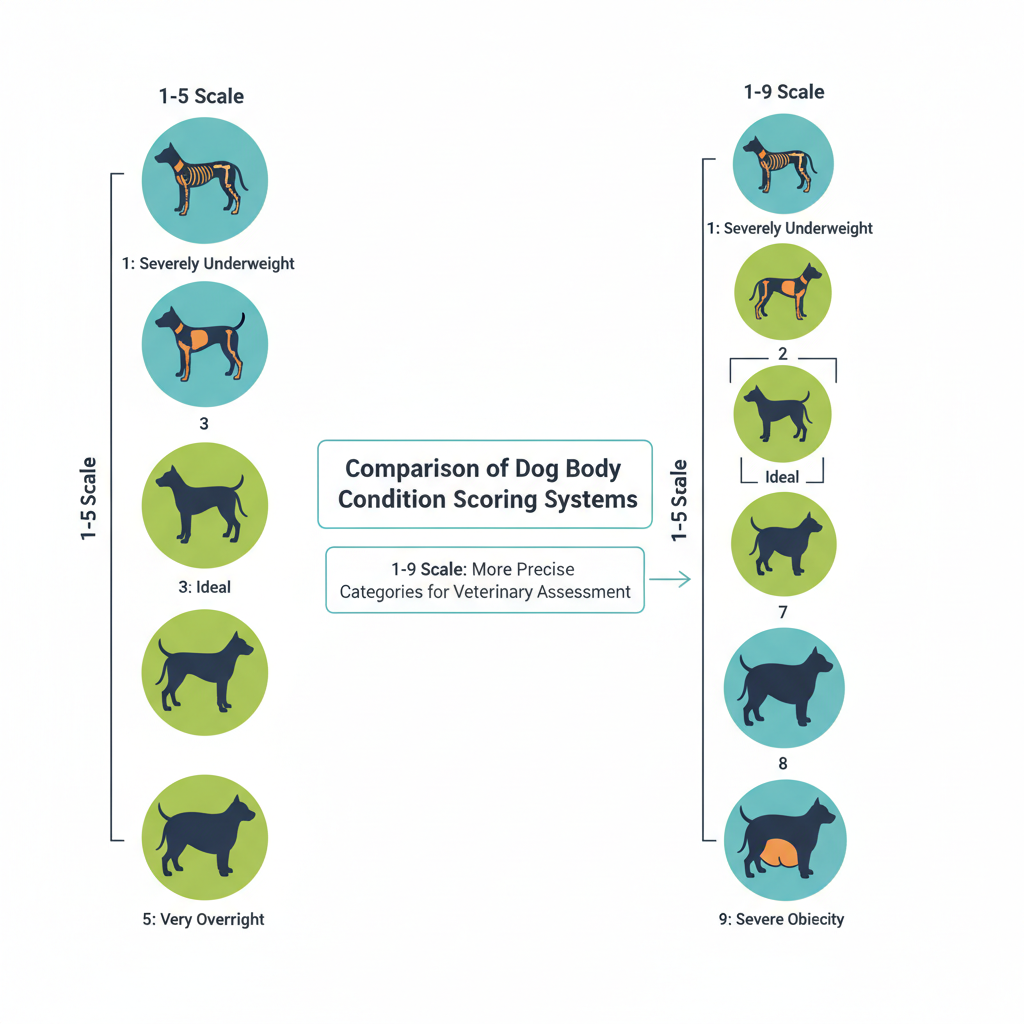
- The 1–5 scale: Here, a score of 1 means your dog is severely underweight, 3 is ideal, and 5 means they're very overweight.
- The 1–9 scale: This system gives you more detail. A score of 1 is severely underweight, 4–5 is ideal, and 9 indicates severe obesity.
Many veterinary specialists prefer the 1–9 scale because it offers more precise categories. Both systems aim for the same goal and use similar criteria. Just remember, a lower number always means underweight, and a higher number means your dog is carrying extra pounds.
For the rest of this article, we'll focus on the more detailed 1–9 scale.
How to Check Your Dog’s Body Condition Score at Home
While your vet can give you the most accurate score, you can do a quick check at home to get a general idea. You'll use a combination of looking at your dog and gently feeling their body.
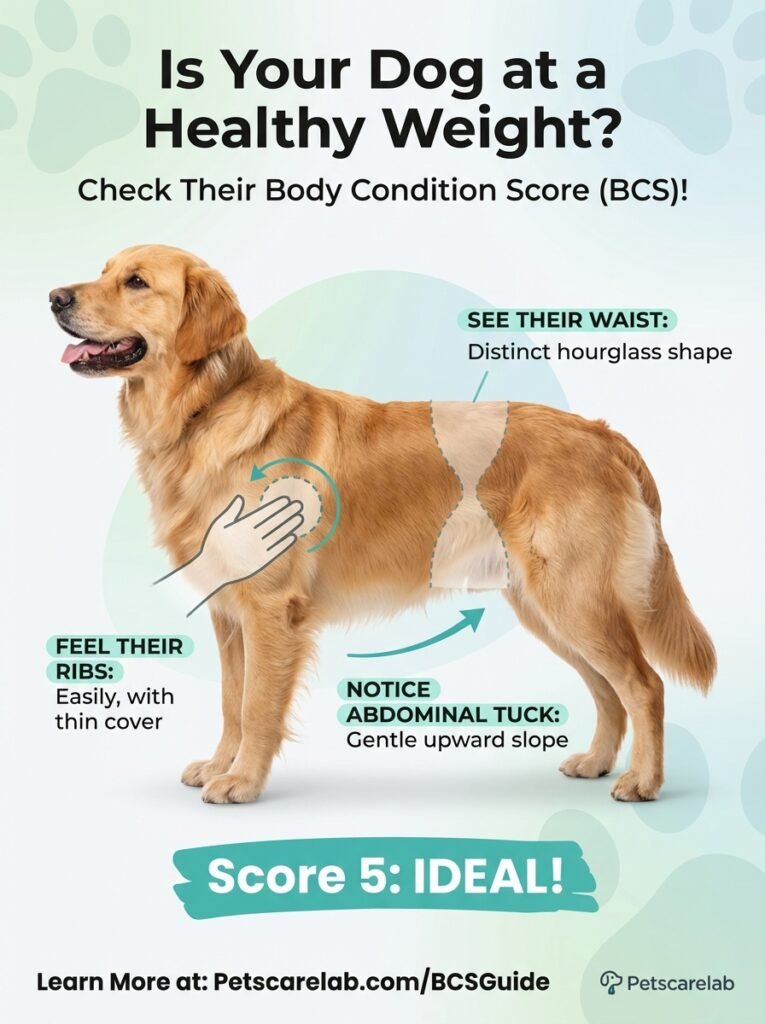
Here’s how to assess your dog’s body condition score:
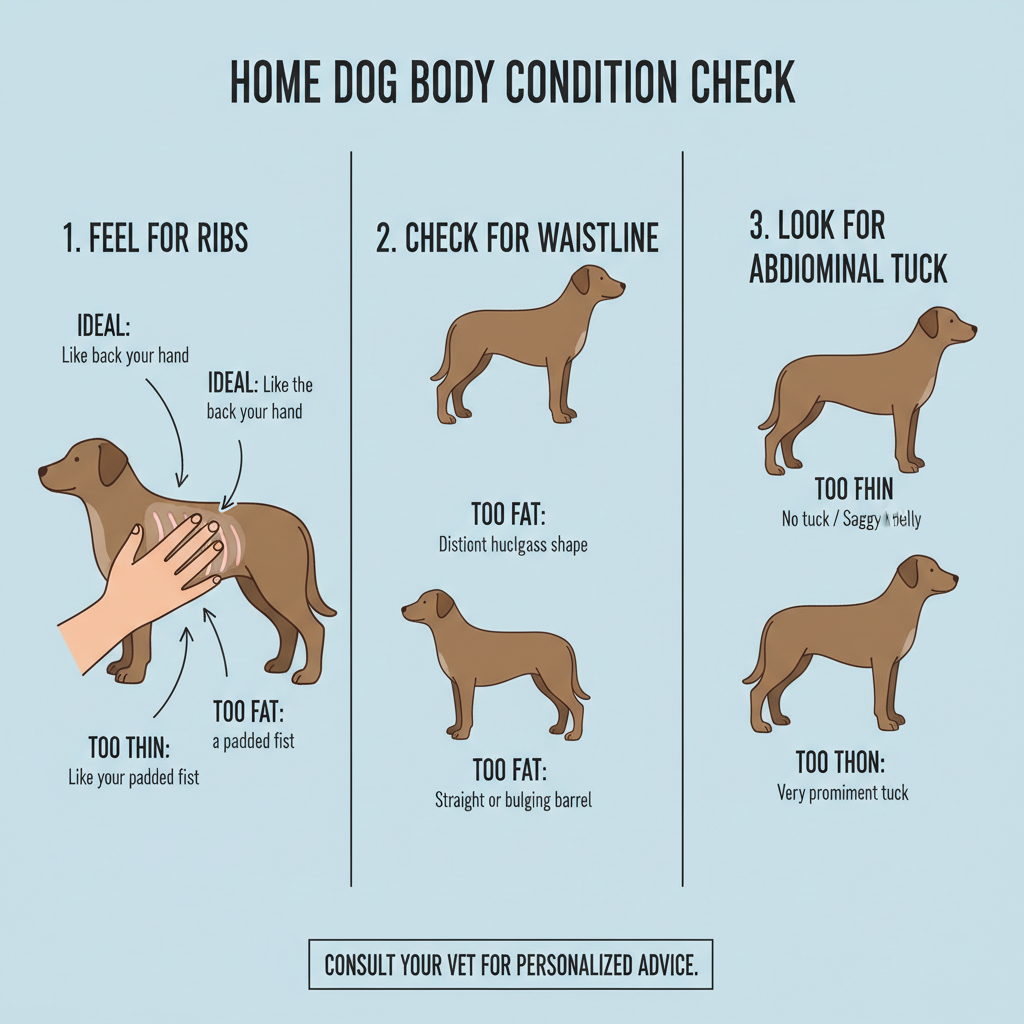
1. Feel for Their Ribs
Start by placing both thumbs on your dog’s spine, then spread your fingers across their rib cage. You should be able to feel their ribs easily, almost like the knuckles on your hand, but with a thin, soft layer over them. You shouldn't have to press hard. If you can't feel their ribs without really pushing, your dog might be carrying too much weight. If their ribs stick out very clearly and you can see them from a distance, they might be too thin.
2. Check for a Waistline
Now, stand above your dog and look down at their back. You should see a distinct "hourglass" shape, with a noticeable tuck-in right behind their ribs. If your dog looks more like a barrel with no waist, they're probably overweight. If that waistline looks too extreme, almost like it's pinched, your dog might be underweight.
3. Look for an Abdominal Tuck
Finally, look at your dog from the side. You should see their belly gently slope upwards from their rib cage towards their hind legs. This is called an abdominal tuck. If that tuck is very prominent, it often means your dog is underweight. If there's little to no tuck, and their belly hangs low, they might be overweight.
Dog Body Condition Score Chart (1–9 Scale)
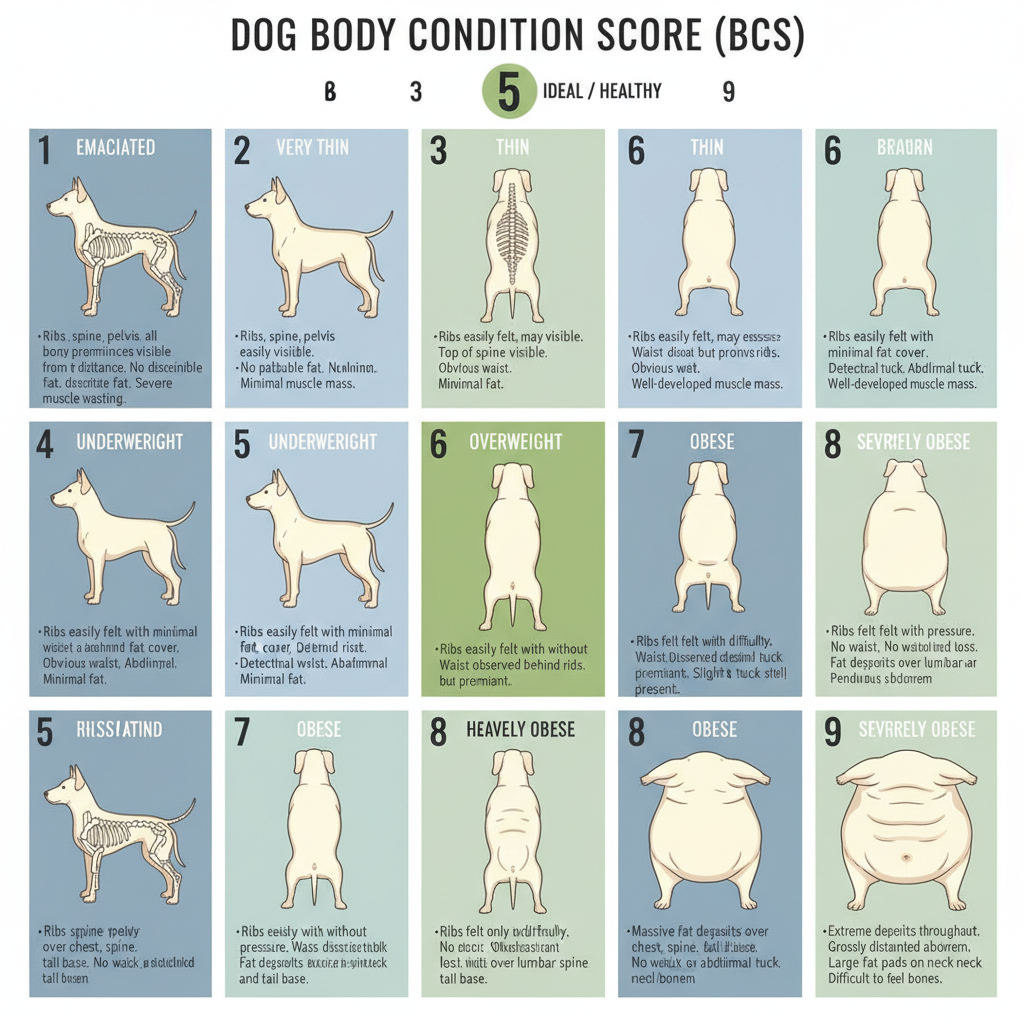
Let's break down each score on the 1–9 scale. This will help you understand exactly what to look for and what each score means for your dog's health.
Score 1: Emaciated
What You'll See:
- You can clearly see their ribs, backbones, hip bones, and all other bony parts from a distance.
- There's no visible body fat.
- They’ve clearly lost a lot of muscle.
What You'll Feel:
- Their bones are incredibly easy to feel.
What It Means: A score of 1 means your dog is severely underweight. This usually points to a serious underlying illness, severe malnutrition, or starvation. This is a critical situation.
Score 2: Very Thin
What You'll See:
- Ribs, backbones, and hip bones are still very easy to see.
- You won't see any body fat.
- They've lost some muscle, but not as much as a score 1 dog.
What You'll Feel:
- Their bones are still very easy to feel.
What It Means: Dogs with a score of 2 are very underweight. This could be due to malnutrition, an undiagnosed illness, or not getting enough food.
Score 3: Thin
What You'll See:
- Their ribs are easy to feel and might even be visible.
- You might see the tops of their backbones.
- Their hip bones are starting to stand out.
- They have a clear abdominal tuck and an hourglass shape.
What You'll Feel:
- You can easily feel their bones without pressing hard.
What It Means: A score of 3 means your dog is thin. Like scores 1 and 2, this can be a sign of malnutrition, an underlying health issue, or not enough food.
Score 4: Underweight (Ideal for Some Sighthounds)
What You'll See:
- You can easily feel their ribs, though they have a tiny bit of fat covering them.
- Their waist is easy to spot when you look from above.
- They definitely have an abdominal tuck.
What You'll Feel:
- Their ribs feel like the knuckles on your hand – distinct but not pointy.
What It Means: Dogs with a score of 4 are slightly underweight. However, this score is actually considered ideal for some naturally lean breeds, like Greyhounds or Whippets, who are built very slender.
Score 5: Ideal/Healthy
What You'll See:
- You can easily feel their ribs, covered by just a minimal layer of fat.
- Their waist is clearly visible when you look from above.
- They have a noticeable abdominal tuck.
What You'll Feel:
- Their ribs feel like the back of your hand – smooth but easy to feel.
What It Means: Congratulations! A score of 5 means your dog is at an ideal, healthy weight. Keep up the great work with their diet and exercise!
Score 6: Slightly Overweight
What You'll See:
- You can feel their ribs, but there's a slight excess of fat covering them.
- You can still make out a waist from above, but it's not as prominent as an ideal dog's.
- They still have an abdominal tuck, but it might be less defined.
What You'll Feel:
- You can feel their ribs, but you'll need to apply a little light pressure.
What It Means: A score of 6 means your dog is carrying a few extra pounds. This is a good time to make small adjustments to their diet and exercise to prevent further weight gain. Catching it now is easier than later!
Score 7: Overweight
What You'll See:
- It's hard to feel their ribs because there's a heavy layer of fat covering them.
- Their waist is barely visible, or you can't see one at all.
- The abdominal tuck is either completely gone or very minimal.
- You'll notice fat deposits around their lower back and at the base of their tail.
What You'll Feel:
- Their ribs are tough to feel through the fat.
What It Means: Dogs with a score of 7 are overweight. It's crucial to make changes to their diet and get them moving more to protect their health.
Score 8: Obese
What You'll See:
- You won't be able to feel their ribs at all because of a very thick layer of fat.
- They have no waist or abdominal tuck.
- Their belly looks noticeably distended or saggy.
- You'll see significant fat deposits over their lower back, face, legs, and at the base of their tail.
What You'll Feel:
- Their ribs are impossible to feel under all that fat.
What It Means: A score of 8 means your dog is obese. This weight seriously puts their health at risk and can lead to many health problems.
Score 9: Severely Obese
What You'll See:
- They have huge fat deposits across their chest, spine, and tail base.
- Their waist and abdominal tuck are completely gone.
- You'll see extensive fat on their neck and limbs.
- Their belly is extremely distended.
What You'll Feel:
- You absolutely cannot feel their ribs under the massive fat deposits.
What It Means: A score of 9 means your dog is severely obese, which is an extreme health risk. This can drastically shorten your dog’s life and cause a whole host of serious health complications.
What to Do if Your Dog's Score Isn't Ideal
If you've checked your dog and think they're either too thin or too heavy, the best first step is to schedule an appointment with your vet. They can give you the most accurate Dog Body Condition Score and help you create a personalized plan to get your pup back to a healthy weight.
If your dog is underweight, your vet will likely run some tests to rule out any hidden medical issues, such as:
- Parasites
- Hyperactive thyroid
- Kidney or liver disease
- Heart conditions
- Cancer
Once they pinpoint the cause, your vet will recommend a treatment plan, which could involve dietary changes, medication, or other therapies.
If your dog is overweight, your vet will work with you to create a safe and effective weight loss plan. This might include:
- A special weight-loss dog food: These foods are designed to help dogs shed pounds safely.
- Diet adjustments: This could mean cutting back on calories, feeding smaller meals, or switching to a lighter dog food.
- More exercise: Your vet can help you figure out an exercise routine that's safe and right for your dog's current fitness level.
Your vet will also help you set a realistic weight loss goal and keep an eye on your dog's progress. It’s super important not to drastically cut their food or suddenly ramp up their exercise, as this can be dangerous. Your vet will guide you through making these changes safely.
What's a good body condition score for a dog?
A good Dog Body Condition Score is typically a 5 on a 1–9 scale. This means you can easily feel their ribs with just a thin layer of fat, they have a clear waist, and you can see an abdominal tuck. For some naturally lean breeds, like sighthounds, a score of 4 might also be ideal.
How do I check my dog’s body condition?
You check your dog’s body condition by looking at them closely and gently feeling their ribs, waist, and the tuck of their abdomen. You should be able to easily feel their ribs (like the back of your hand), see a clear waistline when looking from above, and notice their belly tucking up from the side.
How can I tell if my dog is fat?
You'll know if your dog is overweight or fat if you struggle to feel their ribs, they don't have a clear waistline, and their belly doesn't tuck up. You might also notice obvious fat deposits around their neck, over their spine, and at the base of their tail. If you're worried your dog is too heavy, chat with your vet. They can give you an accurate assessment and help you create a weight management plan.