How Old Is My Dog in Human Years?
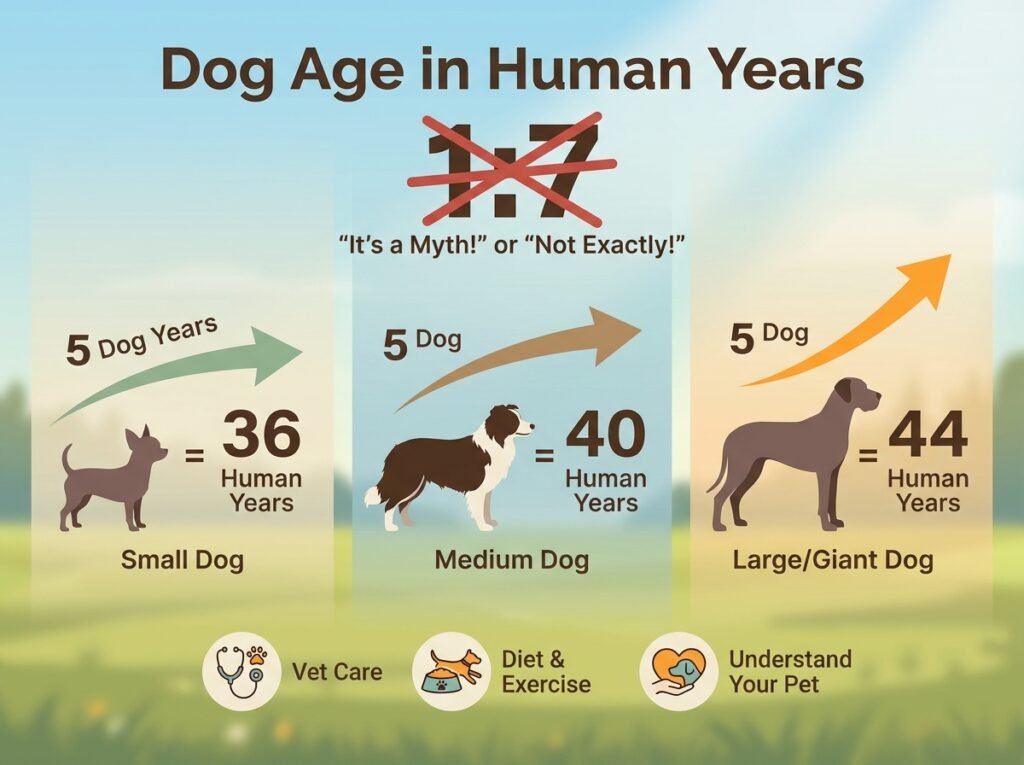
Every dog parent has probably heard the old saying: "One human year equals seven dog years." It's a fun idea, but is that really how you figure out your dog age in human years? The truth is a little more complex. The formula actually depends on your pup's size and breed. Let's break down how to truly understand your furry friend's age.
Your Dog's Age in Human Years: A Quick Chart
There isn't a single, magic formula to calculate a dog's age in human years. Instead, it's a sliding scale, mostly based on how big your dog gets, and a bit on their breed. Here’s a handy chart to give you a good estimate of your dog's age in human years:
| Dog's Actual Age | Small Dog (0-20 lbs) | Medium Dog (21-50 lbs) | Large Dog (51-90 lbs) | Giant Dog (91+ lbs) |
|---|---|---|---|---|
| 1 year | 15 | 15 | 15 | 12 |
| 2 years | 24 | 24 | 24 | 20 |
| 3 years | 28 | 28 | 28 | 28 |
| 4 years | 32 | 32 | 32 | 36 |
| 5 years | 36 | 36 | 36 | 44 |
| 6 years | 40 | 42 | 45 | 52 |
| 7 years | 44 | 47 | 50 | 60 |
| 8 years | 48 | 51 | 55 | 68 |
| 9 years | 52 | 56 | 60 | 76 |
| 10 years | 56 | 60 | 65 | 84 |
| 11 years | 60 | 65 | 70 | 92 |
| 12 years | 64 | 69 | 75 | 100 |
| 13 years | 68 | 74 | 80 | 108 |
| 14 years | 72 | 78 | 85 | 116 |
| 15 years | 76 | 83 | 90 | 124 |
Keep in mind: This chart offers a general idea. Every dog is unique and might age a bit differently depending on their genes, health, and how they live their life.
The Real Way to Understand Your Dog's Age
The "7-year rule" is far too simple. The real way we figure out dog years considers that pups grow up much faster in their first couple of years than we do. After that, their aging slows down. Here's a clearer picture:
- First Year: Your dog's first year zooms by, packing in roughly 15 human years of development. During this time, they learn so much, grow rapidly, and explore their world.
- Second Year: The second year adds about 9 human years to their life. By the time they hit two years old, most dogs are full-fledged adults, equivalent to a 24-year-old human.
- After Two Years: Once they're past their second birthday, the rate of aging varies a lot depending on their size and breed.
The general breakdown goes like this:
- Small Dogs: These little guys usually live longer than their bigger pals. So, after those first two years, they age slower, adding around 4-5 human years for each calendar year.
- Medium Dogs: They fall right in the middle, adding about 5-6 human years per calendar year once they're past two.
- Large and Giant Dogs: These big lovable breeds mature more quickly and often have shorter lives. They add about 7-8 human years for each calendar year after those first two.
For example, imagine a 5-year-old small dog. She might be around 36 human years old (that's 15+9+4+4+4). Now picture a 5-year-old giant dog; he could already be around 44 human years old (that's 12+8+8+8+8). See the difference?

The Latest Science on Calculating Dog Years
Some interesting recent scientific research, including a study published in Cell Systems by a team at the University of California San Diego, suggests a whole new way to figure out a dog's age. This method looks at changes in a dog's DNA over time. The formula they came up with is: Human Age = 16 ln(dog’s chronological age) + 31
- Here, `ln` stands for the natural logarithm (a type of mathematical function).
- This formula tells us that young dogs age incredibly fast, but then their aging process slows down quite a bit as they get older.
While this scientific formula offers a fascinating peek into the molecular clock of aging, it's a bit tricky for most pet parents to use day-to-day. For practical understanding, the simpler, size-based guidelines work best.
Why Do Bigger Dogs Live Shorter Lives?
It might seem strange, but big dogs generally don't live as long as small dogs. Scientists aren't completely sure why, but our team at Petscarelab, along with other veterinary specialists, has a few theories:
- Fast Growth: Large breeds grow and develop at a super-fast pace. This rapid development might put extra stress on their bodies, possibly leading to age-related health issues earlier in life.
- Higher Cancer Risk: Studies show that larger dogs tend to face a higher risk of certain cancers.
- Metabolic Differences: There could be a link between a dog's metabolism and how quickly they age. Larger dogs simply have different metabolic rates compared to smaller pups, which might impact their lifespan.
- More Wear and Tear: Their larger size could mean more stress on their joints, organs, and overall body systems. Think of it as simply more "wear and tear" happening at a faster rate.

Understanding Your Dog's Life Stages
Forget the exact number of human years for a moment. What's truly important is understanding your dog's current life stage. This helps you give them the best possible care.
- Puppy (0-6 months): This is a whirlwind of growth, learning, and making new friends. Puppies need consistent meals, tons of playtime, and basic training to set them up for success.
- Adolescent (6 months-2 years): Your dog is still growing and developing, both physically and mentally. They might push boundaries (just like human teenagers!), so keep up with their training and give them plenty of mental puzzles and activities. They'll also reach sexual maturity during this time.
- Adult (2 years-6 years, though this varies by size): Your dog is fully grown, has settled into their unique personality, and is generally in their prime. Focus on a balanced diet, regular exercise, and those all-important routine vet check-ups.
- Senior (6+ years, also varies by size): As dogs reach their golden years, you might notice signs of aging, like less energy, stiff joints, or changes in how well they see or hear. Senior pups thrive on specialized diets, more frequent vet visits to catch issues early, and a comfy home environment tailored to their needs.
Why Knowing Your Dog's Age Matters
While figuring out your dog's age in human years is mostly for fun, knowing their actual age (in calendar years) and understanding their life stage is absolutely essential for their health and happiness.
- Preventative Care: A puppy's vet visits are all about vaccinations. Senior dogs, on the other hand, need more frequent check-ups to monitor for common age-related conditions like arthritis, kidney disease, or even changes in their thinking and memory. Our veterinary specialists recommend tailoring check-ups to your dog's age.
- Diet and Nutrition: The food a growing puppy needs is completely different from what a senior dog requires. Age-appropriate food makes sure your dog gets the right nutrients to thrive at every stage.
- Exercise Needs: Puppies have short bursts of energy and need lots of short play sessions. Adult dogs can usually handle more vigorous exercise, while seniors might benefit from gentler, shorter strolls.
- Behavioral Expectations: Knowing your dog's life stage helps you understand their behavior. This means you can set realistic expectations and tackle any age-related changes, like a sudden burst of adolescent energy or a senior dog slowing down, with patience and understanding.
Ultimately, whether you call your 10-year-old dog "60" or "84" in human years doesn't really matter. What truly counts is showering them with love, giving them proper care, and paying attention to their needs throughout their entire life's journey. They're family, after all.