Disseminated Intravascular Coagulation (DIC) in Dogs
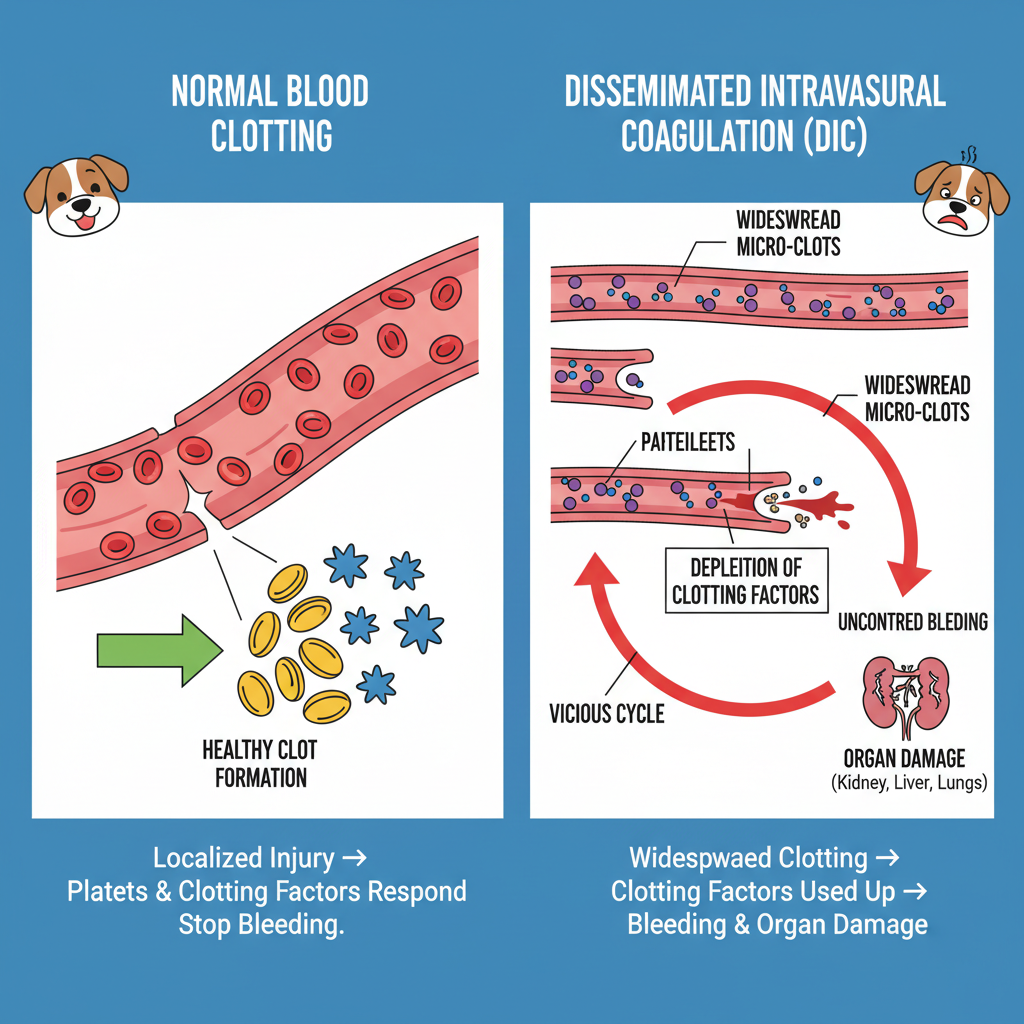
Imagine your dog's body, usually so good at healing, suddenly turning on itself. That's a bit like what happens with DIC in dogs, a terrifying and life-threatening condition. Instead of just forming healthy clots when needed, their system goes haywire, creating tiny, widespread blood clots throughout the body. But here's the cruel twist: this wild clotting spree quickly uses up all the body's essential clotting tools, leaving your pup vulnerable to severe, uncontrollable bleeding. It's not a disease on its own; think of it as a devastating domino effect triggered by another serious illness.
What Is Disseminated Intravascular Coagulation?
DIC essentially throws your dog's natural clotting system into chaos. Normally, when your dog gets a cut, their body sends out special "clotting factors"—like tiny construction workers and building materials (platelets and proteins)—to quickly patch things up. But with DIC, these workers go into overdrive, building countless tiny clots everywhere, even where they're not needed. This frenzy rapidly uses up all the building materials. Soon, there's nothing left for actual emergencies. So, your pup ends up with dangerous clots blocking blood flow to vital organs AND can't stop bleeding from even minor injuries, or worse, bleeding internally. It’s a vicious cycle that can quickly damage organs.
Causes of Disseminated Intravascular Coagulation in Dogs
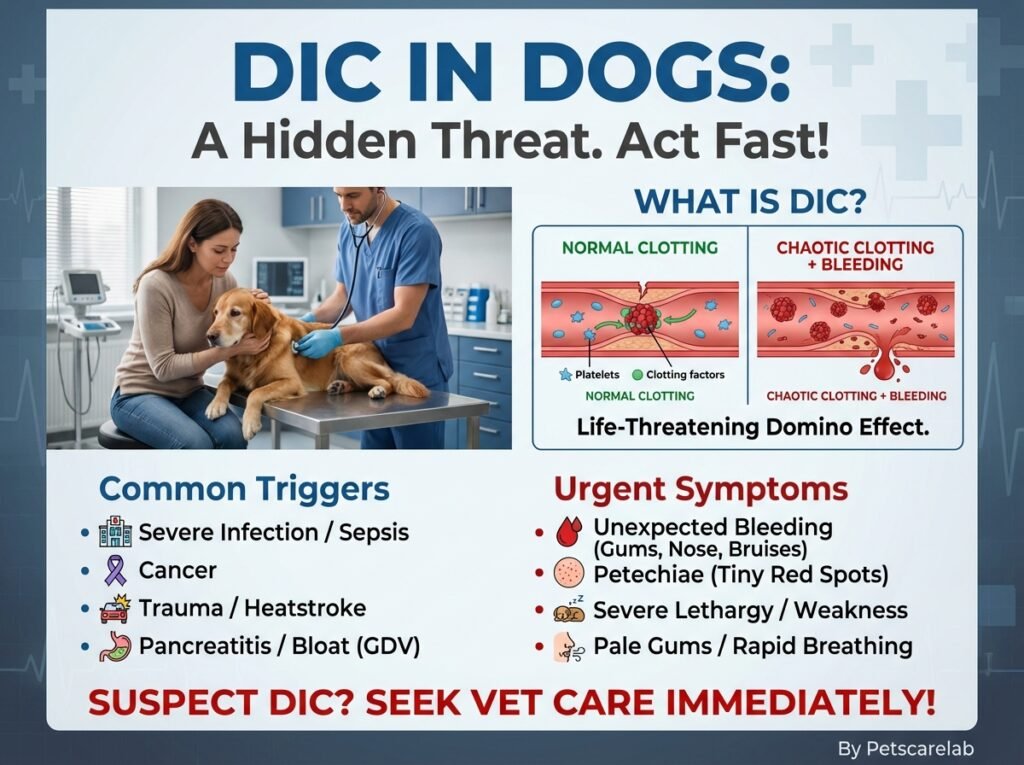
Remember how we said DIC isn't a standalone disease? It always sprouts from another serious health problem brewing in your dog's body. These underlying conditions trigger the whole disastrous clotting cascade. Our team at Petscarelab knows how important it is to understand these root causes. Here are some of the most common culprits:
- Severe infections or sepsis: Nasty bacterial invaders are often the number one trigger.
- Cancer: Especially advanced types that have spread.
- Major trauma: Think severe car accidents, bad burns, or even heatstroke.
- Immune system gone rogue: When your dog's immune system mistakenly attacks its own body.
- Pancreatitis: A painful, intense inflammation of the pancreas.
- Heatstroke: Severe overheating of the body.
- Complications from surgery or blood transfusions: Sometimes, even life-saving procedures can inadvertently trigger DIC.
- Snakebites.
- Liver failure.
- Gastric dilatation-volvulus (GDV) or bloat: That terrifying, life-threatening stomach twist.
Symptoms of Disseminated Intravascular Coagulation in Dogs
Spotting the signs of DIC can be tricky because they often mimic the underlying illness. Plus, depending on which organs are hit hardest and how fast the condition develops, the symptoms can vary wildly. Sometimes they appear suddenly and severely, other times they sneak up over time. But if you notice any of these things, especially in a dog already battling another serious condition, it's a huge red flag. Here's what to look for:
- Unexpected bleeding: This is often the most alarming sign. You might see:
- Nosebleeds that just won't stop.
- Gums that ooze blood.
- Strange bruises (bigger patches) or tiny pinprick red spots (petechiae) on their skin, gums, or even the whites of their eyes.
- Blood showing up in their pee or poop.
- New bleeding from a surgery site or where an IV was placed.
- Signs of internal bleeding, which you won't see externally but might notice your pup suddenly becoming very weak, having pale gums, or breathing really fast.
- Worsening signs of their existing illness: They might become even more:
- Lethargic and weak.
- Refuse to eat.
- Vomit or have diarrhea.
- Spike a fever.
- Struggle to breathe.
- Show signs of pain.
- Signs their organs are struggling: Because those clots are blocking blood flow or severe bleeding is happening, you might see:
- Neurological changes like sudden seizures or confusion if their brain is affected.
- Signs of kidney failure, such as hardly peeing at all.
- Issues with their liver.
Diagnosing Disseminated Intravascular Coagulation in Dogs
When a pup shows signs of DIC, our veterinary specialists jump into action. Diagnosing this complex condition means piecing together clues from a meticulous physical exam, understanding your dog's full health history (especially any pre-existing conditions), and running a battery of specialized lab tests. We're looking for definite markers that confirm the chaotic clotting and bleeding. Here are the crucial tests we often perform:
- Complete Blood Count (CBC): This tells us if platelet counts are plummeting (meaning fewer clotting 'workers'), if your dog is anemic from bleeding, or if there are signs of infection through their white blood cells.
- Blood Smear: We'll look at a blood sample under a microscope. Seeing fragmented red blood cells, called schistocytes, is a big clue – it means red blood cells are literally getting torn apart as they squeeze past those tiny clots.
- Coagulation Profile: This is perhaps the most important set of tests when we suspect your dog has DIC. It includes:
- PT and aPTT (Prothrombin Time and Activated Partial Thromboplastin Time): These tell us how quickly your pup's blood clots. With DIC, these times are usually much longer than they should be.
- Fibrinogen: This key clotting protein gets used up rapidly, so we often see low levels.
- D-dimer and Fibrin Degradation Products (FDPs): High levels of these are a clear sign that clots are forming and then breaking down throughout the body, a hallmark of DIC.
- Other blood tests: We'll also run tests to check how well organs like the kidneys and liver are functioning, and to help pinpoint that initial underlying cause.
- Imaging (X-rays, ultrasound): We might use these tools to get a better look inside, trying to find the primary illness or check for internal bleeding.
Ultimately, diagnosing DIC means connecting all these dots – the test results, the physical signs, and the presence of another serious condition.
Treatment for DIC in Dogs
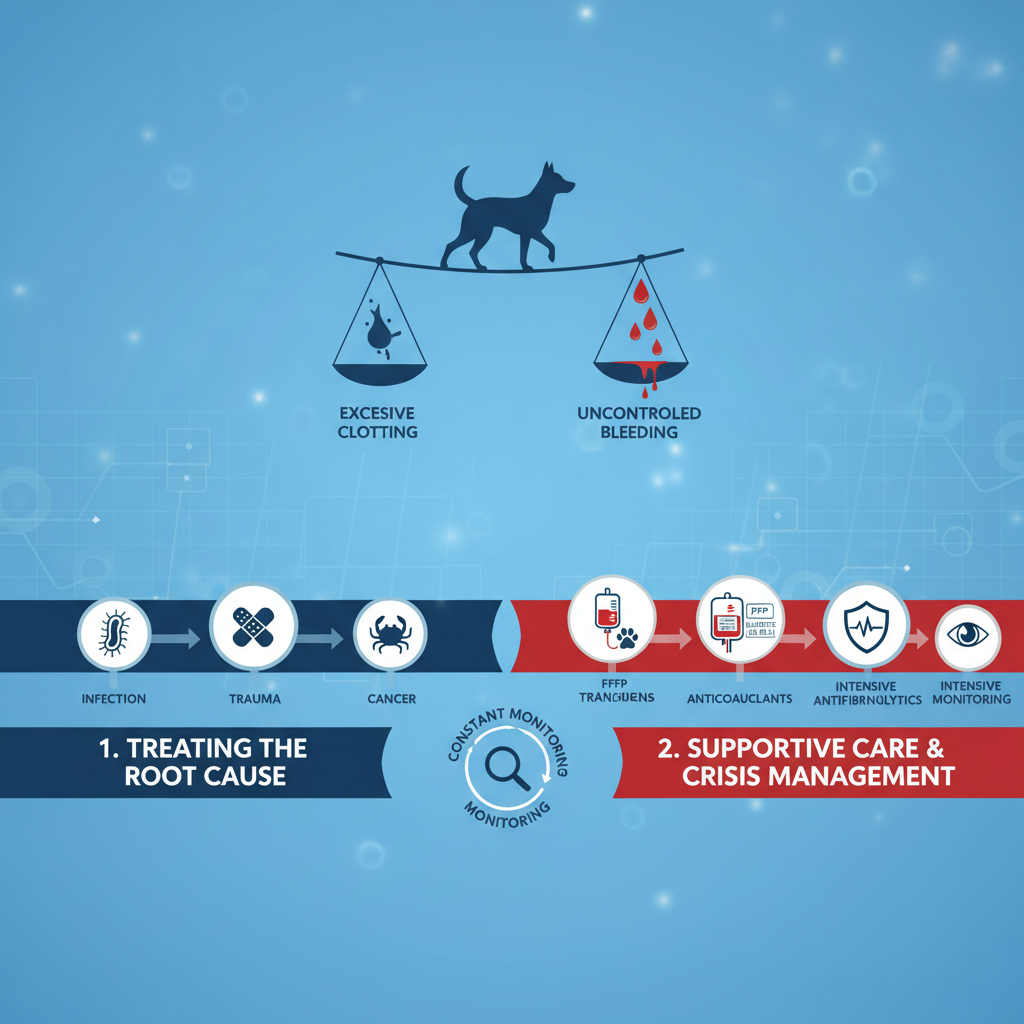
Treating DIC in dogs is incredibly challenging, like walking a tightrope. Our veterinary team has to battle two opposite problems at once: stopping the excessive clotting and preventing uncontrolled bleeding. We focus on two main goals:
- Attack the root cause: This is the absolute priority. DIC won't resolve unless we treat the illness that triggered it. This could mean antibiotics for an infection, surgery for a tumor or after trauma, or specialized care for pancreatitis. Think of it like turning off the faucet before you mop up the flood.
- Support your dog's body and manage the crisis: While we're tackling the underlying problem, we're also working tirelessly to stabilize your pup. This supportive care is crucial, even though it’s a delicate balancing act.
Supportive care may include:
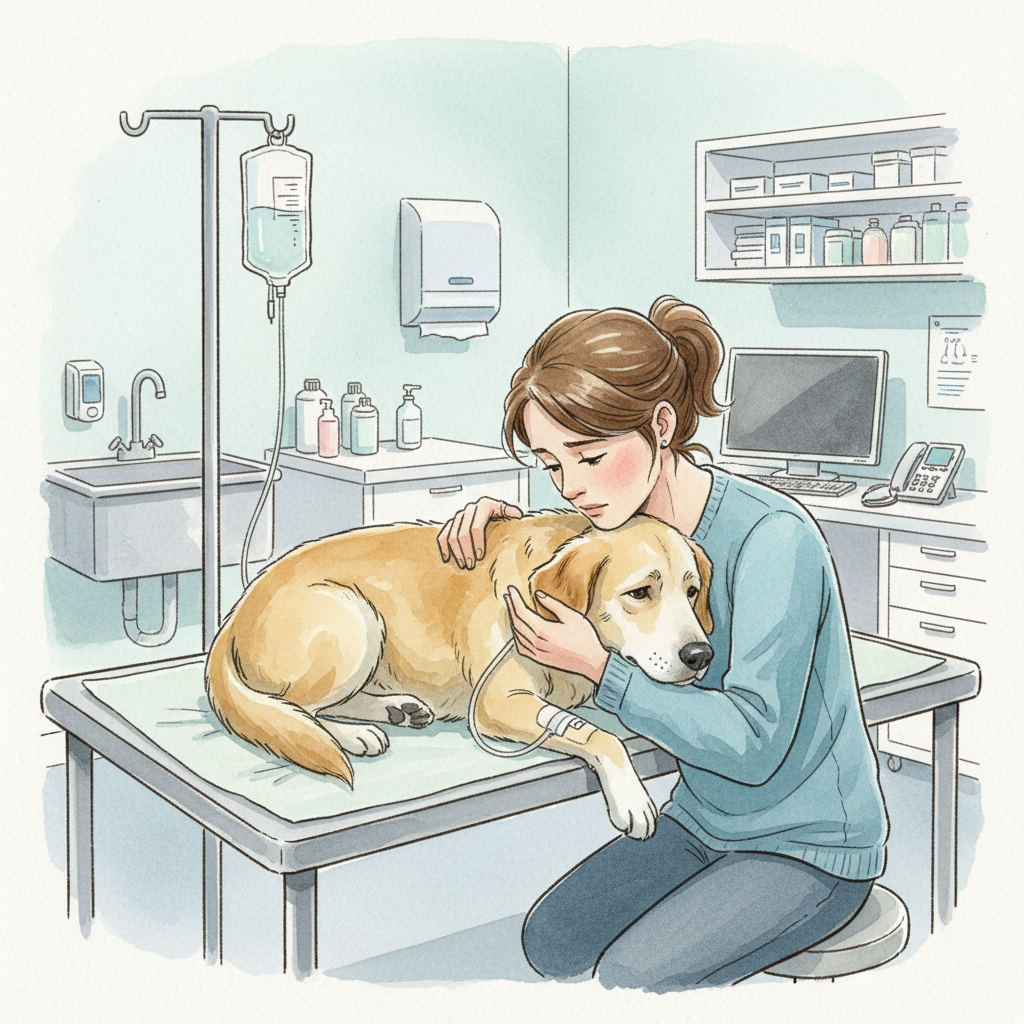
- IV fluids: To keep blood pressure stable and ensure vital organs get the blood flow they need.
- Life-saving blood product transfusions:
- Fresh frozen plasma (FFP) or cryoprecipitate: We give these to replenish the clotting factors your dog has used up.
- Platelet-rich plasma or platelet transfusions: If your pup's platelet count is dangerously low and they're bleeding badly, we might need to give them fresh platelets.
- Packed red blood cells: If severe bleeding has caused significant anemia, these transfusions help restore their oxygen-carrying capacity.
- Anticoagulants (like heparin): Sometimes, very carefully, we might use low doses of blood thinners to try and stop more tiny clots from forming. But this is a risky call, as giving too much can worsen the bleeding. Our veterinary specialists make this decision with extreme caution.
- Antifibrinolytic agents: These medications can help stabilize clots that have already formed and reduce bleeding. Again, we use them with incredible care to avoid pushing the system further into clotting overdrive.
- Constant, intensive monitoring: Your dog will need round-the-clock care, with our team continuously watching their vital signs, checking blood work, and monitoring their urine output. This is truly an emergency situation.
This is an absolute veterinary emergency. DIC is a relentless and fast-moving condition that demands immediate, aggressive care to give your pup any chance of recovery.
Recovery and Management of Disseminated Intravascular Coagulation in Dogs
Let's be honest: the outlook for dogs battling DIC is often guarded, meaning it's very serious, and survival rates are unfortunately low. This is especially true if we can't quickly find and treat the underlying trigger. But for those brave pups who do pull through, recovery is a long road. Management involves:
- Completely resolving the original illness: This remains the biggest factor. DIC won't truly go away until the core problem that caused it is under control.
- Ongoing intensive care: Even after the immediate crisis, your dog might need a longer stay in the hospital, potentially with continued intensive support, depending on how severe and long-lasting the DIC was.
- Watchful eye for lasting damage: Surviving DIC doesn't mean the journey is over. Our team will carefully monitor for any long-term complications, as the clotting and bleeding can sometimes leave lasting damage to vital organs.
- Regular follow-up appointments: Expect frequent vet visits and blood tests. We'll need to make sure the underlying condition stays managed and that there are no lingering effects from the DIC.
Because DIC is so severe and complex, we have to acknowledge that many dogs sadly don't make it. Your best weapon against this devastating condition is spotting the initial underlying disease early and getting your dog immediate, aggressive veterinary care. That's truly their only chance for a positive outcome.