Introduction
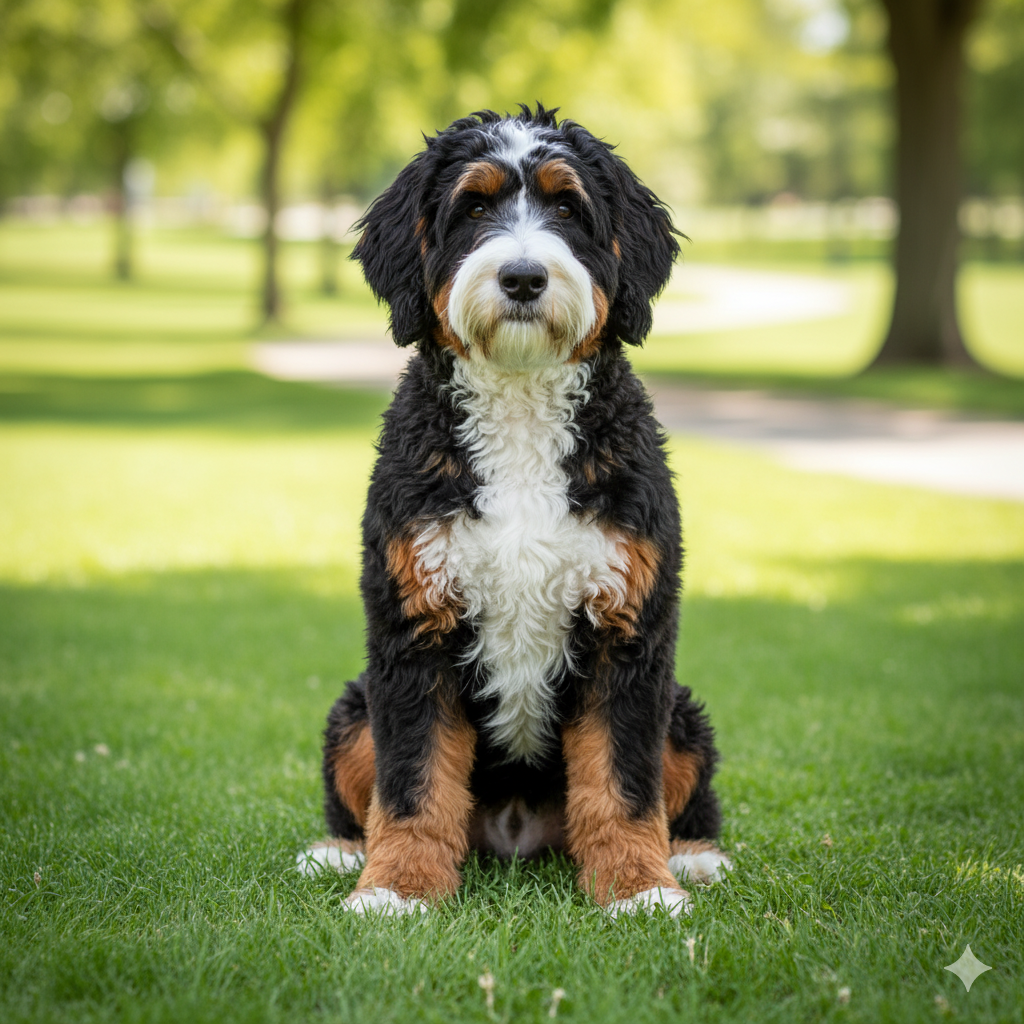
Bernedoodles bring double the joy and charm: This delightful hybrid, born from crossing a Bernese Mountain Dog with a Poodle, is celebrated for their lively and affectionate nature. Beyond their playful and fluffy appeal, Bernedoodles feature a low-shedding, low-allergen coat, earning them a reputation as "hypoallergenic" dogs—though technically, no dog breed is completely hypoallergenic.
Like many “Doodle” mixes, Bernedoodles are categorized by generation labels such as F1, F1b, F2, or F3, which relate directly to their breeding lineage. An F1 Bernedoodle comes from one Bernese Mountain Dog parent and one Poodle parent, while an F1b is the offspring of an F1 Bernedoodle and a Poodle. The higher the generation number, the more generations removed from the original Bernese-Poodle pairing.
Caring for a Bernedoodle
Bernedoodles come in three distinctive sizes: Standard, Miniature, and Toy.
- Standard Bernedoodles weigh between 61 and 100 pounds, can stand as tall as 29 inches, and typically live 12 to 15 years.
- Miniature Bernedoodles mature to weigh 20 to 45 pounds, measure up to 22 inches tall, and have a lifespan of 14 to 16 years.
- Toy Bernedoodles are the smallest, under 20 pounds and standing 12 to 17 inches tall, but they enjoy the longest lifespans, often reaching up to 18 years.
Though all share the same Bernese Mountain Dog-Poodle heritage, each size variety has its own unique care needs and ideal living conditions. For instance, Miniature and Toy Bernedoodles adapt well to cozy apartment living, while a Standard Bernedoodle thrives best with more room to roam and comfortably stretch out on the floor.
Despite these preferences, Bernedoodles are remarkably adaptable. With proper exercise, any size Bernedoodle can thrive happily in a variety of family environments.
Bernedoodle Health Issues
The lifespan of a Bernedoodle varies from 12 to 18 years, depending largely on size—smaller dogs generally outlive their larger counterparts.
These lovable pups can inherit health concerns from either parent breed, and Miniatures may encounter different challenges than Standards. Before welcoming your Bernedoodle puppy home, it’s crucial to consult with your breeder for a comprehensive health history for your pup and their parents. Responsible breeders vaccinate, perform health screenings, and maintain detailed lineage records.
Hip and Elbow Dysplasia
Hip dysplasia occurs when the hip joint develops loosely and painfully during growth, while elbow dysplasia refers to abnormal development of the elbow joint. Both are genetically inherited, painful conditions that can eventually cause arthritis if untreated.
Managing hip and elbow dysplasia involves keeping your Bernedoodle at a healthy weight to reduce joint strain. Treatment options may include medications, joint supplements, or in severe cases, surgery.
Progressive Retinal Atrophy
Bernedoodles are also prone to eye conditions, including progressive retinal atrophy (PRA), a degenerative disease that leads to gradual vision loss and eventual blindness. Signs to watch for include:
- Clumsiness or bumping into objects
- Dilated pupils
- Cataracts
- Night blindness, often the earliest symptom
While PRA has no cure, dogs adapting to blindness can live fulfilling and joyful lives with loving care.
Allergies
Despite their allergy-friendly coat, Bernedoodles can suffer from food or environmental allergies. Symptoms may include persistent itching or licking, rashes, recurrent skin or ear infections, and hair loss.
If you notice any of these signs, consult your veterinarian to develop an effective allergy identification and treatment plan.
Gastric Dilatation-Volvulus (GDV)
Large, deep-chested dogs like Standard Bernedoodles are at risk for gastric dilatation-volvulus (GDV), a life-threatening condition often described as severe bloat. GDV occurs when a dog’s stomach rapidly fills with gas, expands, and then twists—potentially impacting the spleen as well.
This condition can be triggered by eating too quickly or consuming one large meal daily. Symptoms to watch include:
- Restlessness or inability to settle
- Retching without producing vomit
- A visibly distended abdomen
- Excessive drooling
- Stretching the body into a "downward dog" or “praying mantis” pose
GDV is a medical emergency requiring immediate veterinary intervention. If you notice these symptoms, seek urgent care for your dog.
What To Feed a Bernedoodle
Feeding your Bernedoodle a diet that meets the standards set by the Association of American Feed Control Officials (AAFCO) ensures a balanced and complete nutritional profile. If you’re uncertain about the best dog food brand, your veterinarian is the best resource for guidance.
How To Feed a Bernedoodle
Puppy Bernedoodles do best with three to four meals daily, offered on a consistent schedule. If you have a Standard Bernedoodle puppy, choose a formula designed specifically for large breeds.
Adult Bernedoodles thrive on two meals per day. If your dog tends to gulp down food too quickly, consider using a slow feeder bowl to encourage slower eating.
“While technically adult dogs can survive on one meal a day, feeding twice daily reduces anxiety and obsessive food behaviors,” explains a vet from Petscarelab. “Spacing meals every 12 hours supports better metabolism and mental wellbeing, and smaller, more frequent meals may also lower the risk of health issues like GDV by preventing rapid stomach expansion.”
How Much Should You Feed a Bernedoodle?
The amount of food your Bernedoodle requires depends largely on their size—naturally, a Toy Bernedoodle eats significantly less than a hefty Standard. Other factors influencing their dietary needs include their activity level and overall health.
“There’s no one-size-fits-all feeding plan,” advises Petscarelab’s vet. “Always work with your vet to tailor a nutrition plan that suits your dog’s unique needs.”
Nutritional Tips for Bernedoodles
Provided your Bernedoodle eats a complete, balanced diet approved by AAFCO, supplements are usually unnecessary unless your vet advises otherwise. However, joint supplements can benefit some Bernedoodles, helping support hip and elbow health.
As always, discuss any supplements with your veterinarian before adding them to your dog’s diet.
Bernedoodle Personality and Temperament
Bernedoodles are affectionate and gentle companions. While personalities vary by individual, this breed often makes an excellent family pet—they typically adore children, enjoy playful interactions with other dogs, and are kind around smaller animals like cats.
Bernedoodle Behavior
A blend of the intelligent, active Poodle and the calm, sturdy Bernese Mountain Dog, Bernedoodles are playful, goofy, and easygoing. With responsible breeding and early, consistent training, your Bernedoodle puppy will thrive into a happy, well-mannered adult. They cherish being close to their families and tend to bark sparingly.
Bernedoodle Training
Highly intelligent and eager to please, Bernedoodles pick up commands and tricks quickly, along with essential skills like crate and potty training. Positive reinforcement is the key to nurturing good behavior.
Begin leash training from the start—this breed loves their daily walks and exploring the outdoors.
Combining the spirited spirit of the Poodle with the gentle steadiness of the Bernese Mountain Dog, Bernedoodles are playful, fun-loving, and tenderhearted.
Fun Activities for Bernedoodles
- Hiking adventures
- Obedience classes
- Running and jogging
- Swimming sessions
- Agility training
- Learning new tricks
- Navigating obstacle courses
Bernedoodle Grooming Guide
Though Bernedoodles shed minimally, they require regular upkeep with frequent brushing and routine professional grooming. Daily brushing of their teeth with dog-friendly toothpaste is essential to prevent plaque and maintain oral health. They are definitely not a low-maintenance breed.
Skin Care
Since Bernedoodles enjoy outdoor activities, baths are necessary whenever they get dirty. However, limit bathing to no more than once a month to avoid drying out their skin.
Coat Care
Thanks to their Bernese Mountain Dog and Poodle heritage, Bernedoodles need consistent weekly brushing to prevent tangles and mats. Scheduling regular appointments with a professional groomer helps keep their coats healthy and manageable.
Eye Care
Generally, Bernedoodles require little special eye care. Keep the hair around their eyes trimmed to prevent irritation or vision blockage. If you notice cloudiness, redness, or discharge, contact your vet promptly.
Ear Care
Many Bernedoodles love to swim, so cleaning their ears after water activities is crucial to prevent trapped moisture, which can lead to infections.
Considerations for Pet Parents
The Bernedoodle’s blend of Poodle intellect and Bernese Mountain Dog warmth makes them wonderful family companions. They equally enjoy lounging on the couch and bounding through the backyard with kids and other pets.
Plan on at least two daily walks to keep your Bernedoodle healthy, happy, and engaged. Their active minds also need variety—games, snuffle mats, and puzzle toys offer great mental stimulation. With proper physical and mental exercise, Bernedoodles fit comfortably into almost any household.
Do Bernedoodles shed?
Bernedoodles generally shed very little compared to many breeds. Yet, individual dogs vary, and some may shed more, especially if they inherit more traits from their Bernese Mountain Dog side.
Are Bernedoodles hypoallergenic?
Thanks to their Poodle ancestry, Bernedoodles are often a good choice for people with allergies. However, no dog breed is completely hypoallergenic, since allergens are present in their saliva and urine.
Do Bernedoodles bark a lot?
Bernedoodles are typically quiet dogs, barking mostly when startled or during playful moments.
What's the difference between a Goldendoodle and a Bernedoodle?
Though these breeds may look somewhat similar, they originate from different crosses. Goldendoodles blend Golden Retrievers with Poodles, while Bernedoodles combine Bernese Mountain Dogs with Poodles.
How much does a Bernedoodle cost?
On average, Bernedoodles are priced between $2,000 and $5,000.