Introduction
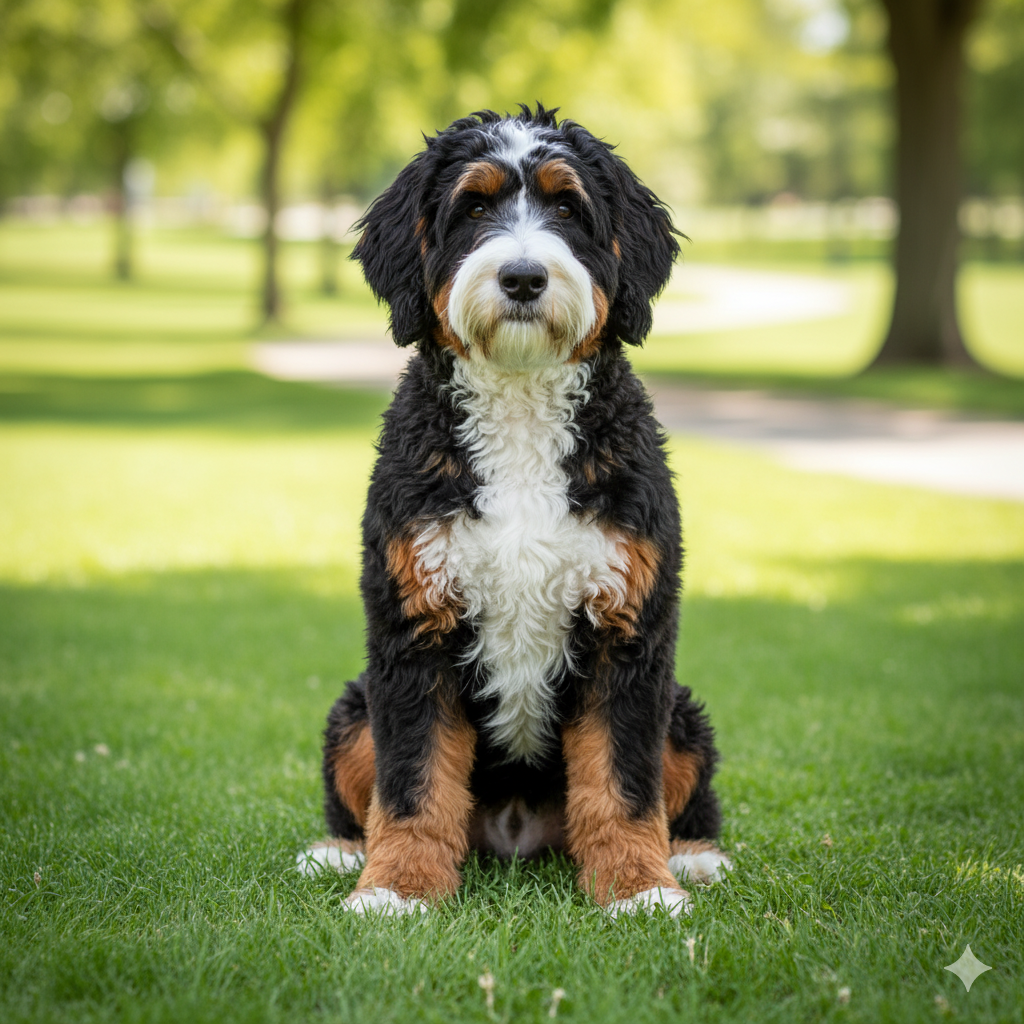
Bernedoodles bring double the joy: this unique blend of Bernese Mountain Dog and Poodle is celebrated for their playful, friendly, and outgoing nature. Beyond their charming, fluffy appearance, Bernedoodles sport a low-shedding, low-allergen coat which has earned them the reputation of being "hypoallergenic" dogs—though it’s important to note that no dog breed is truly hypoallergenic.
Similar to other "Doodle" mixes, Bernedoodles often carry generation labels like F1, F1b, F2, or F3 which describe their parental lineage. An F1 Bernedoodle has one Bernese Mountain Dog parent and one Poodle parent. An F1b Bernedoodle results from breeding an F1 Bernedoodle with a Poodle. The higher the generation number, the further your dog is from a straightforward Bernese Mountain Dog-Poodle cross.
Caring for a Bernedoodle
Bernedoodles come in three distinctive sizes: Standard, Miniature, and Toy.
- Standard Bernedoodles typically weigh between 61 and 100 pounds, stand up to 29 inches tall, and enjoy a lifespan of 12 to 15 years.
- Miniature Bernedoodles mature at 20 to 45 pounds, reach up to 22 inches in height, and tend to live 14 to 16 years.
- Toy Bernedoodles are petite, weighing less than 20 pounds and standing around 12 to 17 inches tall, often living the longest—up to 18 years.
While all Bernedoodles are a mix of Bernese Mountain Dog and Poodle, each size requires different care and lifestyle considerations. For instance, Toy and Miniature Bernedoodles adapt well to apartment living, while Standard Bernedoodles appreciate having extra room to stretch out and lounge comfortably.
That said, Bernedoodles are highly adaptable. With enough exercise and attention, any size can become a cherished family member in a variety of living situations.
Bernedoodle Health Issues
Bernedoodles generally live between 12 and 18 years, with smaller dogs tending to outlive their larger counterparts.
Because they inherit traits from two breeds, Bernedoodles can be prone to certain health concerns, which vary by size. Miniature Bernedoodles might encounter different issues than Standards. Prior to bringing your puppy home, always request a full health history from your breeder regarding your pup and their lineage. Reputable breeders vaccinate their dogs, screen for genetic conditions, and can provide detailed family health backgrounds.
Hip and Elbow Dysplasia
Hip dysplasia occurs when the hip joint develops abnormally, becoming loose and painful, often during growth. Elbow dysplasia is a similar condition affecting the elbow joint. Both are inherited and, if untreated, typically lead to painful arthritis.
Managing weight is crucial since excess pounds stress joints and worsen symptoms. Severe cases of hip or elbow dysplasia might require medications, joint supplements, or surgery.
Progressive Retinal Atrophy
Bernedoodles may develop eye conditions like progressive retinal atrophy (PRA), a genetic disorder causing gradual vision loss that ultimately results in blindness. Early signs include:
- Difficulty navigating and increased clumsiness
- Dilated pupils
- Cataracts
- Night blindness, often the first symptom noticed
While PRA has no cure, blind dogs can continue living vibrant lives with the right care and adjustments.
Allergies
Despite their reputation as allergy-friendly, Bernedoodles can be susceptible to food or environmental allergies. Symptoms include persistent itching or licking, rashes, recurrent ear and skin infections, and hair thinning.
If your dog shows any of these signs, consult your veterinarian to diagnose and develop a treatment plan.
Gastric Dilatation-Volvulus (GDV)
Standard Bernedoodles, with their deep chest anatomy, are at risk for gastric dilatation-volvulus (GDV), a life-threatening form of bloat. GDV happens when the stomach rapidly fills with gas and twists, cutting off blood flow and affecting adjacent organs like the spleen.
This condition is more common in dogs that eat meals too quickly or consume one large daily meal. Watch for symptoms such as:
- Restlessness or inability to settle
- Attempting to vomit without producing anything
- Swollen, distended belly
- Excessive drooling
- Stretching posture resembling a “downward dog” or “praying mantis”
GDV develops rapidly and requires emergency veterinary intervention. If you notice these signs, seek medical help immediately.
What To Feed a Bernedoodle
Feeding your Bernedoodle a dog food that meets the standards of the Association of American Feed Control Officials (AAFCO) guarantees a well-rounded, nutritious diet. For personalized recommendations, consult your veterinarian.
How To Feed a Bernedoodle
Puppy Bernedoodles should be fed 3 to 4 meals daily on a consistent schedule. For Standard Bernedoodle pups, choose high-quality puppy food specially formulated for large breeds.
Adult Bernedoodles thrive on two meals per day. If your dog eats too quickly, consider using a slow feeder bowl to prevent gulping and reduce digestive issues.
Dr. Alexis Thompson, a veterinarian with Petscarelab Animal Clinic, explains, “While adult dogs can technically eat only once a day, feeding twice daily supports better mental well-being and metabolism. Smaller, frequent meals may also lower the risk of health concerns like GDV because dogs tend to eat slower and consume more manageable portions.”
How Much Should You Feed a Bernedoodle?
The amount of food your Bernedoodle needs varies widely based on size, age, activity level, and overall health. Toy Bernedoodles eat far less than their larger Standard counterparts.
“There’s no one-size-fits-all feeding plan,” says Dr. Thompson. “Working with your vet is the best way to tailor a diet specific to your dog’s unique needs.”
Nutritional Tips for Bernedoodles
If your Bernedoodle’s diet consists of a balanced, AAFCO-approved food, supplements typically aren’t necessary unless advised by your veterinarian. However, joint supplements might benefit some Bernedoodles to help support healthy hips and elbows.
Always check with your vet before introducing supplements to your dog’s regimen.
Bernedoodle Personality and Temperament
Bernedoodles are affectionate, gentle, and full of heart. While every individual dog has its own personality, this breed generally fits seamlessly into families of all types. They thrive on companionship, adore playing with children, enjoy socializing with other dogs, and often get along well with smaller pets such as cats.
Bernedoodle Behavior
Borrowing the intelligence and hunting instincts of the Poodle combined with the calm, steady nature of the Bernese Mountain Dog, Bernedoodles are playful, goofy, and easygoing. With early, patient training and socialization from a responsible breeder, your Bernedoodle puppy will blossom into a delightful, well-mannered companion. They enjoy close proximity to their people and tend to be modest barkers.
Bernedoodle Training
Highly smart and eager to please, Bernedoodles swiftly learn commands, tricks, crate etiquette, and potty training. Using positive reinforcement techniques will foster good behavior and strengthen your bond.
Starting leash training early is key since Bernedoodles love exploring on walks and benefit greatly from regular outings.
As a blend of the sharp Poodle and the gentle giant Bernese Mountain Dog, Bernedoodles bring a wonderful mix of goofy fun and loving gentleness.
Fun Activities for Bernedoodles
- Hiking adventures
- Obedience classes
- Running and jogging
- Swimming sessions
- Agility challenges
- Trick training
- Navigating obstacle courses
Bernedoodle Grooming Guide
While Bernedoodles shed minimally, they demand regular brushing and professional grooming to keep their coats looking and feeling healthy. Daily teeth brushing using dog-specific toothpaste is essential to maintain oral health and prevent plaque buildup. This breed thrives with consistent grooming; it’s not low maintenance.
Skin Care
Active Bernedoodles who love outdoor adventures will need baths as needed when dirty. However, bathing more than once a month can dry out their skin and cause irritation.
Coat Care
Due to their mixed heritage, Bernedoodles require consistent weekly brushing to prevent matting and tangles. Scheduling regular professional grooming appointments will help keep their coat manageable and looking its best.
Eye Care
Bernedoodles don’t usually require specialized eye care, but ensure hair around their eyes doesn’t obstruct vision or cause irritation. If you spot cloudiness, redness, or unusual discharge, contact your veterinarian promptly.
Ear Care
Many Bernedoodles enjoy swimming, so cleaning their ears after water exposure is vital to prevent infections by keeping moisture and bacteria at bay.
Considerations for Pet Parents
Bernedoodles blend the intelligence and friendliness of Poodles with the gentle demeanor of Bernese Mountain Dogs, making them wonderful family members. They are equally content curling up on the sofa or playing energetically in the yard alongside kids and other pets.
Expect to take your Bernedoodle on at least two walks daily to keep them healthy and satisfied. They also benefit from mental challenges like puzzle toys, snuffle mats, and interactive games. When both mind and body receive ample exercise and stimulation, Bernedoodles adapt happily to most family environments.
Do Bernedoodles shed?
Bernedoodles generally shed very little compared to many other breeds. However, shedding levels can vary, especially if they inherit more traits from their Bernese Mountain Dog parent.
Are Bernedoodles hypoallergenic?
Thanks to their Poodle ancestry, Bernedoodles can be suitable for some allergy sufferers. Still, no dog is completely hypoallergenic since all dogs release allergens through saliva and dander.
Do Bernedoodles bark a lot?
Typically, Bernedoodles are quiet dogs who bark mainly when startled or during play.
What's the difference between a Goldendoodle vs. Bernedoodle?
Though they may share a similar "Doodle" look, Goldendoodles are a Golden Retriever-Poodle mix, while Bernedoodles combine Bernese Mountain Dog and Poodle parentage. Their coat textures and color patterns also often differ.
How much does a Bernedoodle cost?
Bernedoodles commonly range from $2,000 to $5,000, depending on breeder reputation, pedigree, and size.