

Balanced Dog Training vs. Positive Reinforcement: Understanding the Differences
Trying to figure out the best way to train your dog can feel like navigating a maze. Every pet parent wants a well-behaved pup, but how do you get there? Two popular methods often come up in discussions: Balanced Dog Training vs. Positive Reinforcement. Let's dive into what makes each approach unique so you can decide which path feels right for you and your furry best friend.
What is Positive Reinforcement Training?
Imagine your dog doing exactly what you asked – then getting a yummy treat or a happy belly rub! That's the heart of positive reinforcement training. It's all about adding something wonderful (like treats, happy praise, or a fun toy) when your dog does something you like. The idea is simple: if a behavior gets a good result, your dog's much more likely to do it again.
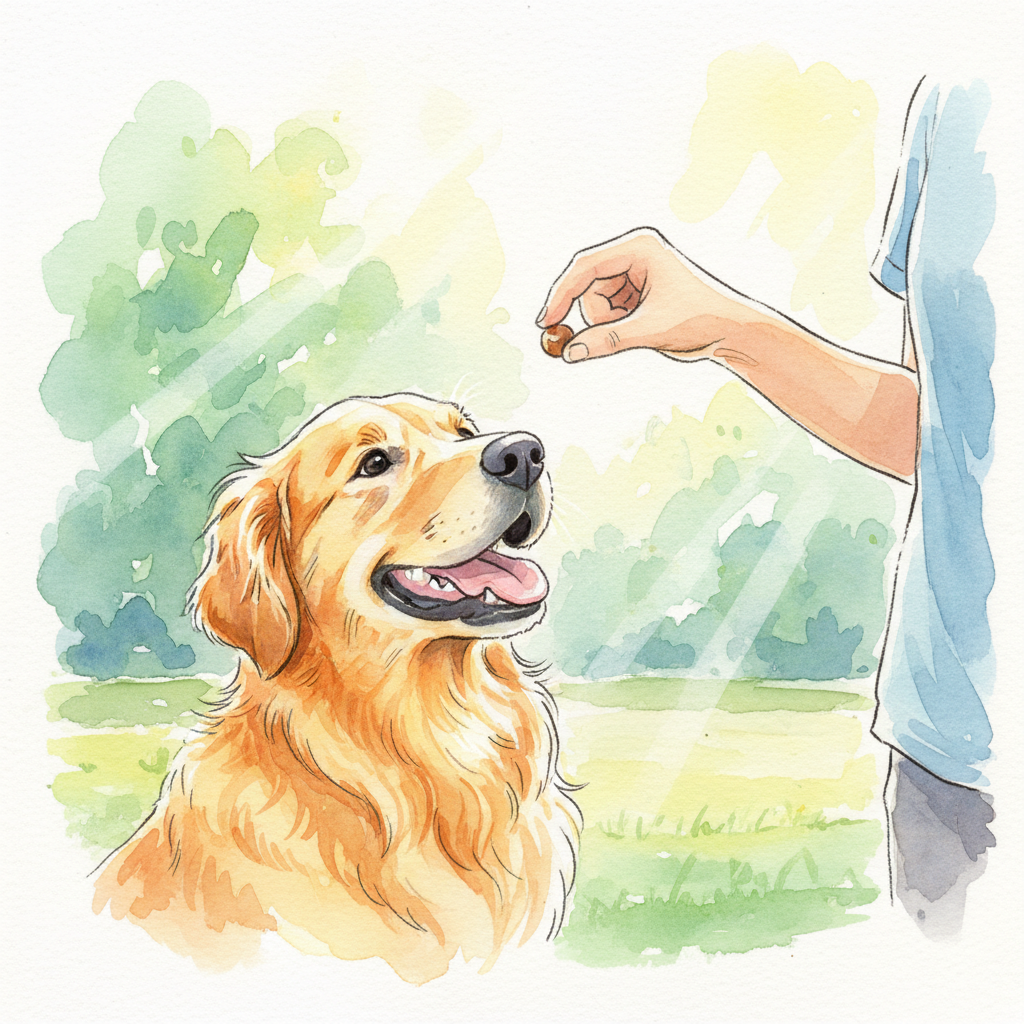
Key Characteristics of Positive Reinforcement:
- Reward-Based: This method mainly uses motivators – things your dog loves – to encourage the actions you want to see.
- Focus on What to Do: Instead of scolding your dog for doing something wrong, you teach them what to do instead.
- Builds Trust: The goal is to create a strong, joyful bond between you and your dog, free from any fear or intimidation.
- Avoids Aversives: This approach strongly discourages using punishment, fear, or pain to change behavior. That means no harsh words, physical corrections, shock collars, prong collars, or choke chains.
- Experts Agree: Our research and many veterinary specialists often point to scientific studies on animal learning and welfare as a solid foundation for this method.
Examples of Positive Reinforcement in Practice:
- Picture your puppy’s tail wagging like crazy when they get a tasty treat for sitting politely on command.
- Giving your dog enthusiastic praise and happy pats when they walk nicely on a loose leash, instead of pulling your arm off.
- Using a clicker to "mark" the exact moment your dog performs the right behavior, immediately followed by a mouth-watering reward.
What is Balanced Dog Training?
Balanced dog training, true to its name, combines positive reinforcement with aversive tools or corrections – often called "punishment" – when the situation calls for it. Trainers who use this method believe that while rewards are fantastic for teaching new tricks, sometimes a correction is necessary to stop unwanted behaviors or reinforce boundaries.
Key Characteristics of Balanced Training:
- Combination Approach: You'll see rewards given for good behaviors, but also corrections for things your dog shouldn't be doing.
- Focus on Consequences: This method emphasizes that every action, good or bad, has a consequence.
- Tool-Dependent: Trainers using a balanced approach might use a variety of tools, including:
- Standard flat collars
- Harnesses
- Prong collars
- Slip collars/choke chains
- Electronic/shock collars (e-collars)
- "Fair and Firm": People often describe this style as being fair but firm when it comes to setting expectations and limits.
- Practicality: Some trainers and pet parents argue that this approach offers a more "real-world" way to train, as dogs naturally experience both rewards and consequences. They also suggest it can be very effective for complex behavior challenges or dogs with strong instincts.
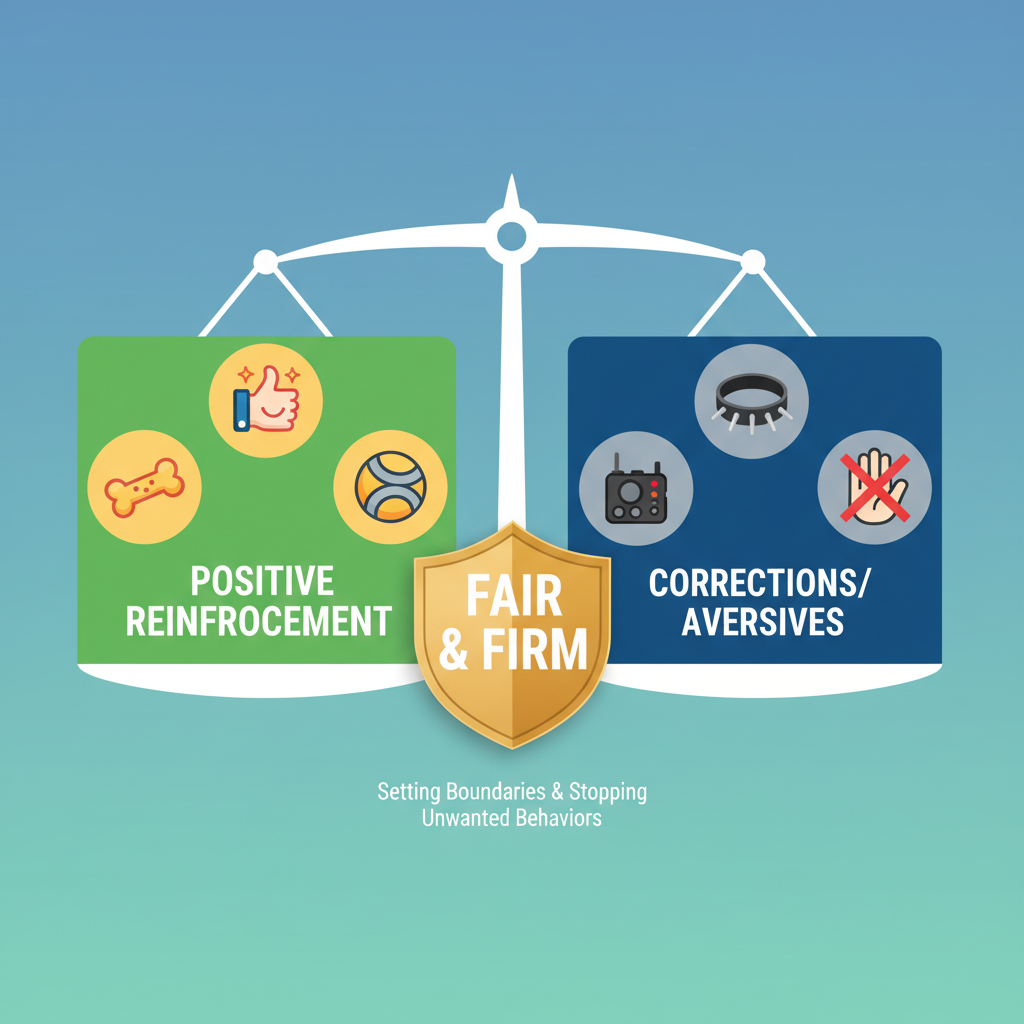
Examples of Balanced Training in Practice:
- Rewarding your dog with praise and a treat for coming when called, but also giving a quick leash pop or a firm verbal correction if they ignore your "leave it" command when sniffing something dangerous.
- Using a prong collar to discourage your dog from pulling you down the street, while also giving treats and praise when they walk nicely with a loose leash.
- Employing an e-collar to reinforce recall from a distance; a gentle "nick" might be used if your dog initially ignores the command, quickly followed by praise and a reward once they comply.
Core Differences: A Quick Look
| Feature | Positive Reinforcement Training | Balanced Dog Training |
|---|---|---|
| Primary Method | Rewards (treats, praise, toys) to encourage desired behaviors. | Rewards for desired actions; Corrections for unwanted ones. |
| Use of Aversives | Avoids all forms of punishment, fear, or intimidation. | Uses aversive tools/corrections when deemed necessary. |
| Training Philosophy | Build trust, make good choices rewarding. | Set clear boundaries, use consequences for actions. |
| Goal | Motivate dogs to want to perform desired actions. | Teach dogs what to do and what not to do. |
| Impact on Dog Welfare | Generally considered less stressful and builds confidence. | Can be effective, but carries potential for stress or fear if misused. |
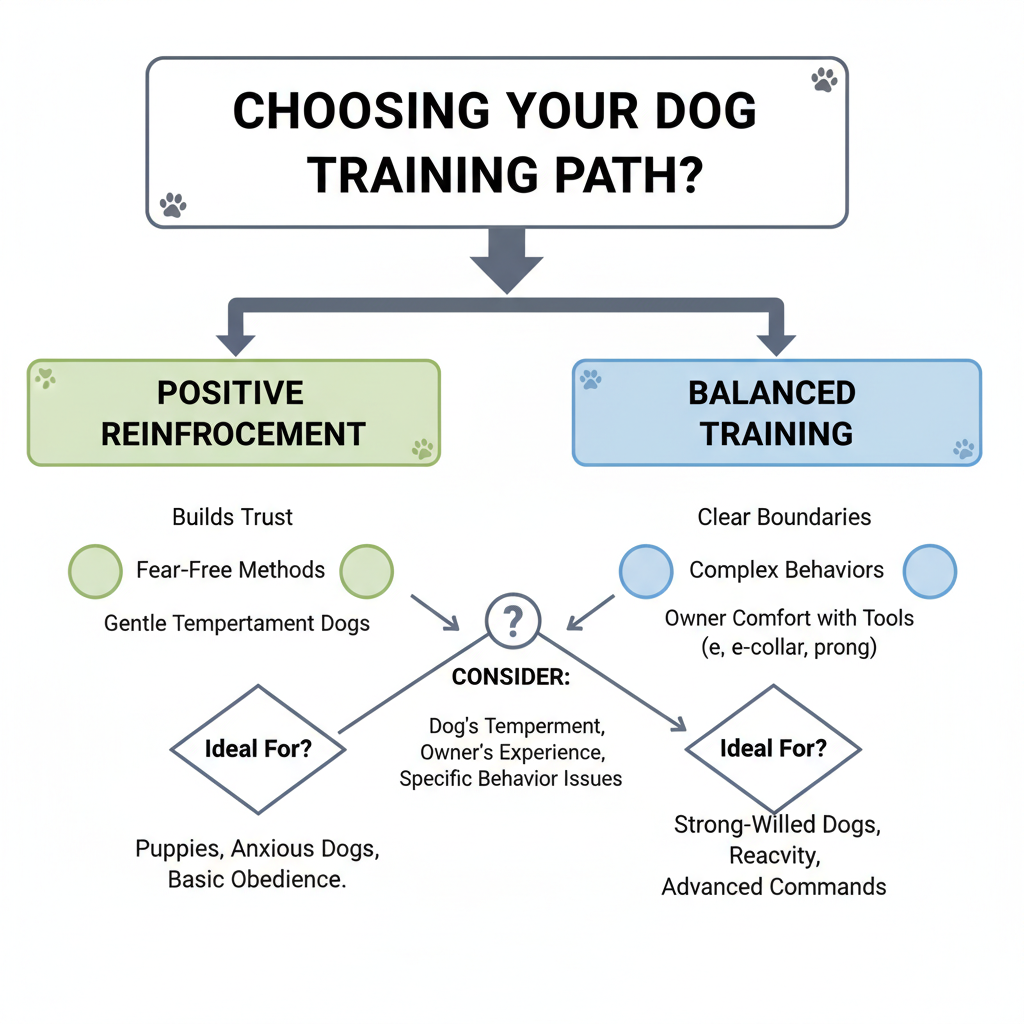
Which Approach is Right for You?
Choosing between positive reinforcement and balanced dog training is a very personal decision. It's often shaped by several factors:
- Your Dog's Temperament: Think about your dog's personality. Is your pup super sensitive and easily startled, or are they a bit more robust and unfazed by corrections?
- Your Comfort Level: How do you feel about using certain tools? Are you comfortable with methods that might cause a bit of discomfort or surprise for your dog?
- The Specific Behavior Issue: What kind of behavior are you tackling? For everyday manners, positive reinforcement often works wonders. For bigger challenges like aggression, some trainers might lean into a balanced approach, though plenty of experts firmly believe positive reinforcement is the way to go, even then.
- Your Goals: What's your ultimate vision for life with your dog? Is a fear-free relationship your absolute top priority, or do you want to see quick behavior changes above all else?
Both positive reinforcement and balanced training share a common goal: helping our dogs become wonderful companions. The biggest differences are how they handle behaviors we don't like and whether they use tools that might cause discomfort. Before you pick a path, do your homework, chat with experienced trainers, and most importantly, truly think about what your dog needs. Our team at Petscarelab always says the best training builds a stronger, happier bond between you and your furry family member, leading to a truly harmonious life together.