When to Switch Your Pup to Adult Dog Food
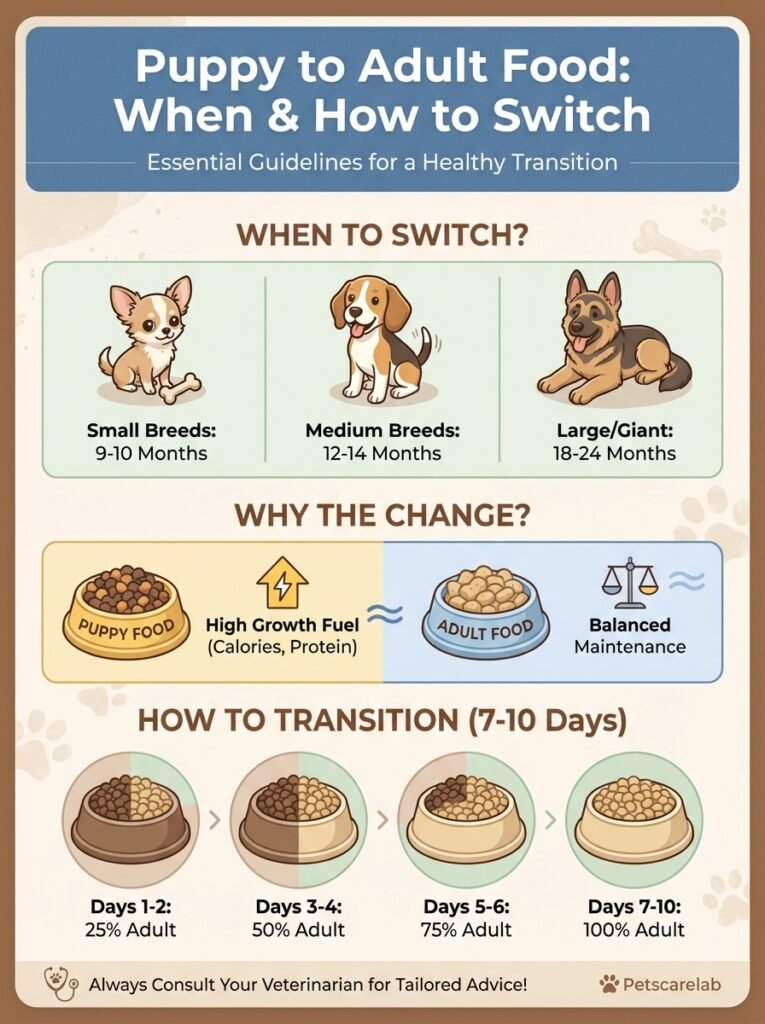
Every dog is unique, so there isn’t a magic age that works for every single pup. The best time to transition your puppy to adult dog food really depends on their breed and size. Think of it like a growth spurt — some pups hit theirs earlier than others!
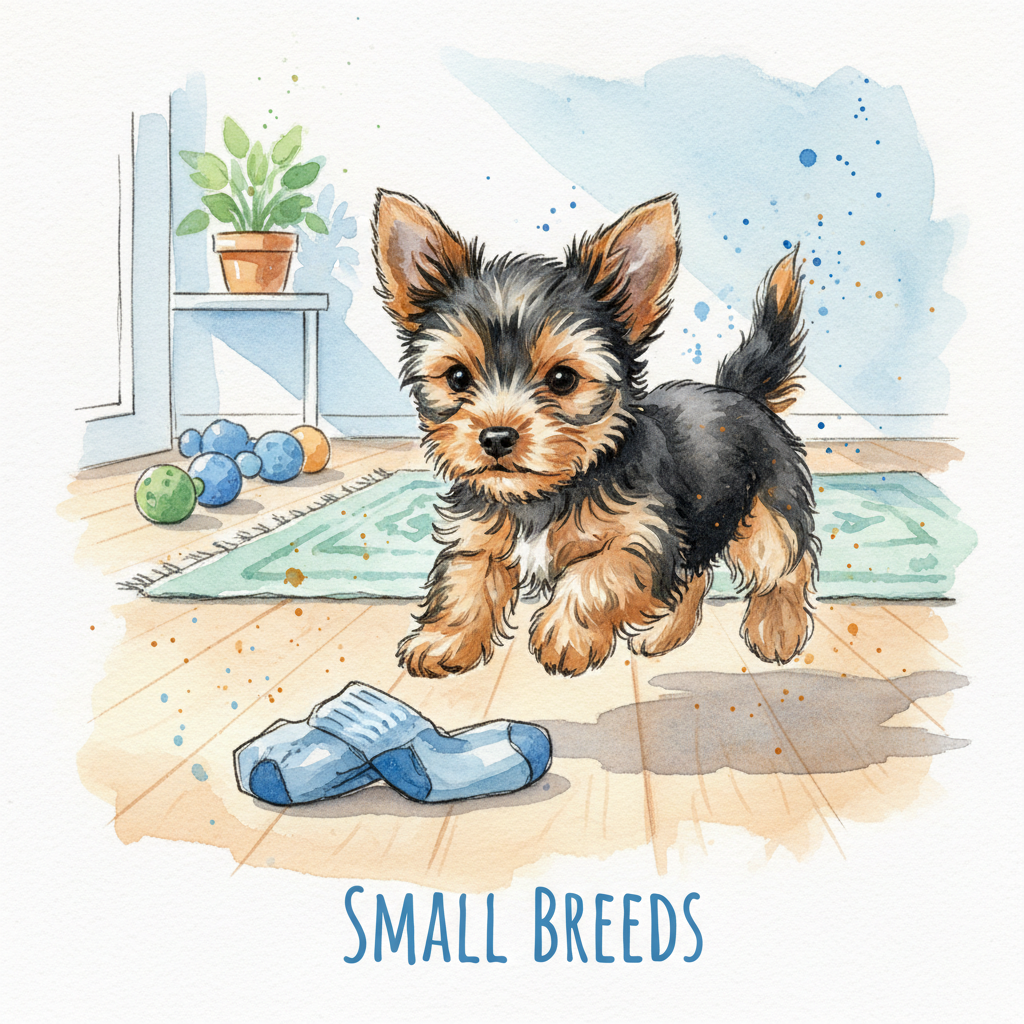
Small Breeds
Little dogs, like Chihuahuas or Yorkies, zoom through their growth stages super fast. They usually reach their full adult size and are ready for grown-up dog food when they’re about 9–10 months old.
Medium Breeds
These pups, like Beagles or Bulldogs, fall right in the middle. They typically hit maturity and are ready to leave puppy food behind between 12–14 months of age.
Large Breeds
Big dogs, such as German Shepherds or Labradors, take their sweet time growing up. They can keep growing until they’re 18–24 months old. That means they should stick with their puppy food until they reach that age.
Giant Breeds
Truly giant breeds, like Great Danes or Mastiffs, grow for an even longer stretch, often until they’re two years old. It’s really important for these gentle giants to stay on a special large breed puppy food. This kind of food is specifically designed to support their unique growth needs and help prevent potential bone and joint issues down the road.
Always chat with your veterinarian for tailored advice about your puppy’s diet. They can give you the best guidance based on your pup’s specific breed, size, and overall health.
Why Puppy Food Is Different from Adult Dog Food
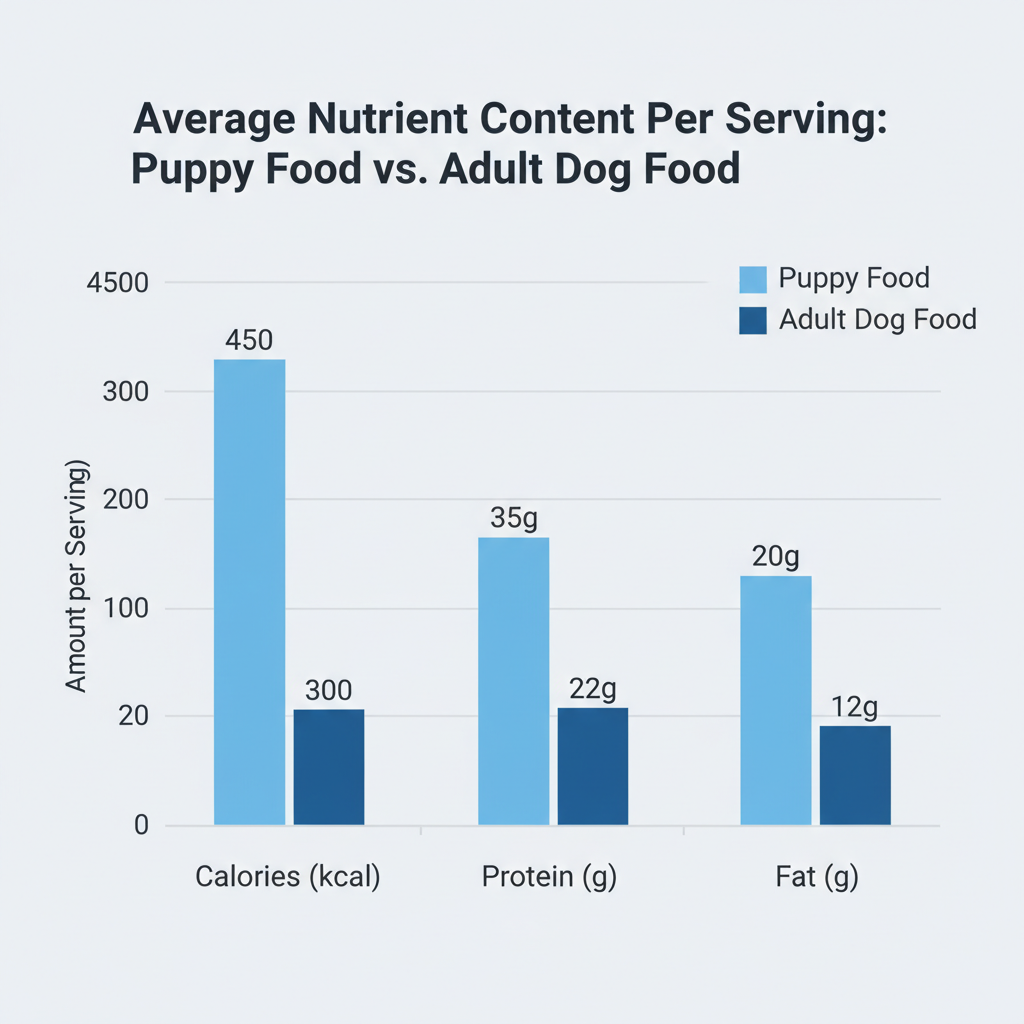
You might wonder why there’s such a fuss about puppy versus adult food. It turns out, puppy food is specially crafted to meet the intense nutritional demands of a growing pup. It packs more protein, fat, and calories to fuel their boundless energy and lightning-fast growth. Puppy food also contains higher levels of calcium and phosphorus, which are essential for developing strong, healthy bones.
Adult dog food, on the other hand, is made for dogs who are fully grown and whose bones have stopped developing. It offers a balanced nutritional profile that helps maintain a dog’s health without packing on extra pounds. You’ll notice adult dog food usually has fewer calories and less fat compared to puppy food.
Feeding puppy food for too long can cause a few problems:
- Obesity: All those extra calories and fat in puppy food can quickly lead to weight gain in adult dogs, increasing the risk of obesity and related health issues.
- Skeletal Problems: For bigger breeds, too much calcium and phosphorus can actually speed up growth too much. This might contribute to developmental orthopedic diseases, which we definitely want to avoid.
- Nutritional Imbalances: Grown-up dogs have different nutritional needs. Sticking with puppy food for too long can throw their nutrient balance out of whack over time.
On the flip side, switching to adult dog food too early can also cause issues:
- Nutritional Deficiencies: Puppies need a lot more calories, protein, and specific nutrients to grow properly. Adult food simply might not provide enough of these, potentially leading to deficiencies and hindering their development.
- Not Enough Energy: Active, growing puppies burn through a lot of energy! The lower calorie content in adult food might not be enough to keep their engines running.
How to Transition Your Dog From Puppy to Adult Dog Food
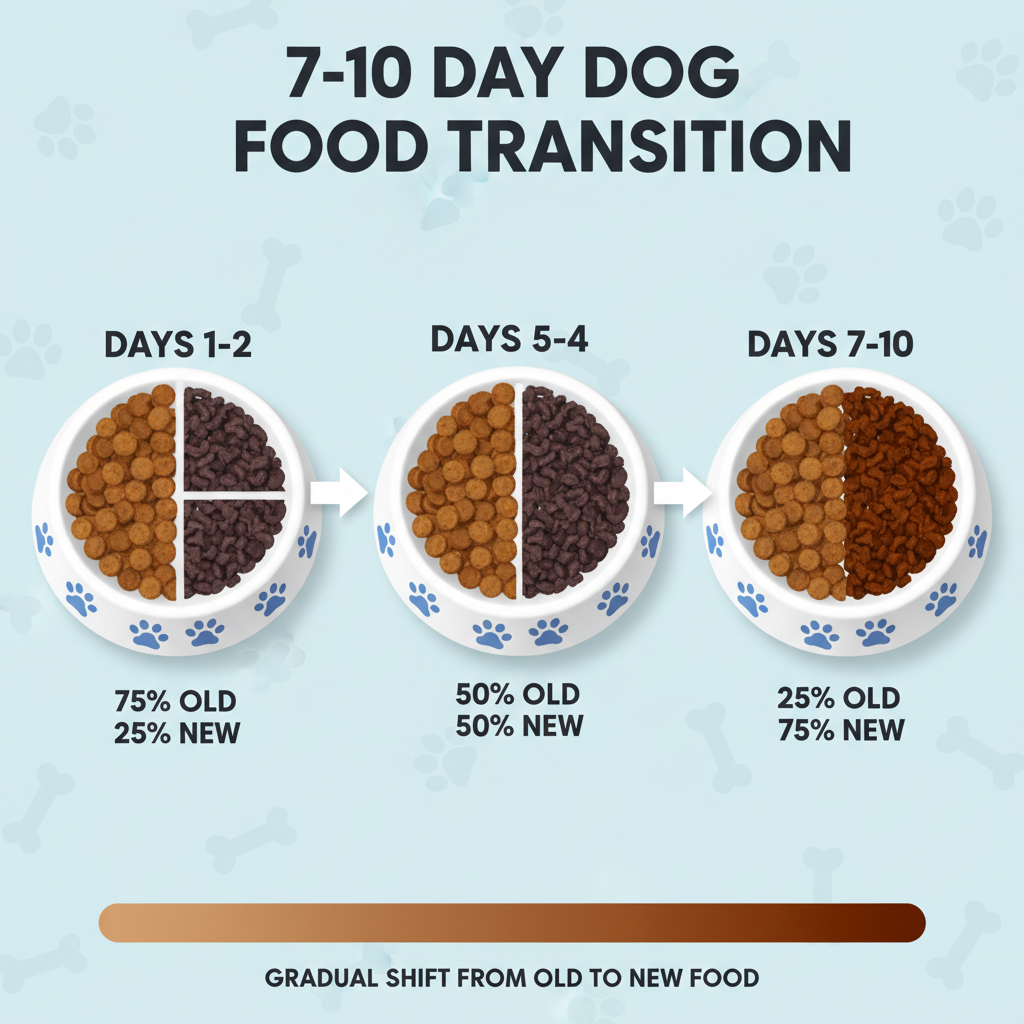
To help your pup avoid an upset tummy, we recommend making the switch from puppy food to adult food gradually. This slow transition should take about 7 to 10 days.
Here’s a simple plan to follow:
- Days 1-2: Mix about 25% of the new adult food with 75% of their current puppy food.
- Days 3-4: Go for a 50/50 mix – half new adult food, half puppy food.
- Days 5-6: Now, mix 75% new adult food with just 25% puppy food.
- Days 7-10: By now, your pup should be happily eating 100% new adult food.
Keep a close eye on your dog during this time for any signs of digestive upset, like throwing up, diarrhea, or not wanting to eat. If you notice any issues, slow down the transition a bit. If symptoms don’t clear up, make sure to chat with your veterinarian.
What if Your Dog Is a Picky Eater?
Some dogs are just plain picky, and they might resist trying new food. If your pup is giving you the cold shoulder, here are some tricks to help with the transition:
- Warm it up: If you’re using wet food, gently warming it can make the aroma more enticing. For kibble, a little warm water can do the trick too.
- Add flavor: A tiny bit of low-sodium chicken broth or plain, cooked chicken can often tempt your dog to dig into their new meal.
- Be patient: Some dogs simply need more time to adjust. Stick with the gradual transition plan and try not to give in to begging with treats or human food. That can actually teach them that being picky gets them better stuff!
- Talk to your vet: If your dog keeps refusing the new food or puts up a real fuss, your veterinarian can offer personalized advice or even suggest specific adult dog food formulas that might be a better fit.
Finding the Best Adult Dog Food Brands
Choosing the “best” adult dog food brand truly depends on your dog’s unique needs, what they like, and any health concerns they might have. We always suggest you chat with your veterinarian for recommendations tailored just for your furry friend.
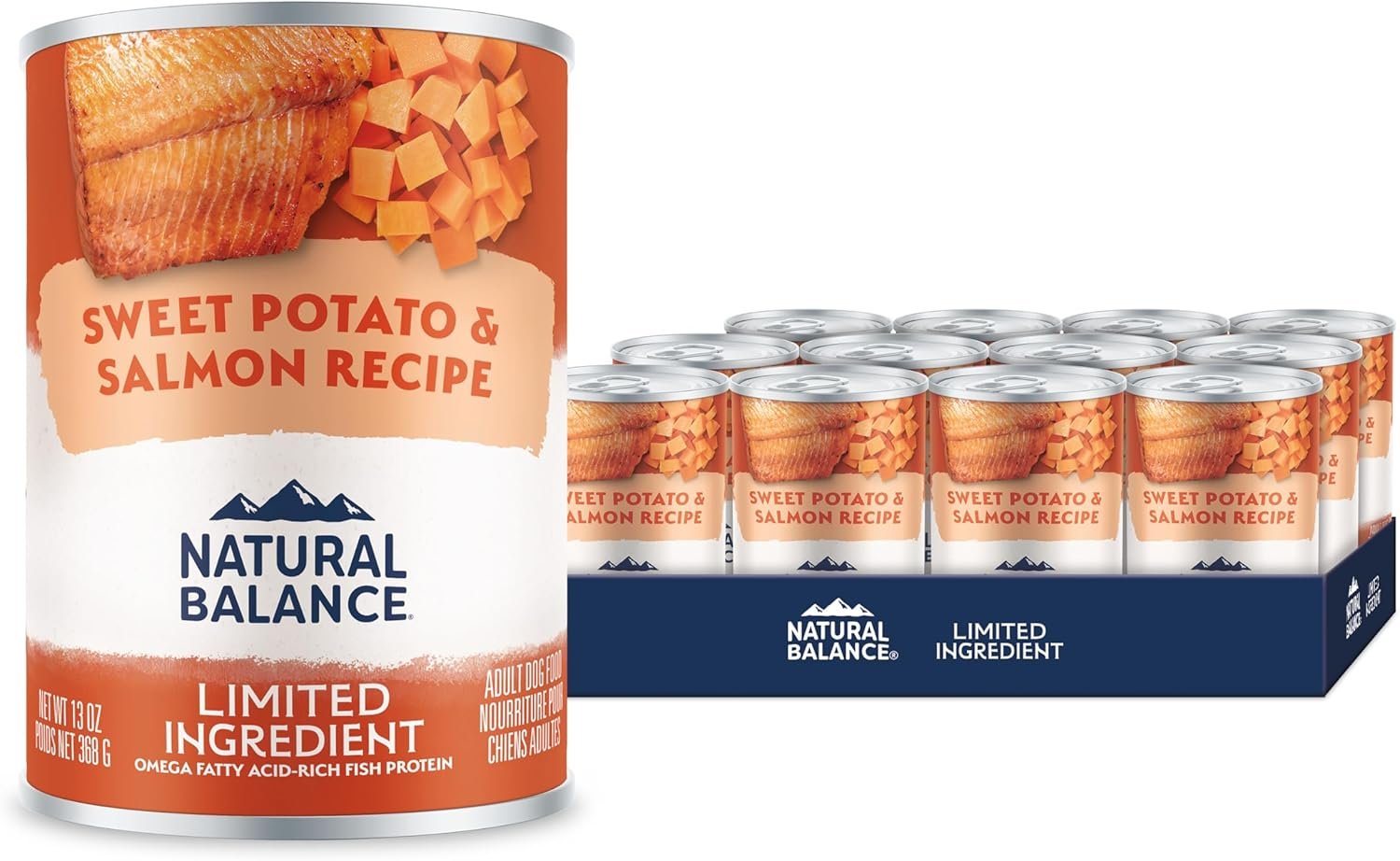
Based on our research and common veterinary guidance, our team at Petscarelab suggests exploring brands known for their quality and balanced nutrition. When you’re picking out a new food, always look for a statement on the label that confirms the food meets recognized nutritional standards. This ensures the food is complete and balanced for your dog’s specific life stage.