Urine Crystals in Dogs: What Every Pet Parent Needs to Know
Finding out your beloved pup might have urine crystals in dogs can be unsettling. These tiny, solid structures can form in your dog’s pee, and while sometimes they’re no big deal, other times they can signal a bigger health issue. Think of them like microscopic bits of sand in their urinary tract.
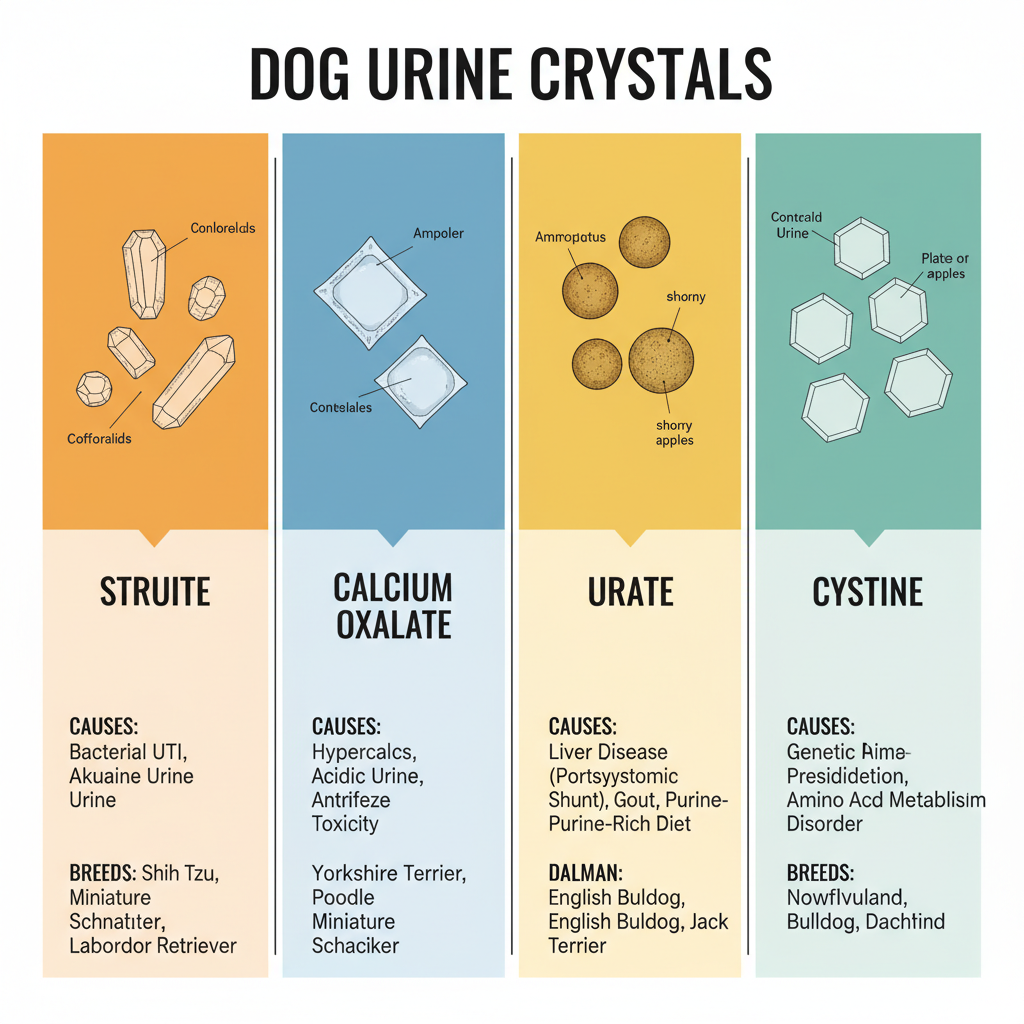
Several types of crystals can show up, but a few are much more common:
- Struvite (magnesium ammonium phosphate)
- Calcium oxalate
- Urate
- Cystine
Don’t panic just yet. Our team at Petscarelab knows that in some cases, these crystals are completely normal and don’t cause any trouble. But in others, they can point to an underlying health problem and even lead to serious complications. Your vet is the best person to tell you if your dog’s crystals need treatment.
What Are Urine Crystals in Dogs, Really?
Urine crystals are simply clumps of minerals that form in your dog’s urine. While the crystals themselves usually aren’t an emergency, they can sometimes grow into painful urinary stones. These stones can become truly dangerous, even life-threatening.
Urinary stones can completely block the flow of urine, especially in male dogs because they have a narrower urethra. If your dog has a urinary blockage and doesn’t get help right away, it can lead to kidney failure, a ruptured bladder, and even death.
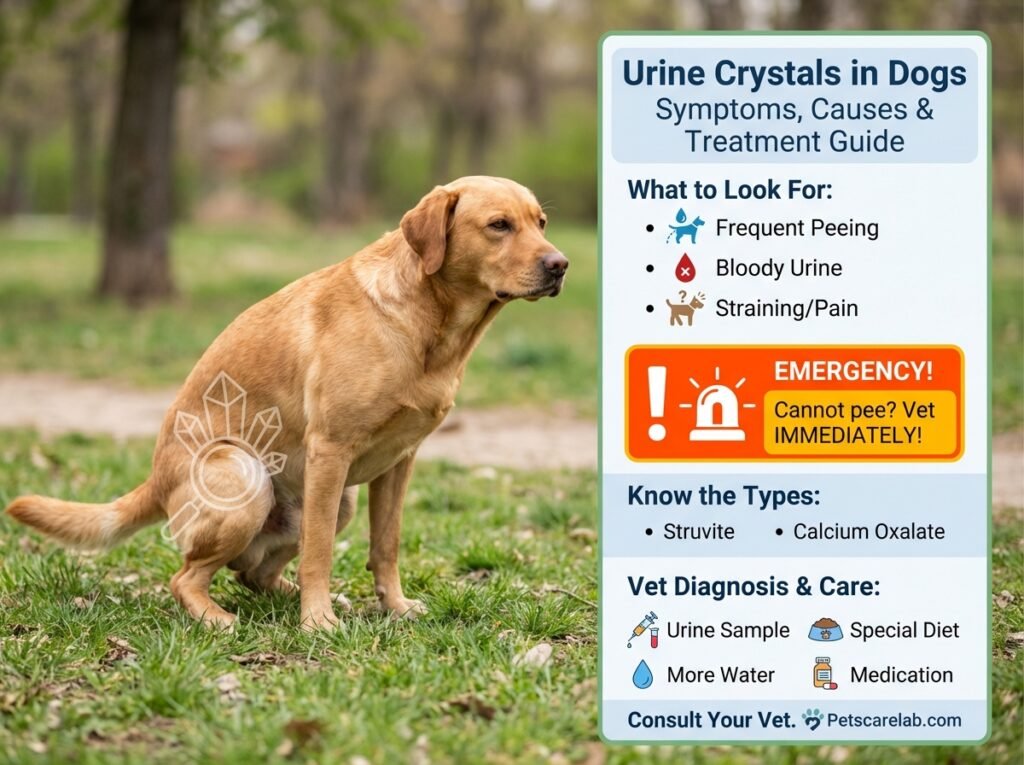
This is critical: If your dog is straining to pee, crying out when they try, or can’t urinate at all, rush them to an emergency vet immediately. This is a life-threatening situation.
Different Kinds of Urine Crystals and What They Mean
Different types of urine crystals often link back to specific health problems and need unique treatments. It’s like solving a puzzle – identifying the crystal helps your vet figure out the next steps.
- Struvite crystals are the most common type we see in dogs. They often pop up with bacterial urinary tract infections (UTIs). An unusual diet, certain medications, or an underlying metabolic disease can also cause them.
- Calcium oxalate crystals come in second place for commonality. We often find them in dogs with high blood calcium levels (a condition called hypercalcemia). This can happen because of diseases like cancer, hyperparathyroidism, and Addison’s disease. Some medications, a poor diet, and a history of urinary stones can also make your dog more prone to these.
- Urate crystals aren’t as common as struvite or calcium oxalate. They frequently show up in dogs with liver problems or a condition called portosystemic shunts. Certain breeds, like Dalmatians and English Bulldogs, are genetically more likely to get them.
- Cystine crystals are pretty rare in dogs and are almost always due to a genetic predisposition. Breeds like Newfoundlands, Labrador Retrievers, Dachshunds, and Basset Hounds are among those at higher risk.
Signs Your Dog Might Have Urine Crystals
Sometimes, dogs with urine crystals won’t show any signs of illness at all. Other times, they might start showing symptoms related to whatever caused the crystals, or they might develop problems from urinary stones.
The most common signs that your dog has urine crystals or urinary stones usually involve their lower urinary tract. Keep an eye out for:
- Peeing more often than usual
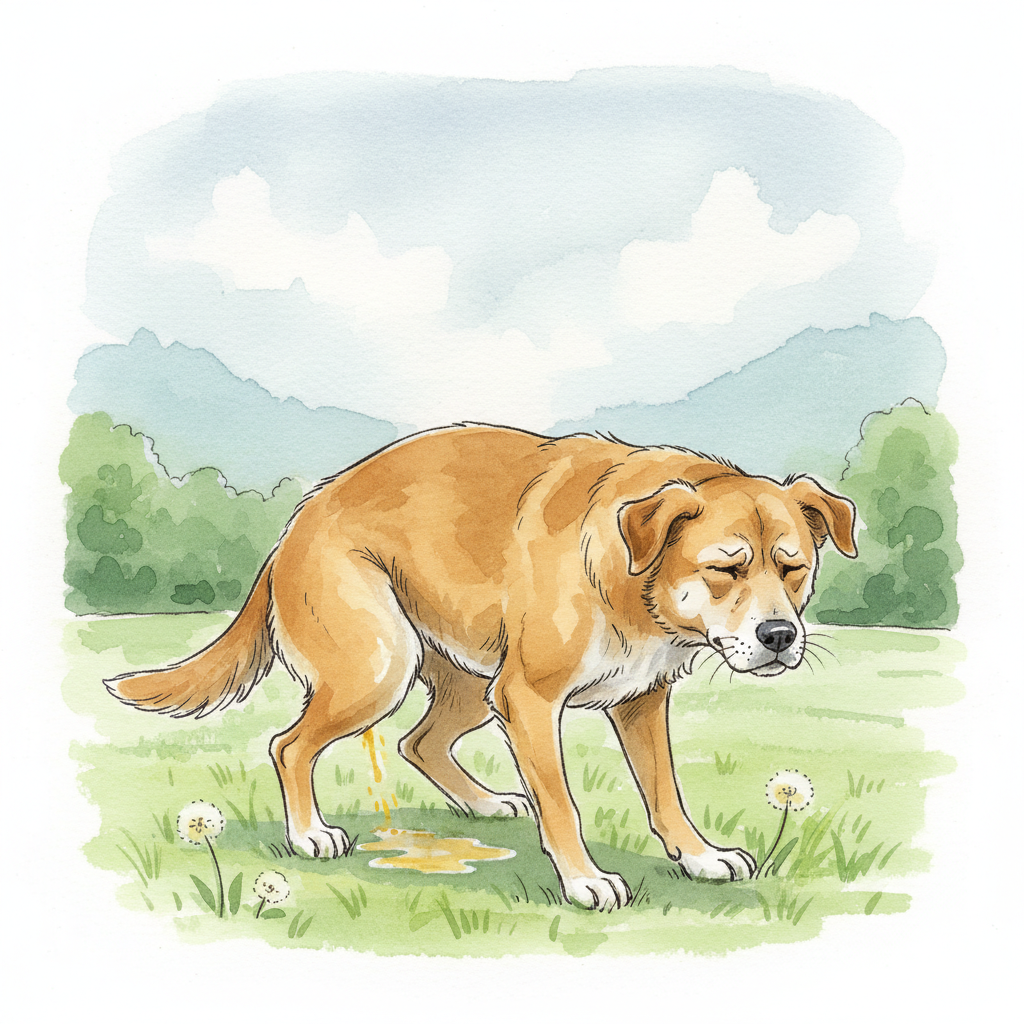
- Straining when they try to pee
- Urinating only tiny amounts each time
- Having accidents inside the house
- Bloody urine
- Licking their private parts a lot
- Whining or yelping when they pee (painful urination)
- Urinary blockage (most common in male pups):
- Can’t pee at all
- Throwing up
- Acting tired or sluggish
- Not wanting to eat
- Pain in their belly
Why Do Urine Crystals Form in Dogs?
The main reason urine crystals form is when your dog’s pee has too many specific substances floating around in it. For example, if their urine is packed with calcium and oxalate, then calcium oxalate crystals can start to form.
Several factors can contribute to these high concentrations and boost your dog’s risk of developing urine crystals:
- Dehydration: Not drinking enough water makes urine more concentrated.
- An unsuitable diet: What your dog eats plays a huge role.
- Urinary tract infections (UTIs): These can change the urine’s chemistry.
- Abnormal urine pH: If their pee is too acidic or too alkaline, crystals can form.
- Kidney or liver disease: These serious conditions can mess with your dog’s body chemistry.
- Metabolic diseases: Conditions like hypercalcemia, portosystemic shunt, Addison’s disease, or hyperparathyroidism can also be culprits.
- Genetic predispositions: Some breeds are just more prone to certain types of crystals.
- Certain medications: Some drugs can alter urine composition.
How Vets Diagnose Urine Crystals in Dogs
To figure out if your dog has urine crystals, your vet needs a urine sample. The best way to collect this is directly from the bladder using a procedure called cystocentesis (where they use a needle to get the sample) or by catheterization. These methods help make sure the sample isn’t contaminated by skin cells or bacteria from outside, which could give a misleading result.
Once your vet gets the urine, they’ll look at it under a microscope. If crystals are there, they’ll identify the type and how many are present. They’ll also check the urine’s pH, concentration, and look for red blood cells, white blood cells, protein, and bacteria. Often, they’ll recommend a urine culture and sensitivity test too. This checks for bacterial infections and helps them pick the best antibiotic if one’s needed.
If your dog is showing signs of urinary stones or other problems, your vet might also suggest X-rays or an ultrasound. These imaging tests let them look for stones in the bladder, kidneys, or urethra. Blood work might also be on the agenda to check for underlying conditions like kidney disease, liver disease, or high blood calcium levels.
Treating Urine Crystals in Dogs
The treatment for urine crystals in dogs depends entirely on the crystal type and what caused them. If your dog has a few crystals but isn’t showing any symptoms, and there are no other health concerns, your vet might just keep a close eye on things. For example, a small amount of calcium oxalate crystals in a symptom-free dog with normal urine pH might not need immediate intervention.
However, if your dog has symptoms, stones, or underlying health issues, more active treatment is usually necessary. Here’s what that typically involves:
- Antibiotics: If a bacterial UTI is behind the crystals, antibiotics are key.
- Special diets: Your vet might prescribe specific foods designed to either prevent new crystals and stones from forming or help dissolve existing ones.
- More water: Encouraging your dog to drink more water helps dilute their urine, making it harder for crystals to form.
- Medications: If an underlying health problem like high blood calcium or liver disease is causing the crystals, specific medications will target those conditions.
- Surgery: Sometimes, if urinary stones are large, causing blockages, or can’t be dissolved, surgery is the best way to remove them.
Life After Urine Crystals: Recovery and Management
How well your dog recovers from urine crystals depends on the type of crystals, the underlying cause, and whether they had urinary stones. The good news is that with the right treatment, many dogs make a full recovery. But some pups might need lifelong diet changes, medications, or regular check-ups to prevent the crystals from coming back.
If your dog gets diagnosed with urine crystals, it’s crucial to follow your vet’s recommendations closely. This might mean:
- Feeding a prescription diet tailored to their specific needs.
- Giving all medications exactly as prescribed.
- Bringing in urine samples for rechecks as often as your vet recommends.
- Making sure your dog always has access to plenty of fresh, clean water.
By working closely with your veterinarian, you’ll give your dog the best chance at a full recovery and a long, healthy life.
Can urine crystals in dogs just disappear on their own?
Sometimes, small amounts of urine crystals might clear up on their own, especially if they’re not causing any symptoms and were due to something temporary like mild dehydration. But you really need to talk to your vet to figure out what kind of crystals they are and why they formed. Some types of crystals can lead to serious health problems if you leave them untreated.
How common are urine crystals in dogs?
Urine crystals are fairly common in dogs, with struvite and calcium oxalate being the most frequent types our team sees. How often they show up can depend on things like your dog’s breed, their diet, and any other health conditions they might have.
Do urine crystals hurt dogs?
Yes, urine crystals can definitely cause pain for dogs, especially if they develop into urinary stones. These stones can irritate the lining of the urinary tract, cause inflammation, and potentially block the flow of urine. This leads to a lot of discomfort. You might notice your dog straining to pee, crying out during urination, or acting restless.
What signs should I look for if my dog has bladder crystals?
Symptoms of bladder crystals in dogs (which often mean urinary stones have formed from the crystals) can include:
- Trying to pee very frequently
- Straining or having a hard time urinating
- Peeing small amounts often
- Bloody pee
- Licking their genital area a lot
- Having accidents inside the house
- Painful urination
- In severe cases, a complete inability to pee (this is a medical emergency, especially for male dogs!)
If you spot any of these signs, don’t wait—get your pup to the vet right away.
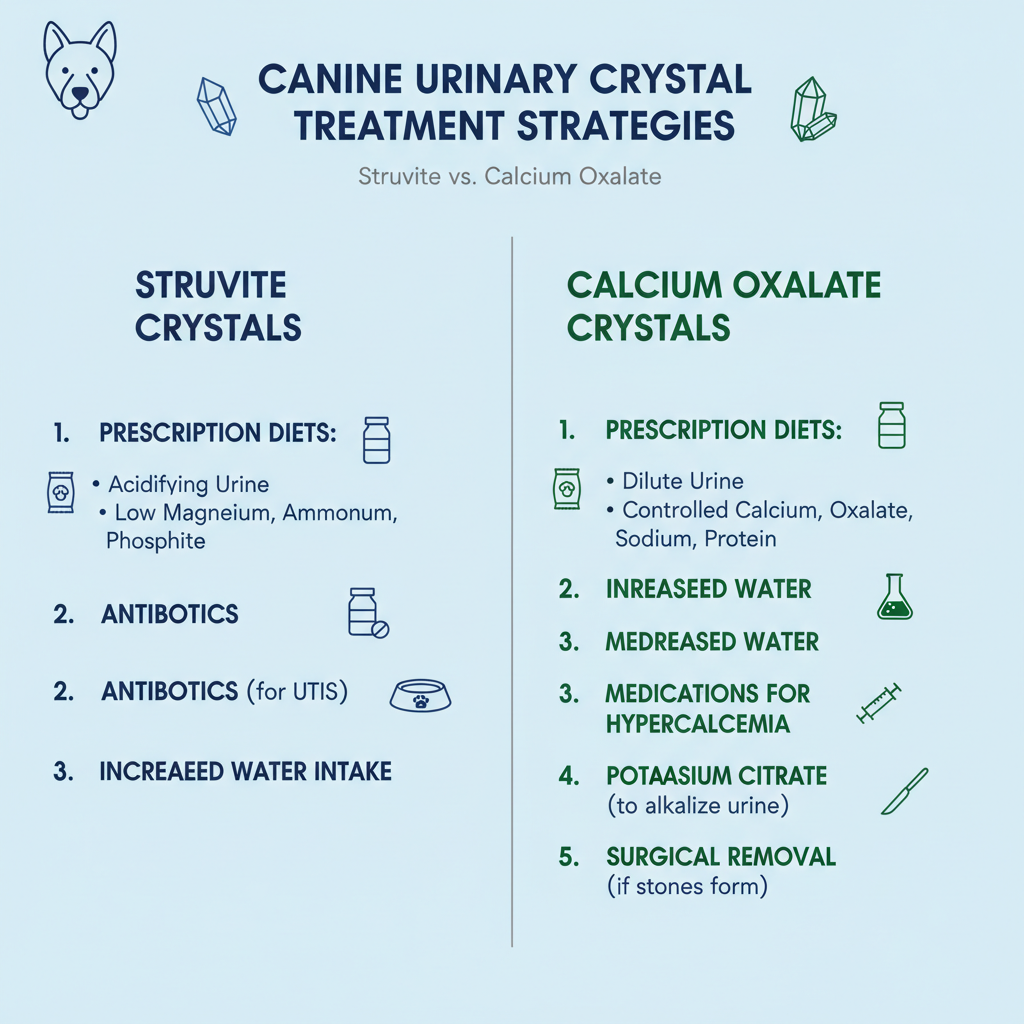
How do vets treat struvite crystals in dogs?
Treating struvite crystals in dogs usually involves:
- Special prescription diets that are designed to dissolve struvite stones and crystals. These diets make the urine more acidic and lower the levels of magnesium, ammonium, and phosphate.
- Antibiotics if your dog has a bacterial urinary tract infection (UTI), since UTIs are a big cause of struvite formation.
- More water intake to help dilute the urine, making it harder for crystals to form.
- Regular follow-ups with urinalyses to make sure the crystals and any stones are going away.
If the stones are too large or causing blockages, surgery might be necessary.
How do vets treat calcium oxalate crystals in dogs?
Treating calcium oxalate crystals in dogs focuses on stopping new ones from forming and growing, because these crystals don’t usually dissolve with diet changes the way struvite stones do. Treatment plans often include:
- Specific prescription diets that encourage dilute urine and have carefully controlled levels of calcium, oxalate, sodium, and protein.
- Increasing your dog’s water intake to keep their urine diluted.
- Medications if an underlying condition, like high blood calcium (hypercalcemia), is causing the crystals.
- Potassium citrate can sometimes be used to make the urine less acidic, which can help prevent crystal formation.
- Regular monitoring with urinalyses and imaging (like X-rays or ultrasound) to check for stone formation.
If calcium oxalate stones do form and cause problems, they often need surgical removal.