

Pulmonic Stenosis in Dogs: What Every Pet Parent Needs to Know
Discovering your beloved pup has a heart condition can feel overwhelming. One such condition, pulmonic stenosis in dogs, is a problem they’re born with – what we call a congenital heart defect. Imagine the heart’s pulmonic valve, which sits between the heart’s right pumping chamber (ventricle) and the artery leading to the lungs, being too narrow or blocked. This makes it harder for blood to flow smoothly.
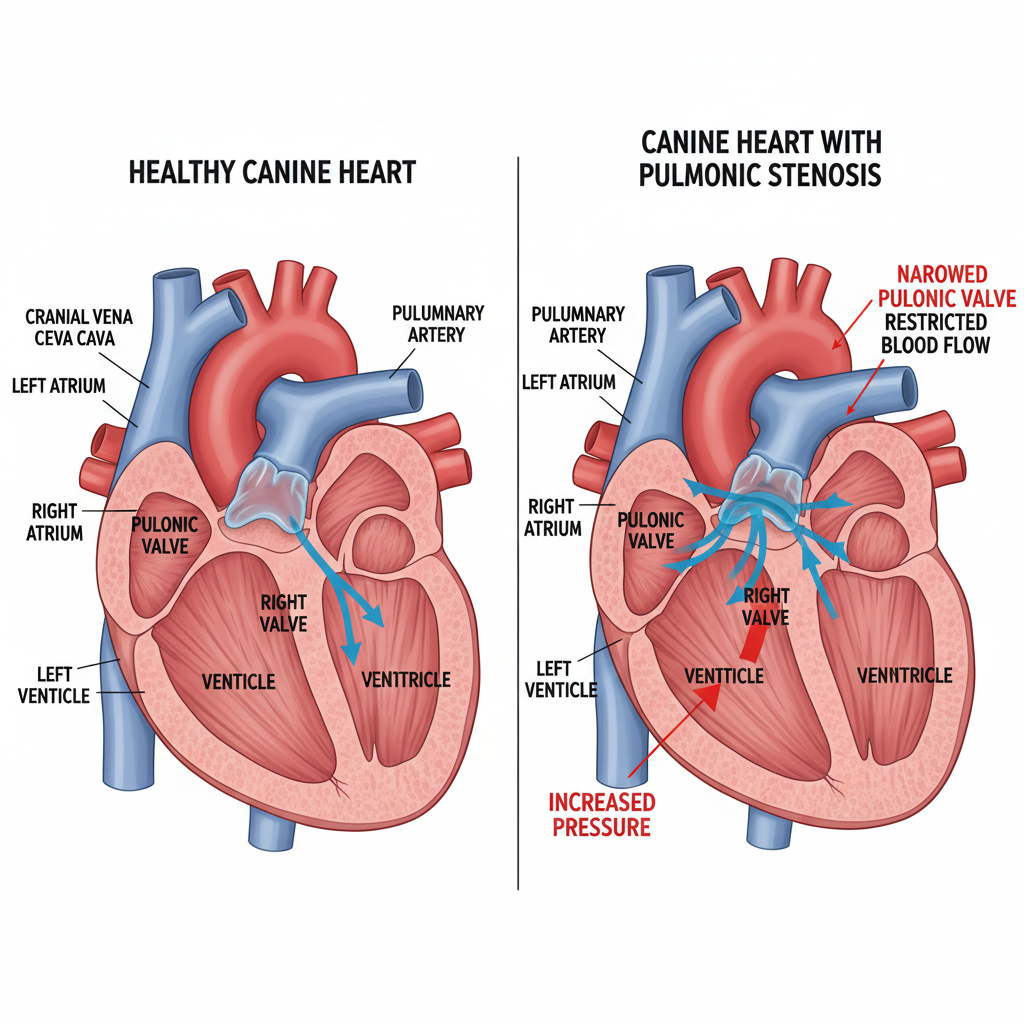
While any dog can be affected, our research shows it’s more common in certain breeds. Think English Bulldogs, French Bulldogs, Mastiffs, Samoyeds, Terriers, and Miniature Schnauzers.

Normally, the pulmonic valve acts like a gate, guiding blood from your dog’s heart to their lungs. When this gate is too tight or blocked, your dog’s heart has to push much harder to get blood through. This extra effort builds pressure in the right side of the heart, and over time, the heart muscle can thicken. Eventually, this can lead to serious right-sided heart failure.
This condition isn’t a one-size-fits-all problem; it can be very mild or extremely severe. A pup with a mild case might never show any signs or need treatment. But a severe case can be life-threatening and often requires surgery to fix.
What Causes Pulmonic Stenosis in Dogs?
Most of the time, pulmonic stenosis in dogs is something they’re born with. While veterinary specialists don’t always know the exact reason it happens, we believe it’s a mix of genetics and sometimes environmental factors. The fact that certain breeds are more likely to develop it strongly suggests there’s a hereditary link, meaning it can run in families. Sometimes, it also shows up alongside other congenital heart defects.
Symptoms of Pulmonic Stenosis in Dogs
The signs of pulmonic stenosis in dogs can vary a lot, depending on how serious the condition is. A mild case might not cause any noticeable symptoms at all. On the other hand, a severe case can bring on life-threatening signs that need immediate attention.
Keep an eye out for these common symptoms:
- Heart murmur: Often, your vet will be the first to spot this during a routine check-up.
- Tiring out easily: Your dog might get winded quickly during playtime or seem reluctant to exercise.
- Fainting or collapsing: This can happen suddenly, especially during or right after they’ve been active.
- Coughing: While less common with this specific type of heart issue, it can sometimes signal fluid building up in the lungs.
- Struggling to breathe: As the problem gets worse, you might notice your pup having a hard time catching their breath.
- Swollen belly: This is due to fluid collecting in the abdomen, a classic sign of right-sided heart failure.
- Weakness or sluggishness: Your dog might just seem low on energy overall.
- Blue-tinged gums or skin (cyanosis): In very severe situations, this shows your pup isn’t getting enough oxygen.
- Poor growth in puppies: Young pups might struggle to grow and thrive as they should.
How Vets Diagnose Pulmonic Stenosis in Dogs
Your vet might first suspect pulmonic stenosis during a regular physical exam if they hear a heart murmur. If a murmur is present, they’ll suggest more tests to confirm the diagnosis and figure out how serious the condition is.
These tests can include:
- Echocardiogram (cardiac ultrasound): This is the best tool for a clear diagnosis. It lets your vet see your dog’s heart structure, measure how much the valve is narrowed, check blood flow, and evaluate how well the heart is working.
- Electrocardiogram (ECG): This test records the heart’s electrical activity. It can detect abnormal rhythms or signs that the right side of the heart is getting too big.
- Chest X-rays: X-rays show your vet the size and shape of the heart and lungs, and they can help find any fluid buildup.
- Blood tests: While they don’t directly diagnose pulmonic stenosis, blood tests help assess your dog’s overall health and rule out other issues. A specific test called proBNP can also tell us if the heart is under stress.
Treatment for Pulmonic Stenosis in Dogs
Treating pulmonic stenosis in dogs depends a lot on how serious the condition is and if your pup is showing symptoms. Mild cases might not need any specific treatment, but it’s still crucial to monitor them regularly.
For moderate to severe cases, here are the treatment options:
- Balloon valvuloplasty: Our team at Petscarelab finds this is often the go-to treatment for many dogs with moderate to severe pulmonic stenosis. It’s a minimally invasive procedure done by a veterinary heart specialist. They insert a thin tube with a tiny balloon into a blood vessel (usually in the leg) and guide it to the pulmonic valve. Then, they inflate the balloon to stretch open the narrowed valve, helping blood flow better.
- Surgical repair: In some complicated situations, or if balloon valvuloplasty isn’t possible, open-heart surgery might be an option. This is a more involved procedure, typically reserved for the most severe cases.
- Medications:
- Beta-blockers (like atenolol): These drugs help reduce the heart’s workload, slow the heart rate, and ease pressure across the valve, especially if there are other issues.
- Diuretics (like furosemide): Your vet might use these if your dog is retaining fluid, such as a swollen belly.
- Antiarrhythmics: If your dog has an irregular heartbeat, these medications can help.
- Pimobendan: This medication helps the heart pump more efficiently and might be used if the right side of the heart isn’t contracting well.
- Activity restriction: Dogs with moderate to severe pulmonic stenosis need to have their exercise limited to avoid overworking their hearts. Keep them calm!
- Regular monitoring: Even after treatment, follow-up appointments with a veterinary heart specialist are essential. This allows them to keep an eye on the heart’s function and make sure the treatment is working.
Recovery and Management of Pulmonic Stenosis in Dogs
The outlook for dogs with pulmonic stenosis varies depending on how severe the condition is and how well treatment works.
- Mild cases: These pups often have a great prognosis and can live a normal lifespan with little to no intervention.
- Moderate to severe cases: With a successful balloon valvuloplasty, many dogs see a huge improvement in their symptoms and quality of life. The procedure can often extend their lives significantly, though some dogs might need lifelong medication or even more procedures down the road.
- Untreated severe cases: These unfortunately have a poor prognosis and can quickly lead to right-sided heart failure and premature death.
[CHART: Bar chart comparing the life expectancy of dogs with pulmonic stenosis based on severity and treatment: ‘Mild Stenosis (untreated)’, ‘Moderate/Severe Stenosis (with balloon valvuloplasty/treatment)’, and ‘Severe Stenosis (untreated)’. Visually represent that mild cases can have a normal lifespan, treated moderate/severe cases can live many years (e.g., 5-10+ years), and untreated severe cases have a significantly shorter lifespan (e.g., 1-3 years).]
Long-term management usually involves:
- Routine vet visits: You’ll need to keep up with regular check-ups to monitor your dog’s heart health and adjust any medications.
- Sticking to meds: If your vet prescribes medication, it’s absolutely vital to give it consistently, exactly as directed.
- Special diets: Your vet might suggest a specific diet to support heart health, especially if your dog has heart failure.
- Changing activity levels: This means limiting strenuous exercise and avoiding situations that put too much stress on your dog’s heart.
- Watching for symptoms: Pet parents should be vigilant. If you notice any returning or worsening symptoms, tell your vet right away.
Pulmonic stenosis in dogs is a serious heart condition that needs quick diagnosis and the right management. Thanks to advancements in veterinary cardiology, many affected dogs can still lead full, happy lives, especially with early intervention and devoted care.
What is the life expectancy for a dog with pulmonic stenosis?
The life expectancy for a dog with pulmonic stenosis really depends on how severe their condition is and if they receive treatment. Pups with mild pulmonic stenosis can often live a normal lifespan. For those with moderate to severe stenosis, balloon valvuloplasty can dramatically improve their prognosis and prolong their lives, often for many years. Without treatment, severe cases can lead to heart failure and a much shorter life, sometimes within the first few years.
How common is pulmonic stenosis in dogs?
Pulmonic stenosis is actually one of the more common heart defects that dogs are born with. While it can affect any breed, our research shows it’s particularly common in breeds like English Bulldogs, French Bulldogs, Mastiffs, Samoyeds, Terriers, and Miniature Schnauzers, suggesting a strong genetic link.
Can pulmonic stenosis be prevented in dogs?
Since pulmonic stenosis is mainly a congenital and often inherited condition, we can’t fully prevent it. However, responsible breeders can help reduce how often it occurs by screening their breeding dogs for heart conditions. And, of course, regular vet check-ups for puppies are key for catching it early.