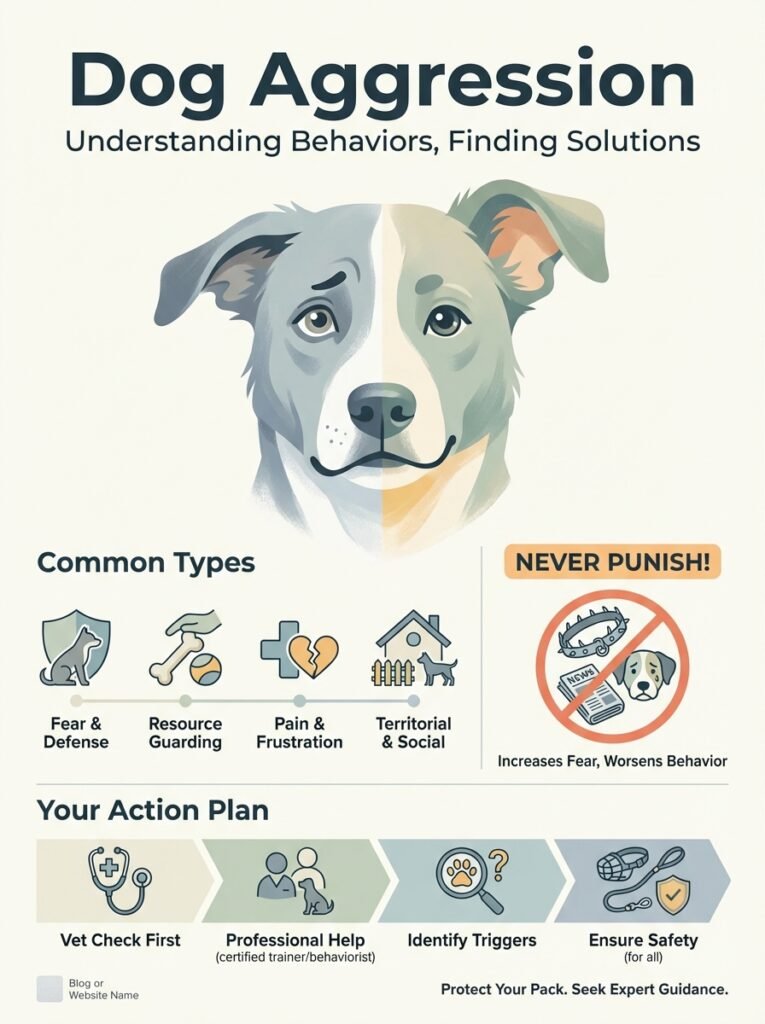
Understanding and Managing Dog Aggression
Watching your beloved dog exhibit aggressive behavior—whether it’s a tense growl, a snarl, a lunge, or even a bite—can be incredibly distressing. Dog aggression isn’t just a minor annoyance; it’s a serious problem that demands immediate attention. Even if your pup doesn’t cause physical harm, these displays are a clear cry for help. It’s the most common reason pet parents reach out for professional guidance, and for good reason. This behavior can be aimed at people or other animals, popping up in specific situations or seemingly out of nowhere.
Unpacking the Different Kinds of Dog Aggression
Dogs don’t just have one blanket form of aggression. Instead, it’s a whole spectrum of behaviors, all sharing a common goal: to make whatever is bothering them go away. Pups resort to aggression when they feel scared, want something badly, or are dealing with pain or deep frustration.
Here are some of the most common ways this aggression shows up:
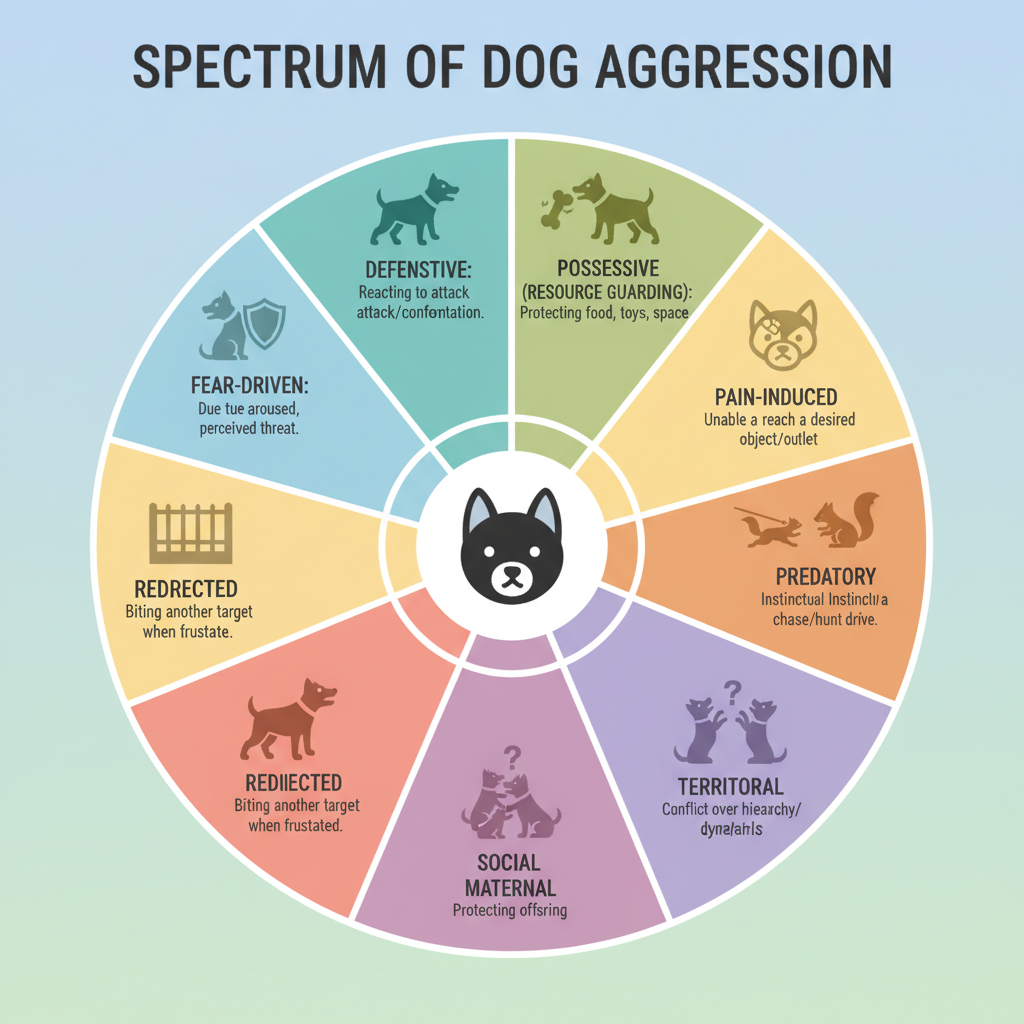
Fear-Driven Aggression
When a dog acts out of fear, they’re usually telling you they feel threatened or worried. These dogs might try to bolt, but if they feel trapped, they’ll often resort to growling, barking, or even snapping to scare off the scary thing.
Fear-driven aggression can stem from a specific person, another animal, or even a general anxiety about strangers, new places, or loud noises.
Watch for these signs of fear aggression:
- Tail tucked tight between their legs
- Ears flattened against their head
- Crouching low to the ground
- Avoiding eye contact
- Trying to escape or hide
- Growling, snarling, or snapping when cornered
Defensive Aggression
This type of aggression is much like fear aggression, but it’s all about your dog feeling the need to defend themselves or their personal space. Imagine your dog is peacefully sleeping, and someone reaches over them, startling them awake. They might not be scared, but they’re definitely startled and ready to defend themselves.
Signs of defensive aggression include:
- Growling, barking, or snarling
- Lunging forward
- Biting
- Body stiff and tense
- Hair on the back of their neck standing on end
Possessive Aggression (Resource Guarding)
Resource guarding, or possessive aggression, happens when a dog growls, snaps, or bites to protect their treasures—things like toys, food bowls, or even their favorite bed. This behavior can be directed at people or other animals who get too close to their prized possessions.
Signs your dog is resource guarding:
- Standing over the item, body stiffening
- Growling, barking, or snapping when someone approaches
- Grabbing the item and running away
- Blocking access to the item with their body
Pain-Induced Aggression
Dogs suffering from pain can become aggressive, especially if you touch them in a sensitive spot. This is common in older dogs struggling with arthritis or other painful conditions. A sudden change in your dog’s temperament might also signal an underlying medical issue, so always get them checked out.
Signs of pain-induced aggression include:
- Growling or snapping when touched
- Limping or avoiding movement
- Whining or yelping
- Lethargy or changes in appetite
Frustration-Elicited Aggression
This kind of aggression crops up when a dog can’t do something they desperately want to. Picture a dog on a leash, seeing another dog across the street but unable to reach them. That pent-up frustration can quickly boil over into aggression. We often see this in highly excitable or energetic pups.
Signs of frustration-elicited aggression include:
- Barking, whining, or jumping
- Lunging at the end of their leash
- Growling or snapping at the frustrating object or person
- Redirecting their aggression toward their owner or another nearby animal
Predatory Aggression
Predatory aggression is a natural instinct in dogs, usually aimed at smaller animals they see as prey—squirrels, rabbits, or even cats. While this isn’t typically directed at people, it can become dangerous if a dog mistakes a small child for prey.
Signs of predatory aggression include:
- Stalking or chasing
- Fixating intensely on their prey
- Silent, focused attention
- A quick, sudden bite to the neck
Social Aggression
Social aggression ties into a dog’s social dynamics and can occur if a dog feels their place in the “pack” is challenged. This often happens between dogs, especially those of the same sex.
Signs of social aggression include:
- Dominant body language (tail held high, stiff posture)
- Growling, snarling, or biting
- Mounting other dogs
- Blocking access to resources
Territorial Aggression
When a dog protects their perceived territory from intruders, that’s territorial aggression. This could be their home, backyard, or even their favorite human. Strangers, delivery people, or other animals who approach their space often become targets.
Signs of territorial aggression include:
- Barking or growling at approaching strangers
- Lunging at fences or doors
- Blocking access to the house or yard
- Urinating on objects to mark territory
Maternal Aggression
Maternal aggression is a powerful, natural instinct in mother dogs protecting their puppies. This aggression is typically directed at anyone who comes near the litter, even their owner.
Signs of maternal aggression include:
- Growling or snapping when someone approaches the puppies
- Standing protectively over the puppies
- Trying to move the puppies away from perceived danger
- Biting if the threat doesn’t back off
Redirected Aggression
Redirected aggression happens when a dog is provoked by one thing but takes their frustration or aggression out on something else. For example, if two dogs are fighting and you try to separate them, one might snap at you instead of the other dog.
Signs of redirected aggression include:
- Biting or snapping at the closest person or animal
- Sudden, unexpected aggression
- Aggression toward someone who wasn’t involved in the initial trigger
Play Aggression
Common in puppies and young dogs, play aggression isn’t usually serious. It involves playful biting, nipping, and chasing. However, if not managed well, it can sometimes escalate into more problematic behavior.
Signs of play aggression include:
- Playful biting or nipping
- Mouthing
- Chasing and pouncing
- Soft, loose body language
What to Do If Your Dog Shows Aggression
Living with an aggressive dog is tough, and it can even be dangerous. If your dog starts showing any signs of dog aggression, you need to act right away.
Here’s your action plan if your dog displays aggression:
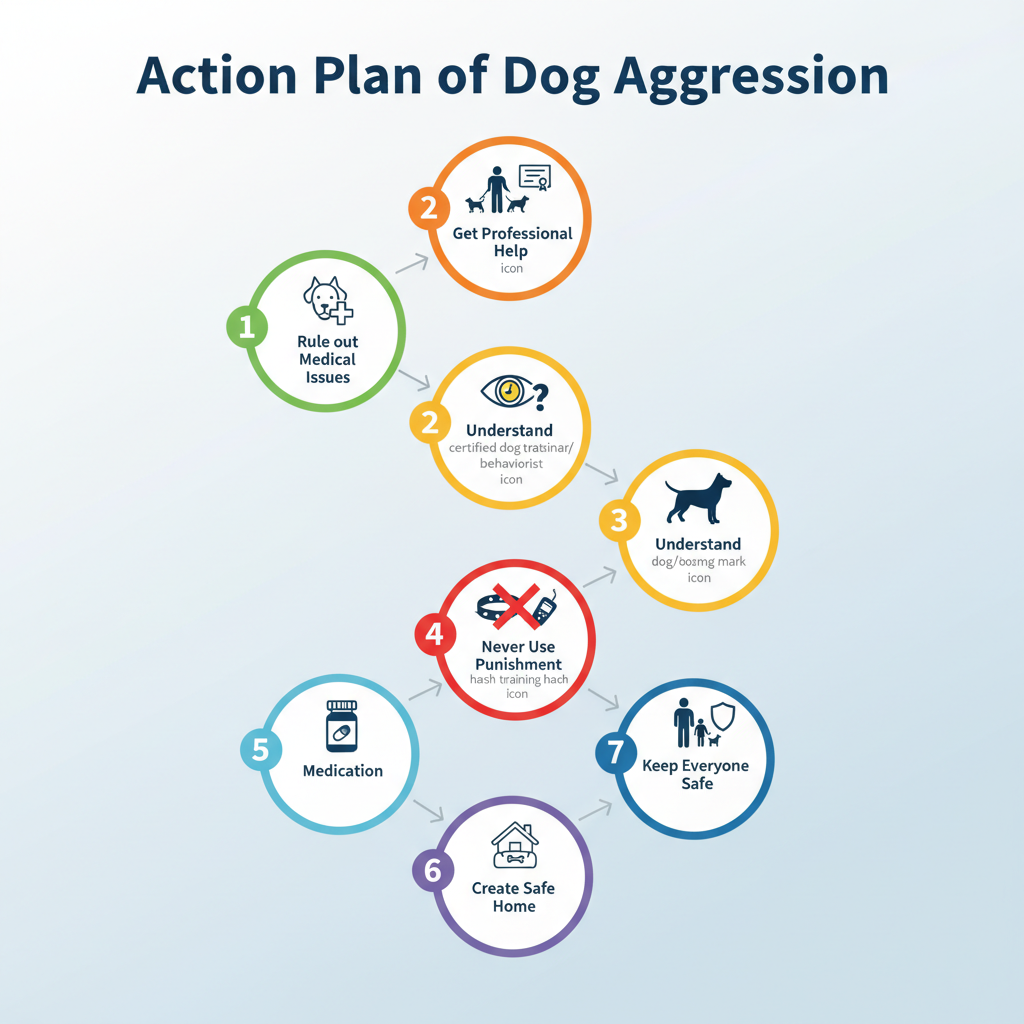
First, Rule Out Medical Issues
Before assuming your dog’s aggression is purely behavioral, schedule an immediate visit with your veterinary specialist. Pain, neurological conditions, hormonal imbalances, and other underlying medical problems can completely change a dog’s mood and lead to aggressive displays. Your vet can conduct a thorough physical exam, blood tests, and other diagnostic checks to rule out any medical causes. Addressing the root health problem might significantly reduce or even eliminate the aggression.
Get Help from a Certified Professional
Working with a qualified professional is absolutely essential when you’re dealing with dog aggression. A certified professional dog trainer or a veterinary behaviorist can evaluate your dog’s unique situation, pinpoint the triggers, and help you create a safe and effective plan for managing and changing the behavior. They can teach you how to interpret your dog’s body language, use positive reinforcement techniques, and build a structured environment to cut down on aggressive incidents. Trying to tackle serious aggression issues without expert guidance can be risky and often won’t work.
Understand What Sets Them Off
Identifying and truly understanding your dog’s aggression triggers is the bedrock of managing it. Pay close attention to when and where the aggression happens, who or what is involved, and what events come just before the behavior. Is it specific people, other dogs, certain objects, or particular environments? Once you know the triggers, you can start putting strategies in place to avoid or minimize exposure to these situations, reducing the chances of aggressive outbursts.
Never Use Punishment
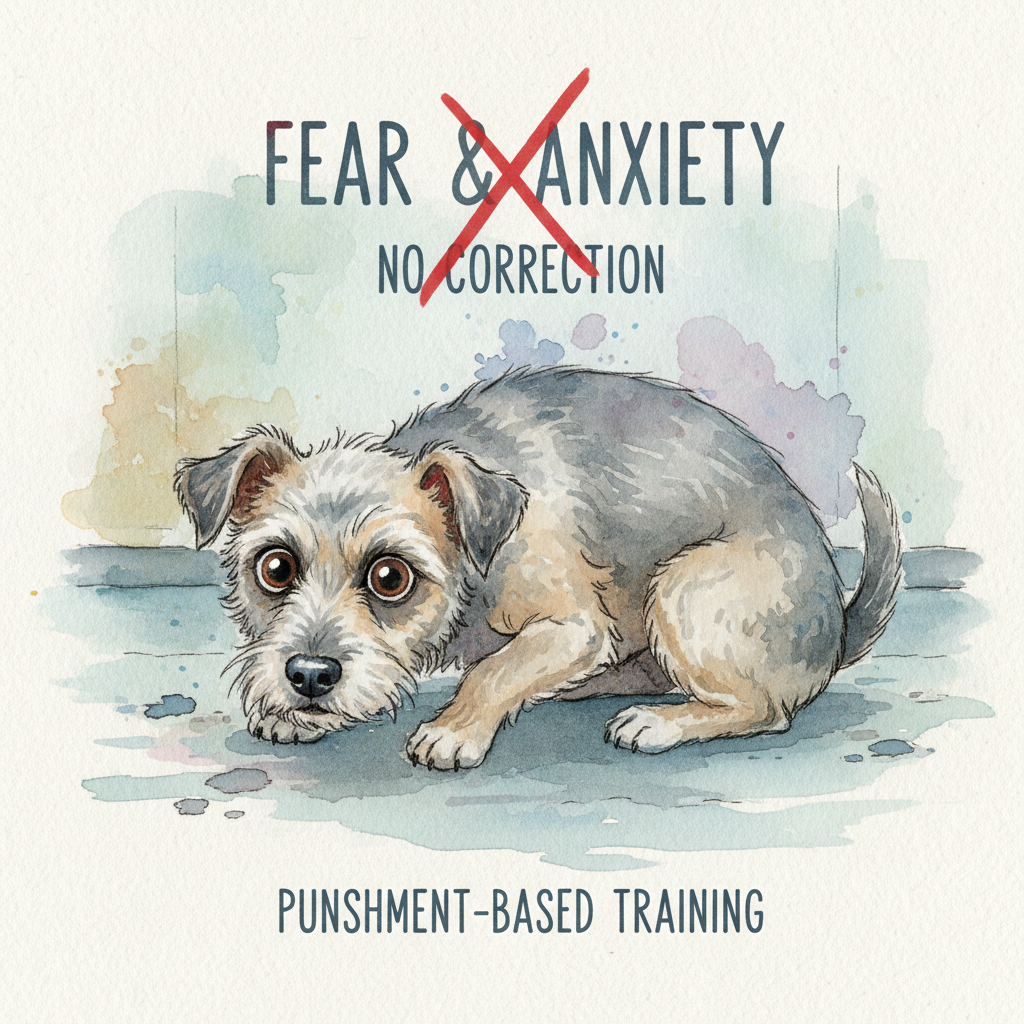
Punishing an aggressive dog, especially with physical methods, is counterproductive and will only make the problem worse. Punishment can dial up fear, anxiety, and distrust, leading to an escalation of aggression as your dog feels even more threatened. Instead of just suppressing the outward signs of aggression—which are often just warnings—focus on understanding and addressing the deep emotional state driving the behavior. Positive reinforcement and redirection are much more effective and humane approaches.
Create a Safe and Predictable Home
Giving your aggressive dog a consistent and predictable environment can dramatically lower their stress and anxiety. This means sticking to a clear routine for feeding, walks, and playtime. Make sure your dog has a safe retreat where they can go to feel secure, away from anything that might trigger them. A calm and structured household helps your dog feel more secure and less likely to resort to aggression.
Medication Can Help (Alongside Behavioral Therapy)
In some cases, especially for dogs with high anxiety, intense fear, or impulsivity that contributes to their aggression, your veterinary specialist or a veterinary behaviorist might suggest medication. Medications can help reduce anxiety and fear, making your dog more open to behavioral modification training. Remember, medication isn’t a magic bullet on its own; it’s a tool used hand-in-hand with a thorough behavioral therapy plan.
Keep Everyone Safe – Always
The safety of everyone involved—you, your family, visitors, and other animals—is the top priority. Never put yourself in a situation where you could get bitten or hurt. Use management tools like leashes, muzzles, gates, and crates to prevent aggressive incidents. If your dog’s aggression is severe or unpredictable, it’s safer to keep them separated from potential triggers and to seek immediate professional help. If you ever feel overwhelmed or unable to manage the aggression safely, don’t hesitate to reach out to a professional immediately.