Seasonal Allergies in Dogs: What Every Pet Parent Needs to Know
Does your dog start scratching like crazy, develop watery eyes, or sneeze a lot when certain seasons roll around? Just like us, our beloved pups can get hit by environmental sensitivities. If your furry friend shows these signs, chances are they’re dealing with seasonal allergies in dogs. These pesky reactions can really make your dog miserable, and if left unchecked, they might even lead to bigger health problems. The good news? Our team at Petscarelab knows there are many ways to help your dog feel better and prevent future flare-ups.
What Are Seasonal Allergies in Dogs, Anyway?
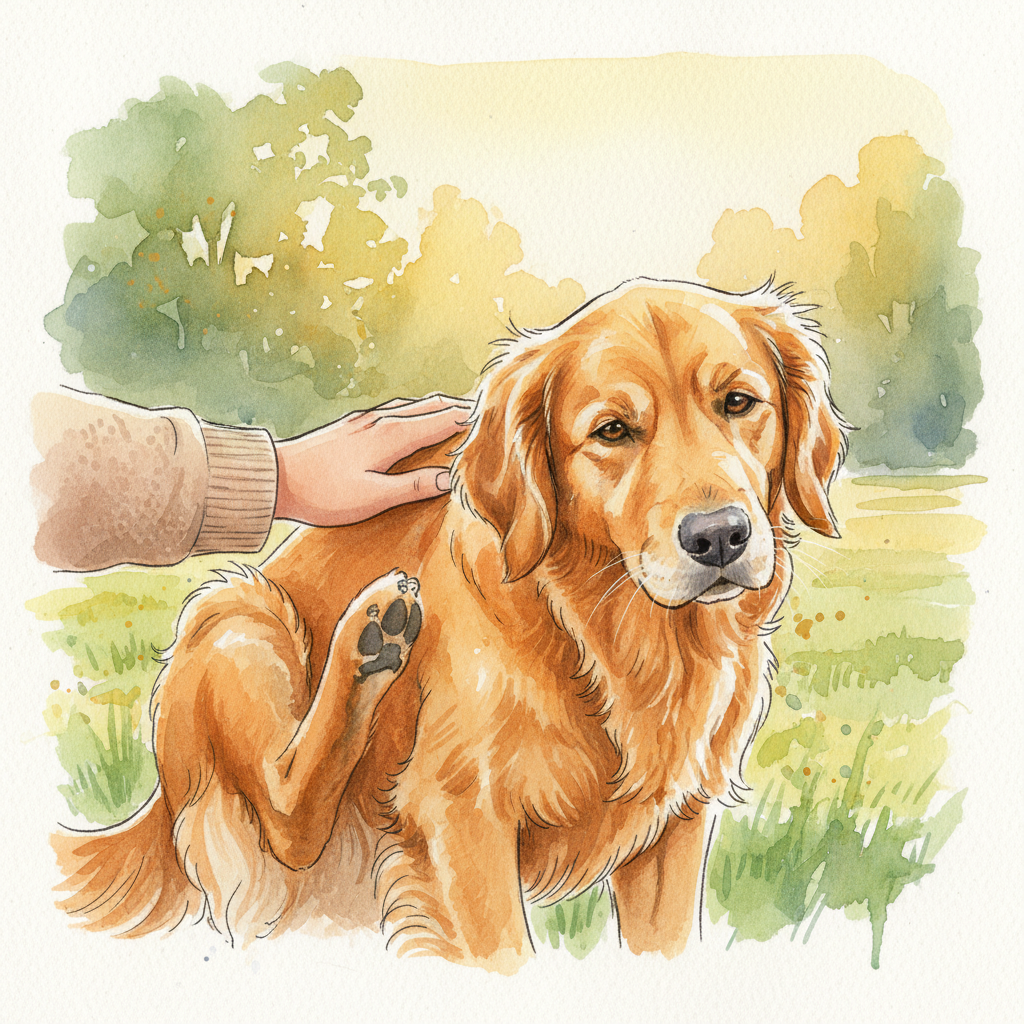
Think of seasonal allergies in dogs as their immune system getting a little too excited about everyday things in the environment. Instead of ignoring harmless stuff like pollen, your dog’s body treats it like a threat, kicking off an allergic reaction.
We often call these “environmental allergies” because the culprits are usually natural things floating around, like:
- Pollen from trees, weeds, and grasses – especially during spring and summer.
- Mold spores – they love damp spots, indoors and out.
- Dust mites – tiny critters that live in dust, bedding, and carpets.
The good news? When your dog gets seasonal allergies, the timing can often tell us what’s bugging them. If they’re scratching in the spring, tree pollen might be the culprit. Summer woes often point to grass pollen, and ragweed pollen is a common troublemaker when fall arrives.
Seasonal allergies are incredibly common, but they’re not the only kind of allergy a dog can have. Other common types include:
- Food allergies: These pop up when your dog’s immune system doesn’t agree with certain ingredients in their kibble or treats.
- Flea allergy dermatitis (FAD): This is a super intense reaction to flea saliva. Just one bite can send a sensitive dog into an itching frenzy.
Is Your Dog Itchy? Signs of Seasonal Allergies in Dogs
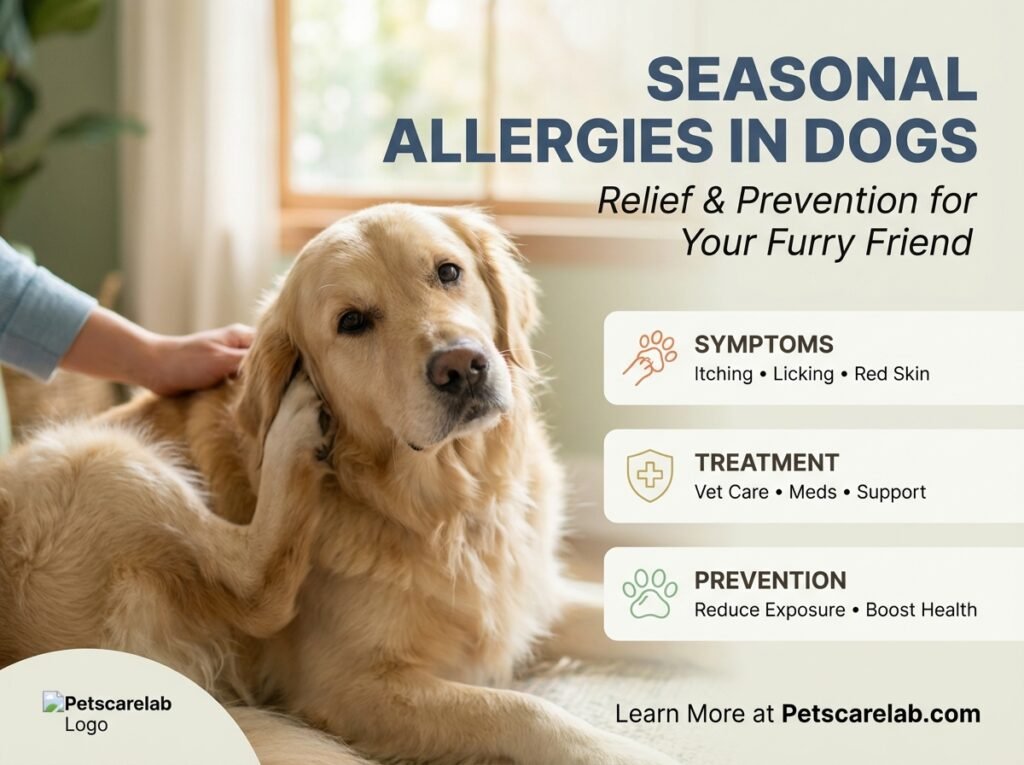
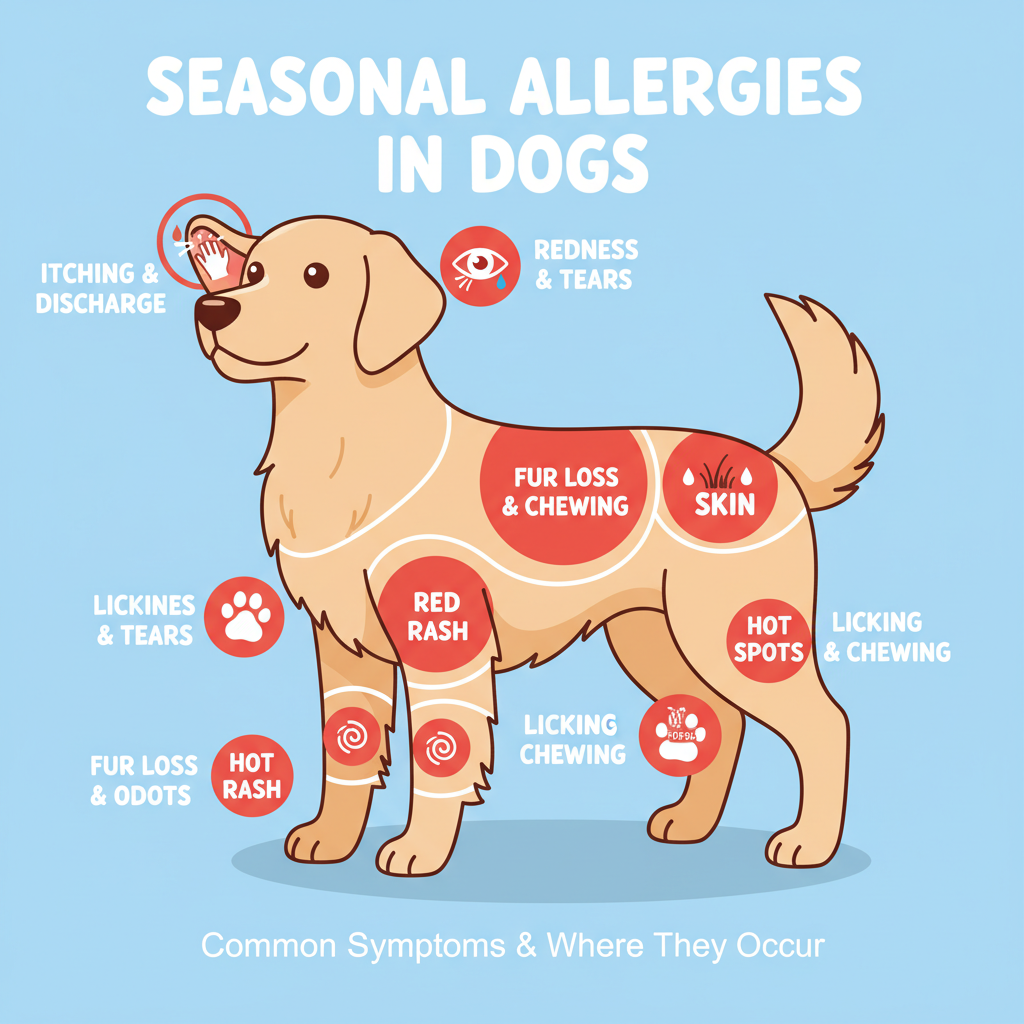
The most frustrating sign of seasonal allergies for many pet parents is intense, relentless itchiness, especially on their dog’s skin. You might catch your pup constantly scratching, licking their paws until they’re raw, or chewing at their belly, groin, or ears. This constant irritation is often called “allergic dermatitis.”
Keep an eye out for these common signs of seasonal allergies in dogs:
- Non-stop itching: Your dog can’t seem to stop scratching, licking, or chewing, particularly on their paws, belly, armpits, or ears.
- Red, angry skin: Those frequently licked or scratched spots can become irritated, red, and inflamed.
- Smelly skin infections: When your dog scratches so much they break the skin, bacteria or yeast can move in. These secondary infections worsen the itch and can give off a foul odor.
- Patchy fur loss: All that scratching and licking can lead to bald spots.
- Goopy, smelly ears: Itchy ears are a huge red flag for dog allergies. You might see redness, discharge, or smell something funky coming from their ears.
- Obsessive paw licking or chewing: This is a classic allergy tell. It can make their paws red, swollen, and even cause them to limp.
- Watery or red eyes: Though less common than skin issues, some dogs get watery, red, or itchy eyes.
- Sneezing or nasal drip: Just like humans, some dogs might sneeze or have a runny nose, but this isn’t as frequent as skin problems.
- Rashes or hives: Sometimes, allergies show up as little red bumps or raised welts on the skin.
- Hot spots: These rapidly spreading, moist sores pop up when your dog scratches or licks one spot intensely. They can get really nasty, really fast.
When to Call the Vet for Dog Allergies
If your dog is showing any of these allergy signs, it’s time to chat with your veterinarian. They can get to the bottom of what’s causing the trouble, recommend the right treatment to calm your dog’s discomfort, and help prevent those nasty secondary infections.
What Causes Seasonal Allergies in Dogs?
Seasonal dog allergies happen because your pup’s immune system gets overly sensitive to everyday stuff in their environment. When your dog encounters an allergen, their body pumps out histamines and other chemicals. It’s these chemicals that cause all that frustrating itching and inflamed skin you see.
A few things can make a dog more likely to develop these seasonal sensitivities:
- Genetics: Some dogs just inherit a tendency towards allergies.
- Environmental exposure: The more your dog is around high levels of allergens, the more likely they are to show symptoms.
- Skin health: Dogs with a weaker skin barrier might be more open to allergens causing trouble.
Are Certain Dogs More Likely to Get Seasonal Allergies?
Absolutely! While any dog can develop seasonal allergies, some breeds seem to draw the short straw when it comes to genetics.
Our team at Petscarelab sees these breeds commonly affected by seasonal allergies:
- Terriers (especially West Highland White Terriers)
- Retrievers (Golden Retrievers and Labrador Retrievers)
- Bulldogs (French Bulldogs and English Bulldogs)
- Pugs
- Shar-Peis
- Boston Terriers
- Boxers
- Setters
- Dalmatians
- Beagles
- Shih Tzus
How Vets Diagnose Seasonal Allergies in Dogs
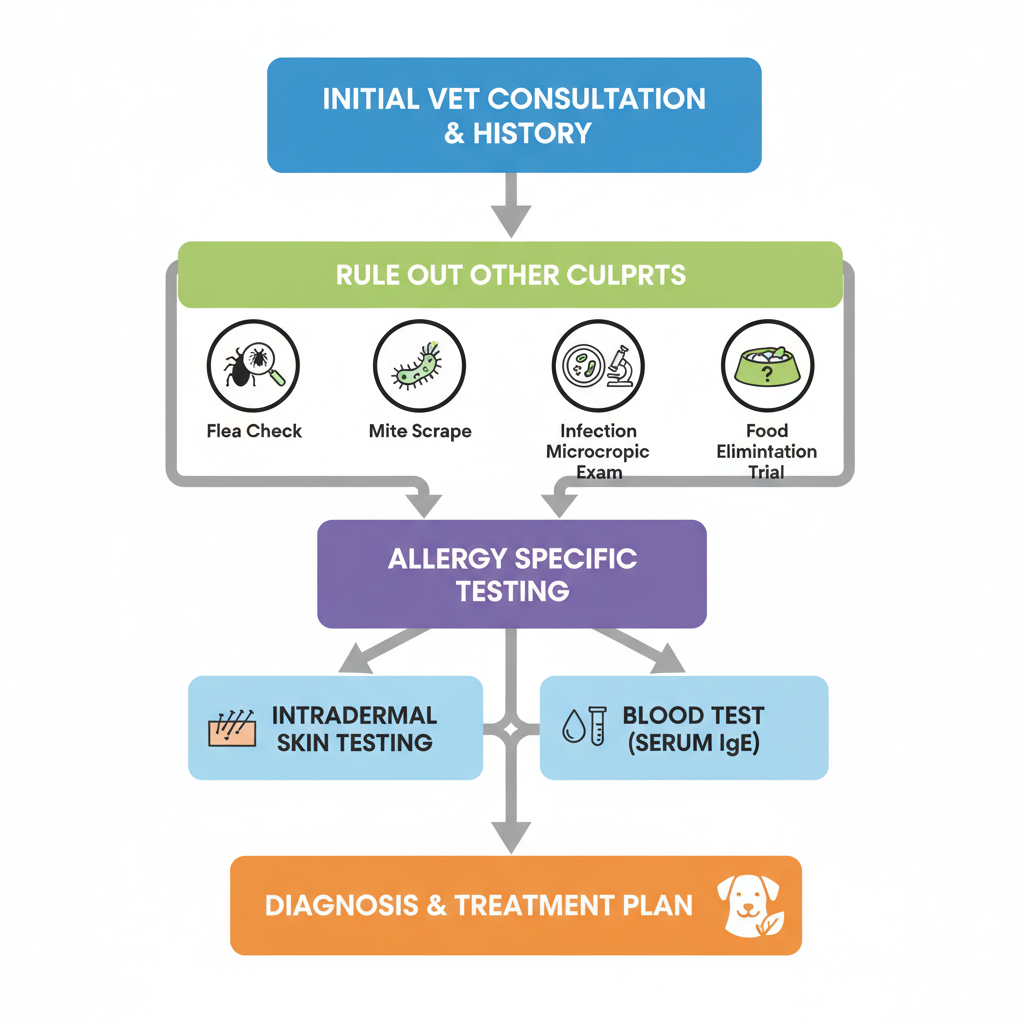
Figuring out if your dog has seasonal allergies often means ruling out other itchy problems first, since many things can cause similar symptoms.
When you visit the vet, they’ll start with a good look at your dog and chat with you about their health history and what you’ve been seeing.
Here’s how vets usually get to the bottom of dog allergies:
- First, rule out other culprits: Your vet will likely run tests to make sure other things aren’t causing your dog’s itching. These might include checking for:
- Fleas: A simple exam can spot fleas or their tell-tale “dirt.”
- Mites: They might do a skin scrape to look for tiny microscopic mites like Demodex or Sarcoptes.
- Bacterial or yeast infections: By examining skin cells under a microscope, the vet can see if these infections are making things worse – they often pop up because of allergies.
- Food allergies: If they suspect food is the problem, a special elimination diet trial might be on the table.
- Then, allergy testing: Once other issues are off the list, allergy tests can pinpoint exactly what environmental allergens are bothering your dog. There are two main kinds:
- Intradermal skin testing: Many vets consider this the most accurate. A veterinary dermatologist injects tiny amounts of different allergens just under your dog’s skin and watches for little bumps or hives to show up.
- Blood tests (serum IgE tests): These tests check for allergy-related antibodies in your dog’s blood. They’re convenient, but sometimes aren’t as precise as skin testing.
Treating Seasonal Allergies in Dogs: Relief for Your Pup
When it comes to treating your dog’s seasonal allergies, the main goals are to calm their symptoms, stop nasty secondary infections from taking hold, and, whenever possible, reduce their exposure to whatever’s making them itch. Your vet will work with you to find the best plan.
Here are the most common treatments:
- Medications from Your Vet:
- Antihistamines: Medications like diphenhydramine (Benadryl) or cetirizine (Zyrtec) can sometimes ease mild itching by blocking histamine. Just know they often work better for humans than dogs and might make your pup a bit sleepy. Always ask your vet for the right dosage.
- Corticosteroids: Think of prednisone or other steroids as powerful inflammation fighters. They can quickly soothe severe itching. However, because they have potential side effects with long-term use (like making your dog extra thirsty, needing to pee more, or feeling super hungry), vets usually save them for short bursts or really bad flare-ups.
- Apoquel (oclacitinib): This medication is a game-changer for many allergic dogs. It specifically targets the itch pathway, working fast with fewer side effects than steroids, which makes it a top choice for ongoing allergy management.
- Cytopoint (lokivetmab): This is an innovative injectable treatment. It’s an antibody that essentially “turns off” the itch signal in your dog’s body, providing relief for 4 to 8 weeks. It’s considered very safe because it’s not a drug in the traditional sense.
- Immunotherapy (allergy shots or drops): If allergy testing pinpoints specific allergens, your vet might suggest immunotherapy. This means giving your dog tiny, increasing doses of those allergens over time to help their immune system build tolerance. It’s a long-term solution that can significantly reduce or even eliminate allergy symptoms for many dogs.
- Topical Treatments for Instant Relief:
- Medicated shampoos: Shampoos with ingredients like chlorhexidine or benzoyl peroxide are fantastic for tackling secondary bacterial or yeast infections and soothing angry skin. Ask your vet which one is right for your dog.
- Anti-itch sprays/foams: Products with hydrocortisone or other calming ingredients can give localized relief to itchy, irritated spots.
- Soothing paw soaks: If your dog’s paws are red and inflamed, soaking them in a diluted Epsom salt solution or a medicated solution can offer comfort and reduce swelling.
- Supplements to Support Skin Health:
- Omega-3 fatty acids: Supplements like fish oil can really boost skin health, calm inflammation, and strengthen your dog’s skin barrier. Make sure you pick one made specifically for pets.
- Smart Environmental Management:
- Regular baths: Washing your dog with a gentle, hypoallergenic shampoo helps rinse away allergens clinging to their coat.
- Wipe down after outdoor adventures: After walks, use a damp cloth or a pet wipe to clean your dog’s paws and coat. This simple step can remove a lot of pollen and other allergens.
- Use good air filters: Running HEPA filters in your home and keeping windows closed can significantly lower the amount of allergens floating around indoors.
- Clean, clean, clean: Vacuuming regularly and washing your dog’s bedding in hot water helps get rid of dust mites and other indoor allergens.
Home Remedies for Seasonal Allergies in Dogs: What You Can Do
While prescription treatments are often key for managing seasonal allergies, some smart home remedies can support their care and give your dog extra comfort.
Always talk to your veterinarian before trying any new home remedy. We want to make sure it’s safe and truly helpful for your individual pup.
Here are a few things you can try at home:
- Oatmeal baths: Colloidal oatmeal is a wonderful natural skin soother. You can buy oatmeal-based shampoos or simply add plain, uncooked oatmeal to your dog’s bathwater for a calming soak.
- Diluted apple cider vinegar: A 50/50 mix of water and apple cider vinegar can be lightly sprayed on itchy spots or used as a paw soak. It can help reduce yeast and bacterial growth and calm irritation. Remember, never put full-strength apple cider vinegar directly on your dog’s skin; it can cause a nasty burn.
- Coconut oil: You can rub a bit of coconut oil on dry, flaky skin for moisture. It also has some natural antimicrobial benefits. Some pet parents even add small amounts to their dog’s food, but chat with your vet first because of its calorie content.
- Brush them often: Regular brushing not only keeps their coat looking great but also helps physically remove loose fur and allergens.
- Feed a great diet: A balanced diet packed with omega-3s and other vital nutrients supports healthy skin and a strong immune system from the inside out.
Preventing Seasonal Allergies in Dogs: Proactive Steps
The best way to manage seasonal allergies is to prevent them where you can. This means cutting down your dog’s exposure to known allergens and really bolstering their skin and immune health.
Here are some smart strategies to help:
- Steer clear of peak allergen times: If you know what allergens set your dog off, try to keep them indoors during those seasons or times of day when pollen counts are highest (think early morning and late afternoon for pollen).
- Keep those windows shut: It’s simple, but closing windows prevents outdoor allergens from drifting into your home.
- Invest in air purifiers: HEPA filters are fantastic for trapping airborne allergens, keeping your indoor air cleaner.
- Wipe down your dog after walks: Make it a habit to use a damp cloth or pet wipe to clean your dog’s paws, belly, and coat every time you come inside. This removes loads of pollen and other irritants.
- Bathe them regularly: A good bath with a gentle, hypoallergenic shampoo washes away allergens clinging to their fur and skin.
- Wash bedding often: Toss your dog’s bed, blankets, and any favorite toys into the hot wash frequently. This helps banish dust mites and other allergens.
- Feed a high-quality diet: A diet packed with essential fatty acids does wonders for skin barrier function and helps reduce inflammation throughout their body.
- Add omega-3 supplements: These supplements are excellent for boosting skin health and can help lessen allergic reactions.
- Don’t forget flea control: Even if your dog battles seasonal allergies, solid flea prevention is a must. Flea bites can seriously worsen existing skin irritation and trigger flea allergy dermatitis.
- Chat with your vet: Always get your vet’s advice on long-term prevention, especially if your dog has a history of severe allergies. Immunotherapy, for example, could be a great preventative option for some pups.
How long do dog seasonal allergies usually last?
Seasonal allergies will bother your dog for as long as the specific allergen is floating around. If your dog reacts to tree pollen, for instance, they might suffer all spring. If ragweed is the issue, symptoms could stick around through fall. Some pups might deal with allergies for several months a year, while others have shorter, more intense bouts.
Can I give my dog human allergy medicine?
Some human allergy medicines, like certain antihistamines (think Benadryl or Zyrtec), can be given to dogs, but only under strict veterinary guidance. The dosage is very different, and many human medications—especially those with decongestants or pain relievers—are actually toxic to dogs. Always, always check with your vet first. They’ll tell you the right type and dose, or suggest pet-specific treatments.
What’s the best medicine for seasonal allergies in dogs?
There’s no single “best” medicine; it really depends on your dog, how bad their symptoms are, and what’s causing the allergies. Top treatments often include Apoquel, Cytopoint, corticosteroids for serious flare-ups, and immunotherapy (allergy shots or drops) for long-term relief. Antihistamines and topical creams can also help with milder symptoms. Your vet is the best person to help you figure out the perfect treatment plan for your furry friend.
When should I take my dog to the vet for their allergies?
Don’t wait! Bring your dog to the vet if they’re constantly itching, seem uncomfortable, have red or irritated skin, are losing fur, keep getting ear infections, or show any signs of secondary skin infections (like redness, bad smells, scabs, or gooey discharge). Catching things early can stop symptoms from getting worse and prevent more serious health problems. If your dog’s quality of life is suffering, a vet visit is definitely needed.