Dog Tick Bites: What Every Pet Parent Needs to Know
No pet parent wants to find a tick on their beloved dog. The sight alone can send shivers down your spine! But dog tick bites are a common reality, especially for pups who love exploring the great outdoors. Knowing exactly what to do when your furry friend gets bitten can make all the difference in keeping them safe and sound.
What Happens When a Tick Bites Your Dog?
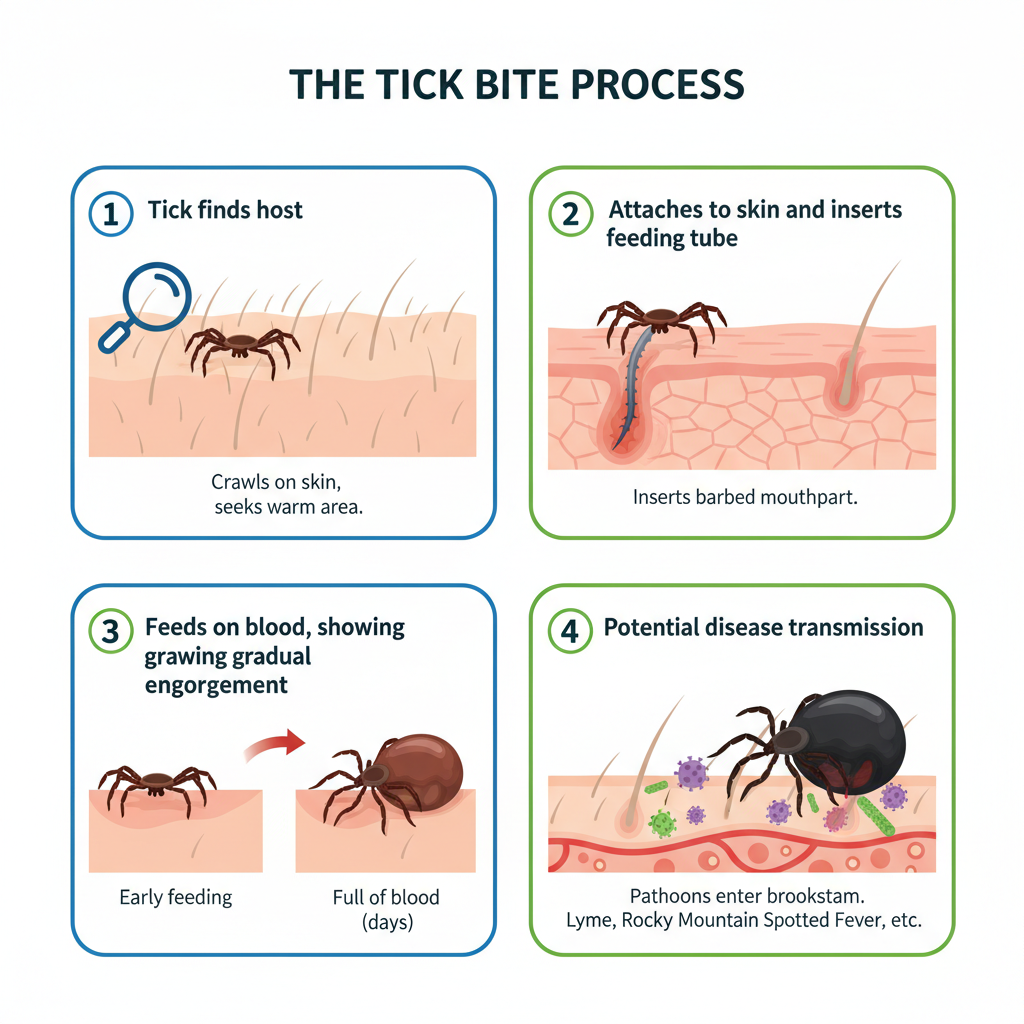
When a tick latches onto your dog, it clings to their skin and burrows its feeding tube right in. Some species even glue themselves on tight with a special cement-like substance.
The tick will then start feasting on your dog’s blood. They can stay attached for hours, even days, depending on the tick type and its stage of life. As the tick feeds, you’ll notice their body swelling up, getting bigger and bigger as they fill with blood.
Most of the time, a tick bite just causes a little annoyance for your pup—maybe some redness or a tiny bump where it latched on. But here’s the catch: some ticks carry nasty diseases they can pass right into your dog’s bloodstream.
Are Dog Tick Bites Dangerous?
Yes, dog tick bites can be dangerous because these tiny pests are notorious for spreading various diseases, things like:
- Lyme disease (carried by Black-legged ticks/Deer ticks)
- Anaplasmosis (carried by Black-legged ticks/Deer ticks and Western Black-legged ticks)
- Ehrlichiosis (carried by Lone Star ticks and Brown Dog ticks)
- Rocky Mountain Spotted Fever (carried by American Dog ticks, Rocky Mountain Wood ticks, and Brown Dog ticks)
- Babesiosis (carried by American Dog ticks, Brown Dog ticks, and Black-legged ticks/Deer ticks)
- Hepatozoonosis (carried by Gulf Coast ticks and Brown Dog ticks)
Not every tick carries disease, and not every bite will make your dog sick. The risk depends on a few things: what kind of tick it is, how long it’s been feasting, and even where you live.
Beyond just diseases, some dogs might have an allergic reaction to a tick bite, leading to swelling, itching, and redness. Even rarer, but serious, is tick paralysis. This happens when a toxin from certain female ticks causes a progressive weakness in your dog’s muscles, which can lead to paralysis.
How Soon After a Tick Bite Can Your Dog Get Sick?
The time it takes for a dog to show symptoms of a tick-borne disease can be all over the map. It might be a few days, several weeks, or even months after the initial bite. Some pups might never even show a single symptom, even if they’re infected.
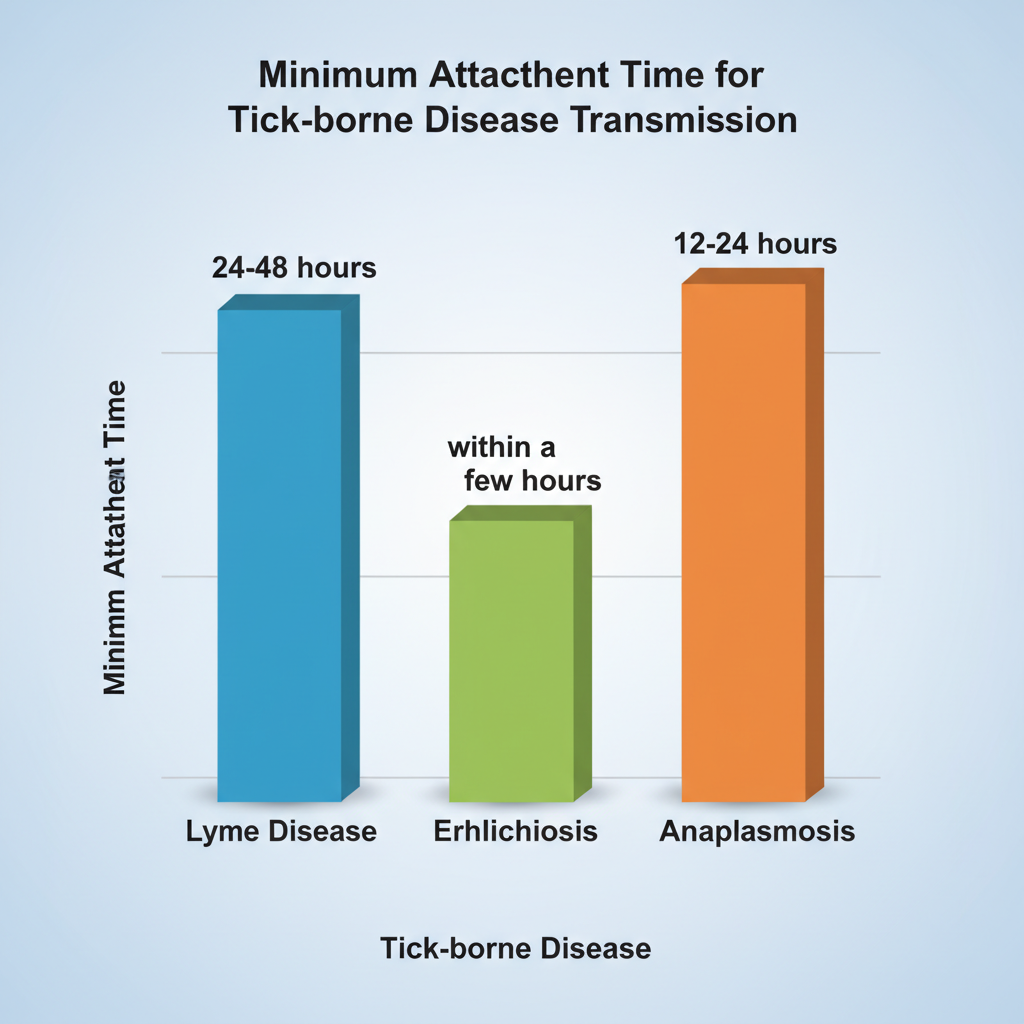
How fast a tick passes on a disease also varies. For instance, Lyme disease usually needs the tick to be attached for at least a full day or two before it can transmit. But other diseases, like certain types of Ehrlichiosis, can get passed on within just a few hours of the tick latching on.
That’s why our team at Petscarelab always stresses how vital it is to get those ticks off fast and then keep a close eye on your dog for any signs of sickness in the weeks and months that follow.
What Symptoms Should You Look For After Dog Tick Bites?
Often, you won’t see any symptoms of a dog tick bite beyond the tick itself. Once the tick falls off or you remove it, though, you might spot:
- A small, red, raised bump at the bite site
- Mild swelling or irritation
- A little crusty spot or a scab where the tick was attached
These little local reactions are usually nothing to worry about and clear up on their own within a few days.
If your dog does pick up a tick-borne disease, the symptoms can vary depending on the illness, but generally include:
- Lethargy, like your pup just can’t get going
- Fever
- Lameness or limping (shifting leg lameness is common with Lyme disease)
- Swollen joints
- Turning their nose up at food
- Weight loss
- Vomiting or diarrhea
- Enlarged lymph nodes
- Neurological signs (in rare cases of tick paralysis or severe disease)
If you spot any of these concerning symptoms, especially knowing your dog has had a tick bite, call your vet right away. Don’t wait.
Found a Tick on Your Dog? Here’s What to Do!
Spotting a tick on your dog can be alarming, but the key is to remove it safely and quickly. Don’t panic!
- First, get your gear ready: You’ll need fine-tipped tweezers or a special tick removal tool, gloves, some antiseptic wipes or rubbing alcohol, and a small jar with rubbing alcohol to drown the tick.
- Protect yourself: Slip on some gloves. You don’t want to touch the tick or any of your dog’s blood.
- Get your dog ready: If you have a calm pup, you might manage it yourself, but it’s often easier if someone can gently hold them still.
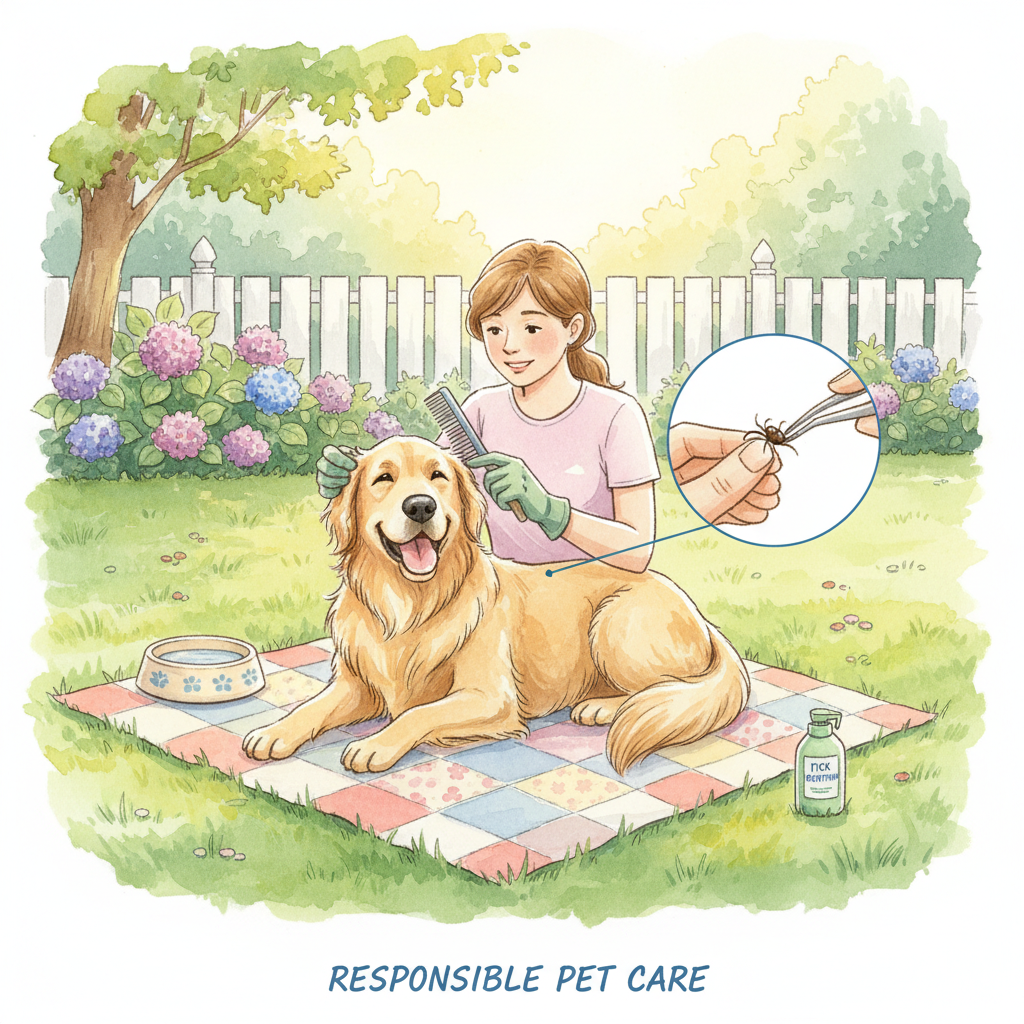
- Grasp the tick: Carefully part your dog’s fur until you can see the tick clearly. Using your tweezers or tool, grab the tick as close to your dog’s skin as you possibly can. Whatever you do, don’t squeeze its body.
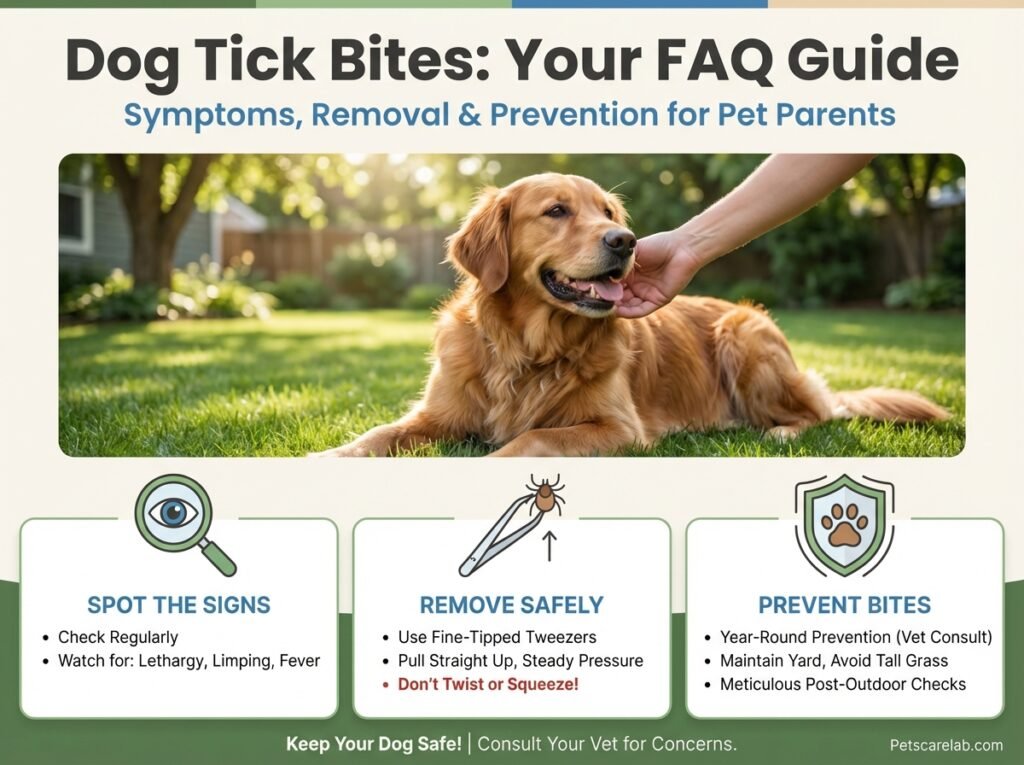
- Pull straight up: With steady, even pressure, pull straight upwards. Resist the urge to twist or yank! Twisting can break off the tick’s mouthparts, leaving them stuck in your dog’s skin.
- Get rid of the tick: Pop the removed tick into that container of rubbing alcohol. This will kill it. If your vet wants to identify it later, you can save it, but otherwise, flush it.
- Clean the bite site: Gently clean the spot where the tick was attached with an antiseptic wipe or some rubbing alcohol.
- Wash your hands: And don’t forget to wash your hands thoroughly with soap and water!
Once the deed is done, keep an eye on that bite spot for any signs of infection — like extra redness, swelling, or pus. Also, pay close attention to your dog for any general symptoms of illness in the coming weeks.
When to Call the Vet After a Dog Tick Bite
It’s wise to reach out to your vet after a dog tick bite if:
- You can’t get the whole tick out: If you’ve tried and the tick’s head or mouthparts are still stuck in your dog’s skin, your vet can remove them safely.
- The bite spot looks infected: If the area gets really red, swollen, painful, or starts oozing pus, it could be infected and needs a vet’s attention.
- Your dog seems sick: If your pup develops any symptoms like tiredness, a fever, limping, won’t eat, or has swollen joints after the bite, see your vet immediately. These could be red flags for a tick-borne disease.
- You’re worried about tick-borne diseases: Your vet can talk to you about testing, prevention, and any treatment needed.
Even if you successfully remove the tick and your dog seems perfectly fine, it’s still smart to tell your vet about the exposure during your dog’s next regular checkup, especially if you live somewhere that’s known for tick-borne diseases. They might suggest annual screening to catch anything early.
How to Prevent Dog Tick Bites
Preventing dog tick bites is hands down the best way to keep your furry friend safe from nasty tick-borne diseases. Here’s our team’s top advice for prevention:
- Use year-round tick prevention: Chat with your vet about the best tick prevention product for your dog. You have options like tasty oral medications, topical treatments you apply to their skin, or special collars. It’s absolutely critical to use these year-round—ticks can be active even when it’s chilly!
- Check your dog meticulously after outdoor adventures: After walks or any time spent outside, especially in wooded or tall grassy areas, give your dog a thorough head-to-paw inspection for ticks. Pay extra attention to sneaky spots like behind their ears, around their neck, in their armpits, between their toes, and near their tail.
- Keep your yard spic and span: Regularly mow your lawn, clear out tall grasses and brush, and rake up leaf litter. This cuts down on places ticks love to hang out right around your home.
- Steer clear of tick hot spots: When you can, avoid walking your dog through tall grass, dense bushes, and heavily wooded areas—these are prime real estate for ticks.
- Vacuum your home often: This helps suck up any ticks that might have hitched a ride indoors on your pup or even on you.
By putting these prevention tips into practice, you can drastically reduce your dog’s chances of getting a tick bite and falling ill from a tick-borne disease.