

Are Retractable Leashes Bad for Your Beloved Pet?
While the convenience of a retractable leash might seem appealing, many conscientious pet owners wonder: are retractable leashes bad? At Petscarelab, our expert team, along with a consensus among veterinary professionals and seasoned dog trainers, strongly advises against their use due to significant safety concerns for both pets and their human companions.
Here’s an in-depth look at why retractable leashes can be bad, exploring the potential dangers and presenting safer, more humane alternatives that prioritize your pet’s well-being and your peace of mind.
What Exactly Is a Retractable Leash?
A retractable leash is a specialized walking device featuring a thin cord, tape, or webbed strap that extends and retracts from a spring-loaded plastic handle. With a simple button mechanism on the handle, pet parents can adjust the leash’s length, locking it in place or allowing it to automatically retract.
These leashes vary considerably in length, often spanning from a mere few feet to an expansive 25 feet or more. They are frequently marketed as a way to grant your dog more freedom to explore while ostensibly keeping them “on leash.”
Why Retractable Leashes Can Be Bad for Your Dog
Yes, the prevailing professional opinion among veterinary experts and skilled dog trainers is that retractable leashes are bad. The perceived convenience they offer often comes at a steep price: compromised safety and the added difficulty they introduce into proper leash training.
Leading animal welfare and veterinary organizations have consistently raised concerns regarding the inherent dangers of retractable leashes. Our team at Petscarelab echoes these sentiments, urging pet owners to fully understand the potential risks before choosing this type of equipment.
Let’s delve into the specific dangers that make retractable leashes a problematic choice for responsible pet care.
Dangers Associated with Retractable Leashes
Retractable leashes harbor several dangers that can lead to unforeseen accidents and injuries. These include:
- Significant injury risks for pet parents
- Serious injury risks for dogs
- Inadvertently encouraging pulling behavior
- Profound lack of control over your dog
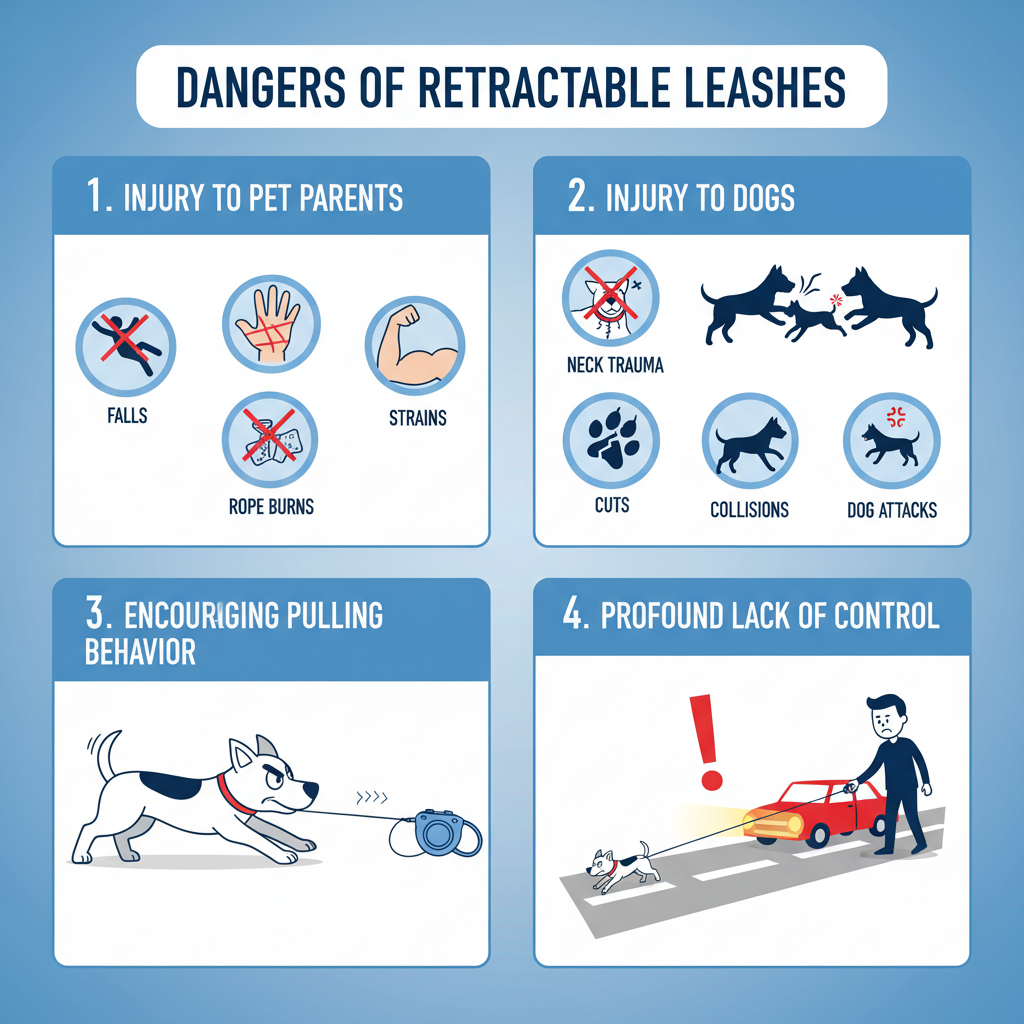
Injury to Pet Parents
Pet parents are frequently at risk of sustaining serious injuries when using retractable leashes. If your dog, particularly a strong or excitable one, suddenly darts or bolts to the end of the leash, the abrupt jerking motion can cause you to:
- Lose your balance and fall violently, resulting in painful sprains, fractures, or even severe head injuries.
- Suffer excruciating rope burns or deep cuts if the thin cord wraps around your fingers, hands, or other body parts with sudden force.
- Experience debilitating strains or sprains in your shoulder, arm, or back due to the unexpected and powerful jolt.
The slender cords characteristic of retractable leashes are exceptionally hazardous. When they become entangled around a person’s leg or arm, the risk of injury skyrockets, especially if your dog pulls with considerable strength.
Injury to Dogs
Our canine companions are equally, if not more, susceptible to injuries when restrained by retractable leashes. Common injuries veterinarians observe include:
- Severe neck or throat trauma from the sudden, sharp jolt when they unexpectedly reach the end of the leash. These injuries can range from mild discomfort and bruising to debilitating tracheal damage, particularly if the dog is wearing a traditional neck collar instead of a harness.
- Painful cuts, abrasions, or rope burns if the leash cord rapidly wraps around their delicate legs, tail, or body.
- Falls or dangerous collisions if they sprint too far ahead and are abruptly stopped at the leash’s maximum extension, especially when moving at high speeds.
- Attacks from other dogs because the extended leash allows them to intrude too closely into another dog’s personal space, potentially escalating conflicts before you can react or intervene effectively.
- Running into hazardous situations like busy traffic or off-limits areas, as the lengthy slack gives them ample opportunity to enter dangerous zones before you can register the threat and take action.
Encouraging Pulling Behavior
One of the less obvious but equally detrimental aspects of retractable leashes is their tendency to inadvertently encourage dogs to pull. Unlike a standard, fixed-length leash that provides immediate and consistent feedback when a dog strains against it, a retractable leash often maintains a continuous, subtle tension on the line. This constant tautness mimics the sensation of pulling without negative consequences for the dog.
This consistent tension effectively teaches dogs that pulling is not only acceptable but often necessary to achieve greater distance or explore further. Consequently, it can significantly hinder and complicate efforts to teach your dog proper leash manners and how to walk politely at your side.
Profound Lack of Control
With a retractable leash, pet owners inherently sacrifice a critical degree of control over their dog compared to using a standard, fixed-length leash. When your dog is 15 or 20 feet away from you, it becomes profoundly more challenging to:
- Recall them swiftly and effectively from a potentially dangerous situation.
- Prevent them from inappropriately approaching other dogs or people, thus avoiding potential conflicts or discomfort.
- Steer them away from irresistible distractions such as discarded food, hazardous debris on the ground, or other tempting, yet unsafe, objects.
The extended distance afforded by these leashes makes it exceedingly difficult to deliver gentle corrections, offer subtle guidance, or provide the immediate supervision essential for responsible dog ownership and successful training.
Safer Alternatives to Retractable Leashes
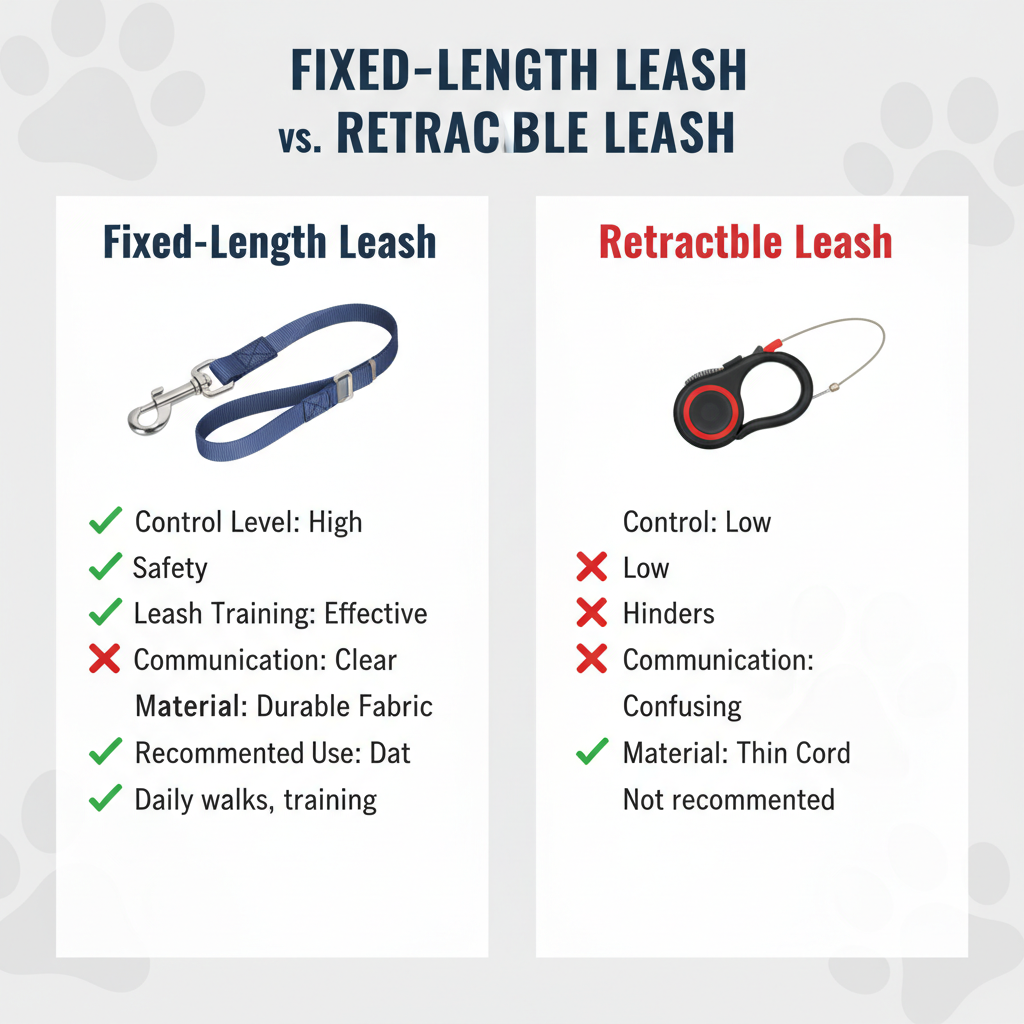
The most reliable and safest alternative to a retractable leash is undoubtedly a standard fixed-length leash. These dependable leashes are typically between 4 to 6 feet long and are crafted from robust, durable materials such as high-quality nylon, supple leather, or resilient biothane.
Here’s precisely why they are a superior choice:
- Enhanced Control: A shorter, fixed leash keeps your dog comfortably close, enabling rapid reactions and providing superior guidance across a multitude of environments and situations.
- Consistent Communication: Fixed leashes offer clear and consistent feedback to your dog, making the process of teaching them not to pull and to walk politely right by your side significantly easier and more effective.
- Significantly Reduced Risk of Injury: For both you and your cherished canine companion, a fixed leash drastically lowers the likelihood of rope burns, dangerous falls, and numerous other preventable accidents.
For those unique situations where you wish to grant your dog more room to explore within a secure, open, and controlled environment, consider utilizing a long line or training leash. These specialized leashes typically range from 15 to 30 feet in length. Crucially, they differ from retractable leashes because they are manually unspooled, requiring your active management of the slack. They are best used in specific, supervised training scenarios where safety can be meticulously maintained.
Choosing the Right Collar or Harness to Avoid Retractable Leashes’ Bad Side Effects
Regardless of the type of leash you ultimately select, it is paramount to pair it with the appropriate collar or harness for your dog’s safety and comfort.
For the vast majority of dogs, a well-fitting harness represents a far safer and more comfortable option than a traditional neck collar, especially when using any type of leash. Harnesses thoughtfully distribute pressure across your dog’s sturdy chest and shoulders, rather than concentrating it solely on their sensitive neck. This design significantly reduces the risk of tracheal damage, strain, and overall discomfort.
When using a standard leash:
- Front-clip harnesses can be remarkably effective for dogs who tend to pull, as their design gently redirects the dog’s forward momentum back towards you, encouraging them to walk more calmly.
- Back-clip harnesses are an excellent and comfortable choice for dogs who typically do not pull and walk politely by your side.
When using a long line for training in controlled environments:
- Always, without exception, use a harness and never a neck collar. This critical choice prevents severe neck injuries should your dog suddenly reach the end of the line at a high speed.
Essential Tips for Effective Leash Training
Proper leash training is fundamental to ensuring your dog walks safely, politely, and joyfully on any leash.
- Start Young: Initiate leash training during your dog’s puppyhood to ingrain positive habits and expectations from an early age.
- Embrace Positive Reinforcement: Utilize highly motivating treats, enthusiastic praise, and favorite toys to reward your dog for walking calmly and politely by your side, without pulling.
- Practice Consistency: Engage in regular, consistent practice sessions in diverse environments to reinforce desirable leash manners and generalize good behavior.
- Keep Sessions Short and Engaging: Maintain your dog’s interest and focus by keeping training sessions brief, fun, and positive.
When to Consult Your Veterinarian
If your dog has unfortunately sustained any injury while using a retractable leash, or if you are experiencing persistent challenges with leash training, please do not hesitate to consult your veterinarian. They can thoroughly assess any injuries, recommend appropriate medical treatment, and offer invaluable advice on effective training techniques or provide a referral to a certified professional dog trainer.
Frequently Asked Questions
What are the primary disadvantages of retractable leashes?
The main disadvantages of retractable leashes include a heightened risk of injury to both pets and their owners, the tendency to foster and encourage undesirable pulling behavior, and a significant reduction in your control over your dog in various situations.
Why are retractable leashes bad for puppies?
Retractable leashes are bad for puppies because their delicate necks are exceptionally vulnerable to serious injury from sudden, jarring movements. Furthermore, these leashes can unfortunately instill poor leash manners and habits from an impressionable age, and they make it considerably more difficult to maintain a close, watchful eye on curious puppies exploring new environments.
Is a 16-foot retractable leash considered too long?
Yes, a 16-foot retractable leash is generally considered far too long for safe and responsible dog walking. This excessive length provides too much slack, making it exceptionally challenging to maintain adequate control over your dog and significantly increasing the risk of accidents and injuries. Most veterinary and training professionals at Petscarelab recommend fixed-length leashes no longer than 6 feet for everyday walks.
Is a 26-foot retractable leash unsuitable and dangerous?
Absolutely, a 26-foot retractable leash is unequivocally far too long for safe and effective dog walking. This extreme length dramatically amplifies the risk of injuries to both the dog and the handler, actively encourages pulling, and severely compromises your ability to maintain control over your dog in virtually any environment or situation.