
What Is Benadryl?
Benadryl (chemically known as Diphenhydramine) functions as an antihistamine, meticulously designed to prevent H-1 receptors in the body from reacting to histamine, which is often released during allergic responses. Beyond its antihistaminic properties, it can also alleviate nausea and vomiting by gently inhibiting the chemoreceptor trigger zone (the brain’s vomiting center) and moderating the vestibular apparatus’s (the ear’s balance center) response to motion.
Veterinary professionals most frequently suggest that pet parents use Benadryl for their dogs to prevent or treat mild allergic reactions and to significantly reduce the nausea and vomiting associated with motion sickness or vestibular disease.

Can Benadryl Be Used for Dog Allergies?
Administered orally, Benadryl for dogs can provide relief from mild allergic symptoms triggered by common environmental factors such as pollen, mold, and house mites. Its efficacy is often enhanced when used as part of a broader, multi-faceted allergy treatment plan recommended by your vet.
Benadryl is also suitable for addressing mild allergic reactions resulting from insect bites or stings. In certain contexts, oral or injectable Benadryl can even serve as a pre-treatment to mitigate mild allergic reactions to vaccines.
However, if your beloved pet is experiencing an acute allergic reaction—manifesting as rapid facial swelling or, critically, difficulty breathing—do not hesitate. Seek immediate veterinary attention, transporting them directly to an emergency clinic. Severe allergic reactions can escalate rapidly and become life-threatening for dogs. Such severe cases often necessitate aggressive supportive care and comprehensive treatment involving steroids and epinephrine, in addition to Benadryl.
Can Dogs Take Benadryl for Anxiety?
You may have heard anecdotal accounts suggesting that Benadryl can soothe dogs suffering from travel anxiety or fear of loud noises like fireworks and thunderstorms. However, based on veterinary insights, its effectiveness for true anxiety management is generally quite limited. While Benadryl might induce a degree of sleepiness and make some dogs less responsive, it does not genuinely address the underlying root causes or complex mechanisms of their anxiety.
If your dog is exhibiting signs of anxiety, the most compassionate and effective approach is to consult with your veterinarian to establish a tailored course of treatment. This might involve thoughtful adjustments to your dog’s environment, specialized behavioral training, prescription medications designed for canine anxiety, or the strategic use of calming tools such as anxiety vests and pet-specific calming diffusers.
Benadryl does offer some effectiveness in preventing motion sickness in dogs. Therefore, if your dog’s anxiety during car rides stems primarily from nausea, it could provide some relief in that specific context.
It’s also worth noting that a minority of dogs and cats can exhibit a paradoxical reaction to Benadryl, experiencing heightened hyperactivity rather than the intended sedative effect.
Should your dog suffer from motion sickness, a conversation with your veterinarian about prescription medications like Cerenia, specifically formulated for motion sickness, would be highly beneficial. Additionally, considering the use of a secure dog travel crate in the car can sometimes aid in mitigating motion sickness.
Is Benadryl Safe for Dogs?
Generally, Benadryl is remarkably well-tolerated by most dogs, presenting few side effects and a reassuringly low risk of overdose when administered correctly and under veterinary guidance.
The crucial reason to always consult your veterinarian, even for a seemingly innocuous over-the-counter medication, is the potential for safety risks if your dog has certain pre-existing health conditions or is currently taking specific other medications.
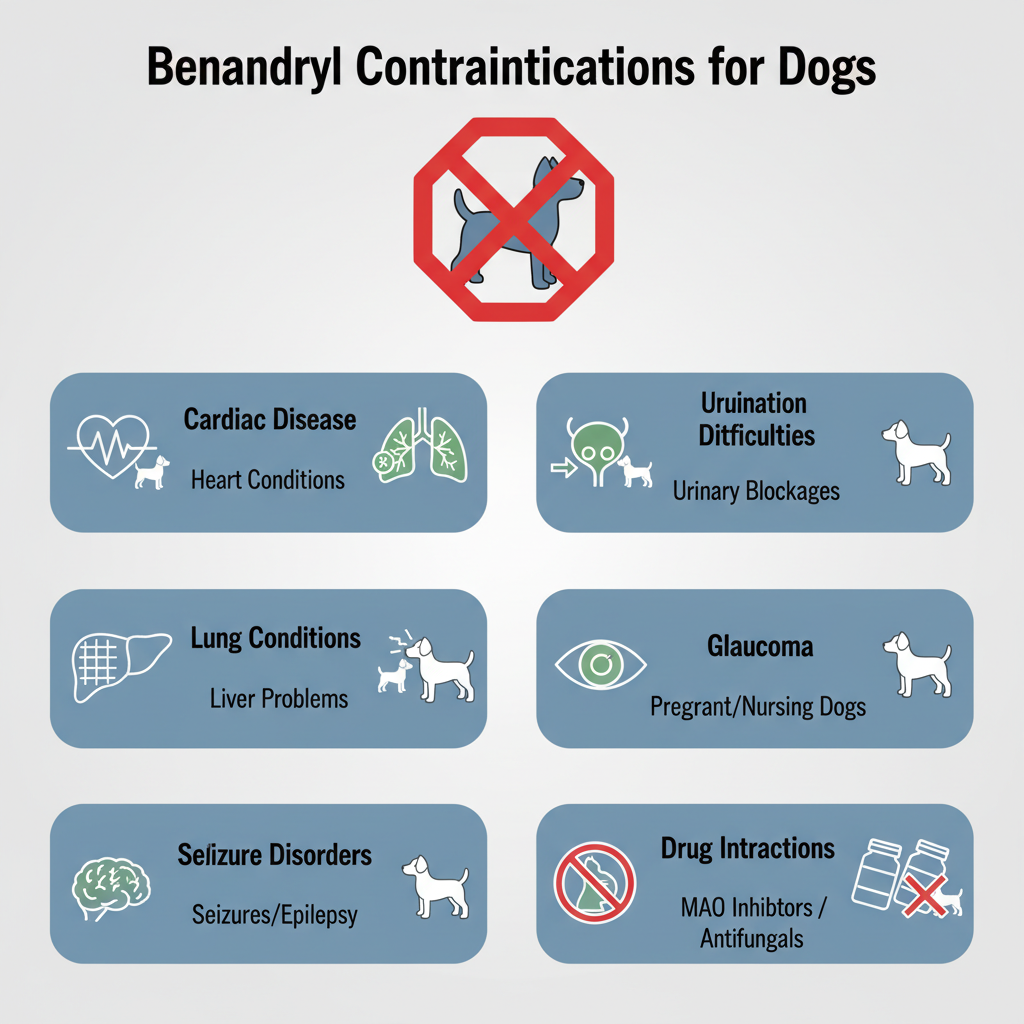
Instances where Benadryl should be avoided or administered with extreme caution include:
- Cardiac conditions (cardiovascular disease)
- Certain types of lung conditions
- Liver disease
- Seizure disorders
- Difficulties with urination
- Glaucoma
- Pregnancy
- In conjunction with specific medications, such as monoamine oxidase inhibitors and some drugs used to treat fungal infections
Side Effects of Benadryl for Dogs
When given at appropriate, normal doses, the most common side effects observed in dogs after taking Benadryl are mild drowsiness and a slight unsteadiness on their feet. However, if a dog receives an excessive Benadryl for dogs dosage, they might exhibit more severe or concerning symptoms, including:
- More pronounced sedation or, conversely, significant agitation
- Severe unsteadiness and loss of coordination
- Disorientation or confusion
- Aggression or other unusual behavioral changes
- Slowed or labored breathing
- Vomiting
- Diarrhea
- Coma
- Seizures
If your dog displays any worrisome or unusual symptoms after taking Benadryl, contact your veterinarian immediately for urgent advice and guidance.
What’s the Benadryl for Dogs Dosage?
With any medication intended for your cherished companion, the absolute safest and most responsible way to ascertain the proper Benadryl for dogs dosage is to consult directly with your veterinarian. They possess the expertise to provide tailored recommendations based on your dog’s unique health profile.
Furthermore, it is critically important to verify the product’s active ingredients, as many over-the-counter formulations combine diphenhydramine with other potentially dangerous medications, such as acetaminophen (Tylenol). Ensure that your chosen Benadryl tablets contain only diphenhydramine as the sole active ingredient.
According to guidelines from the Merck Veterinary Manual, a respected veterinary resource, the standard recommended Benadryl for dogs dosage is typically between 2 and 4 milligrams per kilogram of body weight, or approximately 0.9 to 1.8 milligrams (mg) of Benadryl per pound.
Therefore, a practical and widely accepted starting point for Benadryl for dogs dosage is 1 mg of Benadryl per pound of your dog’s body weight, which can be administered two to three times a day. For example, a 10-pound dog might receive a 10 mg dose in the morning, another in the afternoon, and a final dose in the evening.
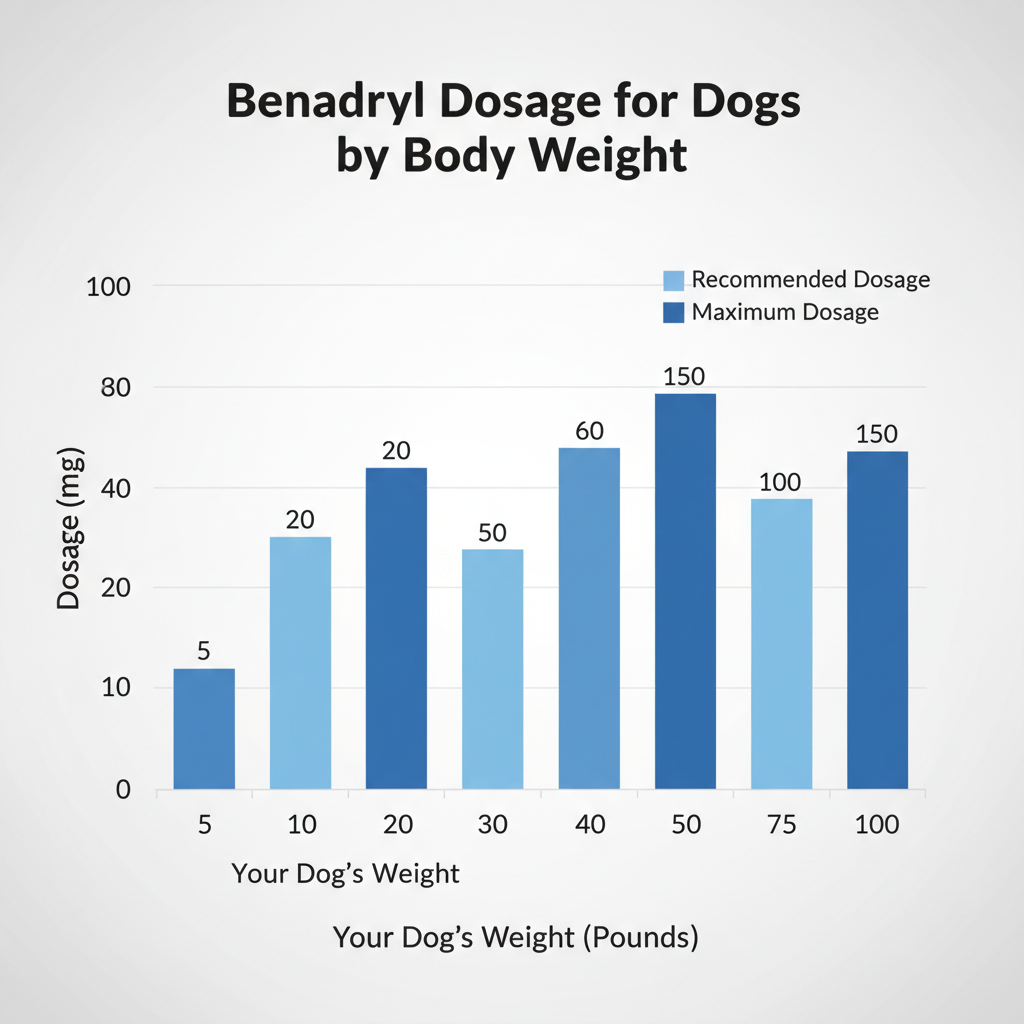
It’s also important to remember that Benadryl comes in various forms, including tablets, capsules, liquids, and children’s chewable tablets. These different concentrations and formats can make it challenging to accurately calculate the precise Benadryl for dogs dosage. When faced with any doubt, always, always consult your trusted veterinarian!
Benadryl Tablets and Capsules
Benadryl tablets are commonly available in strengths containing either 25 mg or 50 mg of diphenhydramine. A 25 mg tablet would be an appropriate single dose for a roughly 25-pound dog, while a 50 mg tablet suits a 50-pound dog. For larger dogs, you might need to administer more than one tablet or capsule to achieve the correct cumulative dose.
For finer tuning of your dog’s dose, 25 mg tablets can be safely split in half. For instance, a dog weighing 60 pounds could receive one 50 mg tablet and half of a 25 mg tablet. If your dog is reluctant to take a Benadryl tablet, consider encasing it in a delicious, pet-safe treat, such as a pill pocket, to encourage easy ingestion.
Children’s Chewable or Liquid Benadryl for Dogs
Children’s chewable tablets or liquid Benadryl can be excellent options, particularly for our tiniest canine companions. A full children’s chewable tablet typically contains 12.5 mg of diphenhydramine and can be halved for dogs weighing less than 10 pounds. Children’s liquid Benadryl, containing a concentration of 2.5 mg/ml, may prove easier to administer to small dogs who are resistant to taking pills, allowing for more precise measurement of their Benadryl for dogs dosage.
How Often Can You Give Your Dog Benadryl?
Generally, dogs can be given Benadryl every eight to 12 hours, which translates to two to three times per day, as advised by your veterinary professional.
Are there Alternatives to Giving a Dog Benadryl?
Diphenhydramine has been a staple for many years, but ongoing advancements in veterinary research have led to the development of numerous treatments that may offer greater efficacy and more targeted relief than Benadryl.
- For managing a dog’s allergies, a comprehensive, multi-modal approach is often most effective. This may involve combining various treatment types simultaneously, such as medicated shampoos, specialized dog supplements, and prescription medications tailored to the specific type and severity of the allergy.
- When addressing canine anxiety, prescription anti-anxiety medications for dogs, integrated with a professionally guided behavioral modification program, consistently deliver far superior results compared to Benadryl.
- Common anti-anxiety medications frequently prescribed by veterinarians for dogs with anxiety include Clomicalm, Reconcile, or Sileo. Your trusted veterinary team can meticulously assess your dog’s health and specific anxiety profile to determine the most suitable and effective anxiety medication for them.
If you have any further questions regarding the appropriate use of Benadryl for your dog, or wish to explore other effective strategies to maintain your cherished pet’s optimal health and happiness, our team at Petscarelab strongly encourages you to engage in an open and thorough discussion with your veterinarian.