





BugMD Pet Safe Flea Spray for Cats & Home Review
Petscarelab’s Verdict: This plant-powered, essential-oil contact killer delivers fast knockdown of adult pests with zero synthetic pesticides, requiring frequent reapplication but offering excellent safety for multi-pet households when used as a daily targeted treatment.
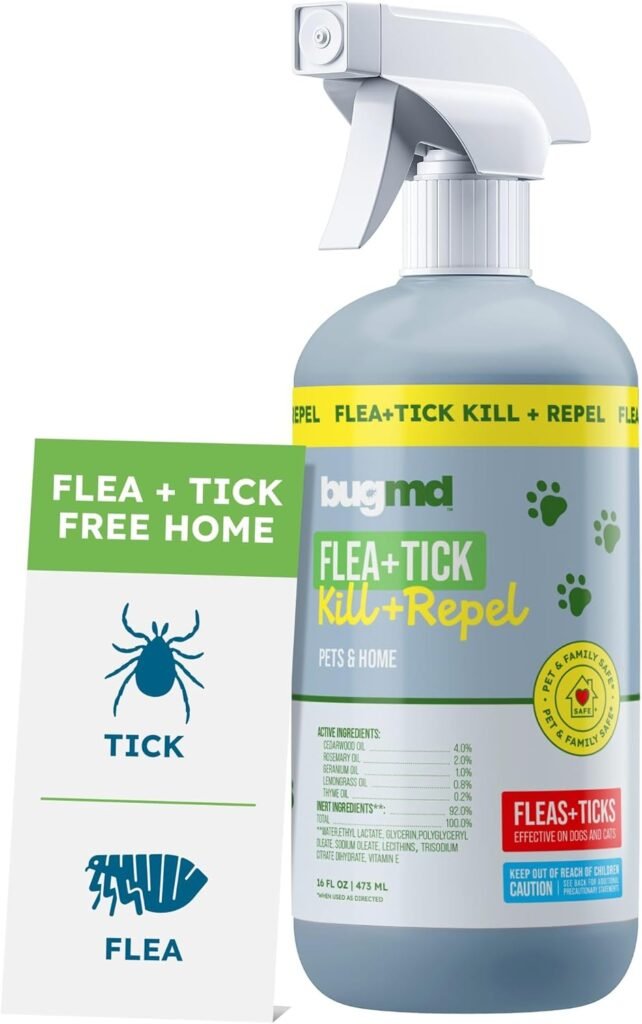
When dealing with a frustrating pest problem, our team at Petscarelab always looks for formulas that balance fast action with household safety. We recently tested the BugMD Pet Safe Flea Spray to see how it handles an active infestation. Because it relies entirely on plant extracts instead of harsh synthetics, you get a completely different experience compared to traditional chemical treatments.
Active Ingredients & Efficacy: How the Plant-Powered Formula Works
Unlike heavy-duty sprays that use synthetic Insect Growth Regulators (IGRs) like Pyriproxyfen to stop the egg-larvae cycle, BugMD relies on a potent botanical blend. Traditional treatments often contain permethrin—which is highly toxic to cats—but this formula skips those chemicals entirely.
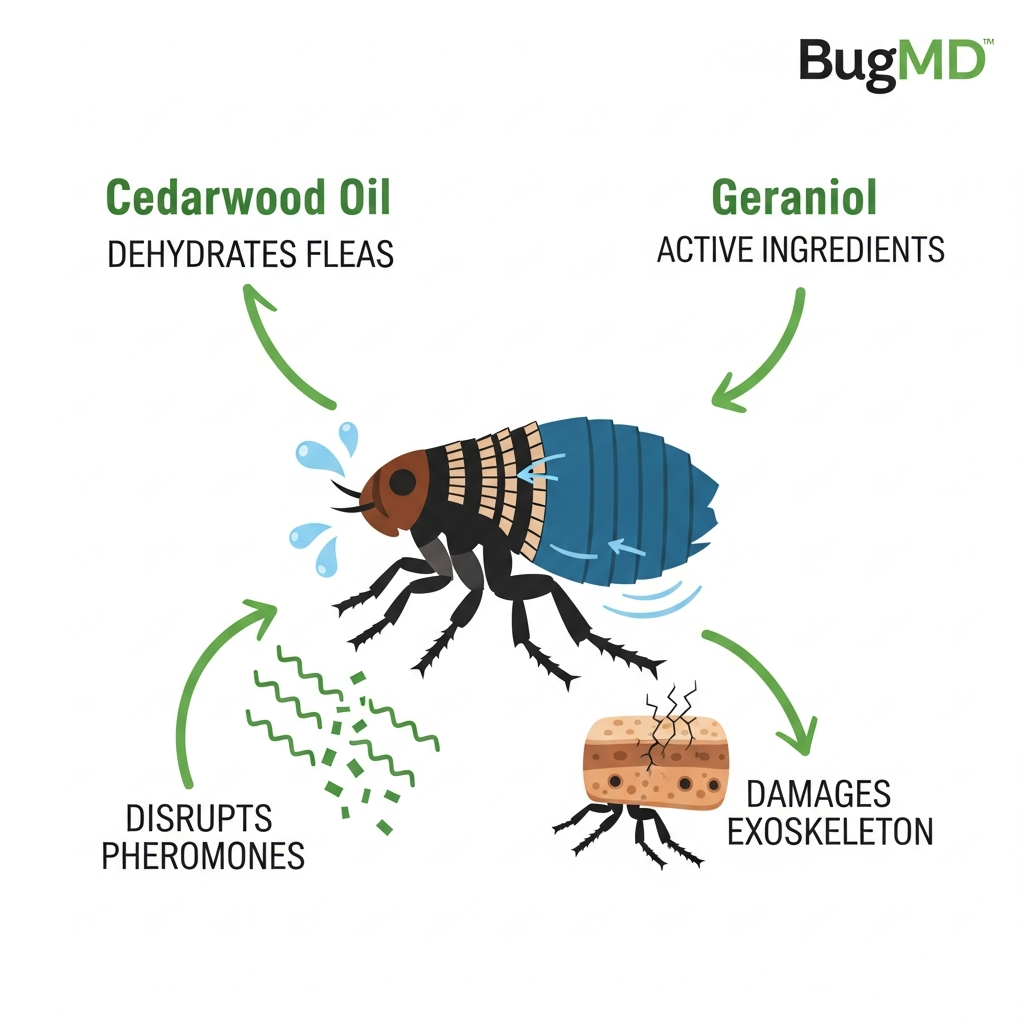
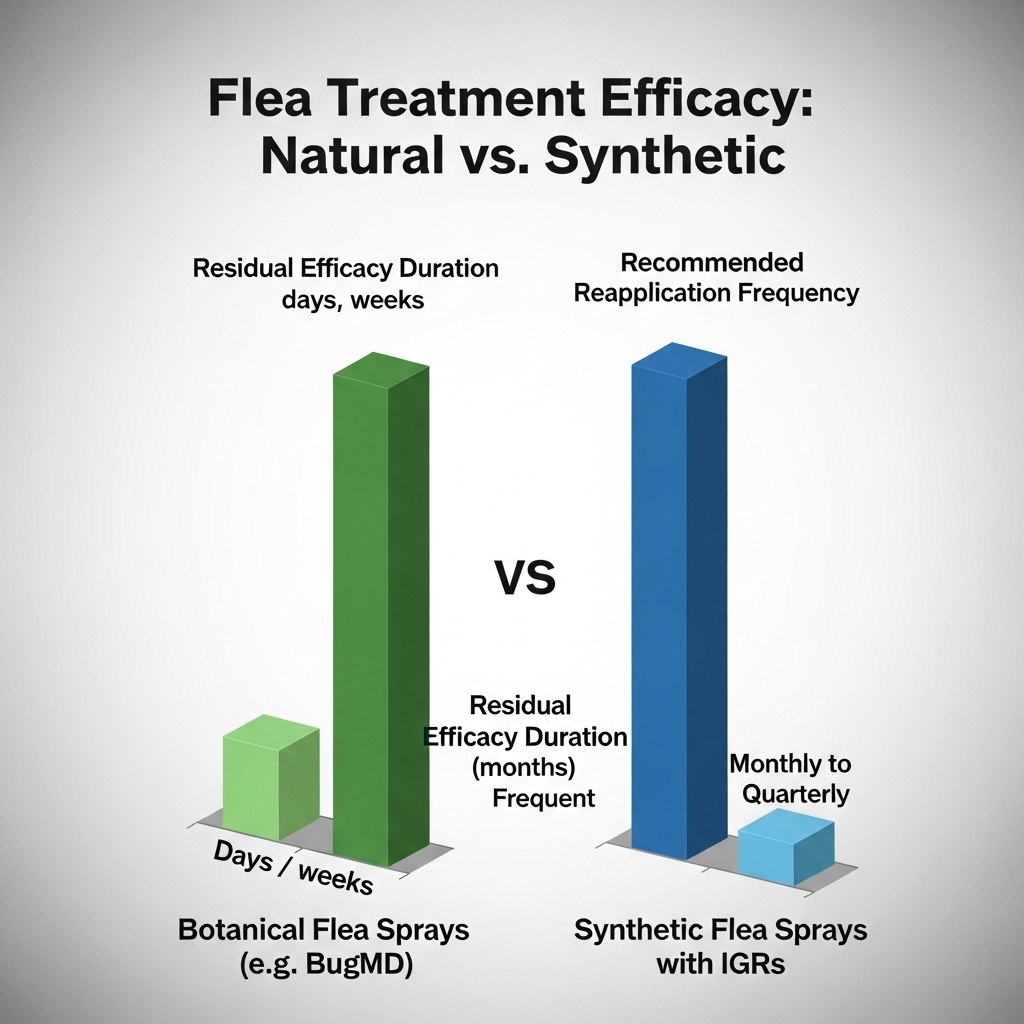
I noticed right away that the active lineup includes Cedarwood Oil (4.0%), Geraniol (1.0%), and Lemongrass Oil (0.8%). How does this actually kill bugs? Cedarwood oil naturally leaches moisture from fleas and ticks, effectively dehydrating them on contact while confusing their pheromone receptors. Meanwhile, Geraniol physically attacks the insect’s exoskeleton. Because it lacks a synthetic IGR, you won’t get a months-long residual effect. You need to apply it more frequently to kill newly hatched pests before they lay eggs, breaking the life cycle through sheer persistence rather than lingering toxins.
Application & Safety Protocols
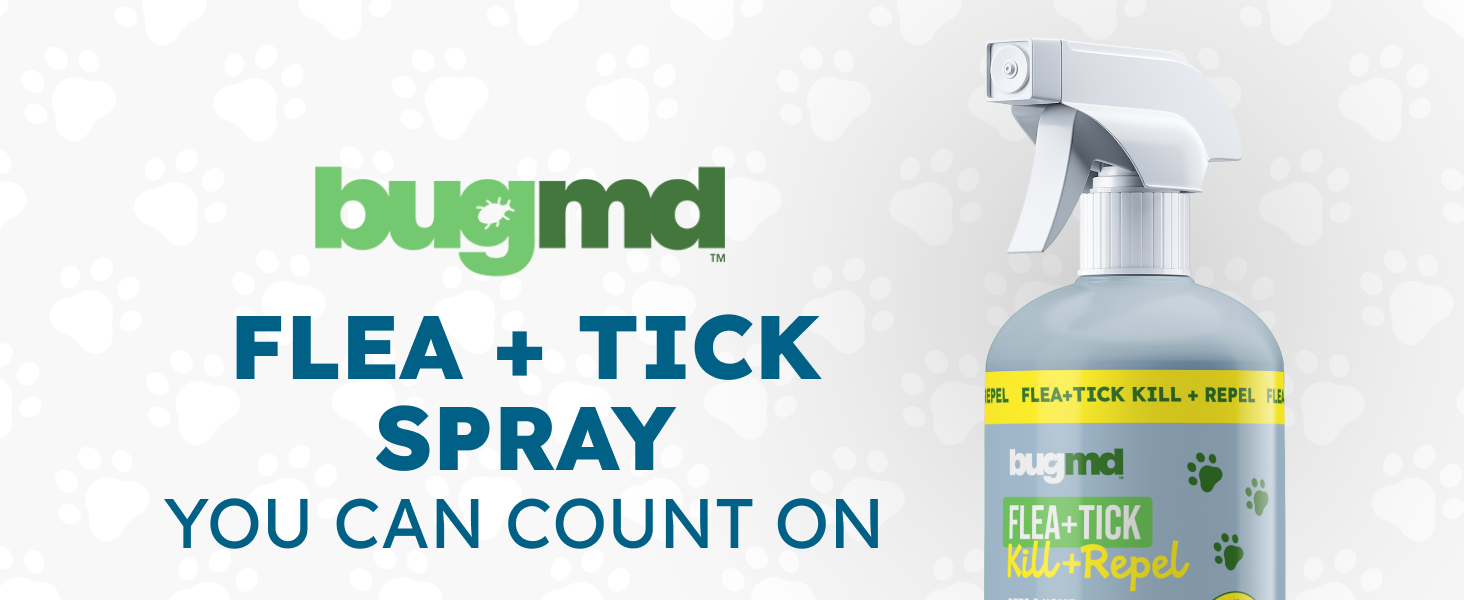
BugMD ships this in a ready-to-use 16-ounce bottle, so you skip the messy mixing phase entirely. The trigger features a highly adaptable nozzle. I found it incredibly easy to twist it to a fine mist when applying it directly to a cat’s coat, then quickly switch it to a targeted stream to hit the deep crevices of a cat tree or along baseboards where flea dirt hides.
When applying this to your cat, remember that they groom themselves constantly. Mist the product lightly and massage it into their coat, keeping it far away from their eyes, nose, and mouth. Essential oils carry a potent scent, so open your windows. Make sure your room has plenty of ventilation while the spray settles. I always recommend letting the treated carpet or bedding dry completely before letting your pets or kids roll around on the floor.
Targeted Sprays vs. Room Foggers
Real-World Considerations
Let’s talk about the scent. The fresh lemongrass and cedarwood aroma acts as a natural deodorizer for litter box areas, which smells great to most of us. However, cats possess incredibly sensitive noses. I noticed some cats bolt at the first spritz because the citrusy aroma comes across as quite strong. You might need to spray a cloth first and gently wipe down a skittish kitty instead of spraying them directly.
While BugMD formulates this to be safe for home surfaces, always patch-test an unseen corner of your furniture or carpet first to ensure the oils do not cause staining. Finally, do not expect the spray to do all the heavy lifting alone. You still need to run your vacuum daily. Vacuuming pulls hidden eggs to the surface, agitates the carpet fibers, and sucks up the dead adults immediately after the spray does its job.
Final Verdict
★★★★★
Who it’s for:
- Households fighting active indoor infestations on pet bedding, cat trees, and rugs.
- Owners who prefer plant-based, essential oil formulas over synthetic pesticides.
- Multi-pet homes looking for a safe contact killer that doubles as a room deodorizer.
Who it’s NOT for:
- Owners who are highly sensitive to strong botanical or citrus scents.
- Homes with open fish tanks (essential oil drift can harm aquatic life).
- Skittish cats who absolutely hate spray bottles and intensely over-groom anything applied to their fur.