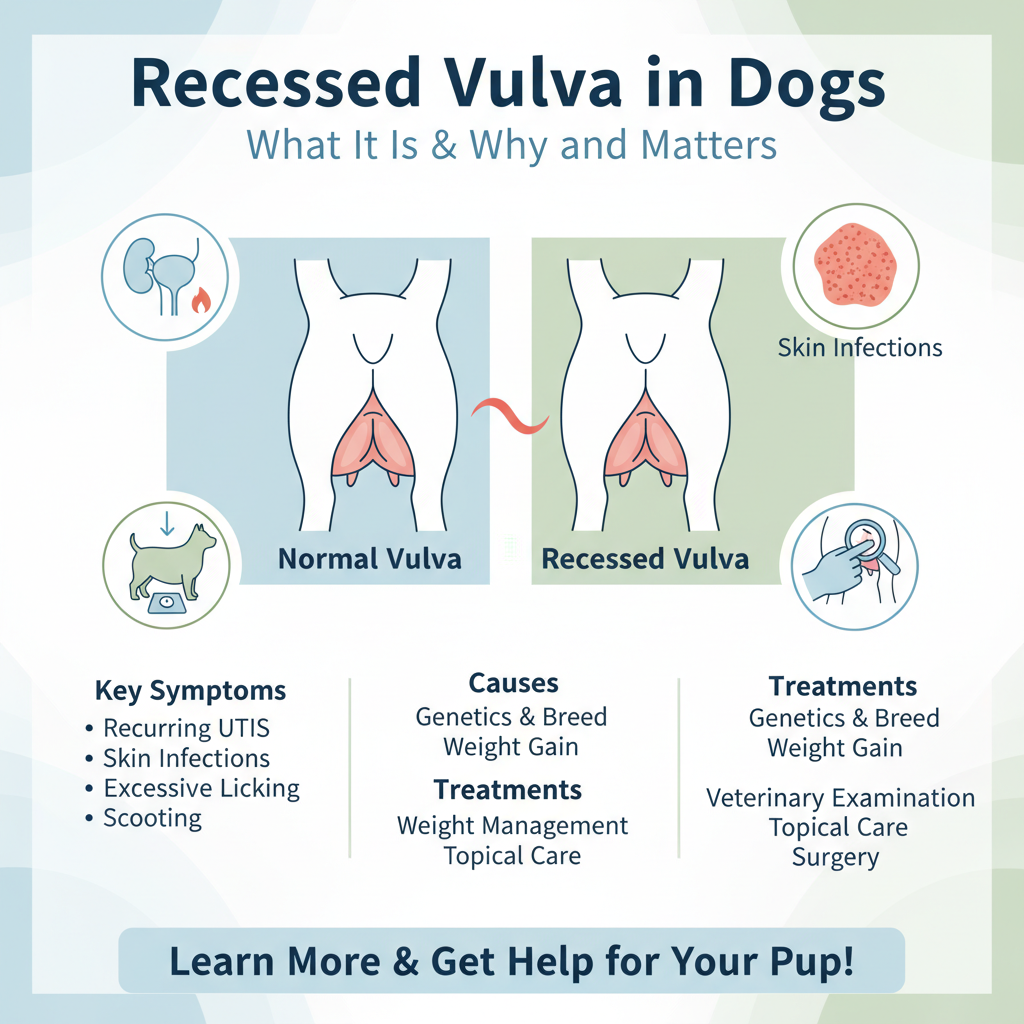
Recessed Vulva in Dogs: What It Is and How to Help Your Pup
When you think about your dog’s health, a recessed vulva in dogs might not be the first thing that comes to mind. But for many dog parents, this anatomical quirk can lead to some uncomfortable problems for their furry friends. Often called a “hooded vulva,” this is when your dog’s vulva is partially tucked inside surrounding skin folds.
While a mildly recessed vulva might not cause any trouble, many dogs end up battling chronic skin infections, urinary tract infections (UTIs), and general discomfort. It’s often spotted in young female pups, sometimes even before their first heat or during a spay appointment.
What Exactly Is a Recessed Vulva?
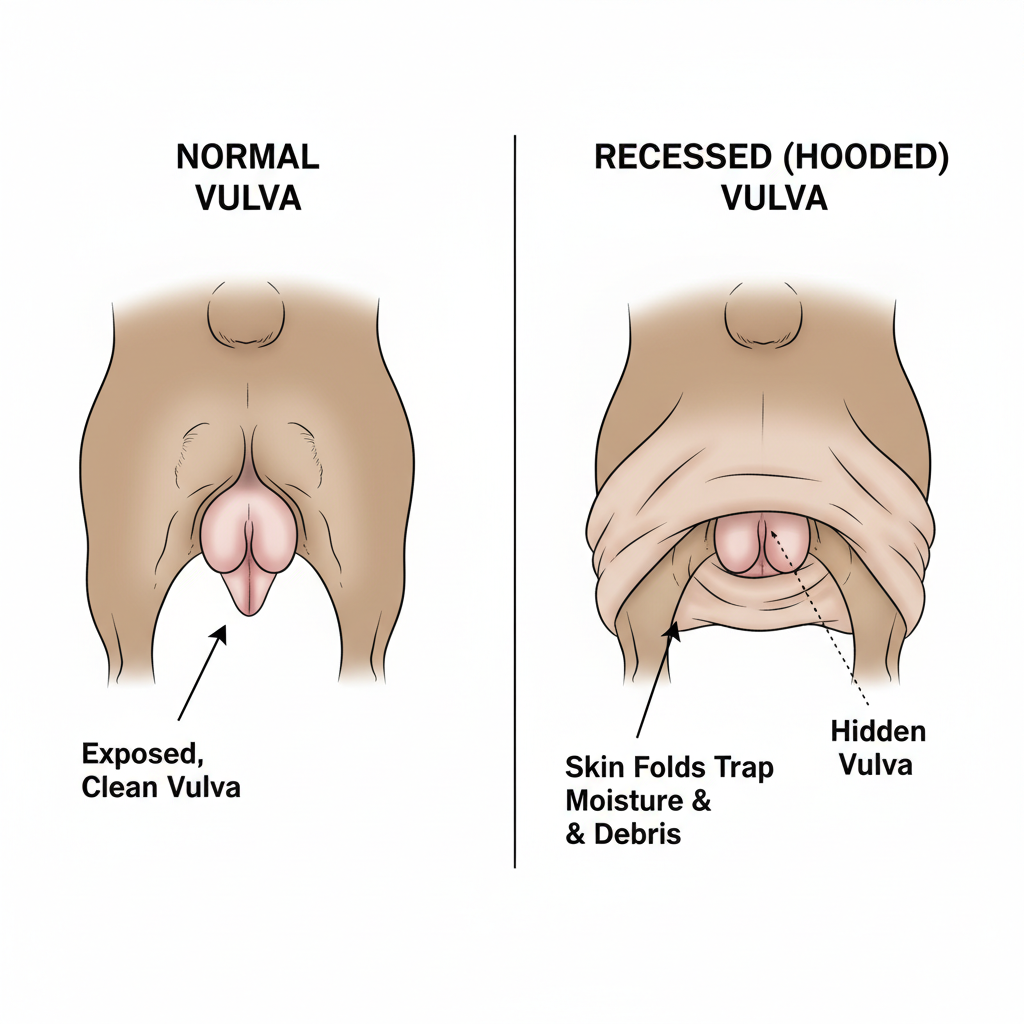
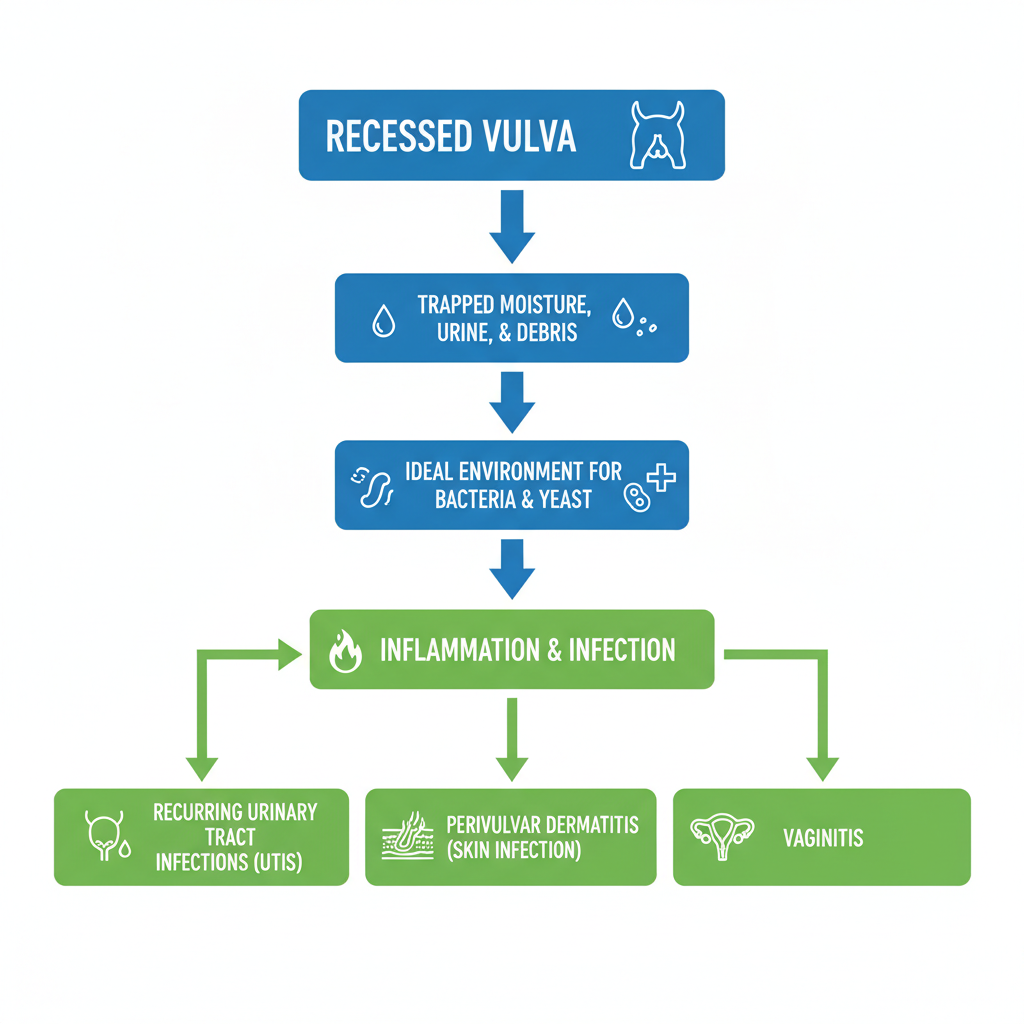
A recessed vulva simply means the vulva isn’t fully visible. Instead, it’s partially covered by the skin around it. This creates a cozy, warm, and moist little pocket perfect for trapping pee, dirt, and bacteria. And that’s usually where the health issues begin.
The severity really varies. Some dogs might just have a slightly tucked vulva, while others have it deeply hidden within multiple layers of skin.
We see this condition a lot in dogs who are overweight or obese because those extra pounds often mean more skin folds around the vulva. But even dogs at a healthy weight can have a recessed vulva, often due to their genes or their breed’s natural body shape.
Why Do Some Dogs Get a Recessed Vulva?
Most of the time, a recessed vulva is something a dog is born with—a congenital anatomical difference. However, several things can make it worse or more noticeable:
- Genes and Breed: Some dog breeds are just more prone to having a recessed vulva, especially those with stocky builds, wider hindquarters, or a tendency to gain weight. Some common breeds include:
- Labrador Retrievers
- Golden Retrievers
- French and English Bulldogs
- Pugs
- Boxers
- Cocker Spaniels
- Mastiffs
- Weight Gain: Extra fat around your dog’s rear end can create or deepen skin folds, effectively “hiding” the vulva. Helping your dog maintain a healthy weight is super important if they’re prone to this condition.
- Being Young: In some young, pre-pubescent female dogs, the vulva might not be fully developed yet. As they get closer to their first heat cycle and mature, hormonal shifts can make the vulva more prominent. But in some cases, that “juvenile” appearance sticks around.
- Injury: Though less common, any trauma to the area around the vulva that causes scarring or swelling could potentially change the anatomy and make the vulva appear recessed.
Signs Your Dog Might Have a Recessed Vulva
The symptoms of a recessed vulva can differ quite a bit, depending on how severe it is and whether your dog has any secondary infections. Here’s what to watch out for:
- Recurring Urinary Tract Infections (UTIs): This is one of the most frequent clues. That tucked-away vulva can trap urine and bacteria, which then climb up into the urinary tract. Signs of a UTI include:
- Peeing more often than usual
- Straining when they pee
- Having accidents inside the house
- Seeing blood in their urine
- Licking their vulvar area a lot
- Pee that looks cloudy or smells really strong
- Skin Infections (Perivulvar Dermatitis): The warm, damp environment within those skin folds is prime real estate for bacteria and yeast to grow, leading to inflamed, infected skin. Look for:
- Redness and irritation around the vulva
- Little pustules or pimple-like bumps
- A foul smell coming from the vulvar area
- Constant itching or licking of the vulva
- Hair loss or stained fur around the vulva from all the licking
- Pain or discomfort when you touch the area
- Vaginitis: Chronic irritation and infection from a recessed vulva can sometimes cause inflammation of the vagina. You might notice some vaginal discharge or your dog acting uncomfortable.
- Scooting: Your dog might drag their bottom along the ground to try and relieve the itching or irritation.
- Trouble Breeding (for unspayed females): In very severe cases, a recessed vulva can physically block natural breeding attempts. This is pretty rare and only applies to dogs who aren’t spayed.
How Vets Diagnose a Recessed Vulva
Diagnosing a recessed vulva usually starts with a good old-fashioned physical exam by your vet.
During the exam, your vet will:
- Visually Inspect the Vulva: They’ll take a close look at how the vulva appears and sits, noticing if it’s tucked into skin folds. They’ll also check how much it’s recessed and if there’s any extra skin or fat around it.
- Check for Signs of Infection: Your vet will search for redness, swelling, discharge, pustules, or a bad smell around the vulva – all signs of skin inflammation or infection.
- Gently Feel the Area: By gently feeling the skin folds and surrounding tissue, they can figure out how severe the recession is and how much fat or skin is involved.
- Chat About Your Dog’s History: Your vet will ask you about your dog’s symptoms, like frequent UTIs, excessive licking, scooting, or any changes you’ve noticed around the vulva. They’ll also ask about your dog’s weight and overall health.
If your vet suspects an infection, they might run a few more tests:
- Urine Culture and Sensitivity: If UTIs are on the table, a sterile urine sample (usually collected by a quick poke with a needle, called a cystocentesis) goes to a lab. This helps identify the exact bacteria causing the infection and tells the vet which antibiotics will work best.
- Skin Cytology: Your vet might take a swab or use a slide to gently press on the skin around the vulva. They’ll then look at it under a microscope to spot any bacteria, yeast, or inflammatory cells causing skin issues.
- Blood Work: In rare cases, if a broader health issue might be affecting your dog’s skin, blood work could be recommended.
Treating a Recessed Vulva in Dogs
Treatment for a recessed vulva depends on how serious the condition is and if your dog has developed any secondary problems.
- Conservative Care: For mild cases or young dogs, vets often start with less invasive options:
- Weight Management: If your dog is carrying extra weight, shedding those pounds is a game-changer. Reducing fat deposits can significantly lessen the skin folds around the vulva, often making the problem disappear.
- Topical Treatments: Regularly cleaning the vulvar folds with medicated wipes or gentle cleansing solutions your vet prescribes can help keep bacteria and yeast from growing. Our team often suggests antiseptic wipes with chlorhexidine.
- Medications: If your dog has bacterial or yeast infections (skin issues or UTIs), your vet will prescribe antibiotics or antifungals, often for several weeks, based on those culture results.
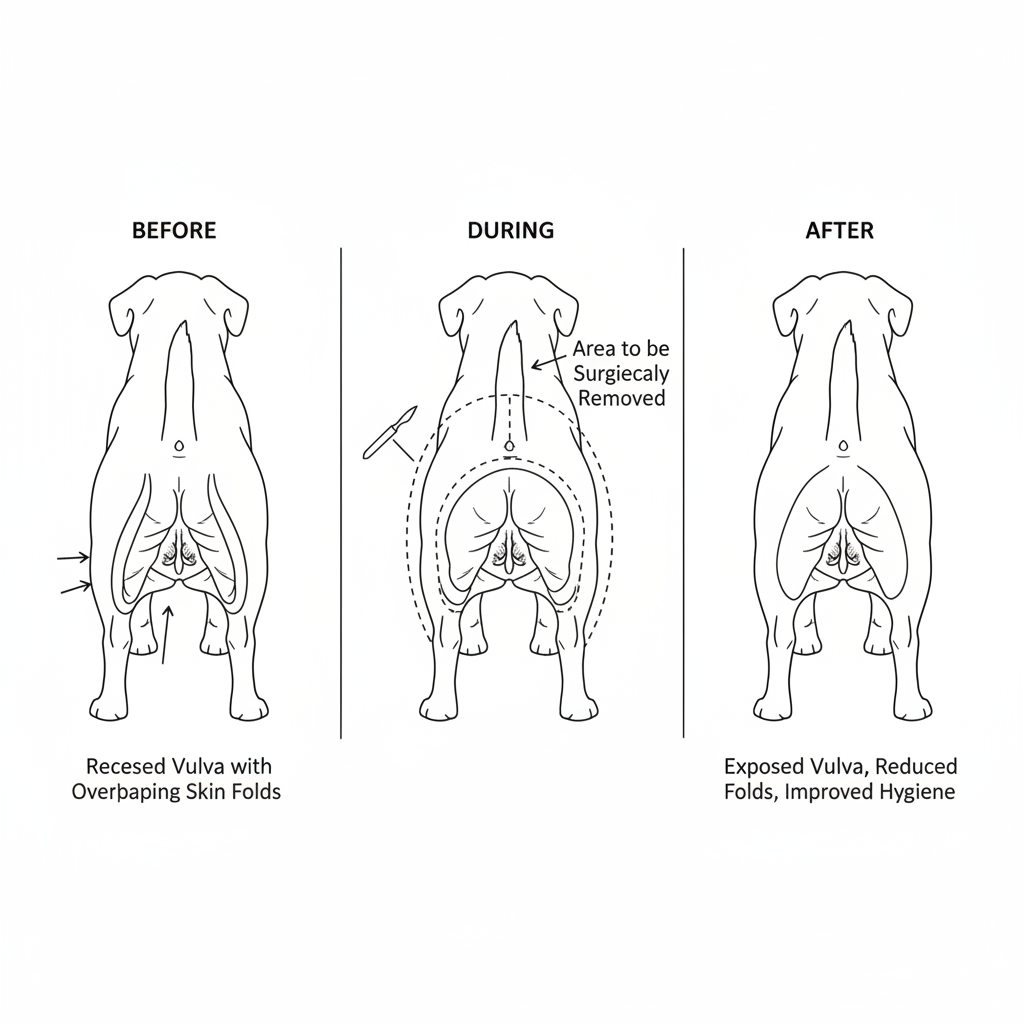
- Surgery (Episioplasty or Vulvoplasty): This is often the most effective and lasting solution for dogs with severe issues or those who keep getting infections that conservative care can’t fix. It’s often recommended after a dog has been spayed.
- The Procedure: An episioplasty involves surgically removing a small, crescent-shaped piece of skin from above the vulva, then stitching the remaining skin back together. This effectively pulls the surrounding skin away, exposing the vulva and getting rid of those deep folds.
- The Upside: This surgery aims to prevent future infections, improve hygiene, and ease your dog’s discomfort. It has a high success rate in stopping recurrent UTIs and skin problems linked to a recessed vulva.
- Timing: Vets often suggest this surgery once a dog is fully grown (around one year old) and sometimes at the same time as spaying. That’s because hormonal changes after spaying can sometimes make the vulva even smaller.
Recovering and Living with a Recessed Vulva
After an episioplasty, here’s what recovery typically looks like:
- Pain Relief: Your dog will likely go home with pain medication for a few days to a week.
- The Cone of Shame: An Elizabethan collar (cone) is a must to stop your dog from licking or chewing at the incision. Licking can lead to infection or the stitches coming undone.
- Taking It Easy: Keep your dog calm and limit vigorous activity (like running, jumping, or too many stairs) for 2–3 weeks. This gives the incision time to heal properly.
- Wound Care: Follow your vet’s specific instructions for keeping the incision clean and dry. Don’t bathe your dog until the stitches are out and the incision is fully healed.
- Stitch Removal: Most stitches are taken out by your vet about 10–14 days after surgery.
For dogs who have surgery, long-term management is usually minimal because the procedure often offers a permanent fix. For dogs who are managed without surgery:
- Keep That Weight Down: Maintaining an ideal body weight is absolutely key.
- Regular Cleaning: Daily or every-other-day cleaning with vet-prescribed wipes can help keep skin infections from coming back.
- Stay Alert: Watch for any signs that symptoms are returning, like excessive licking, a strange odor, or signs of UTIs. If you notice anything, give your vet a call.
With the right treatment, dogs with a recessed vulva can live happy, comfortable, and healthy lives. Catching and addressing the problem early can prevent chronic pain and repeated infections, significantly boosting your dog’s overall quality of life.