
Heart Attack in Dogs: What Every Pet Parent Needs to Know
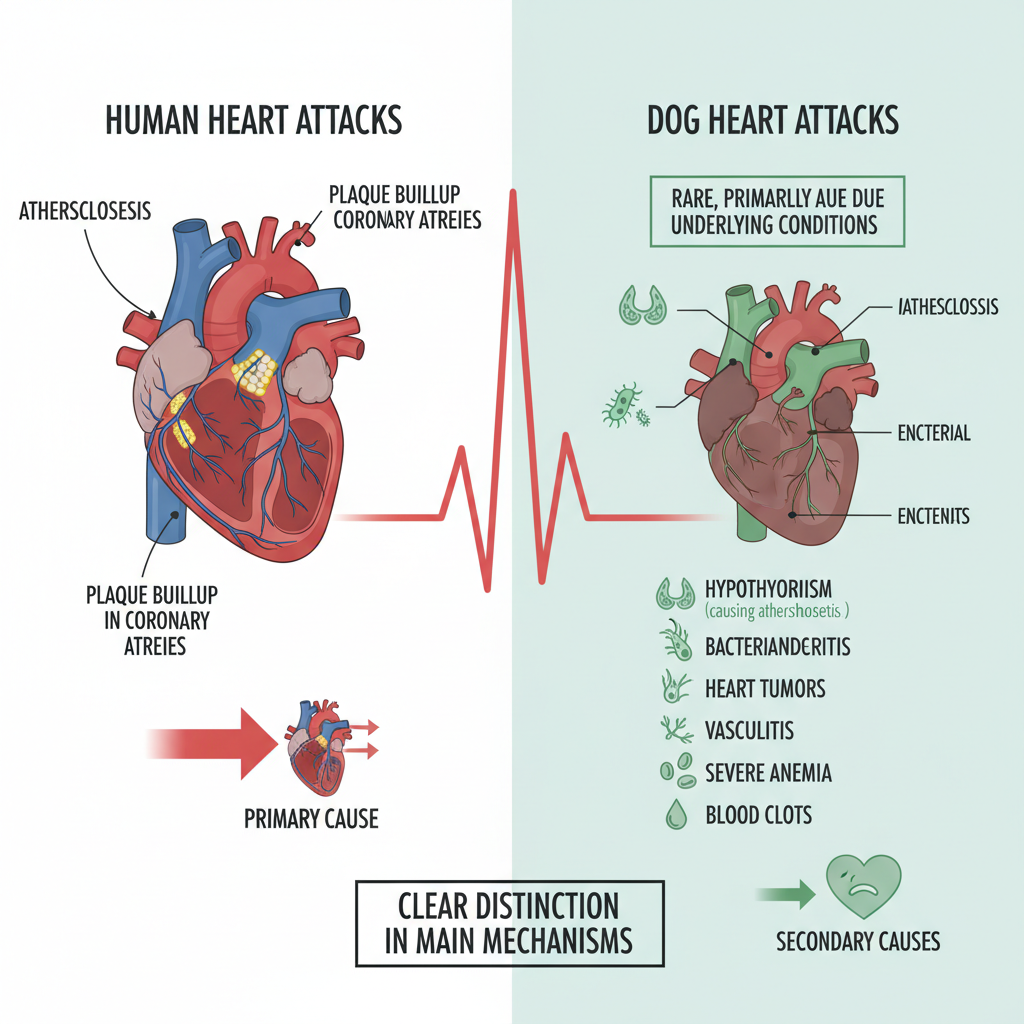
Hearing about a heart attack in dogs can be frightening, but it’s important to know that these events are incredibly rare in our furry friends. Unlike people, who often suffer heart attacks due to clogged arteries from plaque buildup, dogs generally don’t get the same kind of “hardening of the arteries.” When a dog does experience a heart attack, which veterinary specialists call a myocardial infarction – meaning damage to the heart muscle from lack of blood supply – it’s usually because of another underlying health issue.
While a true heart attack is uncommon, understanding what could lead to such a serious problem can help you stay alert for your pup’s health.
What Causes a Heart Attack in Dogs?
When a dog suffers a heart attack, it’s almost always a consequence of another condition already at play. Here are some of the reasons our team at Petscarelab has identified that could lead to a heart attack in a dog:
- Hypothyroidism: This is the most common culprit behind a dog’s heart attack. If your dog’s thyroid gland isn’t making enough thyroid hormone, they can be prone to developing atherosclerosis. That’s when fatty plaques build up inside blood vessels, including the crucial ones that feed the heart (coronary arteries), starving the heart muscle of blood.
- Bacterial Endocarditis: This is a nasty infection of the heart valves. It can cause blood clots to form right on the valves, and these clots might then break off and travel to the coronary arteries, blocking the blood flow.
- Heart Tumors: Growths in or around the heart can squeeze the coronary arteries, or even grow right into them, choking off the blood supply.
- Vasculitis: Imagine angry, swollen blood vessels. That’s vasculitis, an inflammation that can narrow the vessels, cutting off blood flow, or trigger the formation of blood clots.
- Severe Anemia: If your dog doesn’t have enough red blood cells, their body simply can’t carry enough oxygen. While not a direct blockage, this severe lack of oxygen can gravely damage heart tissue.
- Blood Clots (Thromboembolism): Clots can form anywhere in the body. If one breaks loose and travels to the heart’s own blood vessels, it can cause a sudden, devastating blockage.
Symptoms of a Heart Attack in Dogs
Because heart attacks are so rare in dogs, we don’t have a clear, distinct list of symptoms. Plus, since a heart attack is usually a secondary problem, you might also see signs of the underlying disease.
The signs your dog might show can vary a lot, depending on how severe the heart attack is, how long their heart went without blood, and which part of the heart muscle got hit. They might include:
- Suddenly weak, maybe even collapsing
- Struggling to breathe or panting way too fast
- Just wanting to lie there, not moving much, acting super tired
- Throwing up
- Tummy hurting
- A heartbeat that feels off, skipping beats or racing
- Gums or tongue looking bluish or purple, a sign of low oxygen
- The heart suddenly failing
- Tragically, sometimes it’s sudden death

If you ever see any of these worrying signs in your dog, you need to get them to the vet immediately. Don’t wait.
Diagnosing a Heart Attack in Dogs
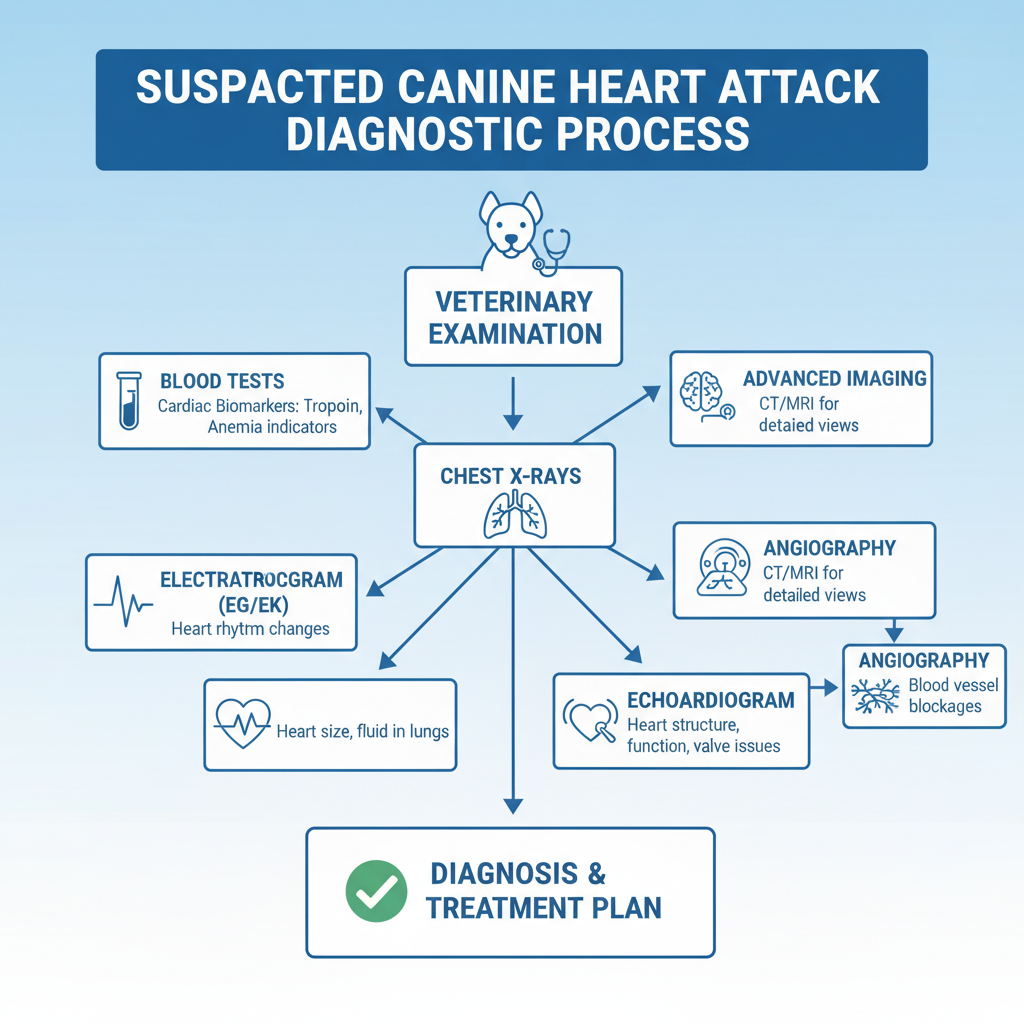
Diagnosing a heart attack in a dog can be a real puzzle for vets because it’s so uncommon and the symptoms aren’t specific. Your vet will always start with a thorough check-up and then likely recommend a series of diagnostic tests.
Tests to figure out if your dog had a heart attack, or to find the root cause, can include:
- Blood tests: These can tell us a lot, from signs of infection or anemia to checking organ function. They’ll also look for cardiac biomarkers like troponin, which gets high when heart muscle is damaged.
- Electrocardiogram (ECG/EKG): This test checks your dog’s heart’s electrical rhythm, looking for irregular beats or changes that point to heart muscle damage.
- Chest X-rays: These help your vet see the size and shape of your dog’s heart and lungs, watching out for fluid in the lungs or other issues.
- Echocardiogram (heart ultrasound): This is like getting a real-time look at your dog’s heart. It lets the vet see its structure, how it’s pumping blood, and if there are any problems with the muscle movement or valves.
- Cardiac CT or MRI scans: Sometimes, super detailed pictures of the heart and surrounding vessels are needed, and these advanced scans can provide them.
- Angiography: Here, a special dye is injected into blood vessels to light them up, making it easier to spot blockages or narrow spots.
- Post-mortem examination (necropsy): Sadly, confirming a myocardial infarction sometimes only happens after your dog has passed away, through a detailed examination.
Treatment for a Heart Attack in Dogs
If your dog has a heart attack, the immediate goal is to stabilize them and then tackle the underlying problem. Our team finds that treatment options might involve:
- Oxygen therapy: To help them breathe easier and get more oxygen into their system.
- Medications: To ease pain, clear up fluid buildup, help their heart work better, and smooth out any irregular beats.
- Intravenous fluids: To keep them hydrated and support their blood flow.
- Anticoagulants or antiplatelet medications: If blood clots are suspected, these can help stop more from forming.
- Specific treatments for the underlying disease: This could mean thyroid meds for hypothyroidism or antibiotics for a heart valve infection.
- Surgery: In very rare cases, surgery might be an option, perhaps to remove a tumor that’s causing the problem.
Recovery and Management of a Heart Attack in Dogs
The path to recovery for a dog after a heart attack varies a lot. It depends on how severe the event was, how much heart muscle got damaged, and if we can treat the root cause.
Long-term care will focus on controlling that underlying disease and doing everything possible to prevent future cardiac events. This often includes:
- Regular vet visits
- Staying on top of medications
- Following special diets
- Careful exercise routines
While heart attacks are rare in dogs, being aware of the possible symptoms and getting your pup to the vet quickly if you suspect a problem can truly make a difference in their outcome. Our team at Petscarelab is here to help you keep your dog’s heart as healthy as can be.