Pepto-Bismol for Dogs: Is It Safe to Give Your Pup This Human Medication?
When your dog’s tummy is rumbling, or they’re having an awful case of the runs, it’s natural to want to ease their discomfort. You might even eye that familiar pink bottle of Pepto-Bismol in your medicine cabinet, thinking it could do the trick. For us humans, Pepto-Bismol is a go-to for upset stomachs, indigestion, diarrhea, and nausea. It contains bismuth subsalicylate and calcium carbonate, ingredients that help settle a queasy stomach.
But what about our furry friends? Can you give Pepto-Bismol for dogs?
Should You Give Your Dog Pepto-Bismol? (Hint: The Answer is NO)
Let’s cut right to it: no, you shouldn’t give your dog Pepto-Bismol without talking to your vet first. While our team at Petscarelab knows that veterinarians might prescribe it in very specific, rare cases of doggy diarrhea, it comes with serious risks. You should never reach for it on your own.
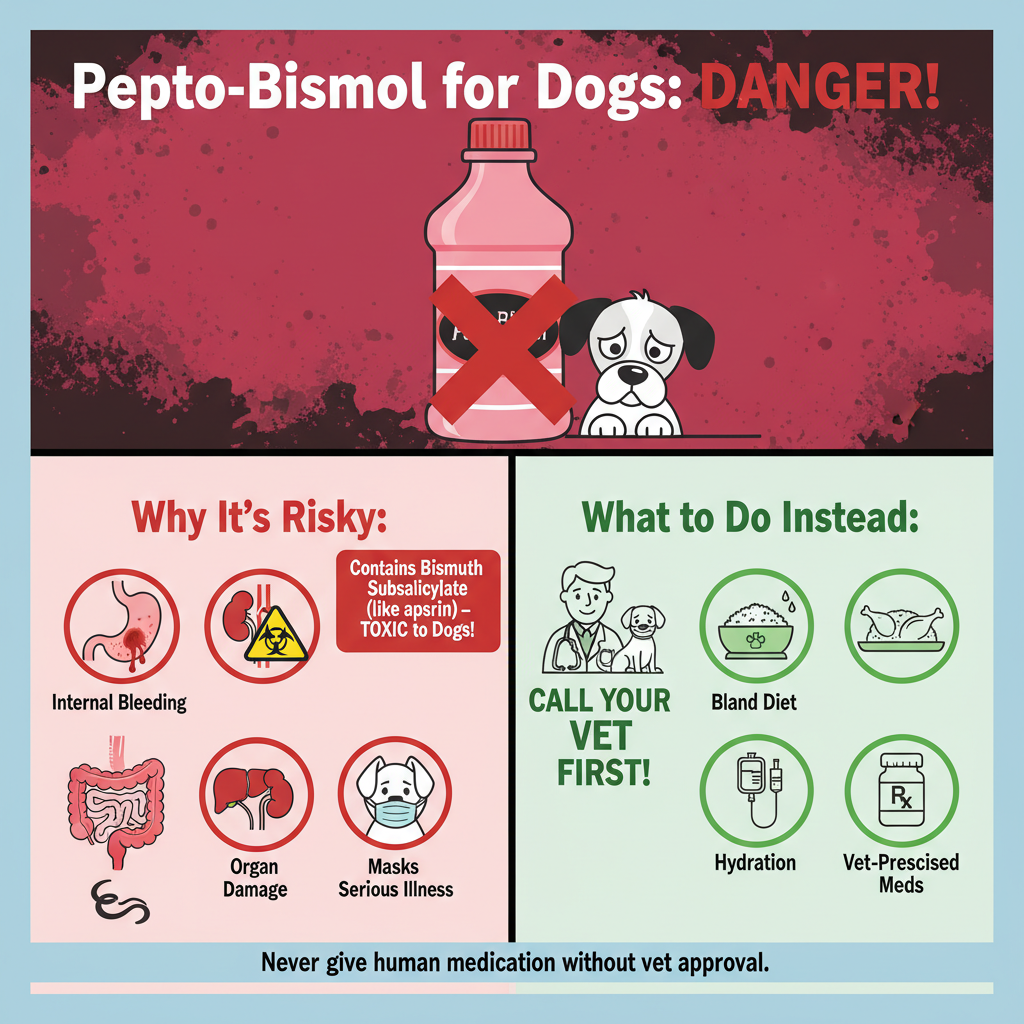
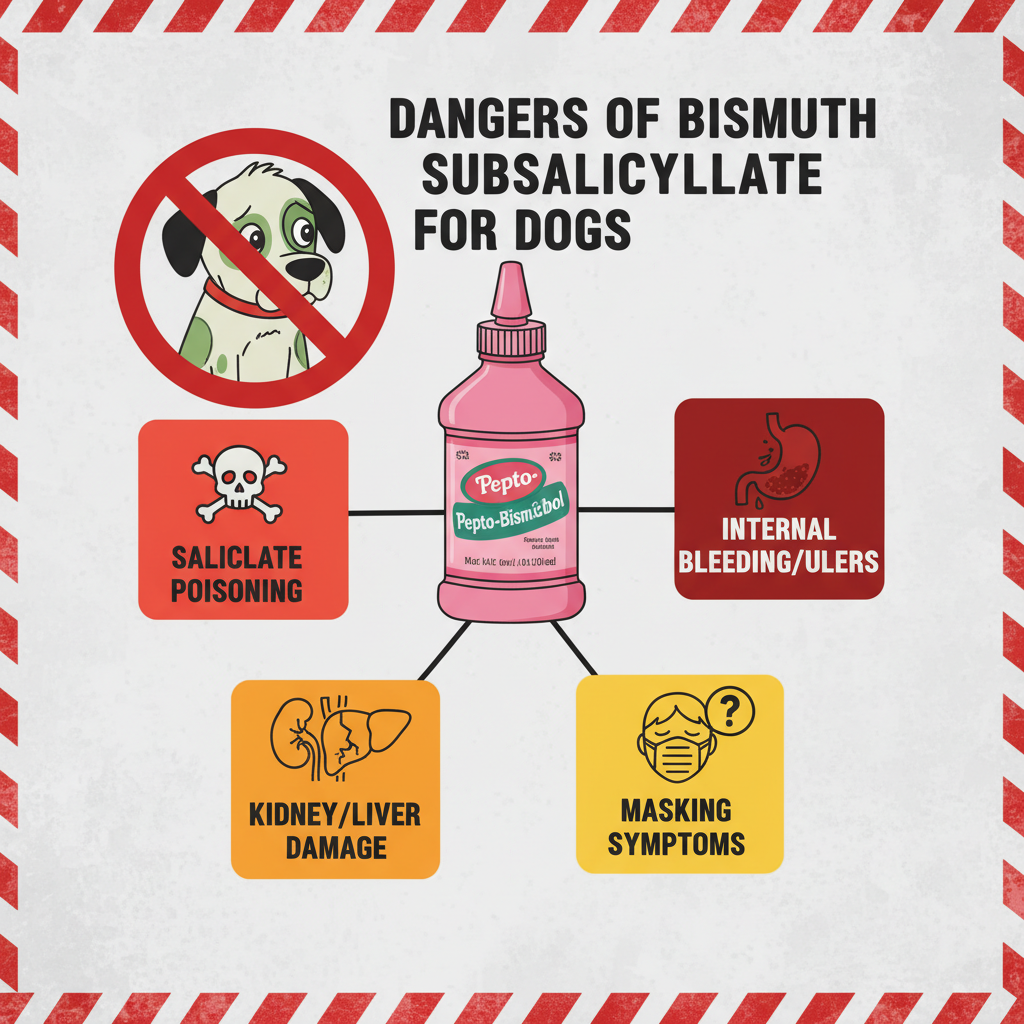
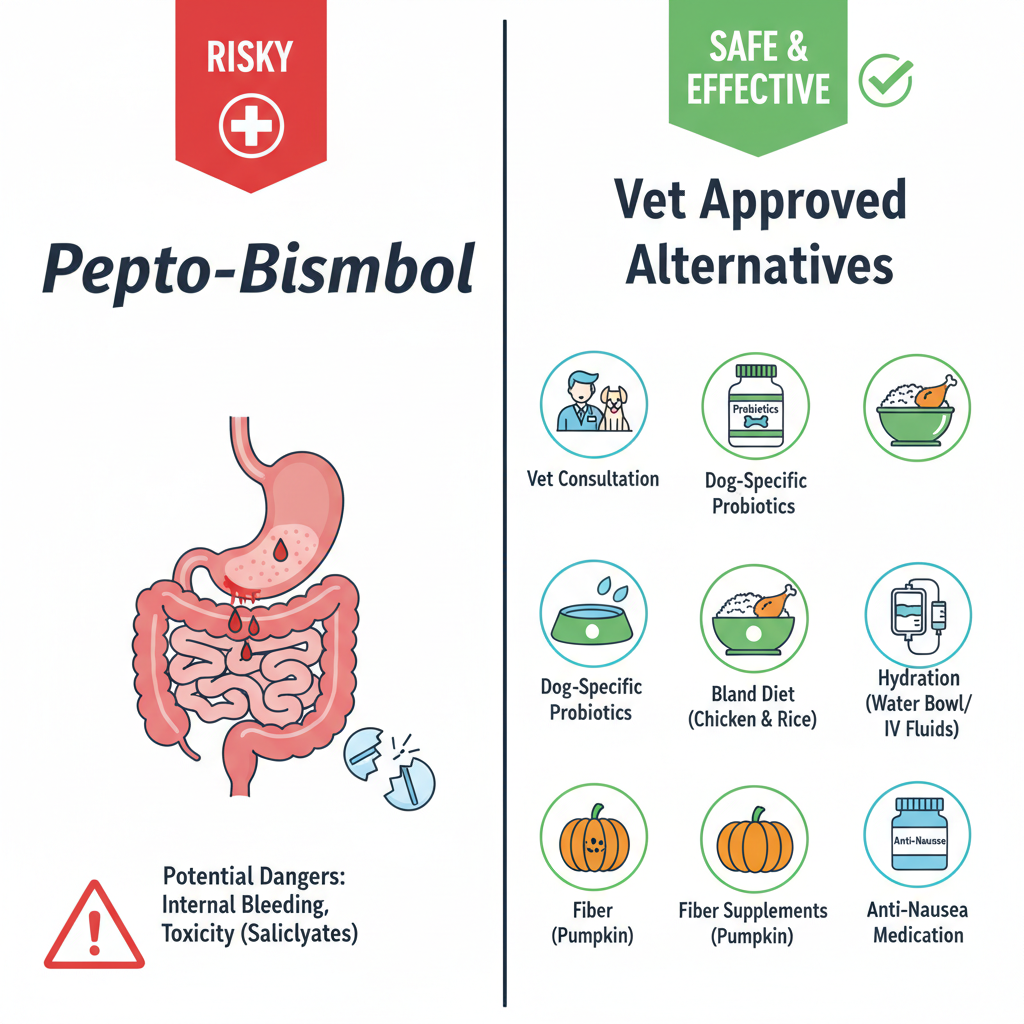
The biggest red flag is bismuth subsalicylate. This ingredient belongs to the salicylate family, just like aspirin. Dogs are super sensitive to salicylates, and giving them Pepto-Bismol can cause real trouble:
- Salicylate poisoning: This isn’t just a minor issue. It can lead to severe problems like bleeding in the stomach or intestines, painful ulcers, and even damage to their kidneys and liver.
- More tummy trouble: The very drug meant to soothe a stomach can actually make things worse for dogs. It might cause vomiting, diarrhea, or—even scarier—black, tarry stools. These dark stools are a sign of digested blood from internal bleeding.
- Hiding bigger problems: Pepto-Bismol can temporarily cover up symptoms of a more serious illness your dog might have. This delays the proper diagnosis and treatment they truly need.
The other ingredient, calcium carbonate, is generally safer but much less effective on its own. It’s usually present in smaller amounts and doesn’t pose as much risk as the bismuth subsalicylate.
Why Some Vets Might Use Pepto-Bismol for Dogs (But It’s Very Rare!)
You might hear about a vet prescribing a very low dose of Pepto-Bismol for a short time to treat certain types of diarrhea. This happens only after a thorough check-up, when your vet has ruled out other, more serious causes for your pup’s upset tummy.
Even then, the risks are still significant. Most of the time, safer alternatives are available and preferred.
What Happens If Your Dog Takes Pepto-Bismol?
If your dog accidentally gets into Pepto-Bismol, even a little bit, keep an eye out for these side effects:
- Stomach upset: Look for vomiting, diarrhea, or signs of abdominal pain. Your dog might seem uncomfortable or restless.
- Black, tarry stools: This is a serious sign, indicating bleeding in their digestive tract. The stools might look like thick coffee grounds.
- Constipation: Oddly, in some cases, especially with larger doses, Pepto-Bismol can cause constipation.
- Heavy panting: Your dog might pant more than usual, which can signal discomfort or pain.
- Tiredness and weakness: They might seem unusually sluggish or weak.
- Anemia: If your dog loses blood from internal bleeding, they could become anemic.
- Kidney or liver damage: In severe cases, this can lead to organ failure.
- Seizures: This is a rare but severe symptom of toxicity.
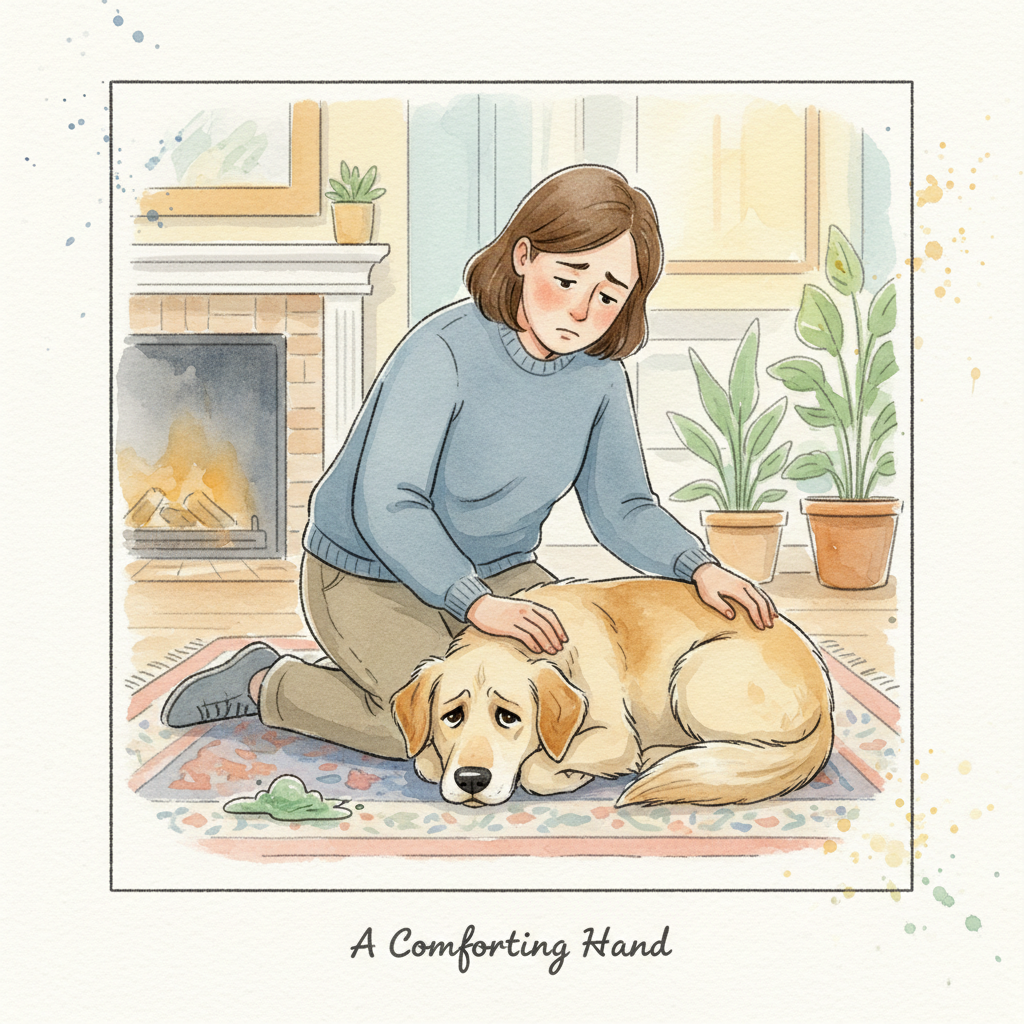
One confusing thing: Pepto-Bismol’s pink color can make your dog’s poop look dark, which might look like digested blood. While this is less serious than actual internal bleeding, it still means you should call your vet to be safe.
Your Dog Has a Tummy Ache? Here’s What to Do Instead of Reaching for Pepto-Bismol
If your dog is experiencing diarrhea or an upset stomach, the best first step is always to call your veterinarian. They can figure out what’s really going on and recommend the safest, most effective treatment plan.
Many things can cause a dog’s upset stomach, including:
- Eating something they shouldn’t: We call this “dietary indiscretion,” and it’s super common when pups get into human food or trash.
- Stress or anxiety: Just like us, dogs can get tummy aches from stress.
- Food allergies or sensitivities: Certain ingredients can trigger a reaction.
- Parasites: Nasty invaders like giardia, roundworms, hookworms, whipworms, or coccidia.
- Bacterial or viral infections: Think parvovirus, distemper, salmonella, or E. coli.
- Inflammatory bowel disease (IBD): A chronic condition affecting the digestive tract.
- Pancreatitis: Inflammation of the pancreas.
- Kidney or liver disease: These serious conditions can also cause digestive issues.
- Toxins or poisons: If your dog ate something harmful.
Safer Ways to Help Your Dog’s Upset Stomach (Pepto-Bismol Alternatives)
Instead of reaching for Pepto-Bismol for dogs, consider these safer and often more effective alternatives, depending on what’s causing your dog’s symptoms:
- Vet-prescribed medications: Your vet can offer specific antibiotics, anti-diarrheals, anti-nausea meds, or anti-inflammatories perfectly suited to your dog’s condition.
- Probiotics: Specially made probiotics for dogs can help restore healthy gut bacteria and improve digestion.
- Dietary changes: Often, a bland diet (like plain boiled chicken and white rice) for a few days can help settle a sensitive stomach. Your vet might also suggest a special prescription gastrointestinal diet.
- Hydration: It’s super important to keep your dog hydrated, especially with diarrhea. Your vet might recommend oral electrolyte solutions or, in severe cases, IV fluids.
- Fiber supplements: A little bit of plain pumpkin puree or psyllium husk can sometimes help firm up loose stools.
- Anti-emetics: Medications like maropitant citrate (Cerenia) are really effective at stopping vomiting.
When to Call the Vet – Don’t Wait!
Contact your veterinarian right away if your dog shows any of these signs:
- Severe vomiting or diarrhea.
- Vomiting or diarrhea that lasts for more than 24 hours.
- Lethargy, weakness, or a complete loss of appetite.
- Black, tarry stools, or any visible blood in their poop.
- Signs of abdominal pain or discomfort (like hunching over or crying).
- Signs of dehydration (like sunken eyes, dry, sticky gums, or skin that stays tented when you gently pinch it).
- You know or suspect they’ve eaten Pepto-Bismol or any other human medication.
- Any other concerning symptoms that worry you.
Never give your dog Pepto-Bismol or any other human medication unless your veterinarian explicitly tells you to. Your vet is always your best resource for keeping your pet healthy and safe.