

Testicular Tumors in Dogs: What Every Pet Parent Needs to Know
Spotting testicular tumors in dogs often happens during a regular check-up with your vet. While they usually affect just one testicle, sometimes both can be involved. The most common kinds you’ll hear about are Sertoli cell tumors, seminomas, and interstitial cell tumors (also known as Leydig cell tumors).
Certain breeds, like Boxers, German Shepherds, Weimaraners, and Shetland Sheepdogs, seem to get these tumors more often, though any dog can develop them. You’ll typically see them in older, unneutered male dogs.
Here’s the good news: most of these tumors are benign and grow slowly. Still, some can be aggressive and spread quickly. That’s why catching them early and getting prompt treatment makes a huge difference in your dog’s outcome.
What to Look For: Symptoms of Testicular Tumors in Dogs
The most obvious sign of a testicular tumor is a noticeable enlargement or a firm lump in one or both testicles. But your dog might show other signs too, depending on the tumor’s type and how far along it is.
Keep an eye out for these common symptoms:
- An enlarged or firm lump in one or both testicles. This is usually the first clue.
- A swollen belly, especially if the tumor has spread.
- Changes in urination or defecation if a large tumor is pressing on other organs.
- Pain or discomfort in the private area. Many tumors are painless, but some can cause your dog distress.
- Lethargy or weakness, particularly if the tumor is making your dog feel unwell systemically.
- Hormonal imbalances: Some tumors, especially Sertoli cell tumors, can churn out hormones that lead to unusual changes, such as:
- Feminization syndrome: You might notice enlarged nipples, hair loss, a baggy prepuce, and even other male dogs showing interest in him.
- Bone marrow suppression: This can cause anemia (low red blood cells), thrombocytopenia (low platelets), and leukopenia (low white blood cells).
Sometimes, dogs with small, benign tumors don’t show any signs at all. That’s why those routine vet visits are so important for early detection!
Why Do Testicular Tumors Happen in Dogs?
We don’t know the exact reasons why testicular tumors in dogs develop, but veterinary specialists have pinpointed several key risk factors:
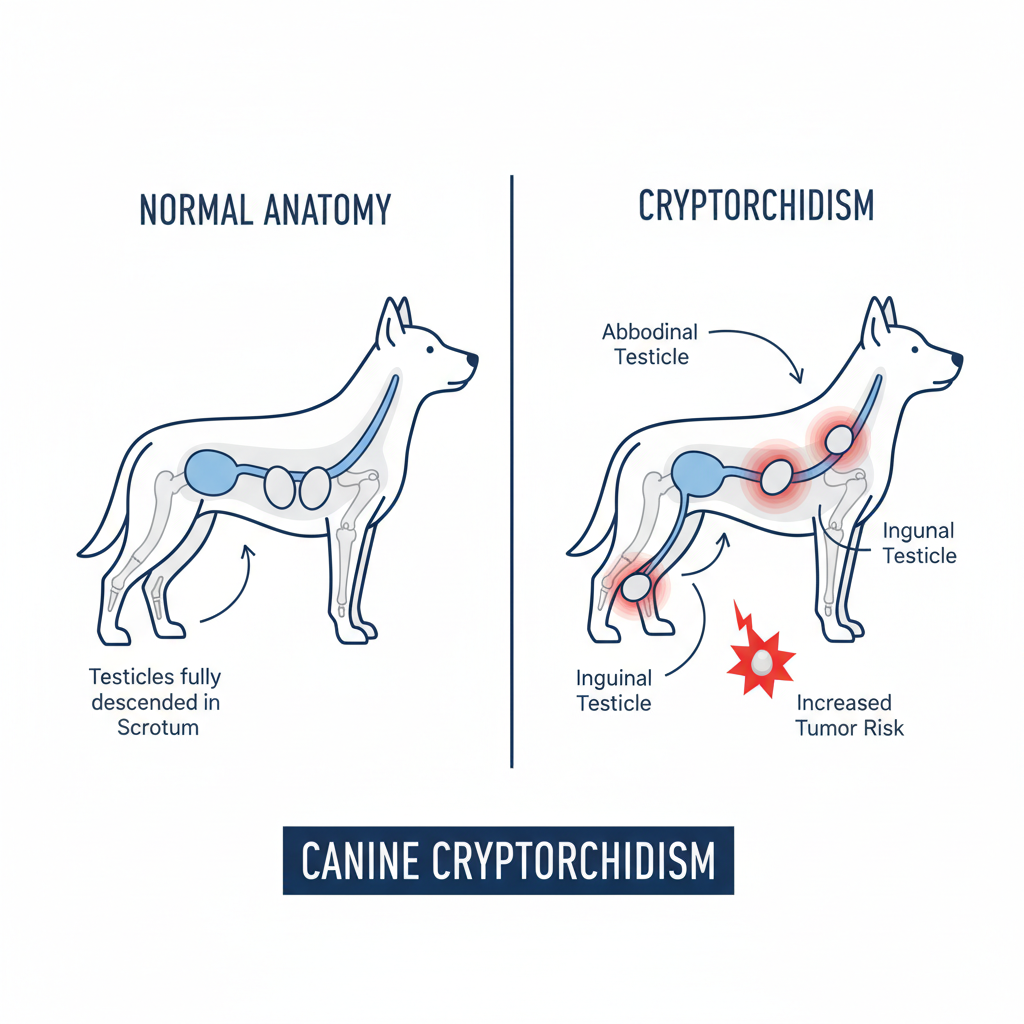
- Cryptorchidism: This is the biggest risk factor. It’s when one or both testicles don’t drop into the scrotum as they should. Undescended testicles – whether they’re stuck in the abdomen or the groin – are far more likely to become cancerous than normally descended ones.
- Age: These tumors are more common in older, intact male dogs, usually those over six years old.
- Breed: As we mentioned, certain breeds like Boxers, German Shepherds, Weimaraners, and Shetland Sheepdogs have a higher chance of developing them.
- Genetics: It’s possible that some dogs are genetically predisposed, meaning they inherit a higher susceptibility.
- Hormonal Factors: Imbalances or specific hormone influences are suspected, particularly when it comes to Sertoli cell tumors.
How Vets Diagnose Testicular Tumors in Dogs
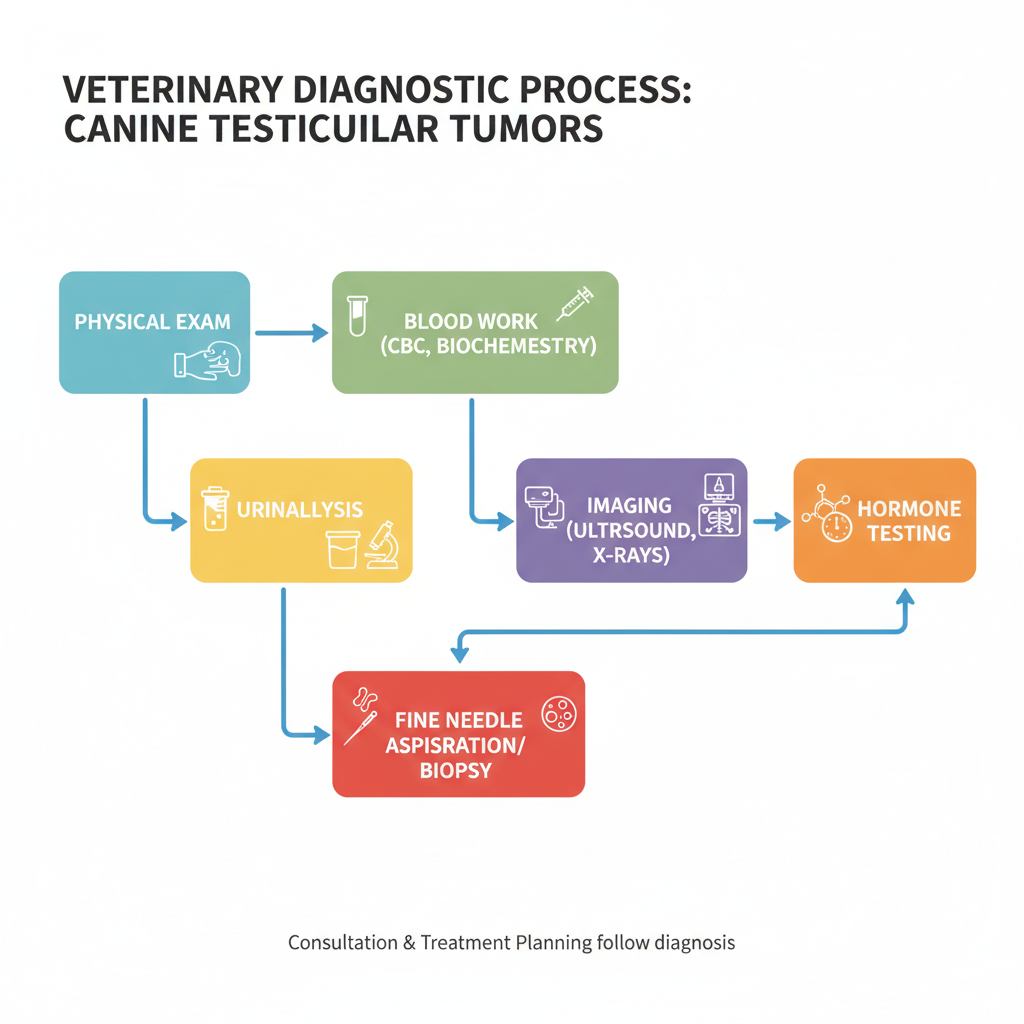
Diagnosing testicular tumors in dogs typically involves a combination of a thorough physical exam and various tests. Our team at Petscarelab outlines the process:
- Physical Exam: Your vet will gently feel your dog’s testicles to check for any unusual size, shape, texture, or lumps. If they suspect an undescended testicle, they’ll also feel around the abdomen and groin area.
- Blood Work:
- Complete Blood Count (CBC): This can reveal issues like anemia, low platelets, or low white blood cell counts, especially if a hormone-producing tumor is affecting the bone marrow.
- Biochemistry Profile: This checks how well your dog’s organs are working and can show any wider effects the tumor might be having on his body.
- Urinalysis: Your vet might do this to rule out other problems with the urinary tract.
- Imaging:
- Ultrasound: An ultrasound of the testicles helps your vet see the tumor’s size, exact location, and characteristics. It can also show if the tumor has spread to nearby lymph nodes or other abdominal organs.
- X-rays: Your vet often takes chest X-rays to check if the tumor has spread to the lungs. Abdominal X-rays can also assess other organs in the belly.
- Fine Needle Aspiration (FNA) or Biopsy: Sometimes, your vet can collect a small sample from the testicular mass using a needle. A veterinary pathologist then examines this sample under a microscope to identify the type of tumor cells. However, surgical removal and a full histopathology (microscopic examination of the entire removed tissue) often provide the most definitive diagnosis.
- Hormone Testing: If your dog shows signs of feminization syndrome or other hormone-related symptoms, specific hormone tests can help confirm the issue.
Treating Testicular Tumors in Dogs
The main and most effective way to treat testicular tumors in dogs is through surgery.
Surgical Treatment
- Orchiectomy (Neutering): This involves surgically removing both testicles. It’s the definitive solution for testicular tumors, even if only one testicle is affected. Removing both prevents new tumors from forming in the remaining testicle and eliminates any harmful hormonal influences. If your dog has an undescended testicle, the vet will surgically remove it from wherever it’s located in the abdomen or groin.
- Unilateral Castration: In very rare cases, if only one testicle is affected and you want to preserve your dog’s breeding potential (and the risk to the other testicle is very low), your vet might only remove the affected testicle. However, veterinary specialists generally don’t recommend this option due to the risk of a new tumor developing in the remaining testicle.
Post-Surgery Care
- Pain Management: Your vet will send you home with pain medication to keep your pup comfortable during his recovery.
- Activity Restriction: Limit your dog’s activity for several weeks. This gives the surgical site time to heal properly.
- Monitor the Incision: Keep a close eye on the incision for any signs of infection, swelling, or excessive redness.
- Elizabethan Collar (E-collar): Your dog might need to wear an E-collar (the “cone of shame”) to stop him from licking or chewing at his stitches.
Additional Treatments (If Necessary)
- Chemotherapy or Radiation Therapy: Most testicular tumors don’t require these treatments because surgical removal is usually curative. However, your vet might consider them if the tumor is very aggressive, has spread, or couldn’t be fully removed with surgery.
- Supportive Care: If your dog experiences severe bone marrow suppression, he might need blood transfusions or other supportive therapies.
Recovery and Long-Term Care for Testicular Tumors in Dogs
The outlook for dogs with testicular tumors in dogs is generally very good, especially if the tumor is found early and removed before it has a chance to spread.
Prognosis
- Benign Tumors: Most testicular tumors (like Sertoli cell tumors, seminomas, and interstitial cell tumors) are benign, and your dog will likely make a full recovery after surgery.
- Malignant Tumors: While less common, some tumors can be malignant. For these, the prognosis depends on the tumor type, how aggressive it is, and whether it has spread to other parts of the body.
- Cryptorchidism: Dogs with undescended testicles that develop tumors also have a good prognosis if the abnormal testicle is removed quickly.
Follow-Up Care
- Histopathology Results: Your vet will send the removed tumor tissue to a lab for detailed examination. This is crucial to find out the exact type of tumor, whether it was benign or malignant, and if the surgical margins were “clear” (meaning all tumor cells were likely removed).
- Regular Check-ups: Even after successful surgery, regular vet visits are important, especially for dogs who had malignant tumors or if there’s any concern about recurrence.
- Monitoring for Symptoms: Keep watching your dog for any new or returning symptoms.
Prevention
- Neutering: The best way to prevent testicular tumors in dogs is to neuter male dogs, particularly those with cryptorchidism. Our team at Petscarelab generally recommends neutering between 6 months and 1 year of age, but it can be done at any age.
- Early Detection: Regular vet check-ups, which include a thorough physical exam, are essential for catching any testicular abnormalities early.