
When Your Dog Faints: Understanding Syncope in Dogs
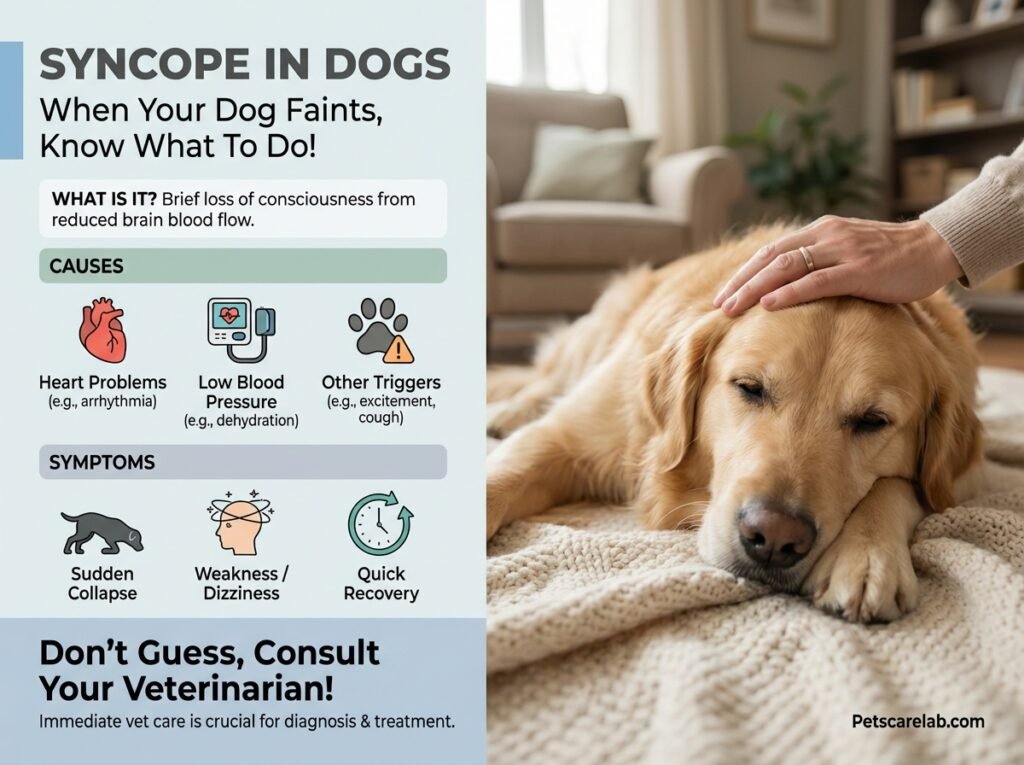
It’s terrifying to watch your dog suddenly collapse, go limp, and then just as quickly, pop back up as if nothing happened. This frightening event, often called fainting, is medically known as syncope in dogs. It’s a temporary loss of consciousness and muscle strength that happens when there’s a sudden, brief drop in blood flow to their brain. That momentary lack of oxygen and nutrients is what causes your furry friend to pass out.
While it looks dramatic, the defining characteristic of syncope is how fast your dog recovers – usually within seconds or a minute or two. Your pup will typically act completely normal afterward. It’s crucial to remember that syncope isn’t a disease on its own; it’s a symptom, a red flag telling you something else is going on underneath. And because it can look a lot like a seizure, knowing the difference can help you explain things to your vet.
Why Do Dogs Faint? Common Causes of Syncope in Dogs
When a dog faints, it’s often a sign that their heart isn’t quite pumping blood to the brain like it should. But other factors can play a role too. Our team at Petscarelab sees several common culprits behind syncope in dogs:
- Heart Problems: Many heart conditions can lead to your dog passing out. These include:
- Arrhythmias: When their heart beats irregularly – too fast, too slow, or just out of rhythm.
- Heart Failure: The heart isn’t strong enough to circulate blood effectively.
- Valvular Heart Disease: Issues with the heart’s valves can disrupt blood flow.
- Cardiomyopathy: Diseases that affect the heart muscle itself.
- Pericardial Effusion: Fluid building up around the heart, squeezing it and preventing it from filling properly.
- Low Blood Pressure: If your dog’s blood pressure drops too low, their brain won’t get enough blood. This can be due to:
- Dehydration: Not enough fluids in their body.
- Blood Loss: From an injury or internal bleeding.
- Certain Medications: Some drugs can have a side effect of lowering blood pressure.
- Neurological Issues: Though less common, problems with the nervous system can sometimes mimic or cause fainting. These might include:
- Seizures: While distinct from syncope, severe seizures can sometimes cause a temporary collapse.
- Narcolepsy: A rare sleep disorder.
- Brain Tumors: Growth in the brain affecting function.
- Other Triggers: Sometimes, even seemingly minor things can trigger a fainting spell in susceptible dogs:
- Hypoglycemia: Low blood sugar.
- Anemia: Not enough healthy red blood cells to carry oxygen.
- Respiratory Conditions: Issues like a collapsed trachea, laryngeal paralysis, or high blood pressure in the lungs can reduce oxygen to the brain.
- Sudden Excitement or Stress: Over-excitement can sometimes cause a temporary drop in blood pressure.
- Coughing Fits: Intense, prolonged coughing can sometimes reduce blood flow.
- Straining to Defecate: Bearing down too hard can temporarily affect circulation.

What Does Syncope Look Like? Recognizing the Symptoms
The most telling sign of syncope is that sudden, scary collapse and loss of consciousness. It’s usually very brief, and your dog will come to quickly.
Besides the actual collapse, you might notice other things:
- Weakness or Lethargy: Your dog might seem wobbly or tired just before or after the episode.
- Dizziness or Disorientation: They might look confused or unsteady for a moment.
- Pale Gums: Their gums might look unusually light pink, almost grayish, because of reduced blood flow.
- Temporary Muscle Twitching: This is a big one that can fool pet parents into thinking it’s a seizure. Your dog might twitch a bit, but it typically stops as soon as they regain consciousness.
- Vomiting: Some dogs might throw up during or after an episode.
- Loss of Bladder/Bowel Control: Though rare, some dogs might pee or poop themselves when they faint.
Again, the fastest, most complete recovery is what usually sets syncope apart from other types of collapses. Your dog will typically stand up, shake it off, and go about their business as if nothing ever happened.
Getting to the Bottom of It: Diagnosing Syncope in Your Dog
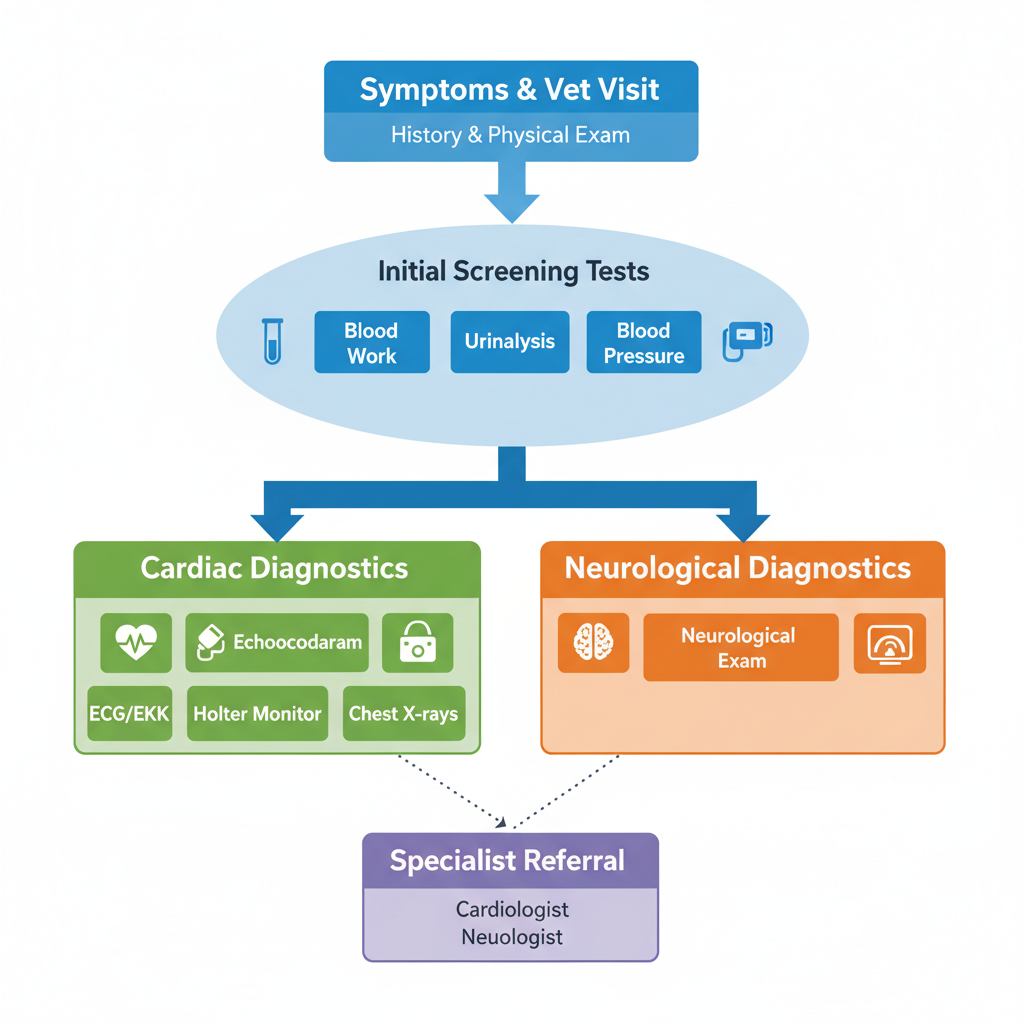
If you think your dog has fainted, getting them to the vet is step number one. Diagnosing the cause of syncope starts with a deep dive into your dog’s medical history and a thorough physical exam. Your vet will ask you to describe what happened in detail: when it occurred, how long it lasted, and anything your dog was doing before, during, and after the episode. Don’t be shy about sharing every little detail!
To figure out what’s really going on, your vet might recommend several diagnostic tests:
- Blood Work: This helps check for problems like anemia, low blood sugar, or imbalances in electrolytes.
- Urinalysis: This can give clues about kidney function and other body systems.
- Electrocardiogram (ECG/EKG): This measures your dog’s heart’s electrical activity, helping to spot abnormal heart rhythms.
- Echocardiogram: An ultrasound of the heart that lets the vet see its structure and how well it’s pumping.
- Holter Monitor: If an arrhythmia is suspected but hard to catch, your dog might wear a portable ECG device for 24-48 hours to record their heart’s activity continuously.
- Blood Pressure Measurement: To check if their blood pressure is too high or too low.
- Chest X-rays: These images help assess the heart’s size and the condition of the lungs.
- Neurological Exam: Your vet will check your dog’s reflexes and responses to rule out conditions like seizures.
- Brain Imaging (MRI/CT scan): In rare cases, if neurological problems are strongly suspected, your vet might suggest advanced imaging.
- Specialist Referral: Sometimes, our team at Petscarelab might recommend seeing a veterinary cardiologist (heart specialist) or neurologist (brain specialist) for more in-depth evaluation.
Helping Your Dog Recover: Treatment for Syncope
The good news is that once your vet identifies what’s causing your dog’s fainting spells, they can put together a specific treatment plan. There’s no single cure for syncope; treatment always targets the underlying condition.
Here’s what that might involve:
- Medications:
- Antiarrhythmic Drugs: To bring their heart rhythm back to normal if they have an arrhythmia.
- Diuretics: If heart failure is causing fluid buildup, these help remove excess fluid.
- Blood Pressure Medications: To get their blood pressure into a healthy range.
- Specific Cardiac Meds: Drugs like pimobendan might be prescribed for various heart diseases.
- Steroids: If an inflammatory condition is at play, steroids could help.
- Dietary Adjustments: Dogs with certain heart conditions or other health issues might need special diets to help manage their symptoms.
- Activity Restrictions: If strenuous exercise triggers episodes, your vet might advise limiting intense play or long walks, especially for dogs with heart problems.
- Surgery: In some situations, surgery might be needed to fix structural heart defects or other physical problems.
- Pacemaker Implantation: For very slow heart rates that don’t respond to medication, a pacemaker can help regulate the rhythm.
- Managing Other Conditions: Treating issues like anemia, low blood sugar, or respiratory problems can often resolve the syncope.
- Emergency Care: If your dog collapses, seek immediate veterinary help. Your vet will keep a close eye on their vital signs and give them fluids or medications as needed to stabilize them.
Life After Fainting: Recovery and Long-Term Management
How well your dog recovers from syncope largely depends on what caused it and how effectively you can manage that underlying condition.
- Close Monitoring: Expect your vet to want to see your dog regularly, especially when they first start treatment. They might need follow-up appointments and more tests to make sure things are improving.
- Medication is Key: If your vet prescribes medication, giving it exactly as directed is incredibly important. Never stop or change doses without talking to your vet first.
- Lifestyle Changes: You might need to make some adjustments to your dog’s daily routine. This could mean a new diet, avoiding super-strenuous activities, or learning to sidestep situations that trigger their fainting (like excessive excitement or overheating).
- Have an Emergency Plan: Talk with your vet about what to do if your dog faints again or if their symptoms worsen. Knowing who to call and what steps to take can reduce panic.
- Watch and Learn at Home: You’re your dog’s best advocate. Pay close attention to their behavior and report any changes or new symptoms to your vet right away. Keeping a log of any fainting episodes – noting the date, time, how long it lasted, and what seemed to trigger it – can give your vet invaluable information.
- What to Expect: If you can successfully treat or manage the root cause of syncope, many dogs go on to live full, happy lives. However, if the cause is very serious or progressive (like advanced heart disease), your vet might give you a more cautious outlook.
Spotting the signs of syncope early and getting prompt veterinary care are the best ways to improve your dog’s outcome. If you suspect your dog has fainted, don’t hesitate – contact your veterinarian immediately.