

How to Help Your Dog and Cat Become Best Buddies
Bringing a new pet home is always a thrill, but it can also be a bit nerve-wracking—especially if you’re introducing a cat to a dog (or the other way around). Our main goal at Petscarelab is to make sure your pets are safe and happy. With a little planning and a lot of patience, you can absolutely create a peaceful home where everyone gets along.
Before the Big Hello: What to Think About
Before your new furry family member even walks through the door, take some time to really understand your current pet’s personality and get your home ready.
Know Your Current Pet’s Vibe
When you’re trying to help a cat and dog get used to each other, your existing pet’s personality is a huge piece of the puzzle.
If you have a dog and are bringing home a cat:
- Does your dog love to chase small animals? This is super important, especially if you have a hunting breed like a terrier or a sighthound (think Greyhounds, Whippets, Salukis) or even a Northern breed (like a Husky or Malamute). If your dog has a history of going after small critters, bringing in a cat might be too risky.
- How does your dog act around other animals? Does your pup bark like crazy, lunge, or seem aggressive when they see other dogs or small animals on walks? If so, you’ll need to work on those behaviors before a cat even enters the picture.
- Is your dog generally chill and well-behaved? A dog that’s typically calm, listens well, and doesn’t have a super strong prey drive will probably have an easier time adjusting to a cat.
If you have a cat and are bringing home a dog:
- Is your cat a scaredy-cat or easily stressed? A shy or anxious kitty might have a much tougher time dealing with a playful, energetic dog.
- Has your cat lived with dogs before? If your cat has previous dog-living experience and handled it well, the transition could be much smoother.
- Is your cat usually confident and tolerant? A confident cat is more likely to stand their ground or just calmly walk away, instead of freaking out.
Get Your Home Ready
Setting up your home the right way is key to a smooth introduction.
For your cat:
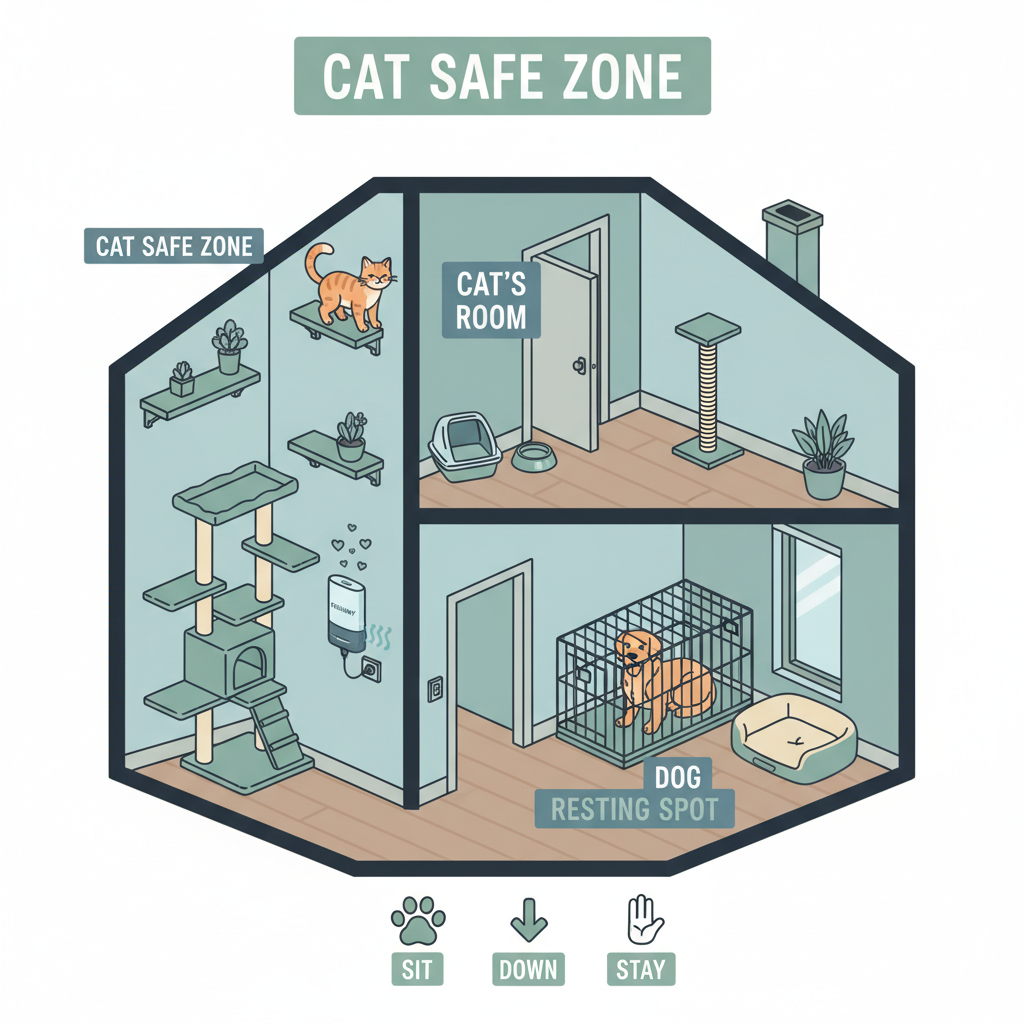
- Create safe zones: Cats need high-up places where they can escape from the dog. Think cat trees, shelves, or rooms with baby gates that a cat can easily jump over but a dog can’t.
- Set up a dedicated “safe room”: This room needs to be completely dog-free and have your cat’s litter box, food, water, and scratching post. This is where your cat will stay at first.
- Use calming pheromones: Our team at Petscarelab often suggests Feliway diffusers for your cat’s safe room and other common areas. They can really help reduce stress.
For your dog:
- Establish ground rules: Make sure your dog knows basic commands like “sit,” “stay,” “leave it,” and “come.” These will be lifesavers during the introduction process.
- Provide a crate or special resting spot: Your dog should have a comfy place to chill out away from the cat, especially during those first few weeks.
- Wear your dog out: A tired dog is a happy (and calm) dog. Make sure your pup gets plenty of exercise before any introduction sessions to help them relax.
The Introduction Process: A Step-by-Step Playbook
The introduction needs to be slow and steady. Focus on rewarding good behavior and letting both animals get used to each other at their own pace. This isn’t a race—it can take days, weeks, or even months.

Step 1: Scent Swapping (1-3 Days)
Before they even see each other, let your pets get familiar with each other’s smell. This is the first step to introducing a cat to a dog.
- Swap cozy items: Take a blanket or towel that smells like your dog and put it in your cat’s safe room. Do the same with a cat-scented item for your dog.
- Watch their reactions: Pay attention to how each pet reacts to the other’s scent. Good signs include calm sniffing, rubbing on it, or just ignoring it. If you see growling, hissing, swatting, or lots of barking, you need to go extra slow.
- Make it positive: Give treats and praise to both animals when they’re interacting calmly with the other’s scent. This builds positive associations right from the start.
Step 2: Site Swapping (1-3 Days)
Once they’re cool with each other’s scent, let them explore each other’s spaces.
- Switch rooms: While your dog is safely put away (maybe in their crate or another room), let your cat wander around the areas where your dog usually hangs out.
- Keep an eye out: Always supervise these sessions to make sure your cat feels safe and has easy escape routes.
- Repeat the swap: Let your dog explore the cat’s safe room (when the cat isn’t in there). This helps both of them get used to the other’s presence without any direct face-to-face meetings.
Step 3: Controlled Visual Contact (Day 4 Onward)
This is the first time they’ll actually see each other, but with a safe barrier in between.
- Use a baby gate or crate: Put a baby gate in a doorway, or keep your dog on a leash or in a crate, with your cat on the other side.
- Keep sessions short and sweet: These first visual meetings should only last a few minutes and always be positive. Offer tasty treats to both animals when they stay calm.
- Distract and calm: If your dog gets too excited, distract them with toys or a command. If your cat hisses or gets upset, gently end the session and try again later.
- Slowly increase time: As long as both pets stay calm and comfortable, gradually make these sessions longer.
Step 4: Supervised Direct Introduction (Once They’re Comfortable)
Only move to this step when both pets show zero signs of aggression or intense fear during the controlled visual contact.
- Dog on a leash: Keep your dog on a leash during these first direct interactions. This gives you full control.
- Cat’s escape plan: Make sure your cat has an easy way to get away, like a cat tree or another room they can slip into.
- Short and positive: Let them be in the same room for short bursts, rewarding calm behavior with treats and praise.
- No forcing: Don’t ever force them to interact. Let them approach each other at their own speed.
- Manage excitement: If your dog gets too excited, gently lead them away and redirect them with a command or a toy. If your cat runs, don’t let your dog chase.
- Increase freedom: Slowly increase the time they spend together and, eventually, allow your dog off-leash, but always under your watchful eye.
Step 5: Unsupervised Time (Only When You Trust Them Completely)
This step should only happen when you are absolutely sure that both animals are comfortable and safe with each other, with no hint of aggression or fear.
- Start with short periods: Begin by leaving them alone together for very brief times (like when you step out for a quick errand).
- Use a pet camera: Consider setting up a pet camera to watch how they interact when you’re not there.
- Keep safe spaces available: Even after they’re best friends, always make sure your cat still has elevated spots and quiet rooms where they can get away from the dog if they need a break.
When Things Don’t Go as Planned: Troubleshooting
- Patience, patience, patience: Don’t rush it. Some introductions take weeks or even months.
- Never punish: Punishment just makes anxiety and fear worse, which makes the whole introduction harder. Always focus on positive reinforcement.
- Separate mealtimes: Always feed your pets in different spots to avoid any food-related squabbles.
- Quality one-on-one time: Keep giving both your cat and your dog individual attention and playtime.
- Get expert help: If you run into serious aggression, intense fear, or problems that just won’t go away, our team at Petscarelab recommends reaching out to a certified professional dog trainer, a cat behaviorist, or a veterinary behaviorist. They can offer personalized advice and guidance.
By following these steps and staying patient, you can help your cat and dog become more than just housemates—they might just become the best of friends.